How Much for a Good Sound System in Car: Best Deals
A good car sound system usually costs $300 to $1,500 installed. A common value range is about $600 to $900 for speakers, a modest amp, and clean installation. Prices vary with equipment quality and installation complexity. Spend too little and you get weak bass, harsh highs, and wasted labor. Spend too much and you may buy parts your car cannot use well. This guide breaks down each price tier, what each component should cost, and where the best deals usually start.
Car audio budget matrix


The best deal is not the cheapest box on a shelf. It is the lowest spend that fixes the weak link in your current system, with enough labor and wiring budget to make the parts work together. For most cars, that means starting with speakers or a head unit, then adding amplification and bass only if the system still sounds thin.
| Spend tier | Recommended bundle | Expected installed total | Sound improvement to expect | First upgrade to skip if budget is tight |
|---|---|---|---|---|
| Entry | Coaxial speakers, factory radio kept, basic wiring and adapters | $300 to $500 | Clearer vocals, less distortion at normal volume, modest bass gain | Touchscreen head unit |
| Best-value | Speakers plus modest 4-channel amp, clean install, tuning | $600 to $900 | Noticeably fuller sound, better dynamics, less strain at higher volume | Subwoofer |
| Expanded | Head unit with CarPlay or Android Auto, speakers, amp, small sub | $1,000 to $1,500 | Stronger bass and better control across the cabin | Large ported enclosure |
| Premium | Better head unit, component speakers, multi-channel amp, sub, integration parts | $1,500 to $3,000 or more | Higher output and cleaner tuning, but gains slow down after the basics are right | Cosmetic trim upgrades |
That matrix lines up with the broader market numbers: basic upgrades can start around $300 to $500, mid-range systems fall between $600 to $1,000, and complete systems with higher-quality components may range from $1,000 to $3,000 or more. A basic car stereo system with an entry-level receiver and speakers can start around $150–$300, while high-end systems can cost $1,500–$3,000 or more once professional installation is factored in.
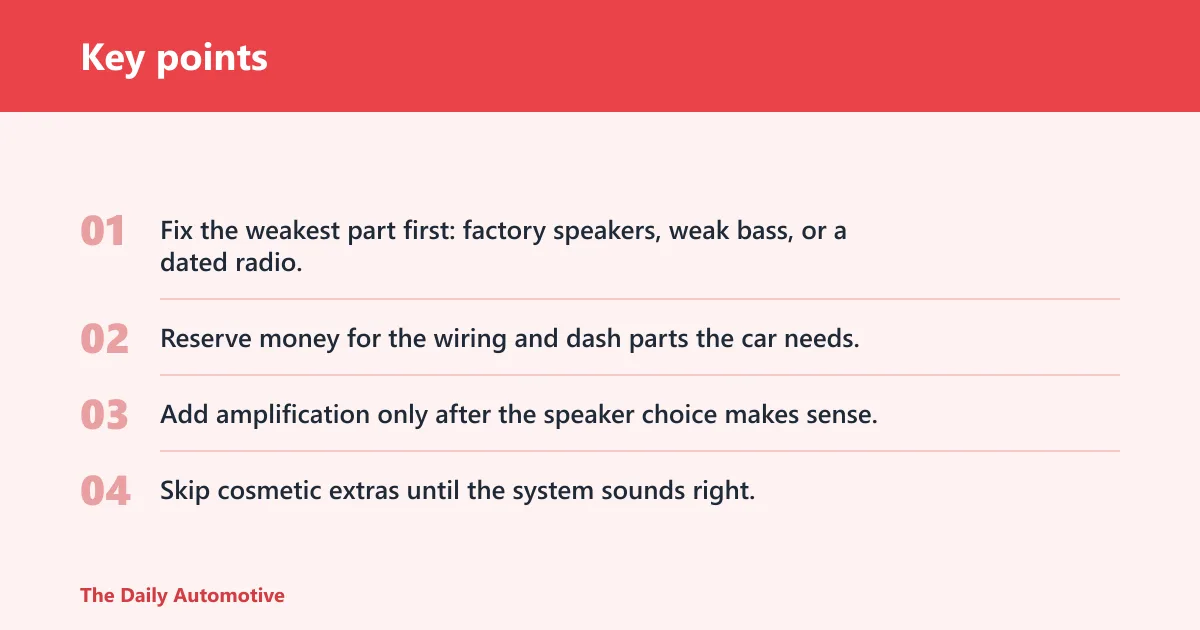
- Fix the weakest part first: factory speakers, weak bass, or a dated radio.
- Reserve money for the wiring and dash parts the car needs.
- Add amplification only after the speaker choice makes sense.
- Skip cosmetic extras until the system sounds right.
A common first-timer mistake is buying a large subwoofer before the rest of the system is balanced. In a compact sedan, that can leave the front speakers sounding thin while the trunk box gets all the attention. The better spend is usually on speaker quality and correct power first.
What counts as a good car sound system?
A good car sound system is one that plays cleanly at the volume you actually use, with enough bass to sound full and enough power to avoid strain. For most buyers, the minimum worthwhile package is better speakers plus proper installation. Extra spending helps less once the system already plays clearly, integrates with the dash, and is tuned well.
The minimum parts that move the sound most
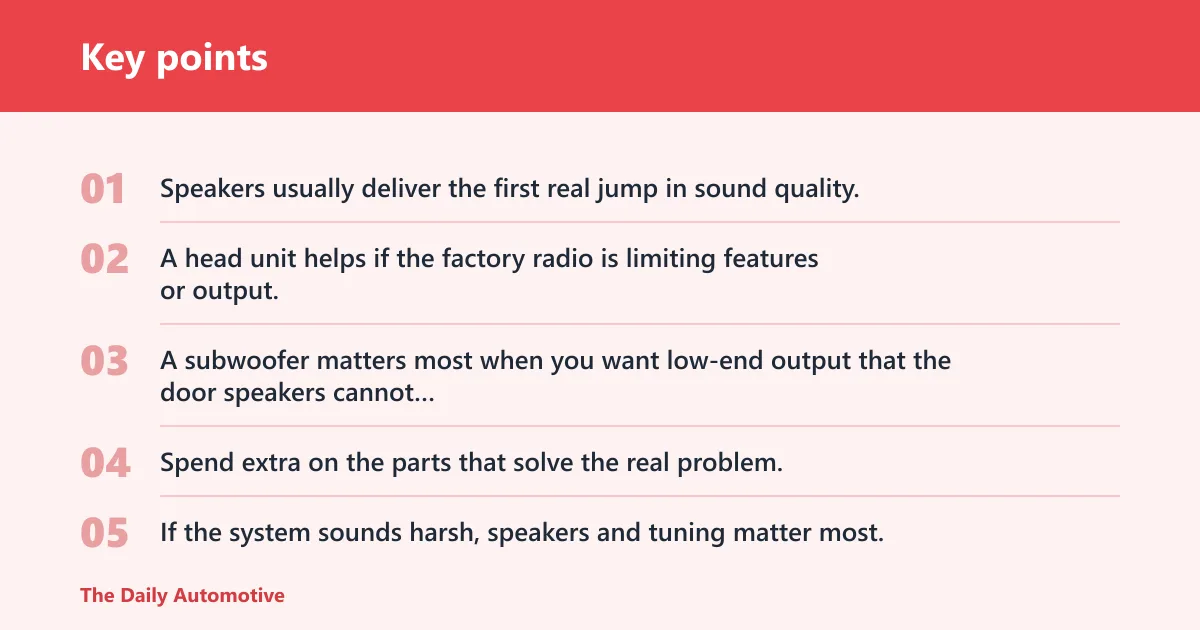
Speakers usually deliver the first real jump in sound quality. A head unit helps if the factory radio is limiting features or output, and a modest amplifier helps speakers play cleaner at higher volume. A subwoofer matters most when you want low-end output that the door speakers cannot produce without distortion.
Spend extra on the parts that solve the real problem. If the system sounds harsh, speakers and tuning matter most. If it sounds thin, a sub and proper bass setup help. If the factory interface is outdated, a touchscreen head unit with CarPlay or Android Auto can be worth the money, but only after you budget for the adapters the car needs.
Where extra spending stops helping much
Sound quality gains flatten when the build already has decent speakers, enough clean power, and a proper enclosure. After that point, more money often goes to larger screens, brand premiums, or cosmetic trim. Bigger speakers and higher watt numbers do not automatically make the system better if the tuning is poor or the enclosure is wrong.
How vehicle size changes the target budget
Compact cars and sedans often need less hardware to sound full, so the best-value target can stay near the lower end of the range. SUVs and trucks usually need more output to fill the cabin. Luxury vehicles can cost more because the radio, climate controls, and factory amplifier integration add labor and adapter costs.
How much do head units cost?
Head unit pricing depends on size, screen features, and whether the car needs extra integration parts. Basic models can start around $50–$150 for the head unit, while advanced touchscreen receivers can reach $300–$500. Touchscreen head units with CarPlay or Android Auto can cost $150–$850+ in parts.
Single-DIN versus double-DIN pricing
Single-DIN units are usually the cheaper route, especially if you only need basic radio, Bluetooth, or USB functions. Double-DIN units cost more because they often include larger screens and more features. The unit price is only part of the bill; the dash opening and trim pieces can matter just as much.
CarPlay, Android Auto, Bluetooth, and navigation cost drivers
CarPlay and Android Auto are common reasons to move past a basic receiver. Bluetooth may be standard on many units, but touchscreen models with smartphone integration, better display quality, and navigation support usually push the price higher. Extra screen size is not the same as better sound.
Installation labor and common adapter costs
Head unit installation is often straightforward in a simple sedan, but labor rises when the car needs a dash kit, antenna adapter, or steering-wheel-control module. Those parts can turn a low-cost radio into a much higher installed total. In vehicles with factory screens or amplified systems, integration hardware can become a major line item.
How much do speakers add?
Speakers can cost $50–$300+ per pair in parts, and that range changes quickly with the speaker type. Coaxial speakers usually cost less and fit more installs, while component speakers cost more because they separate the woofer and tweeter and often need more labor. Installation labor per pair is commonly added on top.
Coaxial versus component speakers
Coaxial speakers are the usual value play. They are simpler to install and often enough for a budget build. Component speakers usually cost more, but they can image better and give you more placement options. If the factory sound is dull, coaxials can be the best deal. If the cabin is noisy and you want more detail, components make more sense.
Per-pair price ranges and labor per pair
Parts for one pair can stay near the low end of the range, but labor rises if the doors need trimming, adapters, or extra sound deadening. On a basic build, the labor may be modest. On a luxury car or a truck with deep door panels, the time goes up fast because access is harder and the factory hardware is more involved.
When speaker upgrades need better amplification
Some speakers sound fine on the factory radio. Others need more clean power to avoid distortion. A mismatched setup can sound worse than stock if the amp is underpowered or the gains are set badly. Suppose you install new component speakers in a midsize sedan but keep the weak factory output; the result can be louder treble with little real control in the lower midrange.
Amplifier pricing and power needs
Amplifiers usually start around $100–$250 for entry-level units, and price rises with channel count and output. Mono amps are common for subwoofers, while multi-channel amps power front and rear speakers or a full system. More watts and more channels usually mean more cost, plus more wiring and setup time.
Mono versus multi-channel amps
A mono amp is built for bass duty. It is the common choice for a subwoofer and usually costs less than a full multi-channel unit with similar overall build quality. A 4-channel amp is often the value choice for front and rear speakers. More channels are useful only if the system needs them.
How watts and channel count affect price
Higher output usually costs more because the amp needs more parts and better thermal handling. The right choice is not the biggest number on the box. It is the amp that matches the speakers and the sub without forcing the installer to compensate with awkward tuning or extra accessories.
Labor, tuning, and wiring cost
Amplifier installs add wiring, fuse protection, and tuning time. A full system with amplifiers and subwoofers typically runs 3–6 hours of labor. Most shops charge $50–$150 per hour for car audio installation, so labor alone can change the build by several hundred dollars. Poor tuning is a common failure case: a strong amp can still sound harsh or muddy if gains, crossover points, or bass boost are wrong.
Subwoofer cost and enclosure choice
Subwoofers usually range from $150–$500 depending on size and performance, and the enclosure matters as much as the driver. An 8-inch sub is usually cheaper and easier to fit. A 15-inch sub can move more air, but only if the box and power are right. Sealed and ported enclosures each change cost and sound.
8-inch to 15-inch size differences
Smaller subs can be enough for clean, controlled bass in a sedan or compact car. Larger subs suit drivers who want more output, especially in SUVs and trucks. Bigger is not automatically better. If the enclosure and amp do not match the driver, the bass can sound slow, boomy, or weak.
Sealed versus ported enclosure costs
Sealed boxes usually cost less and are easier to integrate. Ported boxes tend to be larger and can cost more to build and fit, but they can produce more output when designed correctly. A mismatched box is a common failure case: even a good sub can sound distorted if the enclosure does not suit the driver or cabin.
Hidden wiring and accessory costs
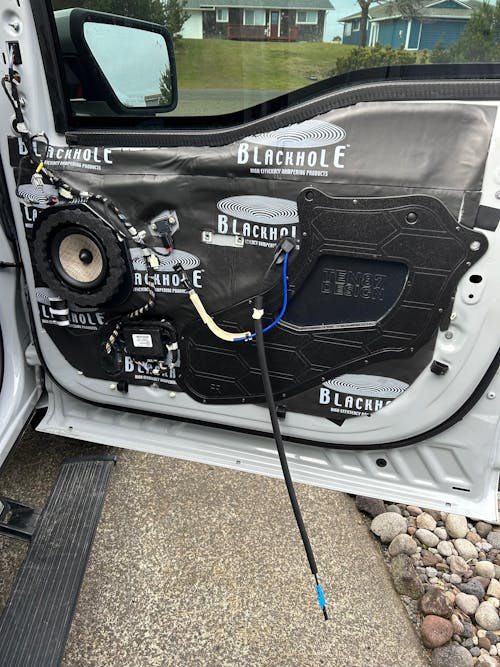
Wiring and accessories can add more to the bill than buyers expect. Harnesses, dash kits, antenna adapters, steering-wheel-control modules, and OEM integration parts are common hidden costs. Sound deadening is another add-on that can improve door output and reduce rattles, especially when a stronger speaker or sub goes in.
These parts matter because they keep the system functional. A head unit swap in an older car may need a simple harness and dash kit. A luxury vehicle may need a more expensive integration module to retain factory functions. Skipping these parts can cause warning lights, lost controls, or poor sound quality.
Why vehicle type changes the bill
Vehicle type changes labor, adapter needs, and the amount of sound output you actually need. Sedans and compact cars usually have the easiest installs and the lowest total cost. SUVs and trucks often need more output and more labor. Luxury vehicles and older or classic cars can add time because of factory electronics, custom dash shapes, or aging wiring.
Sedans and compact cars
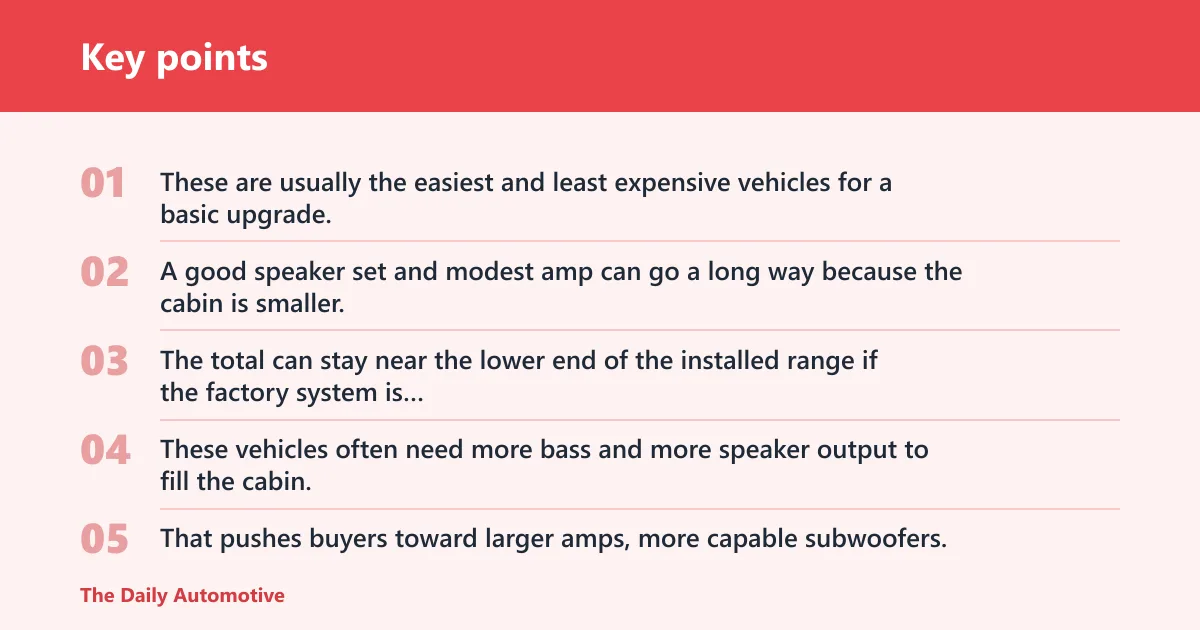
These are usually the easiest and least expensive vehicles for a basic upgrade. A good speaker set and modest amp can go a long way because the cabin is smaller. The total can stay near the lower end of the installed range if the factory system is simple.
SUVs and trucks
These vehicles often need more bass and more speaker output to fill the cabin. That pushes buyers toward larger amps, more capable subwoofers, and sometimes more deadening. Labor can rise because access to panels and routing paths is less convenient.
Luxury vehicles and older or classic cars
Luxury vehicles often need expensive interface parts to keep factory features working. Older or classic cars can be simpler electronically, but the dash may need custom fitment and the wiring may need extra attention. In both cases, the parts-only price can look moderate while the installed total climbs quickly.
What installation really costs
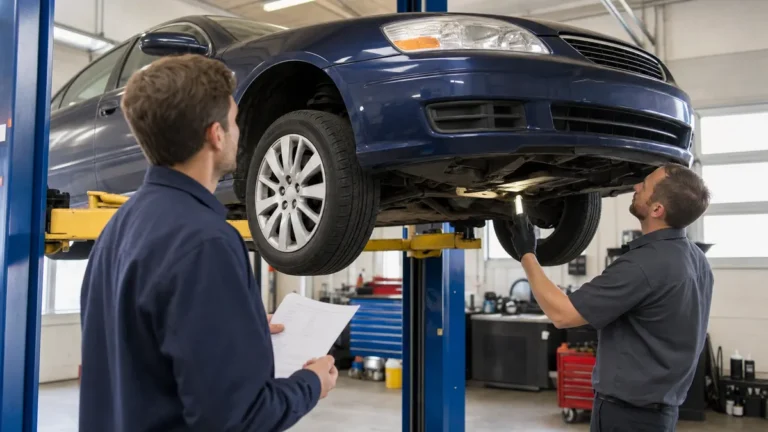
Professional installation costs more, but it reduces wiring mistakes, fitment problems, and tuning errors. Most shops charge $50–$150 per hour for car audio installation. For many buyers, that cost is worth it when the build includes a head unit, new speakers, an amp, a sub, or factory integration parts.
Warranty on workmanship
A shop install usually includes some warranty on the labor, though the length and coverage vary. That matters because a bad ground, a noisy signal, or an incorrect adapter setup can be hard to diagnose later. Shop work also lowers the chance of broken clips, damaged trim, or a system that powers on but does not play correctly.
DIY risk versus paid installation
DIY can save money on a simple speaker swap, especially if the car uses direct-fit parts. The savings shrink when the system needs tuning, amplifier wiring, or dash integration. Pay a shop when the vehicle is expensive to trim apart, when the factory electronics are complex, or when a mistake would cost more than labor.
Picture a truck owner adding a 10-inch sub and a 4-channel amp without planning for the harness, fuse, and signal adapters. The parts may seem affordable at first, but the missing accessories and tuning time can push the total well past the original estimate. Planning the full install first avoids that jump.
Frequently asked questions
How much does a good sound system cost in a car?
A good car sound system usually costs $300 to $1,500 installed. The most useful range for value is often $600 to $900, where speakers, a modest amp, and proper installation deliver a clear improvement without paying for parts the car does not need. Bigger spend usually buys more output, not a proportional jump in sound quality.
What is the cheapest way to upgrade car audio?
The cheapest worthwhile upgrade is usually better speakers, plus the adapters needed to fit them correctly. A basic car stereo system with an entry-level receiver and speakers can start around $150–$300, but the better deal is often to keep the factory radio and spend on speakers first if the dash unit still works well.
How much does car stereo installation cost?
Most shops charge $50–$150 per hour for car audio installation. A full system with amplifiers and subwoofers typically runs 3–6 hours of labor, so installation can add several hundred dollars to the bill. More components mean more wiring, more tuning, and more time.
Is it cheaper to build a car sound system yourself or pay a shop?
DIY is cheaper on paper, but only if the install is simple and you already have the right tools and confidence. Pay a shop when the car needs a dash kit, OEM integration module, steering-wheel-control adapter, or careful tuning. Those are the jobs where mistakes become expensive fast.
How much do speakers, amplifiers, and subwoofers add to the total?
Add labor, wiring, and any integration parts, and those three pieces can quickly turn a modest build into a midrange one.
What does a full car sound system cost installed?
A full system can cost $300 to $1,500+ total, including labor, depending on how many components are replaced and how complex the vehicle is.
Which car audio components matter most for budget vs premium builds?
For budget builds, speakers and correct installation matter most. For premium builds, the head unit, amplifier, subwoofer, and integration parts matter more, but only after the speaker stage is right. Extra money stops paying off once the system is clean, balanced, and properly tuned; after that, brand and screen size take a bigger share of the budget.
How much should I budget for a touchscreen head unit with CarPlay or Android Auto?
Touchscreen head units with CarPlay or Android Auto can cost $150–$850+ in parts. The installed price depends on whether the car needs a dash kit, antenna adapter, steering-wheel-control module, or OEM integration piece. In a simple sedan, the total may stay moderate. In a luxury vehicle, it can rise quickly.
Products related to this article
Sponsored / affiliate links. As an Amazon Associate I earn from qualifying purchases. I may earn additional commission from eligible campaigns.