Where Should a Car Temperature Gauge Be?
Some car questions pop up, and “Where Should a Car Temperature Gauge Be?” is one of those. It’s pretty common for folks learning about their car to wonder about this. It might seem a little confusing at first, but don’t worry!
We’ll make it super simple and walk through it step by step. After we figure out exactly where that gauge lives, we’ll look at why it’s so important for your car.
Understanding Your Car Temperature Gauge Location
The car temperature gauge is a small but mighty part of your vehicle’s dashboard. Its main job is to tell you how hot or cold your engine is running. Keeping your engine in the right temperature zone is super important for it to work well and last a long time.
If it gets too hot or too cold, that’s a problem. Knowing where this gauge is and what it means helps you take care of your car.
Why the Location Matters
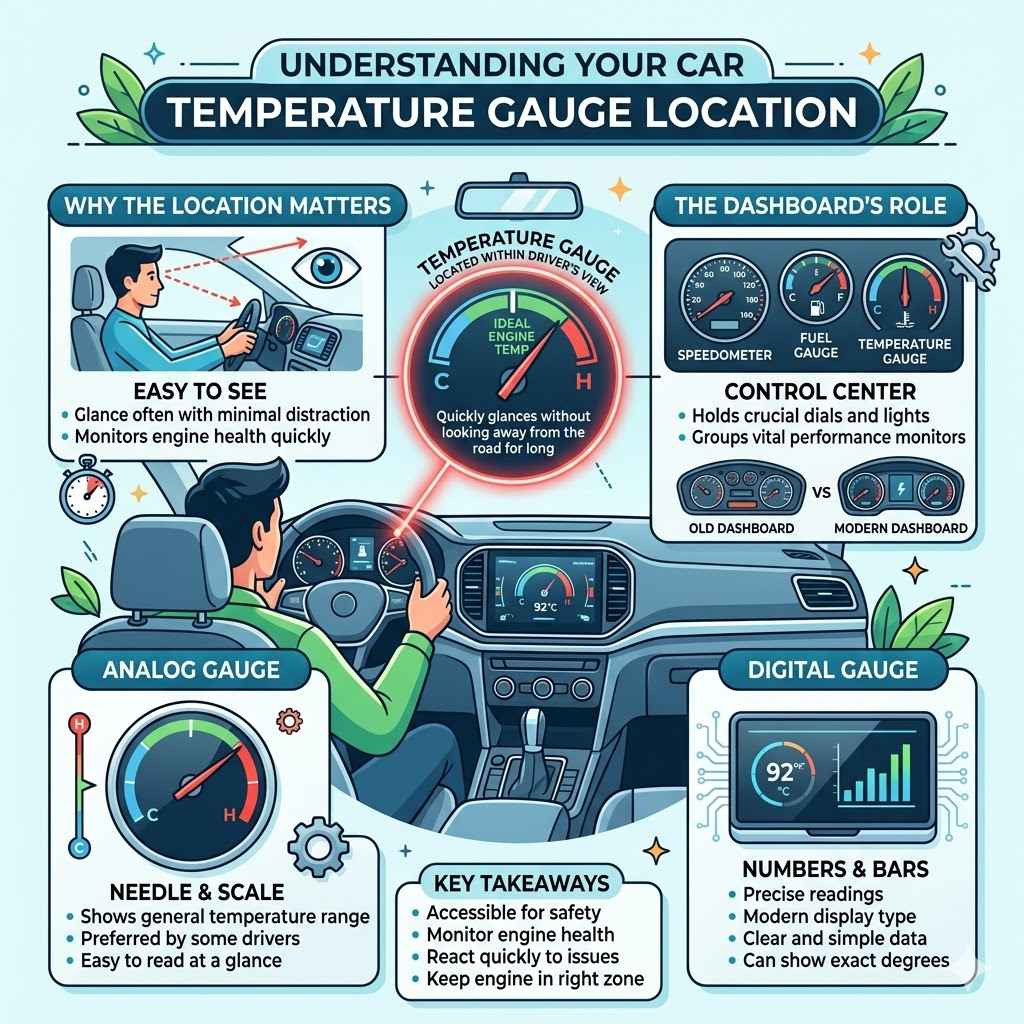
You might be thinking, “Does it really matter where this gauge is?” Yes, it does! A car temperature gauge needs to be in a spot where the driver can easily see it. This is usually right on the dashboard, in plain view of the driver’s seat.
The goal is for you to glance at it often without having to look away from the road for too long.
Modern cars often have this information shown digitally on a screen. Older cars might have a needle that moves along a scale. No matter how it looks, its purpose is the same to give you a quick heads-up about your engine’s health.
This easy access means you can react quickly if something looks wrong.
The Dashboard’s Role
The dashboard is the control center of your car. It holds all the important dials and lights that tell you what your car is doing. Think of it like the cockpit of an airplane.
Everything you need to know about your vehicle’s performance is right there.
The temperature gauge is usually placed among other important gauges like the speedometer (how fast you’re going) and the fuel gauge (how much gas you have). This grouping makes it convenient to monitor several vital signs of your car at once. The design of dashboards has changed a lot over the years, but the need for clear, accessible information remains the same.
Digital vs. Analog Gauges
Cars today often use digital displays for the temperature gauge. This means you’ll see a number or a bar that changes. Older cars typically use analog gauges with a needle that points to different temperature levels.
Both types are designed to be read at a glance.
Digital gauges can sometimes show more precise temperature readings, like an exact degree. Analog gauges use markings and a needle to show a general range. Some drivers prefer the look and feel of an analog gauge, while others like the clear numbers of a digital display.
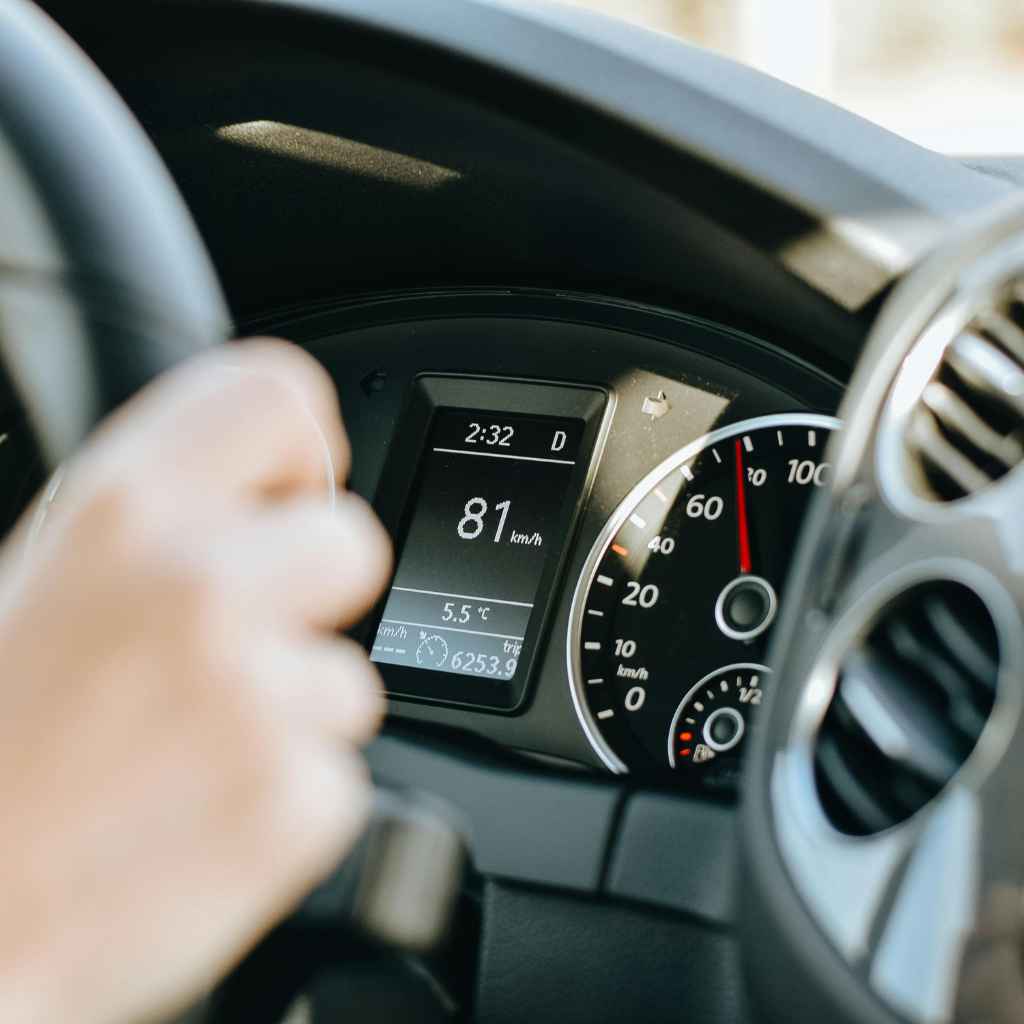
Regardless of the display type, the key is that it’s positioned where you can see it easily. This often means being in the main cluster of instruments right behind the steering wheel. Car makers put a lot of thought into making sure these important readings are accessible.
Signs Your Car Is Too Hot or Too Cold
Your car’s temperature gauge is your early warning system. If the needle starts creeping up towards the red zone, it’s a sign your engine is getting too hot. This is called overheating.
Overheating can cause serious damage to your engine if you don’t stop and let it cool down.
On the flip side, if the gauge stays too low for too long, it might mean your engine isn’t warming up properly. This can affect how efficiently your engine runs and could even lead to other problems. The “normal” range is usually in the middle of the gauge.
Overheating Warning Signs
When your engine overheats, you might see steam coming from under the hood. You could also smell a sweet, burning odor. The temperature gauge itself will be the clearest indicator, showing a high reading.
Some cars will also have a warning light that turns on.
If you see these signs, it’s important to pull over safely as soon as you can. Turn off the engine and let it cool down completely. Do not open the radiator cap while the engine is hot, as this can cause serious burns from pressurized steam and coolant.
The Danger of Engine Damage
A hot engine can suffer major damage. Parts can warp or melt, and the engine could stop working altogether. This can lead to very expensive repairs.
That’s why paying attention to the temperature gauge is so critical. It’s your first line of defense against this kind of harm.
Think of your engine like a person. If you get too hot, you can get sick. An engine needs to stay within its ideal temperature range to function best and avoid breaking down.
The temperature gauge is like a thermometer for your car’s engine.
Cold Engine Indicators
An engine that is too cold might take a long time to reach its normal operating temperature. You might notice your heater isn’t blowing very warm air. In very cold weather, a gauge that stays at the very bottom could indicate a problem with the thermostat, which controls coolant flow.
Driving an engine that is too cold for an extended period can also cause problems. It can lead to increased wear on engine parts and make your car use more fuel. It’s also not good for the environment to be burning fuel inefficiently.
The engine needs to be at its working temperature to burn fuel cleanly and effectively.
Thermostat Functionality
The thermostat is a small valve that controls the flow of coolant in your engine. When the engine is cold, the thermostat stays closed, allowing the engine to warm up quickly. Once the engine reaches its proper temperature, the thermostat opens, letting coolant flow through the radiator to cool it down.
If the thermostat is stuck open, the engine will take too long to warm up. If it’s stuck closed, the engine will overheat.
The temperature gauge is the visual cue that helps you know if the thermostat is doing its job. If the gauge is consistently showing a low reading even after driving for a while, the thermostat might be the issue. A mechanic can easily test and replace a faulty thermostat.
Common Places for the Temperature Gauge
The car temperature gauge’s home is almost always on the dashboard. This is the panel directly in front of the driver, behind the steering wheel. Car designers put all the vital instruments here because they are the easiest for the driver to see without taking their eyes off the road.
Most cars have a cluster of gauges. This cluster usually includes the speedometer, tachometer (engine speed), fuel gauge, and the temperature gauge. Sometimes there’s also an oil pressure gauge or battery voltage meter.
The Instrument Cluster
The instrument cluster is the collection of gauges and warning lights. It’s typically located in a recess directly in front of the driver. This placement ensures that the driver has immediate access to all critical vehicle information.
The temperature gauge is usually positioned either on the far left or far right of the cluster, or sometimes in the center. Its exact placement can vary between car makes and models, but it’s always part of this main group of indicators. This common location makes it familiar across many different vehicles.
Digital Displays in Modern Cars
In newer cars, the instrument cluster might be a large digital screen. This screen can show a variety of information, and the temperature gauge might be a part of that. It could appear as a digital number or a color-changing bar graph.
Even with digital screens, the temperature information is usually displayed prominently. The car’s computer manages this display, pulling data from sensors. The goal is still to make it easy for you to see your engine’s temperature at a quick glance.
Where to Look in Your Car
To find the temperature gauge in your specific car, look at the dashboard directly in front of you. It will likely be in the group of dials or on a digital display screen. If you’re unsure, your car’s owner’s manual will show you exactly where it is and what it looks like.
The owner’s manual is a great resource for understanding all the controls and indicators in your car. It will often have diagrams that label each part of the dashboard, including the temperature gauge. Taking a moment to look this up can save you a lot of worry.
Owner’s Manual Guidance
Your owner’s manual is designed to answer many of your questions about your car. It will explain the function of each gauge and light. If you’ve lost your manual, you can usually find a digital version on the car manufacturer’s website.
Reading the manual helps you become more familiar with your vehicle. It can help you understand what normal readings look like for your car’s temperature gauge and what might indicate a problem. This knowledge empowers you to keep your car in good shape.
The Importance of Monitoring Engine Temperature
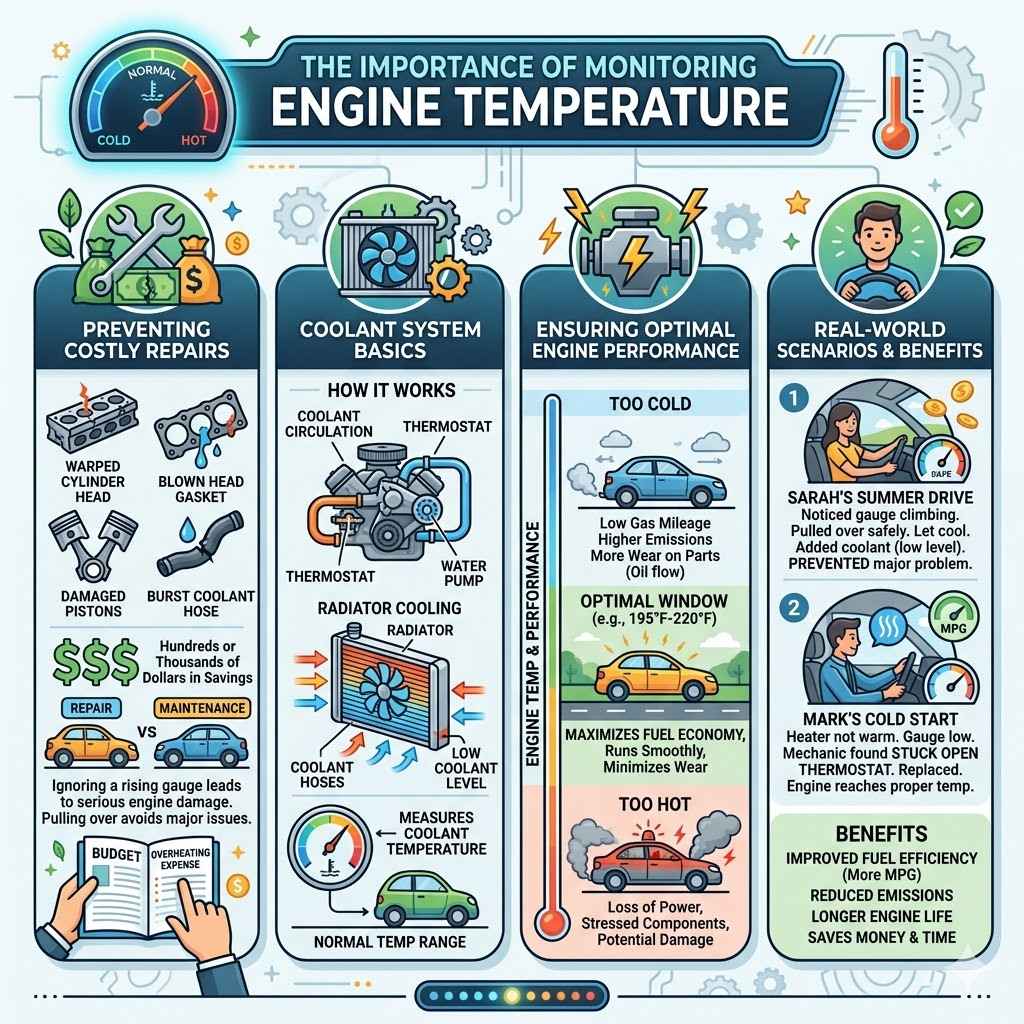
Keeping an eye on your car’s temperature gauge is one of the simplest yet most effective ways to maintain your engine’s health. It’s like a doctor checking your pulse or blood pressure. It gives you a quick snapshot of how your engine is doing.
A healthy engine runs within a specific temperature range. When it gets too hot, vital components can be damaged. If it’s too cold, it won’t run efficiently.
Your temperature gauge is your signal to address any issues before they become big problems.
Preventing Costly Repairs
Ignoring a rising temperature gauge can lead to serious and expensive engine damage. Components like the cylinder head, pistons, and coolant hoses can be compromised by excessive heat. Replacing these parts can cost hundreds or even thousands of dollars.
A common example is a blown head gasket. This often happens when an engine overheats repeatedly. The heat can warp the metal, causing the gasket to fail.
This leads to coolant leaking into the combustion chambers or oil mixing with the coolant, causing major internal engine issues.
By simply watching your temperature gauge and pulling over when it gets too high, you can often prevent this damage. It’s a small action that can save you a lot of money and hassle down the road.
Coolant System Basics
Your car’s cooling system is what keeps the engine at the right temperature. It circulates a mixture of coolant and water through the engine block, absorbing heat. This hot coolant then flows to the radiator, where air passing through cools it down before it circulates back into the engine.
The temperature gauge measures the temperature of this coolant.
Key parts of the cooling system include the radiator, water pump, thermostat, and coolant hoses. If any of these parts fail, the engine can overheat. Low coolant levels are also a frequent cause of overheating.
Ensuring Optimal Engine Performance
Engines are designed to perform best at a specific operating temperature. When the engine is too cold, fuel doesn’t burn as efficiently, leading to lower gas mileage and increased emissions. It can also cause more wear on engine parts because oil doesn’t circulate as effectively.
Conversely, an engine that is too hot will also struggle to perform optimally. Overheating can lead to a loss of power and can stress engine components. Maintaining the correct temperature ensures that your engine runs smoothly, efficiently, and powerfully.
For instance, a modern gasoline engine typically operates best between 195°F and 220°F (90°C to 104°C). The temperature gauge’s “normal” range usually reflects this optimal operating window. Staying within this range maximizes fuel economy and minimizes wear.
Real-World Scenario Example
Imagine Sarah driving her car on a hot summer day. She notices her temperature gauge slowly climbing past the halfway mark. Instead of ignoring it, she remembers her car owner’s manual talking about this.
She decides to pull over at the next safe spot and turn off the engine. After about 20 minutes, the gauge returns to normal. When she gets home, she checks her coolant level and finds it a bit low.
She adds more coolant. By noticing the temperature gauge, she likely prevented a major engine problem that could have cost her thousands of dollars.
Another scenario involves Mark, who noticed his car’s heater wasn’t blowing very warm air, even after driving for 30 minutes. His temperature gauge was also sitting lower than usual. He took his car to a mechanic, who discovered the thermostat was stuck open.
Replacing the thermostat fixed the heater issue and ensured his engine could reach its proper operating temperature, improving fuel efficiency and reducing wear.
Fuel Efficiency and Emissions
When your engine is running at its optimal temperature, it burns fuel more efficiently. This means you get more miles per gallon. It also means your car produces fewer harmful emissions, which is better for the environment.
An engine that is too cold or too hot is essentially wasting fuel and polluting more.
Studies have shown that driving with an engine that is not at its optimal temperature can reduce fuel efficiency by as much as 10-15%. This might not seem like a lot, but over a year, it adds up to more money spent on gas and more pollution released into the air. The simple act of monitoring your temperature gauge contributes to both savings and environmental responsibility.
Frequently Asked Questions
Question: Where is the car temperature gauge usually located?
Answer: The car temperature gauge is almost always located on the dashboard, within the instrument cluster directly in front of the driver. It’s usually grouped with other vital gauges like the speedometer and fuel gauge.
Question: What does it mean if my car’s temperature gauge is in the red?
Answer: If your car’s temperature gauge is in the red zone, it means your engine is overheating. You should pull over safely, turn off the engine, and let it cool down. Driving an overheating engine can cause severe damage.
Question: Can I drive my car if the temperature gauge is too low?
Answer: Driving with an engine that is too cold for an extended period can lead to reduced fuel efficiency and increased engine wear. It’s best to let your engine warm up to its normal operating temperature before driving long distances.
Question: What are the main parts of a car’s cooling system?
Answer: The main parts include the radiator, water pump, thermostat, and coolant hoses. These parts work together to circulate coolant and keep the engine at the correct temperature.
Question: How often should I check my car’s coolant level?
Answer: It’s a good practice to check your coolant level monthly, or before long trips, especially if you’ve noticed your temperature gauge running high. Always check when the engine is cool.
Summary
Your car temperature gauge is a vital indicator of engine health. It’s always found on the dashboard for easy viewing. Watching this gauge helps prevent overheating and ensures your engine runs efficiently.
Paying attention to it can save you money on repairs and keep your car running smoothly for longer.