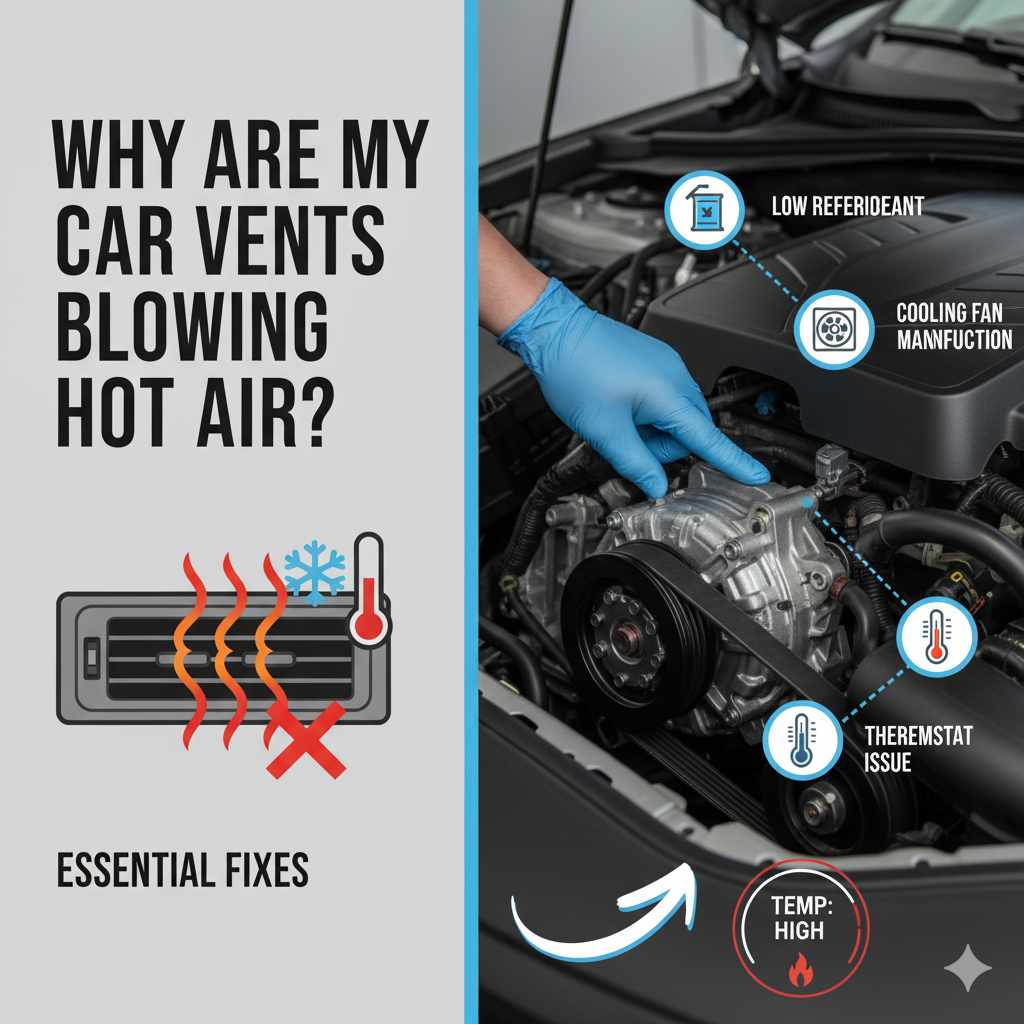
Why Are My Car Vents Blowing Hot Air: Essential Fixes
If your car vents are blowing hot air, it usually signals a problem with your car’s cooling system, such as low coolant, a faulty thermostat, a clogged radiator, or issues with the blend door actuator. These are often fixable with basic maintenance.
Car trouble can be stressful, and when your car vents start blowing hot air instead of the cool, refreshing blast you expect, it’s definitely a sign something needs attention. This can happen even in cooler weather if you’re trying to use your AC, or it can be a sign of your heater malfunctioning. Don’t worry, though! Understanding why this happens and what you can do about it is the first step to getting your car comfortable again. We’ll walk you through the common culprits and simple solutions, so you can get back to enjoying your drive.
Understanding Your Car’s Climate Control System
Before we dive into the fixes, let’s quickly understand how your car’s climate control system works. It’s a two-part system:
The Heater: This part uses hot coolant from your engine to warm the air. This hot coolant circulates through a small radiator-like component called the heater core, located behind your dashboard. When you turn on your heat, a fan blows air through the warm heater core, and that heated air then comes out of your vents.
The Air Conditioner (AC): This system uses refrigerant to cool the air. It’s a separate process involving a compressor, condenser, and evaporator. When you select AC, the system chills the air before it’s blown through your vents.
The magic happens when a “blend door” inside your dashboard directs the air either through the heater core, the AC evaporator, or bypasses both to bring in outside air. Usually, a single system controls this blend door, allowing you to choose between hot, cold, or a mix.
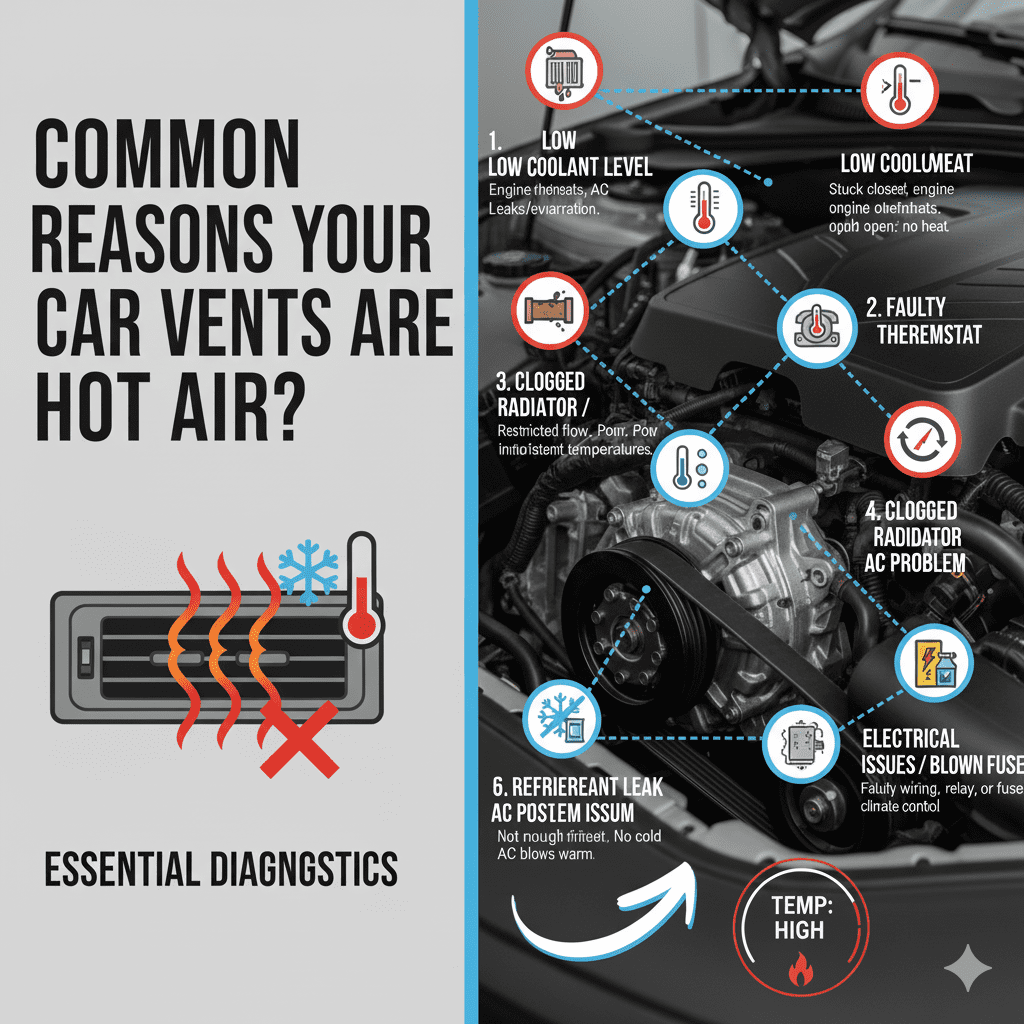
Common Reasons Your Car Vents Are Blowing Hot Air
When your vents are stubbornly blowing hot, it suggests a hitch in either the heating or cooling side, or the system that directs the air. Here are the most frequent reasons:
1. Low Coolant Level (Overheating & AC Issues)
This is a leading cause, especially if your car is also overheating. The engine coolant does double duty: it keeps your engine cool and also provides the heat for your cabin. If there isn’t enough coolant, the engine can overheat, and the heater core won’t get enough hot fluid to warm the incoming air. On the flip side, an engine that’s too hot can cause your AC system to shut down as a protective measure, leading to hot air from the vents.
Symptoms: Engine temperature gauge climbs high, dashboard warning lights for overheating or low coolant, steam from under the hood.
Why it happens: Leaks in the cooling system (hoses, radiator, water pump), evaporation over time, or a blown head gasket can all lead to low coolant.
2. Faulty Thermostat
The thermostat is like a gatekeeper for your engine’s coolant. It stays closed when the engine is cold to help it warm up quickly. Once the engine reaches its optimal operating temperature, the thermostat opens, allowing coolant to flow to the radiator to be cooled. If the thermostat gets stuck closed, coolant can’t circulate properly. This can cause the engine to overheat. When the engine is too hot or not reaching the correct temperature because of a stuck-open thermostat, it impacts both the engine’s health and your cabin’s heating ability.
Symptoms: Engine takes too long to warm up, temperature gauge stays low, or the engine overheats quickly. Your heater might blow cold air if stuck open, or hot air (if the engine is overheating due to being stuck closed).
3. Clogged Radiator or Heater Core
Over time, rust, dirt, and mineral deposits can build up inside your radiator and heater core, especially if you haven’t used the correct coolant or flushed the system regularly. These blockages restrict the flow of coolant.
A clogged radiator prevents the engine from cooling effectively, potentially leading to overheating and, as mentioned, AC shutdown.
A clogged heater core acts like a dam, preventing hot coolant from reaching the fins that warm the air. This means no matter how hot your engine is, hot air won’t be able to pass through as effectively, or at all.
4. Air in the Cooling System
Air pockets in the cooling system are like tiny invisible roadblocks for coolant. They prevent the fluid from flowing smoothly and efficiently to both the engine and the heater core. If there’s air, there’s less coolant doing its job. This can lead to inconsistent temperatures, both for your engine and your cabin.
How it happens: Usually after a coolant flush or refill if the system isn’t properly “bled” or purged of air.
5. Issues with the Blend Door Actuator
This is a very common cause specifically for only hot air blowing when you want cool, or vice-versa. The blend door is a small flap controlled by an electric motor (an actuator) inside your dashboard. Its job is to direct air through the heater core (hot air), the AC evaporator (cold air), or a mix. If the blend door actuator motor fails, or the blend door itself gets stuck in the “heat” position, it will continuously direct air through the heater core, regardless of your climate control settings.
Symptoms: You can’t get cold air from the AC, you can only get hot or warm air, or the temperature adjusts erratically. Sometimes you might hear clicking or popping noises from behind the dashboard when you change temperature settings.
6. Refrigerant Leaks or Other AC System Problems
If the problem is specifically when you turn on your AC, and you’re getting hot air even though the engine temperature is normal, it’s likely an AC system issue. This could be a refrigerant leak (meaning there’s not enough refrigerant to cool the air), a faulty AC compressor, a bad condenser fan, or other component failures.
Why it causes hot air: The AC system needs sufficient refrigerant to create cold air. If that refrigerant is gone or the system can’t pressurize it, the air blown through the vents will only be ambient temperature or slightly warmed by the engine bay.
7. Electrical Issues or Blown Fuses
Modern cars have complex electrical systems managing the climate control. A blown fuse, a faulty relay, or a wiring problem affecting the blend door actuator, AC compressor clutch, or blower motor could easily lead to your system only producing hot air.
Check your owner’s manual: It will show you where your fuse boxes are and which fuses control specific climate functions.
DIY Steps to Diagnose and Fix: A Beginner’s Guide
Let’s get hands-on! Here are some steps you can take to figure out what’s going on and, in some cases, fix it yourself. Remember to always prioritize safety.
Safety First!
Engine Off and Cool: Never work on a hot engine. Let your car cool down completely before opening the hood or touching components.
Parking Brake: Ensure your parking brake is engaged and the car is in park (or in gear for manual transmissions).
Eye Protection and Gloves: Wear safety glasses and gloves, especially when dealing with any fluids.
Consult Your Owner’s Manual: This is your car’s best friend. It has specific information about your vehicle’s components, locations, and maintenance schedules.
Step 1: Check Your Coolant Level
This is the simplest and most crucial first step.
Locate the Coolant Reservoir: It’s usually a translucent plastic tank near the radiator, often with “Min” and “Max” lines marked.
Check the Level (When Cool): The coolant level should be between the MIN and MAX lines. If it’s low, you likely have a leak somewhere.
Add Coolant (If Needed): If low, add a 50/50 mixture of antifreeze and distilled water. Never use plain tap water. Refer to your owner’s manual for the correct type of coolant for your vehicle. You can find this at any auto parts store. This U.S. Department of Energy page offers general vehicle maintenance tips that include checking fluids.
Step 2: Inspect Hoses and Belts
While you’re under the hood, give the cooling system hoses and visible belts a quick once-over.
Hoses: Look for cracks, bulges, or soft spots. Squeeze them gently (when cool!) – they should feel firm, not mushy or brittle.
Belts: Check for any signs of fraying, cracks, or excessive wear. A loose or broken belt could affect components like the water pump, which circulates coolant.
Step 3: Check Your Radiator Cap
Make sure the radiator cap is secure and in good condition. A loose or damaged cap can cause coolant to leak out under pressure, leading to low levels.
Inspect the Seal: Ensure the rubber gasket on the cap is intact and not cracked or perished.
Step 4: Listen for the Cooling Fan
When your engine is running and reaching operating temperature, the electric cooling fan(s) should kick in. Their job is to pull air through the radiator to help cool the coolant.
How to check: Let your car idle for a while with the engine running. You should eventually hear the fan(s) turn on. If they don’t, it could indicate a fuse, relay, or fan motor problem.
Step 5: Test the Thermostat (Indirectly)
You can get a hint about your thermostat’s condition through the temperature gauge and hoses.
Upper Radiator Hose: After the engine has warmed up, carefully touch the upper radiator hose. It should be hot, indicating coolant is circulating. If it’s cool or lukewarm while the gauge shows overheating, the thermostat may be stuck closed.
Temperature Gauge: Keep an eye on your car’s temperature gauge while driving. If it consistently stays very low, even after a long drive, the thermostat might be stuck open.
Step 6: Check for Blend Door Actuator Issues
This is harder to diagnose yourself without tools, but you can sometimes tell.
Listen for Sounds: When you change temperature settings on your dash, listen for any small clicking, whirring, or popping sounds coming from behind the dashboard. These might be the actuator trying to move the blend door.
Observe Temperature Changes: Do the vents respond at all to temperature adjustments? If you turn it to cold and get nothing but heat, it’s a strong sign pointing to the blend door.
Diagnosing blend door issues often requires accessing components behind the dashboard. While some actuators are easier to reach than others, this step might lean towards professional help for beginners.
Step 7: Examine Your AC System (If AC is the Culprit)
If you suspect your AC is the issue (i.e., engine temp is fine, but AC blows hot), here’s what a beginner can check.
Look at the AC Compressor Clutch: With the engine running and AC turned on, locate the AC compressor (it’s usually belt-driven). The clutch on the front should engage (meaning a pulley in the center will start spinning with the rest of the pulley). If it doesn’t, the compressor isn’t running, which could be due to low refrigerant, electrical issues, or a faulty compressor.
Check for Obvious Leaks or Damage: Inspect AC lines for any signs of oily residue, which can indicate a refrigerant leak.
When to Call a Professional
While many car issues can be tackled with a bit of DIY spirit, some require specialized knowledge, tools, and safety precautions. It’s wise to seek professional help if:
You suspect a major cooling system leak (e.g., steam from under the hood, rapid coolant loss).
Your engine is severely overheating.
You’re uncomfortable performing any of the diagnostic steps.
You’ve identified a potential blend door or complex electrical issue.
* You need AC system refrigerant services (handling refrigerant requires certification and special equipment).
A qualified mechanic can accurately diagnose the problem and perform the necessary repairs safely and effectively.
Common Fixes and Their Costs (Estimate)
Here’s a look at some typical fixes for these issues. Costs can vary widely based on your location, the specific vehicle, and whether you use a dealer or independent shop. For DIY, you’re only paying for parts!
| Problem | DIY Fix/Part Cost (Approx.) | Professional Repair Cost (Approx.) | Notes |
|---|---|---|---|
| Low Coolant | $20 – $50 (Coolant, distilled water) | $75 – $200 (If leak is minor and easily found/fixed) | Includes topping up or simple hose replacement. Major leaks (radiator, water pump) cost more. |
| Faulty Thermostat | $20 – $50 (Thermostat, gasket) | $150 – $300 (Includes labor) | Thermostat part is inexpensive, but labor can add up due to access. |
| Clogged Heater Core | $10 – $30 (Flush kit, if DIY flush is attempted) | $300 – $800+ | Heater core replacement is labor-intensive as it’s behind the dash. A flush might help but isn’t always effective. |
| Air in Cooling System | Free (if you know how to bleed it) | $50 – $150 | Proper bleeding is key after any coolant work. Usually a quick service. |
| Blend Door Actuator | $30 – $100 (Actuator part) | $250 – $700+ | Part is relatively cheap, but labor to access and replace it behind the dash is high. |
| Refrigerant Leak (AC) | $50 – $150 (Stop leak additive – use with caution!) | $300 – $1000+ | Requires professional diagnosis, leak repair, and refrigerant recharge. DIY AC recharge kits exist but aren’t for everyone and won’t fix underlying leaks. |

Frequently Asked Questions (FAQ)
Q1: Can I drive my car if the vents are blowing hot air?
A: It depends on the cause. If your engine is overheating, it’s best not to drive it, as this can cause severe damage. If the issue is solely with the AC blowing hot air and your engine temperature is normal, you can usually drive cautiously, but it’s best to get it fixed soon to avoid further issues with the climate control system.
Q2: How often should I check my car’s coolant?
A: It’s a good idea to check your coolant level at least once a month, and always before a long road trip. Also, check it whenever you notice the temperature gauge is higher than normal or if you see any warning lights related to the cooling system.
Q3: My AC is blowing hot, but my heater works fine. What could it be?
A: This strongly suggests an issue with the air conditioning system itself, rather than the engine’s cooling system. Common causes include a refrigerant leak, a faulty AC compressor, a malfunctioning condenser fan, or an electrical problem with the AC clutch. The blend door could also be stuck in the heat position, directing all air through the heater core.
Q4: I can hear clicking from my dashboard when I change the temperature. What is that?
A: Those clicking sounds are often the blend door actuator motor trying to move the blend door. If you hear consistent clicking and cannot change the temperature, it’s very likely the blend door actuator is faulty or the door it controls is stuck or broken.
Q5: What kind of coolant should I use?
A: Always use the type of coolant recommended in your car’s owner’s manual. Coolants come in different colors and formulations (e.g., P-HOAT, OAT, Si-OAT), and using the wrong type can cause corrosion and damage to your cooling system. A 50/50 mix of the correct antifreeze and distilled water is standard.
Q6: Is it safe to add stop-leak additives to my cooling system?
A: Stop-leak additives can sometimes offer a temporary fix for small leaks, but they are not a permanent solution and can sometimes clog delicate parts of the cooling system, including the heater core or thermostat. It’s generally better to find and repair the source of the leak.
Q7: If my heater blows hot, does that mean my AC is fine?
A: Not necessarily. Your car’s heater uses hot engine coolant, while the AC uses a separate refrigerant system to create cold air. If your heater works, it means hot coolant is flowing to the heater core and the system can direct air through it. However, your AC could still have problems with refrigerant, the compressor, or other components, leading to it blowing hot air even when the heater functions perfectly.