Why Car Fan Stays On After Engine Off
It can be a bit confusing when you turn off your car’s engine and hear the fan still whirring away. This is a common thing that happens, especially to people who are new to driving or car maintenance. You might wonder if something is wrong, but usually, it’s just your car doing its job to keep things cool.
Don’t worry, it’s often nothing serious. We’re going to break down Why Does My Car Fan Stay On After Engine Off? in a simple way. You’ll get a clear, step-by-step look at what’s happening so you can feel confident about it.
Understanding Your Car’s Cooling System
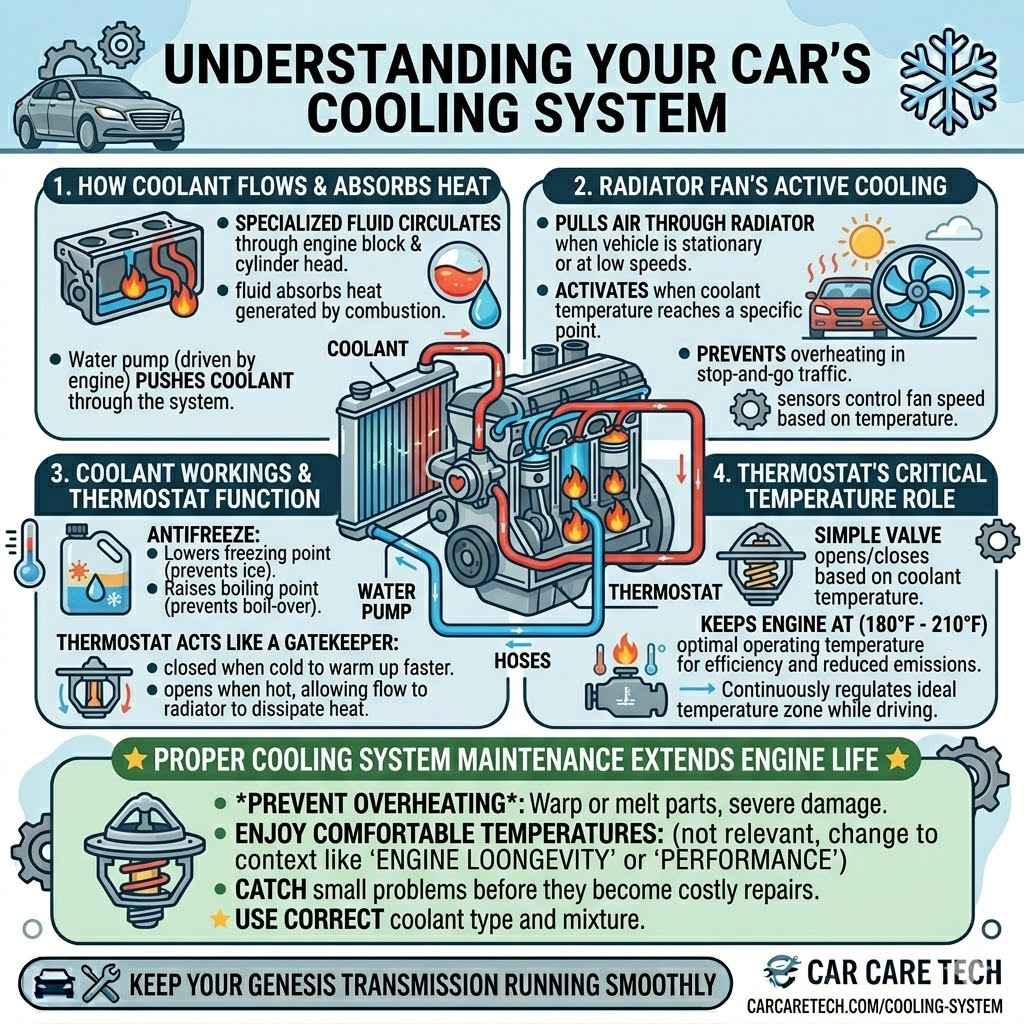
Your car’s cooling system is a vital part of keeping your engine running smoothly. It prevents the engine from overheating, which can cause serious damage. The main job of this system is to manage the engine’s temperature by circulating coolant.
This coolant absorbs the heat generated by the engine during combustion. Once it has absorbed the heat, the coolant flows to the radiator, where it is cooled down. This entire process is crucial for the longevity and performance of your vehicle.
A healthy cooling system ensures your engine operates within its optimal temperature range. If it gets too hot, parts can warp or melt. If it gets too cold, the engine won’t run as efficiently, and fuel economy can suffer.
The system works by a combination of parts, including the coolant, water pump, thermostat, hoses, and the radiator. Each part plays a specific role to maintain the right balance of heat.
The Role of the Radiator Fan
The radiator fan is a key player in the cooling system. Its primary function is to pull air through the radiator when the vehicle is stationary or moving at low speeds. This is when natural airflow from driving isn’t enough to cool the coolant efficiently.
The fan activates when the coolant reaches a certain temperature, ensuring that heat can still be dissipated from the radiator. This prevents the engine from overheating, especially in stop-and-go traffic or on hot days.
Think of the fan as an extra helper. When the car is moving fast, the wind rushing through the radiator does most of the cooling. But when you’re stuck in traffic, there’s not much wind.
That’s when the fan kicks in to provide the necessary airflow. It’s usually electric, controlled by sensors that monitor the coolant temperature. If the temperature gets too high, the sensor tells the fan to spin faster.
This active cooling is essential for preventing engine damage.
Coolant Flow and Thermostat Function
Coolant, often a mix of antifreeze and water, circulates through the engine. This fluid absorbs heat from the engine block and cylinder head. A water pump, driven by the engine, pushes the coolant through the system.
The thermostat acts like a gatekeeper. When the engine is cold, the thermostat stays closed, blocking coolant flow to the radiator. This helps the engine warm up faster to its efficient operating temperature.
Once the coolant reaches a specific temperature, the thermostat opens. It then allows the hot coolant to flow to the radiator. Here, the coolant passes through thin metal fins.
Air moving over these fins, either from the car’s motion or the radiator fan, cools the fluid down. The cooled coolant then returns to the engine to repeat the cycle. This continuous circulation is what keeps your engine from overheating during operation.
How Coolant Works
Coolant is more than just water. It’s a specialized fluid designed to handle extreme temperatures and prevent corrosion. Antifreeze, a common component, lowers the freezing point of the fluid.
This is vital in cold weather to prevent the coolant from turning into ice and damaging the engine or radiator. It also raises the boiling point of the fluid, which is important in hot weather. A higher boiling point means the coolant can stay in a liquid state even when the engine gets very hot.
Beyond temperature control, coolant contains additives that prevent rust and corrosion within the cooling system. These additives protect metal parts like the radiator, water pump, and engine block from degrading over time. Without these protective properties, the metal components would corrode, leading to leaks and system failure.
This is why using the correct type and mixture of coolant is so important for your car’s health.
The Thermostat’s Critical Role
The thermostat is a simple yet ingenious device that is crucial for regulating engine temperature. It’s a valve that opens and closes based on the coolant’s temperature. When the engine is cold, the thermostat remains shut, preventing coolant from circulating to the radiator.
This allows the engine to reach its optimal operating temperature more quickly. A warm engine runs more efficiently, uses less fuel, and produces fewer harmful emissions.
As the engine heats up, the coolant also gets hotter. When it reaches the thermostat’s set temperature, typically between 180°F and 210°F (82°C and 99°C), the thermostat begins to open. This allows the hot coolant to flow from the engine to the radiator.
Here, the heat is dissipated, and the cooled coolant flows back to the engine. This continuous cycle, regulated by the thermostat, ensures the engine stays within its ideal temperature zone during driving.
Why The Fan Stays On After Engine Shutoff
Now, let’s address the main question: Why Does My Car Fan Stay On After Engine Off?. This often happens because your engine’s cooling system is still working hard to cool down components even after the engine itself has stopped running. Modern cars are designed with advanced systems to manage heat effectively.
When you shut off the engine, there’s residual heat that needs to be dissipated. The cooling fan can continue to run for a period to ensure this happens.
This phenomenon is usually a sign that your car’s cooling system is functioning as intended. It’s a proactive measure to prevent heat soak, where residual engine heat can cause coolant temperatures to rise significantly after the engine is off. By keeping the fan running, the system actively cools down the coolant, preventing a rapid increase in temperature and potential damage to engine components.
It’s a safety feature, not typically a fault.
Engine Heat Soak Explained
Heat soak is a condition where an engine, after being shut off, continues to radiate heat. This happens because engine components, especially metal parts like the cylinder block and head, retain a significant amount of heat. Even though the engine isn’t running, the stored heat needs somewhere to go.
Without a way to dissipate this heat, it can transfer back into the coolant, causing its temperature to rise sharply.
This post-shutdown temperature increase can be problematic. It can lead to premature wear on certain components, stress seals and gaskets, and even cause issues with electronic sensors. In older vehicles, this could manifest as difficulty restarting the engine while it’s hot, a phenomenon known as vapor lock.
Modern cooling systems, with their electric fans and smart controls, are designed to combat heat soak effectively. The fan staying on is a direct response to this residual heat.
The Role of Residual Heat
When you turn off your car, the engine’s combustion process stops, but the metal parts are still incredibly hot. Imagine a hot piece of metal; it doesn’t instantly cool down. The engine block, pistons, and exhaust system can retain heat for quite some time.
This stored thermal energy is what we call residual heat. It’s a significant factor in why the cooling fan might continue to operate after the engine is off.
This residual heat is particularly pronounced after a long drive or when the engine has been working hard, such as climbing a steep hill or towing a heavy load. The cooling system’s job is to manage this heat. The fan running ensures that this stored heat doesn’t build up to a level that could cause problems for the engine.
It’s a continuous process of heat management, even when the engine isn’t actively producing heat.
Preventing Heat-Related Damage
The primary reason the fan continues to run is to protect your engine from damage caused by excessive heat. Overheating can lead to warped cylinder heads, blown head gaskets, and other expensive repairs. By circulating air through the radiator and removing heat, the fan helps to keep the coolant temperature within a safe range.
This prevents the thermal stress on engine components that can occur with rapid temperature fluctuations.
This continuous cooling process is especially important for turbocharged engines, which tend to run hotter than naturally aspirated engines. The turbos themselves can retain a lot of heat. Allowing the fan to run after shutdown helps to cool these components down more quickly.
This prolongs the life of the turbocharger and other heat-sensitive parts of the engine. It’s a simple yet effective way to ensure engine longevity.
Common Causes for the Fan Continuing to Run
Several factors contribute to the car’s fan staying on after the engine is turned off. The most common reason is the need to dissipate residual heat, as we’ve discussed. However, there are specific scenarios and components that can influence this behavior.
Understanding these can help demystify why your car is behaving a certain way after you’ve parked it.
The fan’s operation is primarily controlled by the engine’s computer and temperature sensors. When these sensors detect that the engine is still too hot, even with the engine off, they can command the fan to keep running. This is a normal function designed to protect your vehicle.
However, persistent running or unusually long run times can sometimes indicate an underlying issue.
The Role of Engine Coolant Temperature (ECT) Sensors
Engine Coolant Temperature (ECT) sensors are critical for the proper functioning of your car’s cooling system. These sensors constantly monitor the temperature of the engine coolant. They send this information to the car’s onboard computer (ECU).
The ECU uses this data to make decisions about various engine operations, including when to turn the cooling fan on and off.
When you turn off the engine, the ECT sensor continues to measure the coolant temperature. If the temperature is still above a pre-set threshold, the ECU will keep the electric cooling fan running. This is to prevent heat soak and maintain optimal operating temperatures.
A faulty ECT sensor, however, could send incorrect readings. This might cause the fan to run unnecessarily long or not run when it should. Regular checks of these sensors are important for a healthy cooling system.
Electric Cooling Fan Operation
Most modern cars use electric cooling fans, which are powered by the car’s battery and controlled by the ECU. Unlike older mechanical fans that were directly driven by the engine, electric fans can be switched on and off independently. This allows for much more precise control over engine cooling.
The ECU monitors the ECT sensor’s readings. If the temperature exceeds a certain point, the ECU activates the electric fan. This fan then draws air through the radiator, cooling the coolant.
When the coolant temperature drops back to a safe level, the ECU signals the fan to shut off. This intelligent system ensures that cooling is applied only when needed, optimizing efficiency and preventing overheating. The fan staying on after engine shutoff is an extension of this smart control to manage residual heat.
The Function of the Radiator Fan Relay and Fuse
The radiator fan relay and fuse are crucial electrical components that allow the cooling fan to operate. The fuse acts as a safety device, protecting the fan motor and wiring from electrical surges or shorts. If there’s too much current, the fuse will blow, cutting off power and preventing damage.
The relay is essentially an electrically operated switch. It allows a low-current signal from the ECU to control the high-current circuit that powers the fan motor. When the ECU signals the relay, it closes the circuit, sending power from the battery to the fan.
If either the fuse is blown or the relay is faulty, the fan might not operate correctly, or it might run continuously because the control signal is interrupted. These are common checks when troubleshooting fan issues.
Is It Always Normal? When to Worry
While the car fan staying on after the engine is off is usually normal, there are instances when it’s a cause for concern. If the fan runs for an excessively long time, makes strange noises, or if you notice other symptoms, it’s wise to get it checked. Understanding the typical behavior can help you distinguish between normal operation and a potential problem.
A good rule of thumb is to listen to your car. If the fan runs for a few minutes after you shut off the engine and then stops, that’s typically normal. If it continues to run for 15-20 minutes, or if it doesn’t stop at all, then there might be an issue that needs professional attention.
Also, pay attention to your car’s temperature gauge. If it’s showing signs of overheating, the fan’s behavior is definitely something to investigate.
Signs of a Malfunctioning Cooling System
Several signs can indicate that your car’s cooling system is not working correctly. These include a continuously running fan for extended periods after the engine is off, or conversely, the fan not running at all when it should. Another common symptom is the temperature gauge climbing into the red zone while driving, suggesting the engine is overheating.
You might also notice coolant leaks under your car, a sweet smell from the engine bay (indicating a coolant leak), or steam coming from under the hood. If you see these symptoms, it’s crucial to address them promptly. Ignoring cooling system problems can lead to severe engine damage, turning a minor repair into a major, expensive one.
When to Seek Professional Help
If your car fan stays on for an unusually long time, more than about 10-15 minutes after you’ve turned the engine off, it might be time to consult a mechanic. Similarly, if the fan runs constantly, even when the engine is cold, or if it never seems to turn on at all, these are also red flags. These situations could point to a faulty sensor, a stuck relay, or a problem with the car’s computer.
Another critical indicator is if your car’s temperature gauge is consistently reading higher than normal, or if it’s fluctuating wildly. This suggests the cooling system isn’t effectively managing the engine’s heat. A qualified mechanic can diagnose the exact cause, whether it’s a simple electrical issue or a more complex mechanical problem, and ensure your cooling system is operating optimally.
Troubleshooting Steps for the Persistent Fan
If you’re experiencing the fan staying on longer than you expect, there are a few basic troubleshooting steps you can take before calling a mechanic. These checks can sometimes help identify simple issues that are causing the fan to run excessively. However, if you’re not comfortable working with car components, it’s always best to seek professional assistance.
The first step is to observe. How long does the fan stay on? Does it make any unusual noises?
Is the engine temperature gauge behaving normally? Gather this information, as it will be helpful for diagnosis. Sometimes, a simple visual inspection can reveal obvious problems like loose connections or damaged wires, though this requires some familiarity with your car’s engine bay.
Checking the Coolant Level
A low coolant level is one of the most common reasons for an engine to overheat, which in turn can cause the cooling fan to run longer. Ensure your engine has cooled down completely before attempting to check the coolant level. Locate the coolant reservoir, usually a translucent plastic tank with minimum and maximum fill lines.
If the level is below the minimum line, you’ll need to add the correct type of coolant.
The importance of using the correct coolant cannot be overstated. Different vehicles require specific coolant formulations. Using the wrong type can lead to corrosion and system damage.
Always refer to your car’s owner’s manual for the recommended coolant type and mixture ratio. Adding coolant is a straightforward task that can sometimes resolve overheating issues and prevent the fan from running excessively after shutdown.
Inspecting Radiator Fan Connections
Loose or corroded electrical connections to the radiator fan can cause it to malfunction. Sometimes, the fan might run continuously because the ECU isn’t receiving a proper signal to turn it off. Gently inspect the wiring harness connected to the fan motor and its associated relays or modules.
Ensure all connections are secure and free from rust or debris. A visual inspection is often enough to spot obvious problems.
If you notice any signs of corrosion, you can try cleaning the terminals with a wire brush and a contact cleaner. For security, ensure all connectors are firmly seated. If you suspect a loose wire or connection, it might be best to have a mechanic assess and repair it.
Improperly handled electrical components can lead to further damage or safety hazards.
Simple Reset Procedure (If Applicable)
In some cases, a temporary electronic glitch might cause the fan to behave erratically. A simple reset procedure can sometimes clear these minor issues. This typically involves disconnecting the car battery for a few minutes and then reconnecting it.
This action can reset the car’s ECU and potentially clear any lingering error codes that might be causing the fan to run continuously.
Before attempting this, ensure you know how to safely disconnect and reconnect your car battery. Also, be aware that disconnecting the battery may reset other vehicle settings, such as radio presets or clock time. If you’re unsure, it’s always safer to consult your owner’s manual or a professional mechanic.
This reset is not a guaranteed fix but can sometimes resolve minor electronic hiccups.
The Science Behind Post-Shutdown Cooling
The science behind why your car’s fan stays on after the engine is shut off is rooted in thermodynamics and the behavior of materials under heat. Engines are designed to operate within a specific temperature range. When you stop the engine, the heat generated by combustion doesn’t instantly disappear.
This residual heat continues to radiate and transfer, potentially raising the coolant temperature.
Modern automotive engineers design cooling systems with sophisticated controls to manage this phenomenon. Electric fans, precise sensors, and intelligent ECUs work together to ensure that the engine’s thermal equilibrium is maintained even when the ignition is off. This proactive approach prevents damage and ensures the vehicle is ready for its next start without issues.
Thermodynamic Principles at Play
Thermodynamics explains the transfer of heat. When an engine runs, it generates a tremendous amount of heat. This heat is absorbed by the coolant.
Even after the engine is turned off, the hot metal components of the engine will continue to radiate heat into the surrounding environment and the coolant. This process is known as heat transfer. The rate of heat transfer depends on factors like temperature difference, material properties, and surface area.
The cooling fan’s purpose is to accelerate this heat transfer process when natural airflow is insufficient. By drawing air across the radiator fins, it helps to cool the coolant more efficiently. This is particularly important after the engine stops because the engine itself is no longer acting as a heat sink to absorb the coolant’s heat.
The fan essentially extends the cooling period to prevent problematic temperature spikes.
Heat Dissipation and Airflow
Heat dissipation is the process by which thermal energy is transferred from a hotter object to a cooler one. In a car’s cooling system, the hot coolant transfers its heat to the radiator. The radiator is designed with a large surface area (through its fins) to maximize heat exchange with the surrounding air.
Airflow over these fins is crucial for carrying the heat away.
When the car is driving, the forward motion provides ample airflow. However, when the car is stopped, this natural airflow is absent. This is where the electric radiator fan comes in.
It actively pulls air through the radiator, creating the necessary airflow for effective heat dissipation. This forced convection ensures that even when the car is stationary, the cooling system can continue to do its job of removing excess heat from the engine.
The Role of Engine Management Systems
Modern cars are equipped with sophisticated Engine Management Systems (EMS), often referred to as the Engine Control Unit (ECU) or Powertrain Control Module (PCM). These systems are the brains of the engine and many related components. They receive data from numerous sensors throughout the vehicle, including the ECT sensor, and use this data to control various engine functions.
For the cooling fan, the EMS plays a direct role. It monitors the coolant temperature in real-time. Based on pre-programmed parameters, it decides when to activate the cooling fan and at what speed.
After the engine is shut off, if the EMS detects that the coolant temperature is still above a safe limit, it will keep the fan running. This is a programmed response to prevent damage and ensure optimal performance. The system is designed to manage heat proactively.
Temperature Thresholds and Fan Activation
The ECU is programmed with specific temperature thresholds that trigger the cooling fan. Typically, there are two main thresholds for electric fans. The first threshold activates the fan at a lower speed when the coolant temperature reaches a certain point.
The second, higher threshold activates the fan at a higher speed, or ensures it continues to run after shutdown, to provide maximum cooling capacity.
These thresholds are determined by the vehicle manufacturer to ensure optimal engine operating temperatures under various conditions. For example, a common activation temperature for the fan might be around 190°F (88°C) to 210°F (99°C). When the engine is turned off, if the coolant temperature remains above these programmed thresholds, the ECU will continue to power the fan until the temperature drops sufficiently, indicating that residual heat has been managed.
Advanced Cooling Strategies
Automakers are constantly looking for ways to improve engine cooling efficiency. This includes developing more advanced fan control strategies and utilizing different types of cooling systems. Some vehicles might have multiple fans or fans with variable speeds.
These technologies help to fine-tune the cooling process and improve overall vehicle performance and emissions.
For instance, some systems might employ a “sequential” fan operation. This means the fan could run at low speed after shutoff for a period, then ramp up to high speed if the temperature continues to rise. This graduated approach helps to manage heat effectively without unnecessarily draining the battery.
These advanced strategies are all part of ensuring the engine stays within its ideal thermal envelope.
Practical Implications and Maintenance
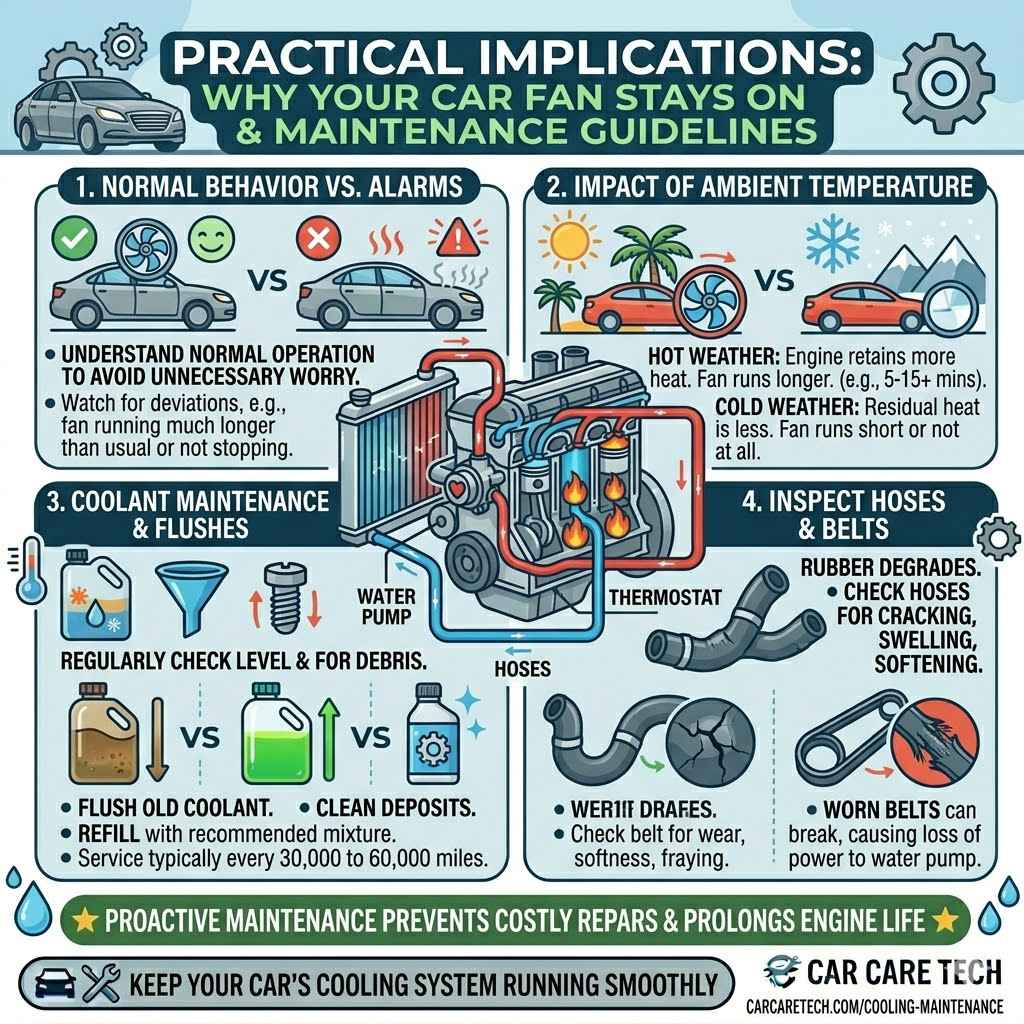
Understanding why your car’s fan stays on after the engine is off has practical implications for car owners. It helps you avoid unnecessary worry and recognize when your vehicle is operating normally. It also highlights the importance of regular maintenance to ensure the cooling system functions as designed.
When you know this behavior is normal, you can be more at ease. However, it’s also a reminder to pay attention to your car’s signals. Any deviation from the normal operation, such as the fan running for much longer than usual or not stopping at all, warrants attention.
Proactive maintenance is key to preventing costly repairs down the line.
Regular Maintenance of the Cooling System
Consistent maintenance of your car’s cooling system is essential. This includes checking the coolant level regularly and ensuring it is free from debris or discoloration. Coolant should be flushed and
You should also have the radiator hoses inspected for signs of wear, such as cracking, bulging, or softness. Worn hoses can burst, leading to a sudden loss of coolant and potential engine overheating. The thermostat should be checked periodically to ensure it opens and closes properly.
A sticking thermostat can cause the engine to overheat or run too cool, both of which are detrimental to engine performance and longevity. Regular inspections and fluid changes are the best defense against cooling system failures.
Coolant Flushes and Replacements
A coolant flush is a maintenance procedure where the old coolant is drained from the system and
When performing a flush, it’s common to also clean the system with a flushing agent to remove any built-up deposits. After draining the old coolant and any flushing agent, the system is refilled with the manufacturer-recommended type and mixture of new coolant. Following the correct procedure ensures that the system is completely filled and free of air pockets, which can also impair cooling performance.
This service is typically recommended every 30,000 to 60,000 miles.
Inspecting Hoses and Belts
Radiator hoses are crucial for transporting coolant between the engine, radiator, and heater core. They are made of rubber, which can degrade over time due to heat and exposure to chemicals. Inspect your hoses for any signs of cracking, swelling, softening, or hardening.
A bulging hose might indicate internal pressure issues, while a brittle or cracked hose is likely to fail soon.
The serpentine belt, which often drives the water pump (and sometimes the cooling fan on older vehicles), also needs regular inspection. Check the belt for cracks, fraying, or excessive wear. A worn or damaged belt can slip or break, leading to a loss of power to the water pump, which will quickly cause the engine to overheat.
Replacing worn belts and hoses is a relatively inexpensive preventative measure.
The Impact of Ambient Temperature
The outside temperature significantly influences how long your car’s fan might stay on after you turn off the engine. On a hot day, the engine and coolant will retain more heat. This means the cooling system has more work to do to bring the temperatures down.
Consequently, the fan will likely run for a longer duration to dissipate this increased residual heat.
Conversely, on a cooler day, the engine components will cool down more rapidly. The amount of residual heat is less, and the ambient air is more effective at cooling. In such conditions, the fan might run for a much shorter time or not at all after the engine is shut off.
This difference in fan run-time based on weather is a normal part of the cooling system’s adaptive behavior.
Hot Weather Operation
During hot weather, engines work harder and accumulate more heat. When you shut off the engine after driving on a very hot day, the heat soak effect is more pronounced. The engine block and other components are at a higher initial temperature.
This stored heat radiates outwards and transfers to the coolant, causing its temperature to rise significantly.
To combat this, the car’s computer (ECU) is programmed to keep the cooling fan running longer. This sustained airflow through the radiator helps to prevent the coolant from reaching a critical overheating point. It’s a critical function that protects the engine from the stresses of extreme heat.
You might notice your fan running for 5 to 15 minutes or even longer in very hot conditions.
Cold Weather Considerations
In cold weather, the cooling system operates differently. The primary goal is to get the engine up to its optimal operating temperature quickly. The thermostat plays a key role here by staying closed until the engine warms up.
Because of this, there is less heat to dissipate when the engine is turned off.
The fan’s operation in cold weather is usually minimal. It may not even engage after engine shutdown because the residual heat is low. If it does engage, it will likely run for a very short period.
This behavior is entirely normal and ensures that the engine reaches its efficient operating temperature without unnecessary cooling, thus improving fuel economy and reducing emissions in colder climates.
Frequently Asked Questions
Question: Is it bad if my car fan stays on for a long time after I turn off the engine?
Answer: It can be a sign of a problem if the fan stays on for an unusually long time, like over 15-20 minutes, or runs continuously. Typically, it should run for a few minutes and then stop as the engine cools down.
Question: What type of coolant should I use?
Answer: Always refer to your car’s owner’s manual for the specific type of coolant recommended by the manufacturer. Using the wrong type can damage your cooling system.
Question: Can a bad thermostat cause the fan to run constantly?
Answer: Yes, a faulty thermostat that doesn’t open properly can cause the engine to overheat, leading the fan to run continuously to try and cool it down. It can also cause the fan to not run when needed.
Question: My car overheats sometimes, but the fan seems to work. What else could be wrong?
Answer: If your car still overheats despite the fan working, the issue could be a clogged radiator, a failing water pump, a coolant leak, or air in the cooling system. These issues need professional diagnosis.
Question: How often should I check my car’s coolant level?
Answer: You should check your coolant level regularly, at least once a month, and especially before long trips. It’s also good practice to check it when the engine is cool.
Summary
Your car’s fan staying on after the engine is off is usually a normal function. It’s your car’s way of managing residual heat to protect the engine. Understanding your cooling system’s components and regular maintenance will help you keep it running smoothly.
If you notice anything unusual, get it checked by a professional.