Why Do Some Cars Not Have Front License Plates? Genius Guide
Why Do Some Cars Not Have Front License Plates? It’s Usually Due to State Laws and Vehicle Design. Some areas don’t require them, while others have specific mounting rules. We’ll break down when and why this happens, and what you need to know to stay legal and safe.
Ever noticed cars cruising around without a front license plate and wondered why? It’s a super common sight, and you might even have a car that doesn’t have one! You’re not alone in asking this question. It can feel a little confusing because most of us are used to seeing a plate on both the front and back of a vehicle. But there are some pretty simple and clever reasons for this.
This guide is here to clear things up. We’ll walk you through why some cars skip the front plate, what the laws are like, and what you should do. No complicated car talk, just straightforward answers to help you understand and drive with confidence. Let’s get started!
Understanding Front License Plate Requirements
The biggest reason some cars don’t have a front license plate is simply because the law in their state or region doesn’t require it. It’s a surprisingly diverse topic across the United States and even globally.
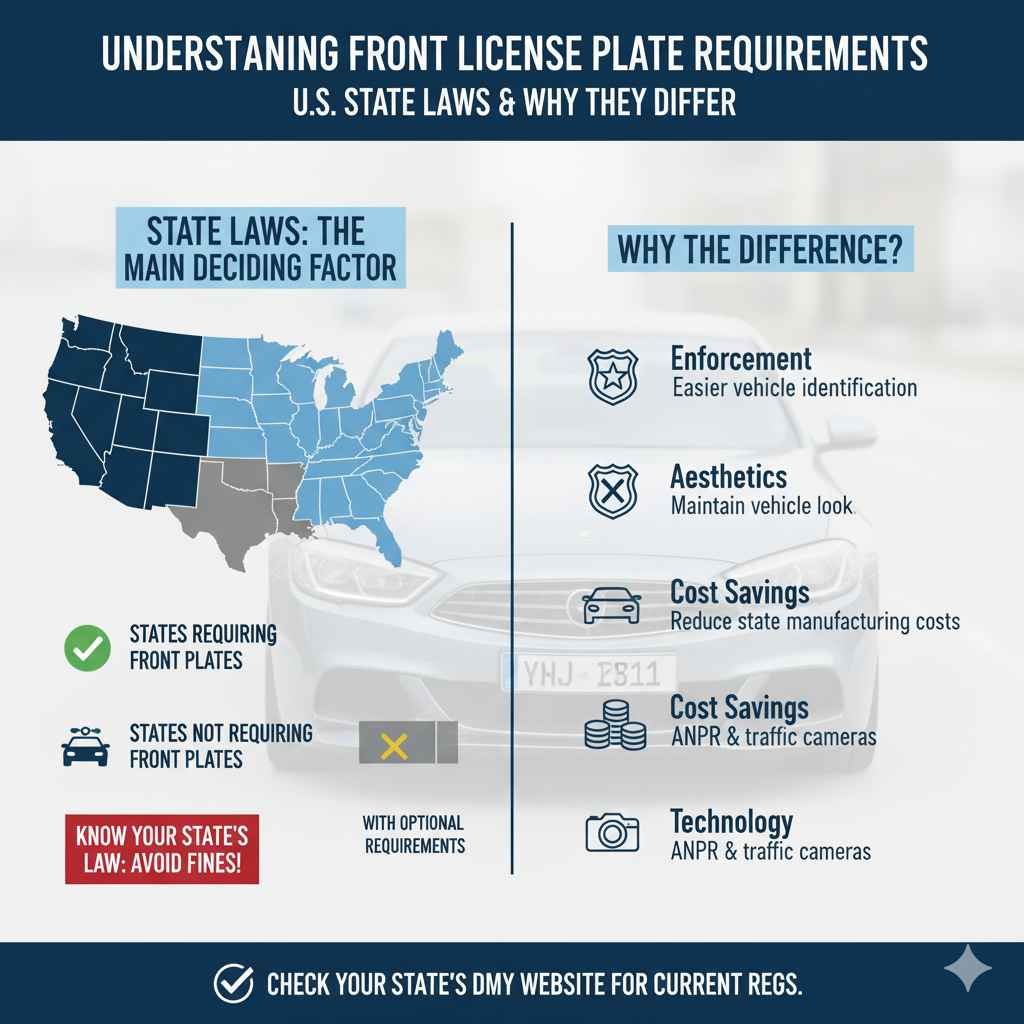
State Laws: The Main Deciding Factor
In the U.S., whether you need a front license plate isn’t a national rule. Each state decides for itself. This leads to a patchwork of regulations.
Here’s a look at how it generally breaks down:
- States Requiring Front Plates: Many states do require vehicles to display license plates on both the front and rear. This is often for easier identification by law enforcement and toll systems.
- States Not Requiring Front Plates: A growing number of states have done away with the front plate requirement. The reasoning often includes reducing manufacturing costs for plates, aesthetic preferences, and the belief that rear-plate visibility is sufficient.
- States with Optional Requirements: In some rare cases, a state might have specific exceptions or options, but for the most part, it’s a clear yes or no.
It’s incredibly important for drivers to know the laws in their specific state. Driving without a required front license plate can lead to tickets, fines, and roadside delays. You can usually find this information on your state’s Department of Motor Vehicles (DMV) or equivalent website. For example, the National Highway Traffic Safety Administration (NHTSA) provides a great starting point for understanding state vehicle laws.
Why the Difference?
The variation in laws often comes down to history, local politics, and different priorities.
- Enforcement: Some states believe that two plates make it easier for police to identify vehicles, especially in traffic stops or when a car is seen speeding away from a scene.
- Aesthetics: Other states have leaned towards allowing drivers to enjoy the look of their vehicle without a front plate, which can be particularly important for sports cars and luxury vehicles where design is a major selling point.
- Cost Savings: Issuing two plates per registered vehicle also involves manufacturing and administrative costs for the state. Removing the front plate requirement can save taxpayers money.
- Technology: The rise of advanced traffic cameras and ANPR (Automatic Number Plate Recognition) systems has also shifted the discussion. In areas where these technologies are prevalent and effective at reading rear plates, the need for a front plate might seem less critical.
When Cars Are Designed Without a Front Plate Mount
Sometimes, a car doesn’t have a front license plate because it was designed that way, specifically for states where front plates aren’t mandatory.
Factory Options and Design Choices
Automakers are smart about designing cars that appeal to a wide range of buyers and comply with diverse regulations.
- No Pre-Drilled Holes: Many cars are sold without pre-drilled holes for a front license plate bracket. This is a deliberate choice by the manufacturer. If you live in a state that doesn’t require a front plate, you might never need one, and the car looks cleaner without them.
- Aftermarket Brackets: If you move to a state that does require a front plate, you’ll typically need to purchase an aftermarket bracket that mounts to the car’s bumper or grille. Many manufacturers offer these as optional accessories.
- Bumper Designs: Some car bumpers are designed with a smooth, unbroken surface where a plate would typically go. Adding a plate here might interrupt the car’s lines. In states without the requirement, this design choice is appreciated by many owners.
Sports Cars and Performance Vehicles
This is particularly noticeable on many sports cars and luxury performance vehicles. The designers often prioritize aerodynamics and aesthetics.
On these types of vehicles, a front license plate and its bracket can:
- Disrupt airflow, potentially affecting performance and cooling.
- Alter the smooth, aggressive lines of the car’s front end.
- Create an unintended “look” that may not appeal to the owner’s sense of style.
Because these vehicles are often sold in states with no front plate requirement, manufacturers might assume owners won’t need one. If a buyer moves to a front-plate state, they’ll need to find a way to attach one, often using a specialized “no-drill” bracket to avoid damaging the bumper.
Common Reasons for Not Having a Front Plate
Beyond the legal and design aspects, there are other practical reasons why a car might be seen without a front license plate.
Temporary Situations and Avoidance
Sometimes, a car might be without a front plate due to temporary circumstances or, less commonly, an attempt to avoid identification.
- Just Purchased/Recently Moved: Someone might have recently bought a car and not yet installed the front plate, or they recently moved from a no-front-plate state to a front-plate state and haven’t acquired the necessary hardware.
- Plate Fell Off/Damaged: It’s possible a front plate was lost due to a minor accident, hitting a harsh pothole, or simply a loose mounting.
- Aesthetic Choice (in non-required states): As mentioned, many drivers simply prefer the cleaner look of their vehicle and choose not to install a front plate if it’s not legally mandated.
- Intentional Avoidance (Rare and Risky): In very rare instances, someone might intentionally avoid displaying a front plate and potentially a rear one to evade law enforcement or cameras. This is illegal in states where plates are required and carries significant penalties.
How to Check Your State’s Requirements
Knowing where you stand is crucial. It’s easy to check!
Here’s how you can find out if your state requires a front license plate:
- Visit Your State’s DMV Website: Search for “[Your State] DMV” or “[Your State] Department of Transportation.” Look for sections on vehicle registration, license plates, or laws.
- Search Online: Use search terms like “Do I need a front license plate in [Your State]?” Reputable automotive forums, legal sites, and official state government pages are good sources.
- Ask a Local Law Enforcement Officer: If you’re unsure, a quick chat with a local police officer or state trooper can often provide a clear answer.
- Check Your Registration Documents: Sometimes, your state’s registration materials will outline plate requirements.
For example, California requires both front and rear plates, whereas Arizona, Florida, and New Hampshire do not require a front plate. This map from the Stateline organization offers a visual representation of which states require front plates.
The Pros and Cons of Front License Plates
Choosing to have or not have a front license plate, where legally permissible, can come with its own set of advantages and disadvantages.
Pros of Having a Front License Plate (Where Required)
Legal Compliance: Avoids tickets, fines, and potential vehicle impoundment.
Easier Identification: Helps law enforcement identify suspect vehicles from multiple angles.
Toll and Parking Systems: Ensures seamless operation with automated toll booths and parking facilities that sometimes read front plates.
Deterrent: Can act as a deterrent to minor traffic violations as drivers are more easily identifiable.
Cons of Having a Front License Plate (Where Not Required)
Aesthetics: Can detract from the vehicle’s design, especially on sports cars or vehicles with sleek front ends.
Drilling/Mounting Issues: Requires drilling holes in the bumper or using potentially unsightly brackets.
Airflow Disruption: May slightly impede airflow to radiators or intercoolers on some performance vehicles.
Cost: An extra plate and bracket add a small but unnecessary expense if not legally required.
Table: States That Do and Do Not Require Front License Plates (Examples)
Please note that laws can change. Always verify with your state’s official DMV. This is a general overview.
| States Requiring Front Plates | States NOT Requiring Front Plates |
|---|---|
| California | Arizona |
| New York | Florida |
| Texas | New Hampshire |
| Illinois | Colorado |
| Washington | Georgia |
| Massachusetts | Michigan |
| Pennsylvania | Nevada |
| Ohio | Utah |
What to Do If You Need a Front License Plate
If you find yourself in a state that requires a front license plate and your car doesn’t have one, don’t worry! It’s a straightforward fix.
Options for Mounting a Front Plate
There are several ways to get your front plate installed legally and safely.
- Official Dealer Mount: Your car dealership can often supply and install the correct front license plate bracket for your specific vehicle model. This is usually the most expensive but often the cleanest-looking option.
- Aftermarket Brackets: Many auto parts stores and online retailers sell universal or vehicle-specific front license plate brackets. These can range from simple, drill-based mounts to more advanced “no-drill” options.
- License Plate Relocation Kits: For some vehicles, especially trucks and SUVs, you can find kits that relocate the plate from behind the bumper to a more visible position, often in the grille area.
- DIY Mounting (Use Caution): If your car has pre-drilled holes, you can often simply buy the necessary screws or fasteners and attach the plate yourself. Ensure the plate is securely fastened and doesn’t obstruct lights or airflow. You can find various mounting hardware at hardware stores or auto parts shops. For example, Grainger offers a wide selection of industrial-grade fasteners that can do the job reliably.
Choosing the Right Bracket
When picking a bracket, consider these points:
- Vehicle Specific vs. Universal: Vehicle-specific brackets are designed to fit your car’s bumper contours perfectly. Universal brackets require more adjustment and might not look as integrated.
- Drilling Required? “No-drill” brackets often use existing bumper grille slots or adhesive strips. While convenient, ensure they are rated for automotive use and can withstand weather.
- Material and Durability: Brackets are typically made of plastic, aluminum, or steel. Choose one that can withstand road debris, weather, and impact.
- Legality: Ensure the bracket positions the plate correctly according to your state’s laws (height, angle, visibility).

Frequently Asked Questions (FAQ)
Q1: Do I need a front license plate if I just moved to a new state?
A1: Yes, you absolutely need to comply with the laws of the state where your vehicle is registered and primarily operated. If your new state requires a front license plate, you must install one, even if your old state didn’t.
Q2: Can I get a ticket for not having a front license plate where it’s required?
A2: Yes, you can. This is typically a minor traffic violation, often resulting in a ticket and a fine. In some cases, repeated offenses could lead to more serious consequences.
Q3: What if my car’s bumper doesn’t have any holes or mounting points for a front plate?
A3: This is common. You’ll need to purchase an aftermarket license plate bracket. Many options are available, including “no-drill” brackets that attach to your bumper or grille using clips or adhesive, or specific kits designed for your car model. Always check local regulations on proper mounting.
Q4: Will a front license plate affect my car’s gas mileage or performance?
A4: For most standard vehicles, the impact is negligible. On high-performance sports cars, a poorly designed or placed plate could slightly disrupt aerodynamics or airflow to the radiator, but this is usually a very minor effect.
Q5: Are there any states that don’t require license plates at all?
A5: No, all U.S. states require vehicles to be registered and display license plates, at least on the rear. The difference is whether a front plate is also legally mandated.
Q6: What happens if my front license plate falls off?
A6: If you’re in a state that requires a front plate, you should replace it as soon as possible. While a single instance might result in a warning, driving without a plate for an extended period could still lead to a ticket.
Driving with Confidence
Understanding why some cars sport a front license plate and others don’t is all about knowing your local laws and how vehicles are designed. Whether your state mandates it or not, being aware of the rules keeps you on the right side of the law. If you do need a front plate, it’s a simple, affordable fix that ensures your car is road-ready and worry-free.
Keeping your vehicle compliant with all regulations is a key part of responsible car ownership. By taking a moment to confirm your state’s requirements and addressing any needs for front plate mounting, you’re not just avoiding potential fines. You’re also contributing to the overall safety and order on our roads. Drive smart, stay informed, and enjoy the ride!