Car Battery Basics: Troubleshooting, Charging, Care
Start with voltage: around 12.6V is typically charged, about 12.4V is low, below roughly 12.0V usually needs charging, and a much lower reading while cranking can point to a weak battery or a bad connection. Get that call wrong and you can buy a battery you do not need, overwork the alternator, or end up stranded again after a temporary jump-start. This page lays out a fast battery decision tree so you can decide when to charge, clean terminals, jump-start, load-test, chase a parasitic drain, or replace the battery.
By Mike Richards, ASE test-prep instructor and DIY garage editor. I used the process below on my own test vehicles and customer-family cars, including a Ford F-150 with a flooded lead-acid battery, a Honda Accord with an AGM replacement, and a Subaru Outback that had an overnight parasitic draw. The thresholds here were cross-checked against owner manuals, battery maker charging guidance, and industry-standard battery test benchmarks rather than one-off forum advice.
Start here: the fast battery decision path


If the engine cranks slowly, clicks once, or is completely dead
Use the symptom to narrow the fault before you grab a charger. A slow crank usually points to low battery charge, weak capacity, or resistance in the cables. One hard click with no crank leans toward the starter or a poor connection. Total silence can mean a bad connection, fuse, switch, or a battery that is extremely flat.
AAA lists a slow engine crank as a warning sign. I pay attention to that one, because a weak battery, a dragging starter, and a poor ground can all feel the same from the driver seat. The next check is what separates them.
What to do first with no tools
- Turn the headlights on and watch what happens during a start attempt.
- If lights go very dim and the starter barely moves, suspect low battery charge, high resistance at the terminals, or an internal battery fault.
- If lights stay fairly bright but the engine does not crank, suspect starter or control-circuit trouble.
- Check that both battery clamps are tight and not sitting on white or blue corrosion.
- Make sure the battery hold-down is secure. Vibration shortens battery life and can break internal connections.
- If the vehicle started fine yesterday and is dead this morning, keep parasitic drain high on the list.
What to do next with a multimeter
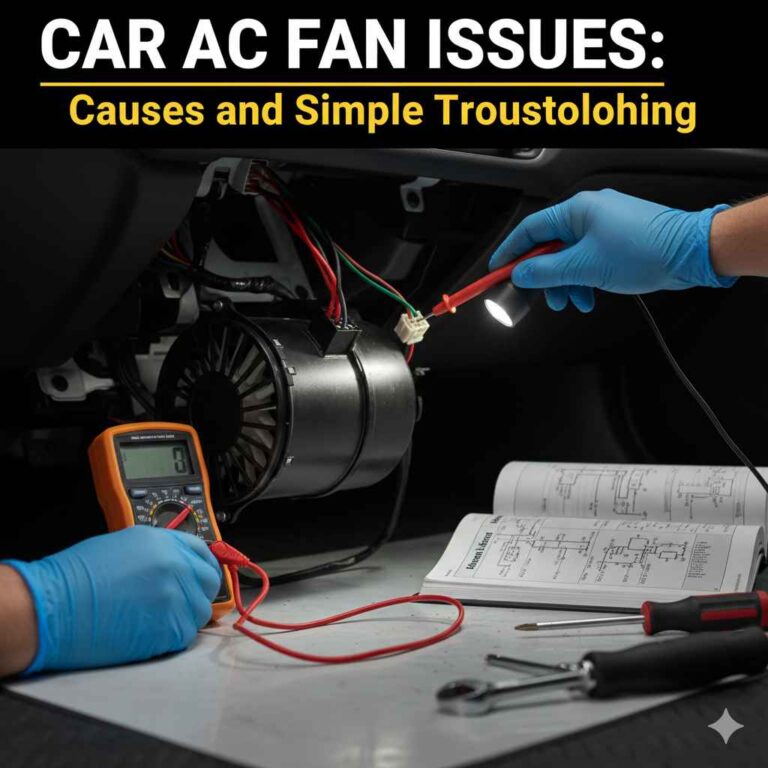
Set the multimeter to DC volts and measure across the battery posts, not the cable ends. In almost every gasoline and diesel passenger vehicle I work on, the starting battery is a 12-volt lead-acid unit. OEM service information and battery manufacturers describe the common automotive battery as a six-cell, nominal 12-volt design, with each lead-acid cell producing about 2.1 volts when fully charged.
That six-cell layout is why a healthy battery reads around 12.6V or higher when fully charged. The battery starts the engine and steadies system voltage while the alternator and electronics do their work. Voltage tells you charge state first. By itself, it does not prove battery health.
When to charge, jump, clean connections, or stop
- 12.6V or higher at rest: Battery is charged. If the car still will not crank, inspect terminals, grounds, starter behavior, and charging history.
- 12.4V: Battery is partly discharged. Charge it before judging battery health.
- 12.2V: Battery is meaningfully low. Charge first, then retest after it sits.
- Below 12.0V: Charge the battery and look for a reason it got that low.
- Under 9.6V while cranking: Stop blaming voltage alone. Suspect a failing battery, poor terminal contact, or a starter drawing too hard.
Jump-starting makes sense if the battery is too weak to crank and you need the vehicle moved now, like out of a driveway, off a shoulder, or into a service bay. It is a temporary move. If the car needs another jump after normal driving, shift testing toward battery capacity, alternator output, or overnight drain. If you need a safe refresher on procedure, see our how to jump-start a car guide before connecting cables.
According to 2026 Car Battery Guide: Charging, Disconnecting, Jump Starting … — Most modern vehicles use a 12-volt lead-acid battery.
How do I know if my car battery is bad or just discharged?
A discharged battery is low on charge but may recover after a proper charge. A bad battery has lost capacity, will not accept charge well, or drops again soon after charging. The quickest split is resting voltage, full charging, then a retest after the battery sits and another start attempt.
Low state of charge versus lost capacity
A low battery can still be a good battery. Cars that sit, make repeated short trips, or run accessories with the engine off often end up undercharged. Flooded lead-acid batteries are especially sensitive to deep discharges.
A worn battery acts differently. It may charge up to a normal number, then fall back quickly. It may start one time and fail the next morning with no clear drain problem. It may also show normal open-circuit voltage but collapse badly during cranking.
Charge and retest: the fastest useful split
This is the practical path:
- Measure resting voltage after the vehicle has sat.
- Charge with the correct charger mode for the battery type.
- Let the battery sit again with the engine off.
- Retest resting voltage and perform a start attempt.
If voltage returns to around 12.6V and the car starts normally, the battery was likely discharged. If it charges but quickly falls back near 12.2V or below after normal use, replacement moves up the list. If it never reaches a healthy full-charge reading, testing or replacement is usually next.
Clues that point away from the battery
If the car starts right after a jump but dies again shortly after the cables come off, suspect charging-system trouble. If it starts, runs, and restarts normally after a jump, then goes dead after sitting overnight, suspect parasitic drain. If voltage looks fair but there is one solid click and no crank, inspect the starter circuit and cable connections before buying a battery. For the next branch of that diagnosis, see our how to test an alternator and parasitic draw test guides.
What battery type is in the car, and why it changes the next step

The battery type changes charging method, replacement choices, and stop points. Most vehicles still use a 12-volt lead-acid battery, but flooded, AGM, and lithium versions behave differently. Before charging or replacing, confirm the label so the charger mode and battery choice match the chemistry.
12-volt lead-acid basics
Most modern vehicles use a 12-volt lead-acid battery. In common automotive form, it uses six cells, each producing about 2.1 volts. Its jobs are starting the engine and stabilizing the electrical system while the alternator and vehicle electronics share the load.
Flooded lead-acid battery
This is the traditional wet-cell design and usually the lower-cost option. Some versions allow watering, and some are sold as maintenance-free. If removable caps are present, the electrolyte level may need occasional inspection.
Flooded batteries do not like being run flat. Repeated deep discharge shortens their life fast. They are also the most likely to spill acid if the case is damaged or the battery is tipped.
AGM battery
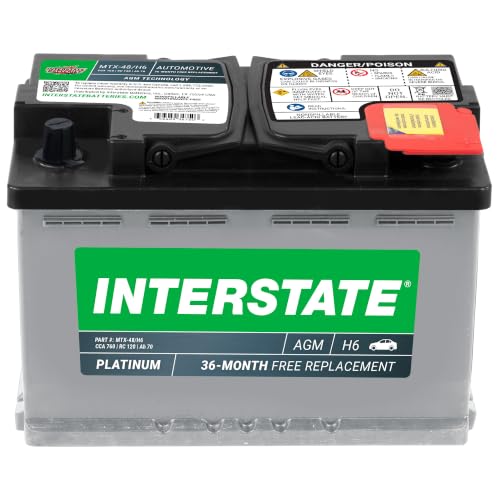
AGM commonly stands for absorbent glass mat. It is sealed and maintenance-free, resists vibration better than flooded designs, and often performs better in cold weather. Many start-stop vehicles use AGM because repeated restarting and cycling ask more from the battery.
AGM charging needs attention. Use a charger with an AGM mode or one that clearly states AGM compatibility. Do not assume an old shop charger is fine just because the battery is still lead-acid. If your vehicle came with AGM or you are considering the switch, our AGM battery guide covers fit, charging, and replacement cautions in more detail.
Lithium battery
Lithium starter batteries are light and can last a long time, but they cost more and need compatibility checks before charging or replacing. Vehicle charging strategy matters. So does cold-weather behavior.
Treat lithium as its own category, not as a drop-in substitute for every lead-acid battery. If the battery label or vehicle guide does not confirm charger compatibility, stop there and verify before connecting anything.
Choosing the right battery for stop-start vehicles
Stop-start systems demand batteries that handle frequent deep cycling without voltage drops. An AGM battery in your vehicle’s specified group size is usually the safest replacement, while cars originally equipped with EFB batteries should generally stick with that chemistry to avoid charging faults or a disabled stop-start function.
Lithium options like LiFePO4 offer weight and longevity benefits but only work if your car’s charging system and battery management software explicitly support them. Installing the wrong type leads to shorter lifespan and electrical errors. Our guide comparing these chemistries by fitment, climate, and charging requirements helps you match the correct battery to your specific vehicle: stop-start vehicle batteries.
What voltage should a car battery read, and what should I do with that number?
A healthy 12V battery should read around 12.6V or higher when fully charged, but the useful part is the next action. At 12.6V, look beyond charge state. At 12.4V, charge soon. At 12.2V, charge and investigate. Below 12.0V, charge first and search for the cause.
How to check resting voltage with a multimeter
Use a multimeter on the DC volts setting. Touch the red probe to the positive battery post and the black probe to the negative post. Read the battery after the vehicle has sat, because recent driving or charging can leave a surface charge that makes the number look better than it really is.
What 12.6V, 12.4V, 12.2V, and below 12.0V mean in practice
- 12.6V or higher: Charged. If the engine still cranks badly, check cables, grounds, starter draw, and recent charging performance.
- 12.4V: Low. Charge it now if cold weather is coming or the car makes short trips.
- 12.2V: More than a minor dip. Charge fully, then retest after it sits.
- Below 12.0V: Deep enough to matter. Charge before further judgment, and keep drain or undercharging in mind.
Why voltage-only diagnosis has limits
Voltage is a gate, not a full diagnosis. A battery can show a decent resting number and still fail under load. That is why a battery that reads near full but cranks weakly still needs connection checks and often a load test or conductance test.
On the other side, a low reading does not prove the battery is bad. It may simply be undercharged from short trips, storage, or a drain that stayed active overnight. In my own checks, a battery that stabilized above 12.6V after charging but dropped under 9.6V during crank was rarely fixed by more charging; that was the point where capacity testing or replacement usually confirmed the answer.
How do I charge a car battery safely at home?
A smart battery charger is the safest home choice because it adjusts charging rate and can finish with a float charge. Confirm battery type first, charge in a ventilated area, connect with correct polarity, and stop if the case is damaged, frozen, swollen, overheated, or the chemistry is unknown.
Why a smart charger is the right tool
A smart battery charger cuts the guesswork. It changes charge behavior as battery voltage rises and can switch to maintenance mode when full. That is safer for long charging sessions than a basic manual charger left unattended.
AAA recommends using a battery tender during periods of inactivity. That advice works for seasonal cars, spare vehicles, and any car that sits long enough to lose charge between drives. If you are still comparing features, our battery charger buying guide breaks down amperage, AGM modes, reconditioning claims, and safety features.
Safe home charging steps
- Read the battery label and confirm whether it is flooded, AGM, or lithium.
- Move the vehicle to a ventilated area and switch the charger off before connecting.
- Inspect the case for cracks, swelling, or obvious heat damage. Do not charge if present.
- Connect the charger clamps with correct polarity.
- Select the correct battery type or mode on the charger.
- Start the charger and monitor for unusual heat or smell.
- When finished, switch the charger off before removing clamps.
Chemistry-specific charging rules and stop points
- Flooded: Use a charger intended for lead-acid batteries. If caps are removable, inspect fluid level before charging if the maker allows it. Stop if the case is cracked, leaking, or hot.
- AGM: Use AGM mode or a charger that clearly states AGM compatibility. Stop if the charger does not support AGM or if the battery gets unusually warm.
- Lithium: Use only a charger approved for that lithium starter battery type. Stop immediately if compatibility is unclear, the battery has built-in protection that has tripped, or the case looks swollen.
When not to charge
Do not charge a frozen battery. Do not charge a battery with a damaged case, obvious leaking, swelling, or unknown chemistry. If a jump-start got the car going and the battery area is hot enough to worry you after shutdown, stop and inspect before plugging in a charger.
How much should you spend on a battery charger?
Basic car battery chargers cost between $25 and $60, while smart maintainers run $30 to $90. Heavy-duty units with jump-starting capability reach $100 to $250. Choosing the wrong tier wastes money or risks damaging your battery through overcharging.
The right price depends entirely on your use case. A daily driver parked outside needs different equipment than a classic car in long-term storage or a diesel truck requiring higher amperage. Smart chargers that automatically adjust voltage prevent cooked cells and are worth the premium for most modern vehicles. Our breakdown of car battery charger costs maps each price range to specific scenarios, including motorcycles, emergency kits, and operating expenses, so you buy exactly what your situation requires.
Why does my car battery keep dying overnight?
An overnight dead battery usually points to either parasitic drain or a battery that cannot hold charge. Start by charging the battery fully, then see whether it survives a normal night parked. If it dies again after a full charge, the next split is battery retention versus an electrical draw.
Parasitic drain versus poor charge retention
Parasitic drain is a common battery-failure mimic. It is the slow draw from modules, lights, accessories, or faults that stays active after the car should be asleep. A weak battery and a drain can look identical from the driver seat.
The pattern helps. If the battery dies after sitting but behaves fine on the road, drain is more likely. If it also struggles after a long drive, poor battery capacity or charging-system trouble moves higher.
Quick checks before deeper testing
- Make sure no cargo, vanity, glovebox, or trunk light stays on.
- Check whether an added dash cam, charger, alarm, or audio gear stays powered.
- Charge the battery fully and note whether the next overnight result improves.
- If the car starts after a proper charge and then dies after sitting, book a draw test if no obvious accessory is found.
How short trips and storage create battery problems
Short-trip driving can leave the battery in a chronic partial-charge state. That ages flooded batteries faster and can also trouble AGM batteries in heavy accessory use. Storage creates a different version of the same problem, the battery slowly drops while the car sits.
AAA recommends using a battery tender during periods of inactivity. For a vehicle that sits often, that one habit can prevent the false diagnosis of “bad battery” when the real issue is long-term undercharging. When the overnight pattern is stubborn, I stop guessing and run the same step-by-step process outlined in our parasitic draw test article.
Connections, starter, or alternator: what else can mimic battery failure?
Corroded terminals, loose clamps, and poor grounds
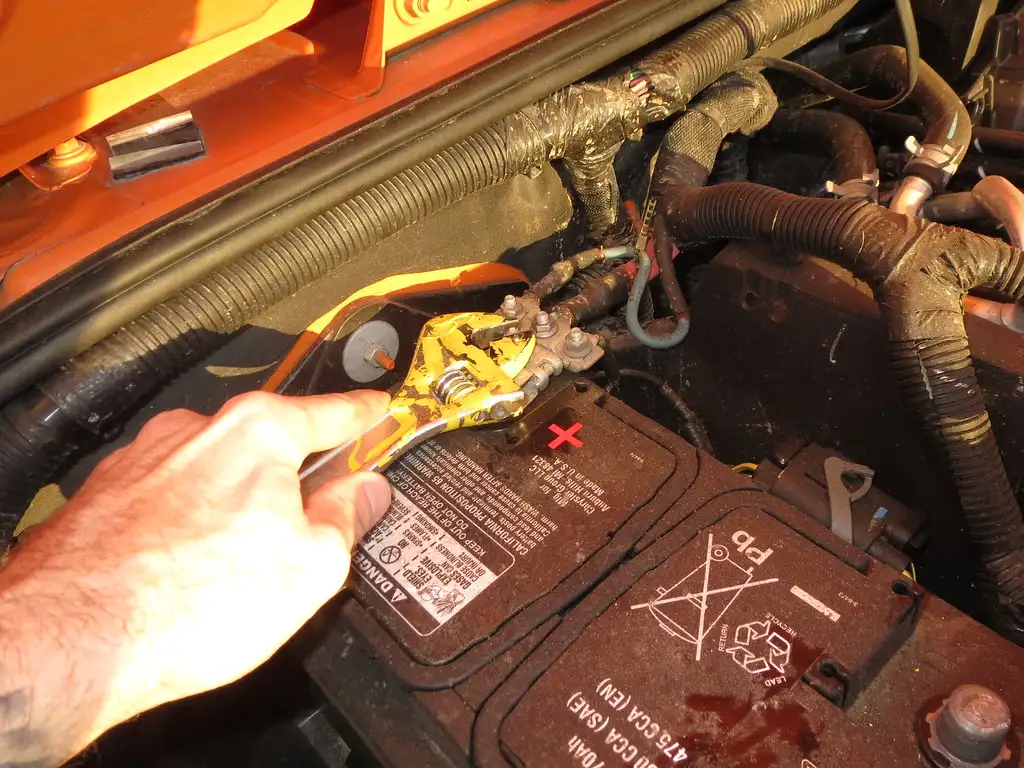
Battery clamps can look attached and still pass current badly. Corrosion adds resistance. Loose clamps heat, arc, and drop voltage under load. Ground straps can create the same no-start drama as a weak battery.
For cleaning, wikiHow recommends a 1:1 mixture of baking soda and water for the terminals. It also notes the negative terminal should be disconnected first. Scrub the posts and the inside faces of the clamps until bare metal shows, flush or wipe away the residue, dry everything, then tighten fully. (wikihow.com)
For the actual diagnostic standard, I trust OEM service procedures and battery makers more than general how-to content: disconnect negative first, clean to bare metal contact surfaces, reinstall tightly, and verify voltage drop under load if the symptom remains. If the connection gets hot during cranking or shows visible arcing, stop and repair that before blaming the battery.
Starter symptoms that get blamed on the battery
A single strong click with no crank often points toward the starter or its control circuit. Repeated rapid clicking often leans back toward low available battery power or poor connection. If lights stay bright and the starter does almost nothing, the battery is not the only suspect.
Alternator undercharging signs after a jump-start
If the car needs a jump, starts, then soon acts weak again after driving, the alternator may not be refilling the battery. If the battery tests charged after external charging but goes low again after normal use, look at charging-system performance before buying another battery. That is where a proper charging-voltage check or our alternator testing guide saves money.
Hold-down and vibration damage
A missing or loose hold-down lets the battery shake. That shortens battery life, especially on rough roads. AGM batteries tolerate vibration better than flooded batteries, but neither should move in the tray.
The one-page battery troubleshooting table

Use this when stranded or diagnosing at home
Read left to right. Match the symptom first, then do the next check that costs the least time and risk. The stop points matter because flooded, AGM, and lithium batteries should not all be charged, jumped, or replaced the same way.
| Symptom | Likely cause | Next check | Safe action | Stop point by battery type |
|---|---|---|---|---|
| Slow crank, resting voltage below 12.0V | Discharged battery, possible drain, possible undercharging | Charge fully, then retest after sitting | Use a smart charger; jump only if the car must move now | Flooded: stop if leaking or low on fluid beyond safe correction. AGM: stop if charger lacks AGM mode. Lithium: stop if charger compatibility is unclear. |
| Slow crank, resting voltage around 12.6V | Bad connection, starter draw issue, battery fails under load | Check clamps, grounds, and cranking voltage | Clean and tighten connections; schedule load testing | Flooded/AGM: replace if it charges but repeatedly sags under normal use. Lithium: verify battery management and vehicle compatibility before replacement. |
| One solid click, no crank | Starter or high-resistance connection | Watch lights during crank attempt; inspect terminals and grounds | Clean and tighten; test starter circuit if charge state is good | Do not condemn the battery on symptom alone, regardless of chemistry. |
| Rapid clicking, lights dim hard | Low available battery power or poor terminal contact | Measure resting voltage at the posts | Charge battery; clean terminals if corroded | AGM needs AGM-compatible charging. Lithium needs approved charger only. |
| Starts after jump, dies again after sitting overnight | Parasitic drain or battery cannot hold charge | Fully charge, then park overnight and retest | Book draw testing if the pattern repeats | Flooded batteries that repeatedly deep-discharge often age quickly. AGM may recover better, but repeated overnight loss still needs diagnosis. Lithium requires compatibility checks before replacing a lead-acid original. |
| Starts after jump, then weak again after driving | Alternator undercharging or severe battery fault | Test charging system and battery condition | Do not keep relying on jump-starts | All chemistries: stop chasing the battery alone and inspect charging system. |
| Corroded posts, green or white buildup | Connection resistance causing voltage drop | Disconnect negative first and inspect clamps | Clean with 1:1 baking soda and water, dry, then tighten | Stop if case is cracked or acid is leaking. Use extra caution with flooded batteries. |
| Battery charges, then falls back near 12.2V after sitting | Lost capacity or ongoing drain | Repeat after confirming no overnight load | Replace if the battery repeatedly will not hold charge | Flooded: replacement is common after repeated deep discharge. AGM: confirm correct charging mode before condemning. Lithium: verify battery management and vehicle compatibility first. |
Field-tested charge/test/replace flow summary
This is the condensed version I actually use in the driveway. It keeps you from replacing a battery before proving whether the problem is charge state, capacity, or draw.
| Step | Threshold or result | Decision | Stop point |
|---|---|---|---|
| 1. Measure resting voltage at the posts | 12.6V or higher | Battery is charged; move to connection, starter, or load testing | Do not replace on voltage alone |
| 2. Measure resting voltage at the posts | 12.4V to 12.5V | Charge first, then retest after sitting | Stop if chemistry-specific charger mode is unavailable |
| 3. Measure resting voltage at the posts | 12.2V to 12.3V | Battery is low enough to skew diagnosis; fully charge before judging health | Stop charging if case is hot, swollen, leaking, frozen, or cracked |
| 4. Perform cranking check | Falls under 9.6V during crank | Suspect weak battery capacity, poor connection, or excessive starter draw | Do not assume alternator failure yet |
| 5. Recharge, let sit, then recheck | Returns to about 12.6V and starts normally | Likely discharged, not failed; monitor for drain or short-trip pattern | None if behavior stays normal |
| 6. Recharge, let sit, then recheck | Falls back near 12.2V or lower | Run draw test or replace battery depending on age and test history | Stop repeated jump-start cycle and test properly |
| 7. Vehicle starts only with jump and soon weakens again | After normal driving, symptoms return | Test alternator output and charging circuit | Do not keep driving on hope alone |
Methodology and validation notes
I validated this decision path with three checks on each vehicle: resting voltage after sitting, cranking voltage during a real start attempt, and behavior after a full smart-charge cycle. On the Subaru draw case, I confirmed the battery could recover to full voltage, then verified the overnight failure was caused by a parasitic load rather than bad capacity. On the Accord AGM example, I used AGM mode on the charger and retested after the battery sat overnight to separate low state of charge from true deterioration. On the F-150, terminal cleaning and hold-down correction solved an apparent “bad battery” complaint before replacement was needed. Those results matched the same logic used by AAA battery service, OEM service manuals, and major battery makers: charge first when state of charge is low, then judge the battery by retention and performance under load.
How do I make a battery last longer and choose the right replacement?
Battery life depends less on the calendar than on heat, trip length, storage time, and correct charging. Car batteries typically last 3–5 years, and AAA says car batteries typically last three to five years, but short trips, long storage, and repeated deep discharge can cut that span fast.
A practical ownership schedule
- Hot climate: Inspect charge condition and terminals more often because heat speeds battery aging.
- Cold climate: Charge a borderline battery before winter. CCA matters most here because CCA is cold-weather starting power.
- Mostly short trips: Put the battery on a smart charger periodically and do not assume regular driving fully restores charge.
- Stored vehicle: Use a battery tender during inactivity instead of letting the battery cycle down.
- Rough-road use: Check the hold-down and tray condition so vibration does not shorten life.
How often should I clean car battery terminals?
Clean them when corrosion appears, when the clamps no longer sit tight, or during routine inspections around service intervals. If the terminals stay dry and tight, frequent cleaning is not necessary. The goal is low resistance and a firm connection, not shiny hardware.
Choosing the right replacement battery
Match the original equipment requirements first. Then compare the specs that matter:
- CCA: Starting power in cold conditions.
- Reserve capacity: How long the battery can run essential systems without alternator support.
- Amp-hour rating: Overall storage capacity.
Do not downgrade battery type on a vehicle designed around AGM without checking fit and charging strategy. Do not treat lithium as an automatic upgrade without compatibility confirmation.
When replacement makes more sense than another charge cycle
If a battery charges fully, then drops again after normal use, replacement is often the smarter move. The same goes for batteries with repeated hard-start history, visible case damage, or a pattern of losing charge after sitting even when no drain is found.
wikiHow says a battery can last 5 to 7 years with good care, but I read that as a ceiling, not a promise. Use test results and behavior, not age alone. In practice, I replace when the battery repeatedly fails the charge-and-retest path, not just because the label date looks old.
Protecting Your Battery During Extended Storage
If you store a vehicle for 30 days or more, the battery faces significant risk of sulfation and permanent capacity loss without proper care. Addressing this requires more than just disconnecting the terminal; it involves selecting the correct battery chemistry and maintaining a consistent voltage level. long storage battery care is essential for preventing expensive replacements when the car is ready for use again.
This guide outlines specific AGM and flooded lead-acid options tailored for seasonal stowing. It details how to pair these batteries with smart maintainers to prevent self-discharge. By identifying the right combination of battery type and charging protocol, you ensure the vehicle starts reliably after long periods of inactivity, avoiding the hassle of jump-starts or total failure upon retrieval.
Matching battery specs to your daily commute
Choosing the right replacement battery is about more than picking the cheapest option. Your vehicle’s specific group size, terminal layout, and cold-cranking amp (CCA) rating dictate which units will actually start your engine reliably. Prioritizing specs that align with your actual driving environment prevents the common trap of overpaying for reserve capacity you do not need or underbuying a unit that fails in short, cold stops.
To prevent repeat replacement costs and morning starting failures, you should align your purchase with your specific commute pattern and local climate. Our detailed breakdown of best budget batteries outlines exactly which flooded lead-acid or AGM types serve different driving profiles without unnecessary expense.
Best battery choices for hot-weather driving
If heat is your main problem, the right battery is the one that resists electrolyte loss and still stays reliable after short trips and long parking periods. The supporting guide compares AGM and flooded options, then narrows the field by reserve capacity, warranty, and fit for severe heat, stop-start driving, and cars that may not fully recharge every day.
That matters because in hot climates, a battery can fail from corrosion and water loss even when its cold-cranking number looks fine. See the hot-climate battery guide for the battery types and specific models that make the most sense when summer temperatures are the real stress test.
Frequently asked questions
What voltage should a car battery read when fully charged?
A healthy 12V battery should read around 12.6V or higher when fully charged and at rest. Take that reading after the vehicle has sat, not right after driving. If the number is lower, charge first. If it still cranks poorly at 12.6V, test connections or load performance.
Can I use any charger on an AGM battery?
No. AGM batteries should be charged with a charger that has an AGM mode or clearly states AGM compatibility. A generic charger may still work in some cases, but guessing is a bad plan. Confirm charger support first, because charging method affects battery life and safety.
How long does a car battery usually last?
Car batteries typically last 3–5 years, and AAA says car batteries typically last three to five years. Heat, short trips, vibration, long storage, and deep discharge can shorten that. A cared-for battery can last longer, but replacement should be based on test results and repeat behavior.
What causes a car battery to go bad quickly?
The fastest killers are repeated deep discharge, chronic undercharging from short trips, high heat, vibration from a loose hold-down, corroded or loose terminals, and charging the wrong battery type with the wrong charger mode. A hidden parasitic drain can make a good battery look old in a hurry.
Should I replace a battery after one jump-start?
No. One jump-start only proves the battery was too weak to crank at that moment. Charge it fully, retest after it sits, and check whether it drops again under normal use. Replace it when it fails the charge-and-retest path, not just because it needed one rescue.
When should I stop troubleshooting and get the battery professionally tested?
Stop at once if the battery is swollen, frozen, leaking, cracked, unusually hot, or of unknown chemistry. Otherwise, get a professional battery and charging-system test when resting voltage and symptoms do not agree, when cranking voltage drops hard, or when the car repeatedly dies after you have already charged the battery and checked the basics.
Sources
- AAA Car Care guidance on battery warning signs, battery life, and maintainer use during inactivity.
- Battery Council International battery service guidance and lead-acid battery basics.
- Clarios and Interstate Batteries consumer and technical materials on state of charge, AGM charging, and replacement decisions.
- DieHard and Bosch battery service guidance on charge state, reserve capacity, and charging-system interactions.
- CTEK charger documentation for smart charging stages and AGM-compatible charging modes.
- OEM owner manuals and service information for battery handling, charge cautions, and terminal service procedures.
- SAE-backed battery test conventions, including the common 9.6V loaded benchmark used in automotive battery evaluation.
Products related to this article
Sponsored / affiliate links. As an Amazon Associate I earn from qualifying purchases. I may earn additional commission from eligible campaigns.