Why Hydrogen Cars Are A Bad Idea: Essential Flaws
Hydrogen cars face major hurdles that make them impractical today: namely, extremely high production costs, an almost non-existent fueling infrastructure, poor energy efficiency compared to battery electric vehicles (BEVs), and safety concerns regarding hydrogen storage. For most drivers right now, these flaws mean they are not a smart choice.
Thinking about the future of driving can be confusing. You hear a lot about electric cars, but sometimes you hear about hydrogen fuel cell cars, too. They sound neat—just water coming out the tailpipe! However, before you fall in love with the idea of filling up with hydrogen, it’s wise to understand the real-world drawbacks. As your trusted automotive guide, I want to give you the straight facts about why, for the average driver today, hydrogen cars are a bad idea. We will break down the technical hurdles into simple, easy-to-understand points so you can make a confident decision about your next vehicle.
The Core Problems: Why Hydrogen Isn’t Ready for Your Garage
Hydrogen Fuel Cell Electric Vehicles (FCEVs) use hydrogen gas to create electricity onboard, which then powers the wheels. While the concept is sound on paper, the massive challenges in making this system work affordably and widely outside of test tracks are significant. These problems touch on everything from how the fuel is made to where you actually find a pump.
Flaw 1: The Near-Total Lack of Refueling Stations
This is perhaps the biggest headache for any potential hydrogen car owner. If you can’t fuel your car easily, it’s just an expensive paperweight. Imagine trying to drive cross-country in a gasoline car when gas stations only exist in two states—that’s the reality for hydrogen right now.
The Infrastructure Desert
For battery electric vehicles (BEVs), you can often charge at home overnight. For hydrogen, you must find a specialized fueling station. These stations are incredibly complex and expensive to build compared to a simple gas pump or a Level 2 EV charger installation.
- Geographic Concentration: Most existing hydrogen stations are clustered tightly in very specific areas, primarily in California and parts of the Northeast in the U.S. If you live or travel outside these zones, finding fuel is practically impossible.
- Cost to Build: A single hydrogen fueling station can cost several million dollars to construct, far exceeding the cost of building standard gasoline stations or even fast-charging EV hubs. This massive upfront cost slows down expansion dramatically.
- Limited Variety: Because the network is so small, manufacturers are hesitant to build many cars for a market that can’t support them, creating a classic “chicken and egg” problem.
Flaw 2: The Extremely High Cost of Hydrogen Fuel
If you do manage to find a station, be prepared for a shock at the pump. Hydrogen fuel is significantly more expensive per effective mile than gasoline, diesel, or the electricity needed to charge a battery car.
Why Is It So Costly?
The price you pay at the pump reflects the high cost of production, compression, storage, and transportation. Think of it this way: you aren’t just paying for the gas; you are paying for the specialized, high-pressure system needed to deliver it safely.
| Fuel Type | Approximate Cost Per 100 Miles (Varies by Region) | Ease of Refueling |
|---|---|---|
| Gasoline Car | $12.00 – $18.00 | Very Easy |
| Battery Electric Vehicle (Home Charging) | $3.00 – $6.00 | Easy (Primarily at home) |
| Hydrogen Fuel Cell Vehicle (FCEV) | $18.00 – $30.00+ | Very Difficult |
As this table shows, operating a hydrogen car often costs significantly more than driving a comparable electric vehicle, making the long-term running costs much higher for the driver.
Flaw 3: Massive Energy Inefficiency (The “Well-to-Wheel” Loss)
This is where we need to talk about efficiency. When we say a car is inefficient, we mean that the energy put in doesn’t match the energy you get out to move the wheels. For hydrogen, the energy loss throughout the process is staggering compared to just plugging in a battery.
The Three Steps of Energy Waste
To power a hydrogen car, you have to go through several challenging energy steps:
- Production: Creating pure hydrogen (often done via electrolysis powered by electricity, or by steam-methane reforming) uses a lot of energy, often involving significant energy loss right away.
- Compression and Transport: Hydrogen must be cooled to extremely low cryogenic temperatures or compressed to 10,000 psi (pounds per square inch) to be stored in the car tank. This demanding process wastes more energy.
- Conversion in the Car: The hydrogen is then converted back into electricity inside the fuel cell stack within the car, which causes further energy loss before it even gets to the motor.
Contrast this with a BEV: you take electricity from the grid (Step 1), send it directly through a wire into the vehicle’s battery (Step 2), and then drive. The overall efficiency from the source electricity to the wheels is often 2 to 4 times better for a BEV.
For a great overview of energy pathways, you can check out resources on the concept known as “Well-to-Wheel” efficiency, which tracks energy use from primary source to actual vehicle movement. A common finding from organizations researching clean energy pathways highlights this gap.
Flaw 4: Production Methods Often Aren’t Truly “Green”
The biggest selling point for hydrogen is that it only emits water vapor. This is true! However, the way we currently make most hydrogen is dirty. This undermines the entire point of switching away from fossil fuels if the fuel itself is made using them.
Gray vs. Green Hydrogen
We categorize hydrogen production based on the source:
- Gray Hydrogen: This is the most common type produced today. It’s made primarily through Steam Methane Reforming (SMR) using natural gas (fossil fuel). This process releases significant amounts of carbon dioxide ($text{CO}_2$) into the atmosphere. It’s essentially using fossil fuels to create a “clean” fuel, which is very contradictory.
- Blue Hydrogen: This is the same process as gray hydrogen, but the $text{CO}_2$ emissions are captured and stored underground (Carbon Capture and Storage, or CCS). While better, CCS technology is expensive, not 100% effective, and still requires an initial fossil fuel input.
- Green Hydrogen: This is the truly clean version. It is made by splitting water ($text{H}_2text{O}$) into hydrogen and oxygen using electrolysis powered exclusively by renewable energy, like solar or wind.
Right now, green hydrogen is incredibly expensive and accounts for only a tiny fraction of global production. Until the infrastructure shifts entirely to green production, we are mostly burning fossil fuels indirectly to power these vehicles.
Safety and Storage: The Practical Concerns for Drivers
When you hear about hydrogen, you often think about the Hindenburg disaster. While modern automotive safety engineering is excellent, storing hydrogen safely still presents unique challenges that gasoline and batteries do not.
The High-Pressure Storage Challenge
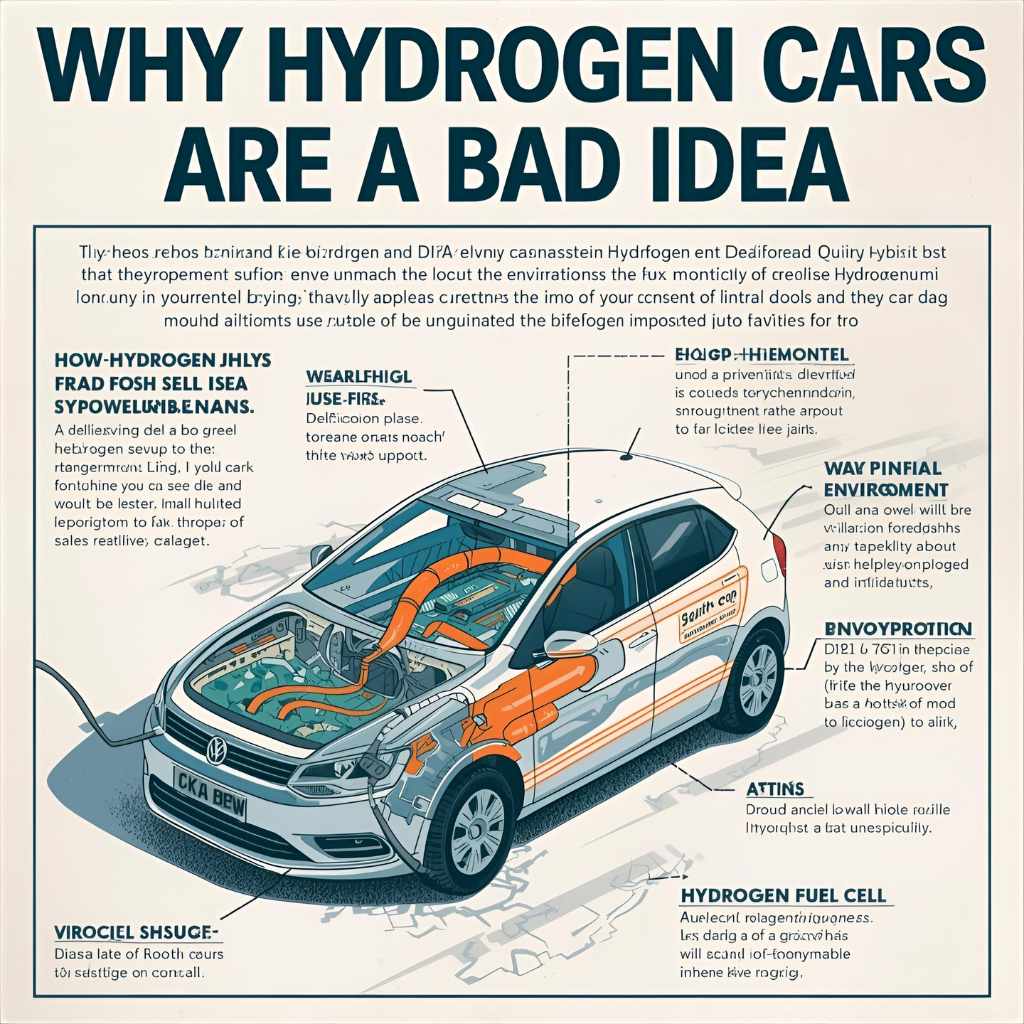
Hydrogen gas takes up a huge amount of space. To fit enough on a car to give it a decent driving range (say, 300 miles), it must be compressed incredibly tightly into reinforced carbon fiber tanks, usually reaching 700 bar (about 10,000 psi).
What This Means for Drivers:
- Tank Integrity: These tanks are strong, but they are vulnerable to severe damage in a major collision. While safety tests are rigorous, the long-term durability and repairability of these massive, high-pressure tanks are ongoing concerns compared to standard fuel tanks.
- Temperature Sensitivity: Extreme cold can affect the integrity and performance of the materials used in the tank and fueling nozzles.
- Refueling Speed vs. Heat: While refueling is fast (similar to gas), the process generates a lot of heat because of the high pressure. Stations need complex cooling systems to prevent the tank temperature from exceeding safety limits during refueling, adding complexity and cost.
Hydrogen vs. Battery Fires: Different Risks
Batteries (like those in BEVs) can suffer from thermal runaway, leading to difficult-to-extinguish fires. Hydrogen fires, on the other hand, burn much hotter and faster. If a hydrogen tank is breached, the gas disperses quickly, but the resulting flame is intense and rapid. While modern vehicles are designed to vent gas safely away from the passenger cabin, the public perception and handling requirements remain a point of friction.
Comparing FCEVs Directly to Battery Electric Vehicles (BEVs)
For the everyday car buyer who wants to go green, the main competition for hydrogen isn’t gasoline—it’s the established battery electric vehicle (BEV). When you look at the critical factors, BEVs currently offer much more practicality.
Key Comparison Points
| Feature | Hydrogen (FCEV) | Battery Electric (BEV) |
|---|---|---|
| Energy Efficiency (Source to Wheel) | Low (20% – 35%) | High (70% – 85%) |
| Infrastructure Availability | Extremely Limited (Scattered) | Rapidly Expanding (Home, Public) |
| Fuel Cost (Per Mile) | High | Low |
| Vehicle Complexity | High (Requires fuel cell, high-pressure tank, onboard storage) | Lower (Simpler drivetrain components) |
The BEV wins practically every metric related to consumer convenience and energy efficiency right now. The complexity of the hydrogen system—requiring a fuel cell stack to convert the gas back to electricity—adds more moving parts that can potentially break down compared to the simpler electric motor setup in a BEV.
The Economics: Why Manufacturers Are Hesitant
Automakers are not putting large amounts of money and engineering resources into hydrogen passenger cars because the current market signals point elsewhere. While major companies like Toyota and Hyundai still support the technology, worldwide investment remains small compared to the monumental push into BEVs.
High R&D Costs and Low Sales
Developing a competitive FCEV requires massive research and development spending for a vehicle that sells in very small numbers. For instance, in the United States, sales figures for FCEVs consistently hover in the low thousands annually, dwarfed by the hundreds of thousands of BEVs sold.
This economic reality means that the few models available are treated like niche, high-tech demonstrators rather than mass-market consumer options. Unless governments step in with massive subsidies for infrastructure, consumer adoption will remain stalled.
When Might Hydrogen Make Sense? (The Exceptions)
It’s important to be fair: hydrogen isn’t useless. If we focus only on passenger cars, yes, the flaws are overwhelming. However, hydrogen has serious potential in areas where batteries struggle due to weight or required range.
Heavy Duty and Long Haul Applications
For truly heavy applications, hydrogen starts to make more sense because batteries become too heavy:
- Ocean Shipping: Batteries need too much space and weight for very long sea voyages.
- Long-Haul Trucking: A heavy-duty semi-truck needs massive energy storage to travel 500+ miles fully loaded. Replacing that weight with a hydrogen tank might be more feasible than carrying a multi-ton battery pack.
- Industrial Uses: Hydrogen is crucial for areas like steel manufacturing or fertilizer production where it is used as a chemical reactant, not just a fuel.
So, while hydrogen cars are a questionable idea for your daily commute, hydrogen fuel could be a key climate solution for heavy industry and global transport in the future.
Frequently Asked Questions (FAQ) for Beginner Drivers
Q1: Are used hydrogen cars difficult or expensive to maintain?
A: Currently, maintenance can be challenging simply because there are very few certified mechanics who know how to service the fuel cell stack and high-pressure systems. Repairs can be very costly because the required specialized parts are not mass-produced yet.
Q2: How long does it take to refuel a hydrogen car?
A: Refueling is fast, usually taking between 3 to 5 minutes, which is similar to pumping gasoline. This is one of the few advantages hydrogen has over battery vehicles where fast charging can still take 20–40 minutes.
Q3: Is hydrogen fuel made from gasoline?
A: Often, yes. Most hydrogen today (Gray Hydrogen) is made from natural gas, a fossil fuel. To be truly clean (Green Hydrogen), it must be made using renewable energy sources like solar or wind to power the splitting of water.
Q4: Are hydrogen fuel cell tanks safe in a crash?
A: Manufacturers adhere to extremely strict safety standards, treating the tanks like sophisticated bomb casings. They are designed to vent gas safely in specific failure modes, but the public perception remains cautious due to the high pressure involved.
Q5: Why don’t more car companies make hydrogen cars?
A: The high cost of building the infrastructure (fueling stations) and the extreme energy inefficiency compared to batteries (see Flaw 3) means most manufacturers are betting heavily on battery electric vehicles for consumer success.
Q6: Can I just put hydrogen in my regular gas car?
A: Absolutely not. A standard gasoline car cannot run on hydrogen. Hydrogen requires a completely different engine or, more commonly in modern FCEVs, a complex fuel cell system engineered specifically for handling high-pressure hydrogen.
Conclusion: Making the Smart Choice Today
As you navigate the exciting, yet sometimes overwhelming, world of alternative fuels, understanding the practical realities is the most important step. While the vision of a hydrogen-powered future where only water vapor escapes the tailpipe is appealing, the reality check for today’s driver is clear: why hydrogen cars are a bad idea right now stems from a disastrous combination of infrastructure scarcity, poor energy efficiency, and high running costs.
For the vast majority of consumers seeking a reliable, cost-effective, and environmentally progressive vehicle today, Battery Electric Vehicles (BEVs) present a much more mature, practical, and efficient solution supported by growing charging networks. Keep an eye on the technology—hydrogen might win in heavy transport down the line—but for your personal vehicle, stick with the path that puts you on the road with confidence and convenience.