How Much Is Auto Tech School? Costs, Fees, and Tools
Auto tech school usually costs around $5,000 to $15,000 at public community colleges and roughly $20,000 to $40,000 at private schools, before tools, fees, and transportation. Miss that full bill and you can borrow too much or run short before graduation. This guide breaks down tuition, schedules, added costs, and a simple way to estimate your out-of-pocket total before you apply.
Typical Cost Range
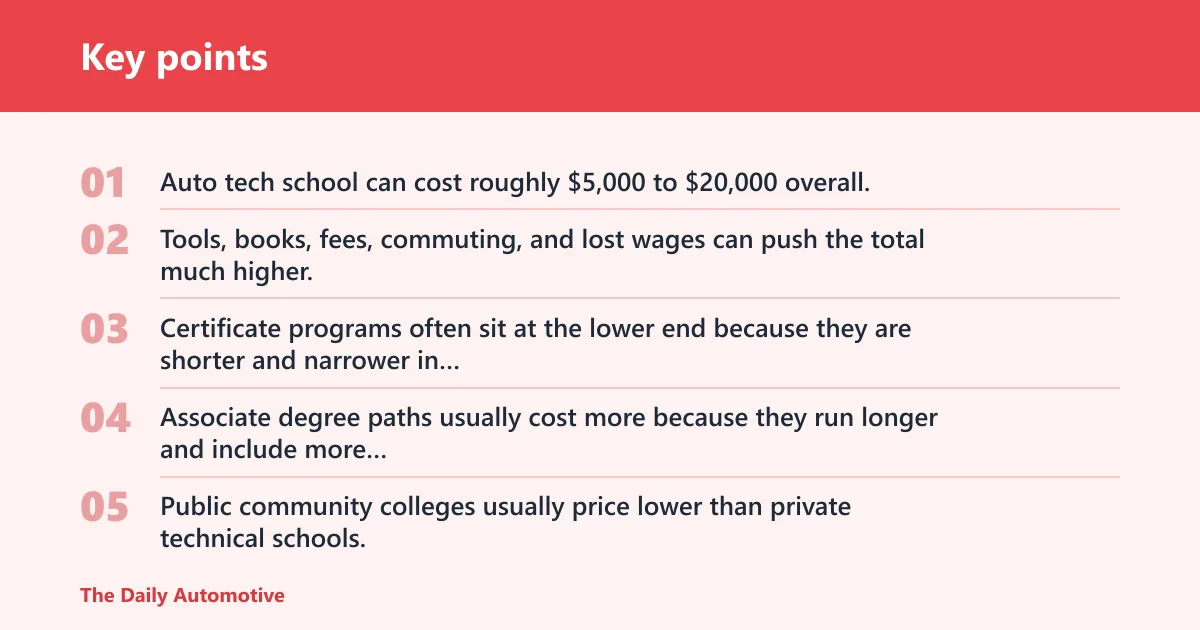


Auto tech school can cost roughly $5,000 to $20,000 overall, but tuition for a certificate or associate degree program typically runs $5,000 to $30,000 depending on school type, length, and location. Sticker price is only the start. Tools, books, fees, commuting, and lost wages can push the total much higher.
Typical tuition ranges by program type
Certificate programs often sit at the lower end because they are shorter and narrower in scope. Associate degree paths usually cost more because they run longer and include more general education and lab time. Public community colleges usually price lower than private technical schools.
Why total cost is often higher than sticker price
Tuition is only one line on the bill. Many students also need a starter tool kit, work boots, uniforms or shop clothes, lab fees, books, and transportation. If you cut work hours to attend day classes, lost wages can become one of the biggest costs.
What changes the price from one school to another
Location matters because rent, commuting distance, and local wage levels differ. Program length matters because a longer program adds more tuition and more weeks without full-time income. School type matters too, since public and private campuses follow different pricing models.
📊 Auto tech school costs range from roughly $5,000 to $20,000. Source: How Much Is Auto Tech School?.
What you actually pay beyond tuition

The real cost of auto tech school usually includes tools, books, lab fees, uniforms, commuting, and sometimes housing or missed pay. Those items can add several thousand dollars to the total. A careful budget should treat tuition as only part of the decision.
Tool kits and specialty tools
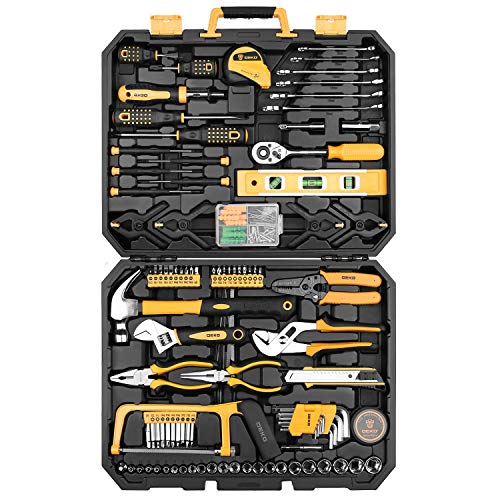
Many programs require you to buy a starter tool kit or build one as you advance. Expect hand tools, a box, torque wrenches, safety gear, and specialty items that are not part of tuition. A larger kit can cost more, but it may reduce borrowing later if you buy gradually.
Books, lab fees, uniforms, and shop supplies
Lab fees help cover consumables used in engine, brake, electrical, and diagnostic classes. Books and digital materials add another layer. Some programs also require uniforms, steel-toe boots, or approved workwear for shop safety.
Commute, housing, and lost wages
If your campus is across town, fuel, parking, and vehicle wear matter. If you relocate for school, housing becomes a major line item. Full-time daytime schedules can also reduce work hours, which means lower income while you are enrolled.
Picture a student who lives 28 miles from campus and drives five days a week. Even before tools, that commute can add a meaningful cost over a nine-month or two-year program. Compare that with a nearby public campus and the price gap becomes easier to see.
How do community colleges and private trade schools compare?
Community colleges typically cost less than private technical schools, but the cheapest option is not always the best fit for every student. Certificate, diploma, and associate degree paths also change the bill. The right choice depends on your schedule, commute, tool costs, and how fast you want to finish.
Public school pricing versus private school pricing
Public programs often carry lower tuition because they are funded differently and may serve local residents at in-district rates. Private schools usually charge more, especially when they compress training into a shorter calendar. A shorter schedule can still cost more overall if it forces you to stop working.
Certificate, diploma, and associate degree differences
Certificate programs are usually shorter and may be the lowest tuition route. Diplomas sit in the middle. Associate degrees usually take longer and can cost more, but they may give you broader academic coursework and a credential some employers prefer.
When a nearby public program can be the lower-cost option
If you can attend a nearby community college without moving, the savings can be significant. A local public program can cut commuting, housing, and lost wages at the same time. That is why price comparisons should use total cost, not tuition alone.
How long does auto tech school take?
Auto tech school can take a few weeks for short courses or a couple of years for longer certificate and degree paths. Short-term programs can get you into the shop faster, while longer programs may include deeper diagnostics, more lab time, and a broader credential.
Short-term programs in weeks or months
Short-term auto tech courses can last from a few weeks to a few months. They are useful for focused training, refresher work, or entry-level skill building. They can also be easier to fit around work, but they may leave you paying separately for extra tools or later coursework.
Full-time versus part-time scheduling
Full-time programs require daytime attendance and finish faster. Part-time programs allow evening or weekend attendance. Part-time study can reduce lost wages, but it may stretch tuition, commuting, and tool purchases over a longer period.
Two-year and four-year path differences
Two-year paths are common for associate degrees. Four-year options are less common in this field, but some students build a longer college path by stacking certificates, advanced technical coursework, or transfer credits. Longer paths usually mean more total cost, even if annual tuition seems manageable.
How should you pay for auto tech school?
Financial aid can lower what you pay out of pocket, but it does not erase the full cost of attendance. Federal loans, grants, work-study, and scholarships may be available to offset costs. The key is to compare aid offers after tools, fees, and living costs are included.
Federal aid, grants, work-study, and scholarships
Grants do not have to be repaid, which makes them valuable. Federal loans can cover tuition and some living costs, but they add monthly payments later. Work-study can help with day-to-day expenses, and scholarships can reduce the amount you borrow.
Loans and what they mean for monthly payments later
Borrowing more may make school possible, but the monthly payment comes after graduation or after you leave school. That matters if you choose a longer program or a higher-priced private campus. A lower tuition bill can be less helpful if it forces you to borrow heavily for housing and tools.
How to compare aid offers across schools
Compare each school’s aid package using the same budget lines: tuition, required tools, fees, housing, and commute. A bigger grant at a higher-priced school may still leave you worse off than a smaller aid package at a cheaper local campus. Ask for the net cost, not only the award amount.
Auto tech school cost worksheet: three sample paths
This worksheet uses sample estimates to show how tuition can turn into a real total. The point is not to price every school exactly. The point is to show how tools, fees, commuting, housing, and lost wages can change the bill by thousands of dollars.
| Cost item | Community college certificate | Private trade school diploma | Associate degree |
|---|---|---|---|
| Tuition | $6,500 | $18,500 | $12,000 |
| Tool kit | $1,500 | $2,500 | $2,000 |
| Lab fees | $350 | $600 | $500 |
| Books and materials | $650 | $900 | $1,100 |
| Commute | $1,000 | $1,800 | $1,400 |
| Housing | $0 | $4,800 | $0 |
| Lost wages | $2,400 | $6,000 | $4,800 |
| Sample total | $12,400 | $34,100 | $21,800 |
In this worksheet, the public certificate path is the lowest-cost option because it avoids housing and keeps tuition down. The private diploma costs more because of higher tuition and the added housing assumption. The associate degree sits between them on tuition, but longer time in school still raises the total.
- Start with published tuition and required fees.
- Add the cost of tools, books, and shop supplies.
- Estimate commute, parking, or relocation costs.
- Include lost wages if you reduce work hours.
- Subtract grants, scholarships, and employer help.
- Compare the remaining total, not tuition alone.
Will auto tech school pay off after graduation?
Auto tech school can pay off if it places you on the automotive service technician path and the total cost stays in line with expected earnings. ASE certification matters because many employers value it, but graduation does not automatically make someone certified. The payoff depends on job market, debt, and how quickly you start earning.
Automotive service technician job path
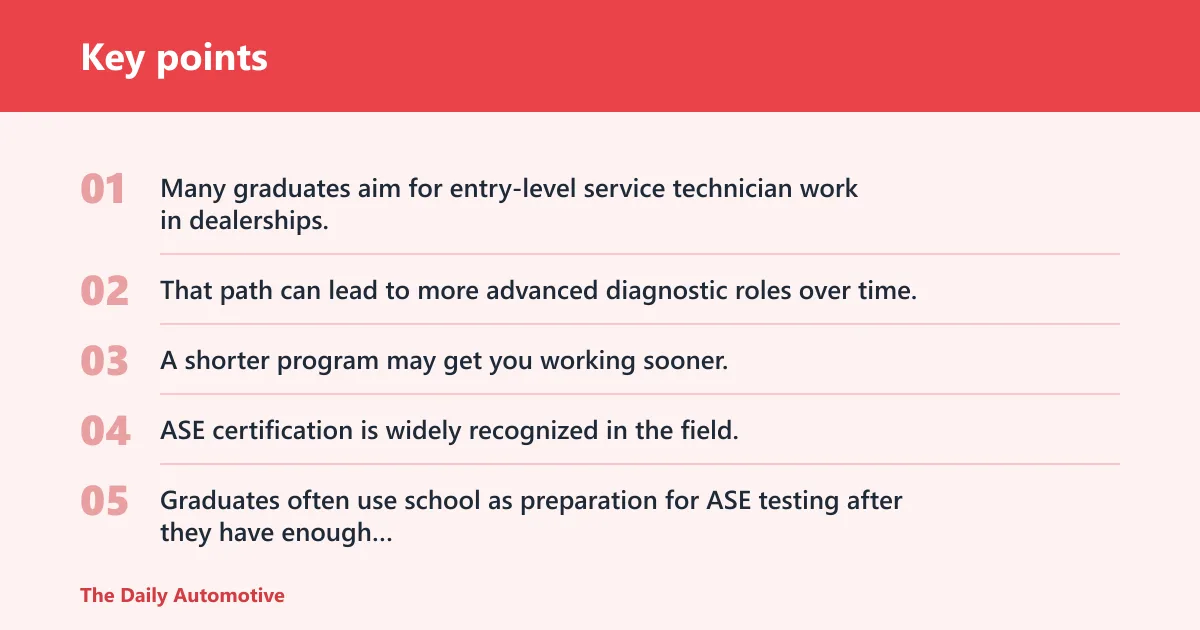
Many graduates aim for entry-level service technician work in dealerships, independent repair shops, fleets, or specialty shops. That path can lead to more advanced diagnostic roles over time. A shorter program may get you working sooner, while a longer program can add depth that some employers notice.
Why ASE certification matters to many employers
ASE certification is widely recognized in the field, but it is separate from school completion. Graduates often use school as preparation for ASE testing after they have enough experience or training. Treat ASE as a later step, not a promise that comes with enrollment.
How to think about earnings potential against program cost
Think in terms of payback period. A lower-cost program can be easier to recover financially if it leads to work faster. A higher-cost program can still make sense if it gives you a stronger credential, but only if the monthly payment and total debt stay manageable.
Suppose a student chooses a private program because it ends faster, but the total bill includes housing and higher borrowing. That student may enter the workforce sooner, yet the monthly loan payment can eat into early earnings. Speed helps only when the whole cost picture still works.
How much is auto mechanic school?
Auto mechanic school usually means the same cost range as auto tech school: roughly $5,000 to $20,000 overall, with tuition commonly falling between $5,000 and $30,000 depending on program type and school. The term matters less than the program structure, length, and added expenses.
How much is auto mechanic trade school?
Auto mechanic trade school can be cheaper or more expensive than a community college program, depending on location and calendar length. Public schools are usually lower-priced than private technical schools. Add tools, fees, and commuting before deciding which trade school is truly cheaper.
How much is uti auto mechanic school?
Universal Technical Institute provides automotive technology and outdoor powered equipment training, but the price depends on campus, program length, and aid package. The right way to judge UTI is by total cost of attendance, not tuition alone. Ask for books, tool requirements, and housing assumptions in writing.
How much is uti auto tech program?
The UTI auto tech program price is not a single number because costs vary by campus and schedule. Compare tuition, required tools, and living expenses against nearby public programs. If you need day classes and a faster finish, the added cost may still be worth weighing carefully.
How much is lincoln tech automotive program?
Lincoln Tech automotive program pricing varies by campus and credential, so a current catalog matters more than old estimates. Look at tuition, kit requirements, fees, and whether the schedule forces you to cut work hours. That total gives a better picture than advertised tuition alone.
How much is lincoln tech automotive program per year?
Annual cost at a school like Lincoln Tech can be misleading if the program runs on a different calendar than a traditional college year. Break the bill into tuition per term, then add tools, fees, and living costs. The yearly total may differ sharply from the published tuition figure.
How much is pennco tech automotive program?
Pennco Tech automotive program costs should be checked against the current school catalog because private-school pricing changes. The useful comparison is not only tuition, but also required tools, materials, commuting, and whether your schedule lets you keep working. That is where the real difference shows up.
Frequently asked questions
how much is trade school for automotive technician
Trade school for automotive technician training often falls in the broad $5,000 to $20,000 range overall, though tuition can be higher at private schools. The best comparison is total cost of attendance. Include tools, materials, and the income you give up if the program runs during daytime hours.
Products related to this article
Sponsored / affiliate links. As an Amazon Associate I earn from qualifying purchases. I may earn additional commission from eligible campaigns.