Best Tires for Passenger Cars (2026): We Compared
For most passenger cars, a premium grand-touring all-season tire is the safest all-around pick. Pick a max-performance summer tire only if your driving stays in warm weather with dry roads that turn wet in rain, and choose a winter tire if temperatures regularly stay below 45°F. The wrong tire can mean longer wet stops, weaker hydroplaning resistance, faster wear, and more noise than you expected. This guide ranks passenger-car tires by climate, grip, tread life, and comfort, with clear picks for sedans, compacts, and midsize cars.
Quick comparison
| Product | Badge | Best for | Price | ||
|---|---|---|---|---|---|
 |
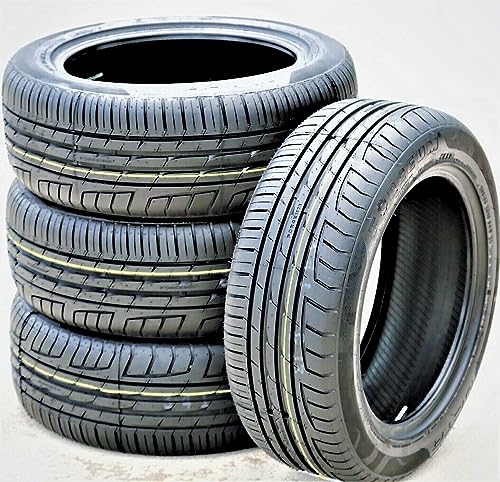
Set of 4 (FOUR) Fullway HP108 All-Season Passenger CarFullway | Our pick | $276.93
Price as of 26 Oct 2026
|
View | |
 |
Pirelli Cinturato Adventure Classic 40-622 Gravel BicyclePirelli | Also great | $188.82
Price as of 26 Oct 2026
|
View |
Use wet traction and braking first. Then match the tire type to your commute, snow exposure, and how long you plan to keep the car.
How we chose
The ranking is based on four commonly used buying checks: wet grip, tread life, ride comfort, and climate fit. It also accounts for warranty length where published, because mileage coverage often tells you more about total cost than sticker price alone.
Category matters, too. Touring all-season tires suit commuters who want a smoother, quieter ride. Grand touring all-season tires bring stronger wet grip and better light-snow ability. Ultra high-performance all-season tires trade some comfort for sharper steering and cornering.
Size, load index, and speed rating matter as much as brand. A tire that fits the wheel well is not enough; it still has to match the placard and the owner’s manual.
What size and rating do you need?
The right tire starts with the door-jamb placard. That label lists the factory size, load index, and speed rating the car was certified to carry, and those values should be your baseline unless the owner’s manual gives an approved alternate size.
Check the door-jamb placard first
Look at the placard on the driver’s door jamb for the original tire size and cold inflation guidance. If the car is currently wearing a different size, do not assume the current setup is correct.
Match load index and speed rating
The load index has to support the vehicle’s weight, while the speed rating must meet or exceed the carmaker’s minimum. For example, the Continental ProContact TX is listed with a 99H load index and H-speed rating, which shows how both values appear together on a real passenger-car tire spec.
Use the owner’s manual for optional sizes
Many sedans accept more than one approved size. The manual tells you which alternates preserve overall diameter, ABS behavior, and speedometer accuracy. If it is not listed there, do not treat it as a safe swap.
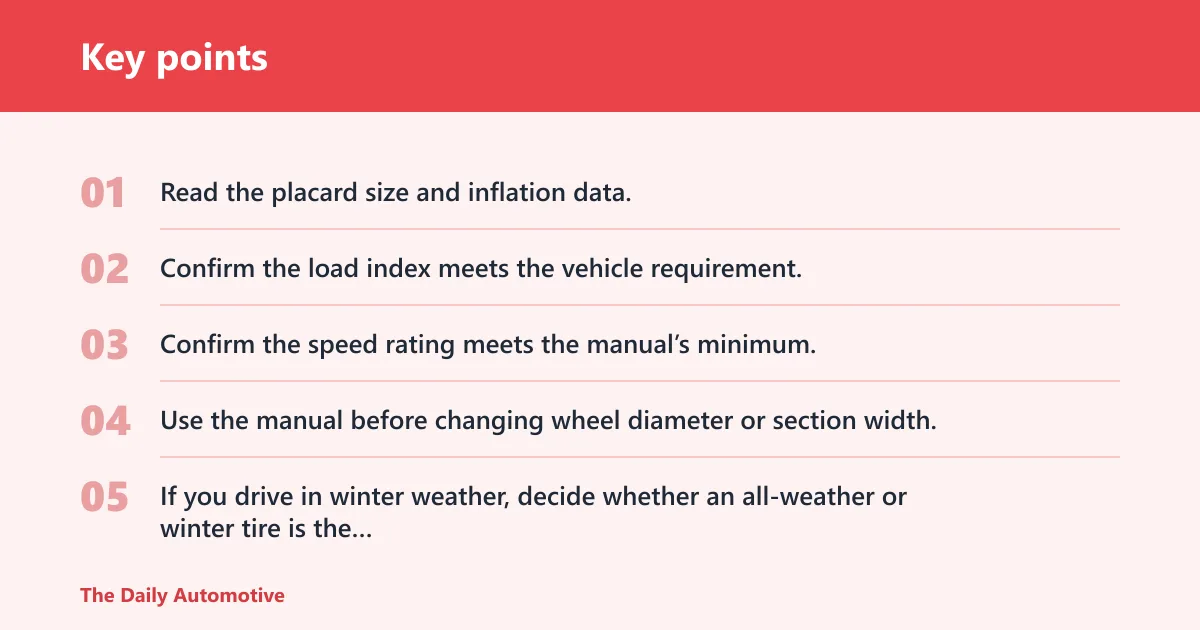
- Read the placard size and inflation data.
- Confirm the load index meets the vehicle requirement.
- Confirm the speed rating meets the manual’s minimum.
- Use the manual before changing wheel diameter or section width.
- If you drive in winter weather, decide whether an all-weather or winter tire is the better fit.
Say your sedan calls for 205/55R16 and you see a cheaper 215/55R16 set online. That wider tire may look close, but it can change clearance and speedometer behavior. The placard and manual matter more than a bargain listing.
Passenger car decision table
| Driver profile | Recommended tire category | Must-have specs | Tradeoffs |
|---|---|---|---|
| Highway commuter | Touring all-season | Smooth ride, low road noise, long tread life, strong wet braking | Less steering sharpness than performance tires |
| Rainy-city driver | Grand touring all-season or all-weather | Wet traction, hydroplaning resistance, stable braking in standing water | Usually costs more than basic touring |
| Light-snow suburban driver | All-weather tire | Marked winter capability, wet grip, light-snow traction | Often louder and firmer than standard touring all-season tires |
| Budget shopper | Value touring all-season | Solid tread warranty, acceptable wet grip, proven wear pattern | Usually gives up some cabin quiet and steering response |
| Spirited driver | Ultra high-performance all-season | Quick steering, dry grip, usable wet traction, correct speed rating | Shorter tread life and firmer ride than touring tires |
Are all-weather tires better than all-season tires?
All-weather tires make more sense than standard all-season tires when winter is real, but not severe enough to justify a dedicated winter set. They add snow traction and stronger cold-weather grip, while still staying on the car year-round. In mild regions, standard all-season tires still win on ride comfort, noise, and often price.
Where all-weather tires make sense
Choose all-weather tires if you see repeated slush, early-season snow, or cold mornings that linger for weeks. They are the safer year-round choice when winter traction matters more than maximum comfort.
Where standard all-season tires still win
If winter is brief and roads are usually clear, a premium touring or grand touring all-season tire is often the smarter pick. You get lower noise, a smoother ride, and usually longer tread life.
Michelin CrossClimate2: best for safety
The Michelin CrossClimate2 is often described as a strong safety-oriented choice for mixed weather, especially when wet grip and winter confidence matter more than a soft ride. Car Talk names it its #1 car tire pick and gives it a 4.9 out of 5 score, while TireGrades lists it as the best safety and grip tire. That combination points to a strong all-weather fit for mixed climates.
It suits drivers who want one tire for rain, cold mornings, and light snow without switching sets twice a year. The tradeoff is price. Premium all-weather tires usually cost more than standard touring all-season models, and they can ride firmer than a quiet commuter tire.
Continental TrueContact Tour 54: best value
The Continental TrueContact Tour 54 fits drivers who want a value-oriented touring all-season tire with responsive handling and solid grip. It is the kind of tire that makes sense for common sedans and compact cars where wet traction, predictable steering, and long-life value all matter.
Its drawback is simple: value tires rarely lead in one single category. If you want the quietest cabin or the sharpest turn-in, a more specialized tire may suit you better. If you want a balanced commuter tire, this category is hard to beat.
Goodyear Assurance MaxLife2: best for tread life
The Goodyear Assurance MaxLife2 is aimed at drivers who care most about durability and replacement timing. For daily commuting, that matters because tread life changes the real cost of ownership more than a low sticker price does.
This is the right kind of tire for drivers who put on steady highway miles and want to stretch replacement intervals. The drawback is that durability-first tires can feel less precise than an ultra high-performance all-season tire, and they may not satisfy drivers who want the most direct steering response.
Pirelli Cinturato WeatherActive: best for wet weather
The Pirelli Cinturato WeatherActive is the premium all-weather pick for drivers who rank wet traction and snow capability above pure ride softness. It makes sense in regions where heavy rain, cold snaps, and light snow all show up in the same year.
Its honest tradeoff is comfort. All-weather tires often bring a firmer ride and more road noise than a standard touring all-season tire. If your climate stays warm and mostly dry, a quieter touring model may be the better daily-driver match.
Which one should you buy?

Start with climate, then move to mileage and comfort. The safest choice is not the same for every driver, because a commuter in Phoenix does not need the same tire as a driver in Pittsburgh or Minneapolis.
Highway commuter
Choose a touring all-season tire first. You want low noise, smooth ride quality, and a tread pattern built for long wear. If the commute is mostly interstate and the weather is mild, this is the best-fit category.
Rainy-city driver
Pick a grand touring all-season or an all-weather tire. Wet traction and braking should outrank price here, because standing water and repeated rain exposure raise hydroplaning risk. The Michelin CrossClimate2 and Pirelli Cinturato WeatherActive fit this use case better than a basic touring tire.
Light-snow suburban driver
Go with an all-weather tire if you want one set year-round. If snow is only occasional and roads are quickly cleared, a premium grand touring all-season tire can still work, but it is not as strong in cold traction.
Budget shopper
Focus on total ownership, not just purchase price. A tire with a longer treadwear warranty can be cheaper over time if it wears evenly and lasts longer. The Continental TrueContact Tour 54 is the better value-type choice here than a no-name bargain tire.
Spirited driver
Choose an ultra high-performance all-season tire if steering response matters more than ride softness. You give up some comfort and often some tread life, but you gain a sharper feel in corners and quicker response on turn-in.
Suppose you live in a rainy suburb, drive a midsize sedan, and see light snow four or five times a winter. An all-weather tire may be the safer buy than a standard touring all-season, because the extra cold-weather grip matters more than a slightly quieter ride.
Fullway HP108 all-season: best for low-cost fitment
The Fullway HP108 is a low-cost all-season passenger-car option for buyers who are trying to keep replacement spending down. Its listed size is 205/60R16, with a 92H load range SL 4-ply specification, so it fits the broad pattern of common sedan tire sizing.
The drawback is that this is the kind of tire where you should be especially careful about expectations. Budget all-season tires rarely match premium models for wet braking, noise control, or tread life consistency, so it is best for shoppers who need an economical replacement and can accept a simpler tire.
Pirelli Cinturato Adventure Classic: not for passenger cars
This product is a gravel bicycle tire, not a passenger-car tire, so it should not be considered for the car-shopping decision this article covers. It appears in the product list, but it does not belong on a sedan, compact, or midsize car.
The drawback is obvious and decisive: it is the wrong vehicle type. If you are shopping for a passenger car, ignore it and focus on the tire categories and models above that match your size, rating, and climate needs.
What are the best tires for passenger cars?
The best passenger-car tire depends on the job. For safety in mixed weather, the Michelin CrossClimate2 stands out. For value, the Continental TrueContact Tour 54 makes sense. For long tread life, the Goodyear Assurance MaxLife2 is the better fit. The right choice comes from climate, not brand alone.
Which passenger car tires are best for wet weather?
For wet weather, prioritize tread pattern, wet braking, and hydroplaning resistance over ride softness. The Michelin CrossClimate2 and Pirelli Cinturato WeatherActive are stronger matches for rain-heavy driving than a basic touring all-season tire. If standing water is common, all-weather tires deserve a closer look.
What tires give the longest tread life for a sedan?
Touring all-season tires and durability-focused models usually last the longest because they are built for commuting, not aggressive cornering. The Goodyear Assurance MaxLife2 is aimed at that need, and treadwear warranty is a useful clue when comparing options. Mileage coverage is commonly reported to run from about 50,000 to 80,000 miles, depending on the model.
What is the difference between touring and high-performance passenger car tires?

Touring tires are tuned for comfort, low noise, and tread life. High-performance tires are tuned for sharper steering, firmer cornering, and stronger dry-road response. The tradeoff is straightforward: the more handling you want, the more ride comfort and wear life you usually give up.
What tire brand is best for comfort and low noise?
Comfort and low noise are more about tire category than brand name. Touring all-season tires are the quietest common choice for passenger cars, especially on highways. If comfort is the priority, start there before comparing brands, because an ultra high-performance tire from a premium brand can still ride firmly.
Which passenger car tires are good in light snow?
All-weather tires are the safer year-round choice for light snow because they add cold-weather traction that standard all-season tires do not match. The Michelin CrossClimate2 is a strong example. If snow is only occasional and roads are cleared quickly, a premium grand touring all-season tire can be enough.
What size passenger car tire do I need for my car?
Use the door-jamb placard first, then verify the owner’s manual. Match the exact size, load index, and speed rating unless the manual lists an approved alternate. If the car currently has different tires, do not assume the installed size is correct just because it fits the wheel.
Which budget passenger car tires are worth buying?
Budget tires are worth buying only when they still meet the vehicle’s size and rating requirements and have a credible tread-life warranty. The Fullway HP108 fits the low-cost side of the market, while value touring tires such as the Continental TrueContact Tour 54 are usually the safer long-term buy if the budget can stretch.
Products related to this article
Sponsored / affiliate links. As an Amazon Associate I earn from qualifying purchases. I may earn additional commission from eligible campaigns.