Why Is My Car Leaking Fluid: Essential Fixes
A car leaking fluid usually means a seal, hose, or component has a problem. Common culprits include coolant leaks (sweet smell, colorful puddle), oil leaks (dark, brown stain), brake fluid leaks (slippery feel, low pedal), and power steering fluid leaks (slippery, may have odor). Identifying the fluid type and location helps pinpoint the issue for a straightforward DIY fix or a quick trip to the mechanic.
Why Is My Car Leaking Fluid? Essential Fixes for Every Driver
Seeing a puddle under your car can be unsettling, but don’t panic! It’s a common car issue that many drivers face. Learning to identify car fluid leaks is a fantastic way to take charge of your vehicle’s health and potentially save money on repairs. We’ll walk through how to figure out what’s leaking, what it means, and what you can do about it, making car care feel much less mysterious.
This guide is designed to be super simple. We’ll break down the different types of fluids, show you how to spot them, and offer easy steps to address the most common leaks. By the end, you’ll feel more confident understanding your car and knowing when it’s time for action.
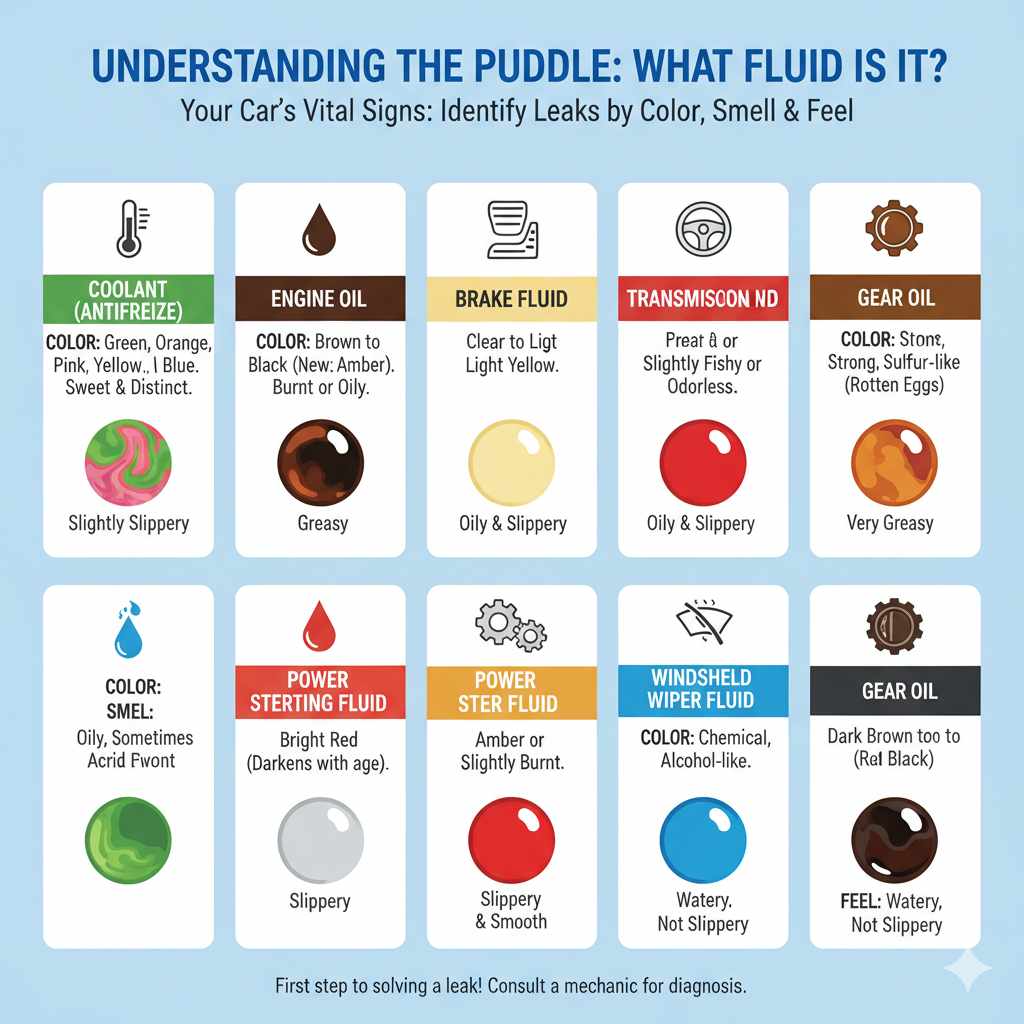
Understanding the Puddle: What Fluid Is It?
The first step to solving a leak is figuring out what kind of fluid is on your driveway. Different fluids have distinct colors, smells, and textures, which are big clues. Think of them like your car’s vital signs!
Coolant (Antifreeze)
Often brightly colored, ranging from neon green, orange, pink, or blue. It has a sweet, slightly syrupy smell. Coolant protects your engine from overheating and freezing.
- Color: Green, orange, pink, yellow, or blue.
- Smell: Sweet and distinct.
- Feel: Slightly slippery.
Engine Oil
This is typically dark brown or black, especially if it’s older. New oil is usually amber. It has a burnt or oily smell. Oil lubricates your engine’s moving parts.
- Color: Brown to black.
- Smell: Burnt or oily.
- Feel: Greasy.
Brake Fluid
Usually clear or slightly yellowish. It has a slightly fishy odor and can feel slippery. This fluid is crucial for your braking system to work.
- Color: Clear to light yellow.
- Smell: Slightly fishy or odorless.
- Feel: Oily and slippery.
Transmission Fluid
Automatic transmission fluid (ATF) is typically bright red and may smell slightly burnt if it’s old or overheated. It’s essential for gear changes in automatic transmissions.
- Color: Bright red (can darken with age).
- Smell: Sweet or slightly burnt.
- Feel: Slippery and smooth.
Power Steering Fluid
Color can vary depending on the type, often amber or reddish. It might have a slightly oily or burning smell, especially if leaking.
- Color: Amber or reddish.
- Smell: Oily, sometimes acrid.
- Feel: Slippery.
Windshield Wiper Fluid
Most often blue, but can be other colors. It has a distinct chemical smell, sometimes like rubbing alcohol.
- Color: Usually blue, sometimes dyes can vary.
- Smell: Chemical, often like alcohol.
- Feel: Watery, not slippery.
Gear Oil
Found in manual transmissions and differentials. It’s typically dark brown or black and has a strong, unpleasant sulfurous odor, like rotten eggs.
- Color: Dark brown to black.
- Smell: Strong, sulfurous, unpleasant.
- Feel: Very greasy.
Where Is the Leak Coming From? Common Locations
Once you have an idea of the fluid, try to pinpoint its origin. Looking under your car when it’s parked on dry ground and then checking related areas when the engine is cool can help.
Under the Front of the Car
Leaks here often involve the engine oil, coolant (radiator or hoses), or power steering fluid. Check the oil pan, oil filter, radiator, and power steering pump area.
Under the Middle of the Car
This area is typically where the transmission is located. Leaks here could be transmission fluid. If you have a manual transmission, it could also be gear oil from the transmission or differential.
Under the Rear of the Car
Leaks in the back might indicate differential fluid (gear oil) or potentially brake fluid if you have rear-wheel ABS components back there.
Around the Wheels
Leaks near a wheel could be brake fluid from a leaky brake line or caliper, or potentially coolant from a hose running near that area.
On the Windshield or Dashboard
If you notice fluid on your windshield that isn’t from being outside, it could be a windshield washer fluid leak spreading from the reservoir or hoses.
Common Fluid Leaks and Their Fixes
Let’s dive into the most frequent fluid leaks and how to tackle them. Remember, safety first! If you’re unsure or uncomfortable, it’s always best to consult a trusted mechanic.
1. Engine Oil Leak
Why it happens: Old, worn, or damaged seals and gaskets are the usual suspects. The oil filter might not be tightened properly, or the oil pan itself could be cracked.
What to do:
- Identify the Source: Look for oil drips and stains. Check the oil pan, oil filter, and valve cover gasket. A mechanic can use a UV dye to pinpoint tiny leaks.
- Tighten or Replace Filter: If the oil filter is loose, carefully tighten it (don’t overtighten!). If it’s old, it needs replacement.
- Replace Gaskets/Seals: If a gasket (like the valve cover gasket or oil pan gasket) is leaking, it needs to be replaced. This can be a DIY job for some, but often requires some mechanical skill.
- Repair or Replace Oil Pan: If the oil pan is cracked, it will need to be repaired or replaced.
DIY Difficulty: Easy to Moderate, depending on the source.
2. Coolant (Antifreeze) Leak
Why it happens: Radiator hoses can crack or become loose. The radiator itself can corrode and develop holes. Water pump seals can fail, and head gaskets can leak.
What to do:
- Inspect Hoses: Squeeze the radiator hoses. If they feel brittle, spongy, or have cracks, they probably need replacing. Check hose clamps for tightness.
- Check Radiator: Look for wet spots or corrosion on the radiator. Small leaks might be fixable with a radiator sealant, but a new radiator is often needed for significant damage.
- Inspect Water Pump: Look for leaks around the water pump pulley. A weeping hole usually indicates seal failure.
- Check for Head Gasket Issues: If you see white smoke from the exhaust, milky oil, or a loss of coolant without visible leaks, it might be a head gasket. This is a major repair.
DIY Difficulty: Easy (hoses) to Difficult (radiator, water pump, head gasket).
3. Brake Fluid Leak
Why it happens: Brake lines can rust and corrode, especially in areas with road salt. Seals in brake calipers or wheel cylinders can wear out. The master cylinder can also leak.
What to do:
- Check Fluid Level: If your brake fluid level is low, this is a serious safety concern.
- Inspect Brake Lines: Look for rust or corrosion on the metal brake lines. If they are badly corroded, they need to be replaced.
- Examine Calipers & Cylinders: Check around the brake calipers (for disc brakes) or wheel cylinders (for drum brakes) for leaks.
- Replace Leaky Components: Worn seals in calipers or wheel cylinders need replacement. A leaking master cylinder requires replacement.
Safety Note: Brake fluid leaks are critical. Your brakes WILL fail if not addressed. Even minor leaks demand immediate attention from a professional.
DIY Difficulty: Moderate to Difficult. Replacing brake lines or components involves bleeding the brake system, which requires specific knowledge and tools.
4. Transmission Fluid Leak
Why it happens: The transmission pan gasket can degrade. Transmission lines that run to the cooler can crack or get damaged. Seals on the transmission itself can fail.
What to do:
- Locate the Source: Transmission fluid is usually bright red. Check the transmission pan and where the transmission lines connect.
- Tighten or Replace Pan Gasket: Like the oil pan, the transmission pan has a gasket that can leak. It can sometimes be tightened, but often needs replacement.
- Inspect Transmission Lines: Ensure lines going to the radiator or transmission cooler are intact and not leaking at the connections.
- Address Internal Seals: Leaks from internal seals are generally complex and require professional service.
DIY Difficulty: Moderate (pan gasket) to Difficult (lines, internal seals).
5. Power Steering Fluid Leak
Why it happens: Hoses for the power steering system can crack. The power steering pump or steering rack seals can fail.
What to do:
- Check Fluid Level: Low power steering fluid makes steering difficult.
- Inspect Hoses: Look for cracks, wear, or loose connections on the power steering hoses.
- Examine Pump: Check the power steering pump for leaks, especially around its seals.
- Inspect Steering Rack/Box: Leaks can also come from the steering rack (most modern cars) or steering gear box (older cars).
DIY Difficulty: Moderate. Replacing hoses is often straightforward, but pumps, racks, or gear boxes can be more involved.
Quick Fixes and When to Call a Pro
Some leaks are easier to fix than others. Here’s a quick guide to what you might be able to handle yourself and when it’s best to get expert help.
DIY-Friendly Fixes:
- Tightening a loose hose clamp.
- Replacing a cracked or brittle hose (like a radiator hose or power steering hose).
- Tightening a loose oil or transmission pan bolt (be careful not to overtighten!).
- Topping off fluids (as a temporary measure while you figure out the leak).
When to Call a Professional Mechanic:
- Brake fluid leaks – this is a critical safety system.
- Any leak that causes a significant drop in fluid level quickly.
- Leaking engine oil or coolant from a suspected head gasket issue.
- Transmission fluid leaks that aren’t from the pan gasket or lines.
- If you’re unsure about the source or the repair itself.
- Any leak that requires removing major components.
Tools You Might Need for Basic Checks
You don’t need a full mechanic’s shop to do some basic checks. Here are a few handy tools:
- Gloves: To keep your hands clean and protect them from hot fluids or sharp edges. Nitrile gloves are great.
- Safety Glasses: Always protect your eyes, especially when working under a vehicle.
- Paper Towels or Rags: For wiping up spills and cleaning areas to better spot leaks.
- Flashlight: Essential for seeing into dark nooks and crannies under the car.
- Drain Pan: If you plan on draining any fluid to replace a component.
- Basic Socket Set and Wrenches: For tightening clamps or removing components.
For more in-depth repairs, you might need specialized tools like torque wrenches, diagnostic scanners, or bleeding kits for brake systems. You can find great guides on specific tools on sites like Popular Mechanics, which offers practical advice for DIYers.
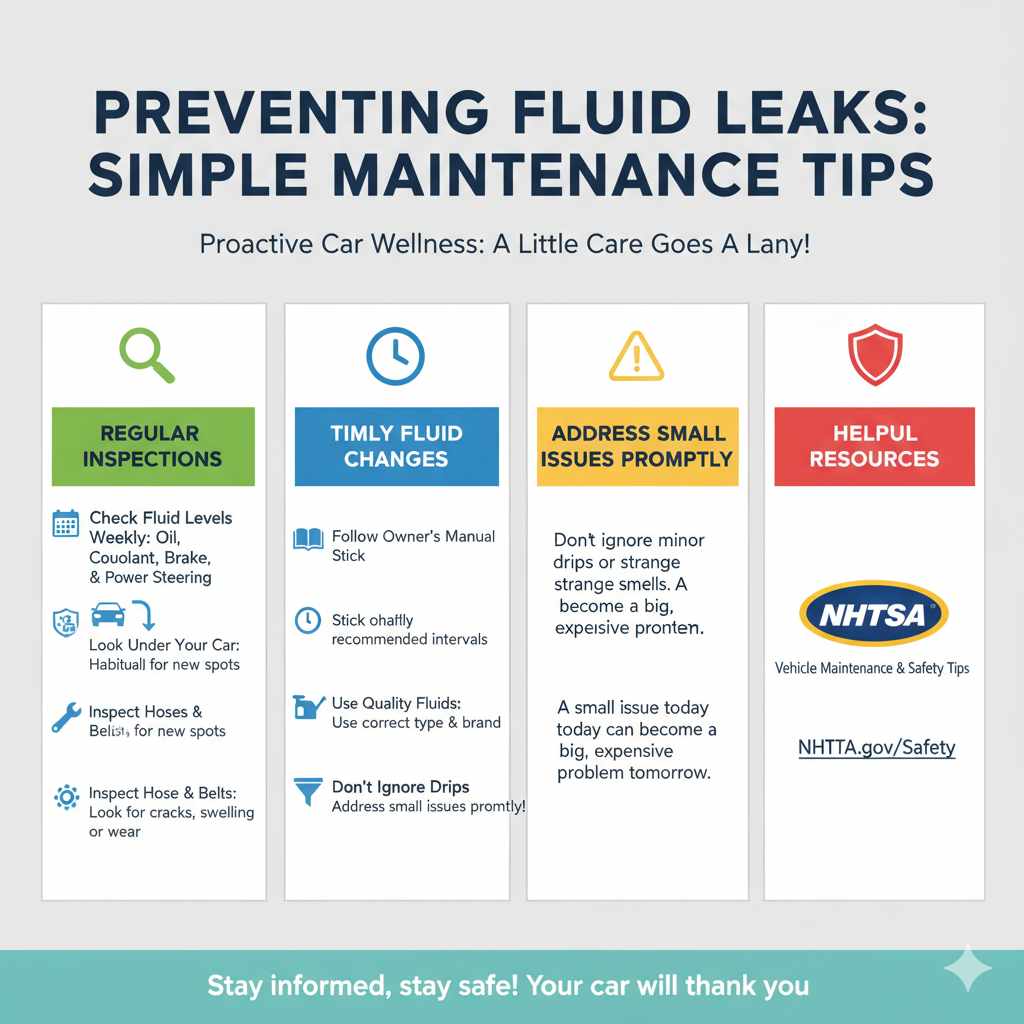
Preventing Fluid Leaks: Simple Maintenance Tips
A little regular care can go a long way in preventing leaks. Think of it as proactive car wellness!
Regular Inspections:
- Check Fluid Levels Weekly: Make it a habit to check your oil, coolant, brake, and power steering fluid levels.
- Look Under Your Car: Make it a habit to glance under your car before you drive, especially if it’s been parked for a while.
- Inspect Hoses and Belts: Periodically check hoses for cracks, swelling, or hardening, and belts for wear. The National Highway Traffic Safety Administration (NHTSA) provides excellent safety tips relevant to vehicle maintenance.
Timely Fluid Changes:
- Follow Your Owner’s Manual: Stick to the recommended intervals for oil changes, coolant flushes, and transmission fluid services.
- Use Quality Fluids: Always use the correct type and quality of fluids specified for your vehicle.
Address Small Issues Promptly:
- Don’t ignore minor drips or strange smells. A small issue today can become a big, expensive problem tomorrow.
Leak Identification Table: A Quick Reference
This table summarizes the key indicators for common fluid leaks, helping you make a quick diagnosis.
| Fluid Type | Color | Smell | Likely Location | Potential Cause |
|---|---|---|---|---|
| Coolant | Green, Orange, Pink, Yellow, Blue | Sweet | Front of car (radiator, hoses) | Hose, Radiator, Water Pump |
| Engine Oil | Brown to Black | Burnt, Oily | Front to Middle of car | Gasket, Seal, Oil Pan, Filter |
| Brake Fluid | Clear to Light Yellow | Slightly Fishy | Around wheels, under car | Brake Line, Caliper, Master Cylinder |
| Transmission Fluid | Bright Red (darkens over time) | Sweet or Burnt | Middle of car | Pan Gasket, Lines, Seals |
| Power Steering Fluid | Amber or Reddish | Oily, Acrid | Front of car (near pump/rack) | Hose, Pump, Rack/Box |
Frequently Asked Questions (FAQ)
Q1: Is a small puddle under my car always a problem?
A1: Not always. Sometimes it’s just condensation from your air conditioner on a humid day, which is normal (clear, odorless water). However, any colored or strong-smelling fluid is a sign something needs checking.
Q2: Can I just add more fluid to stop a leak?
A2: Adding fluid is only a temporary fix. It doesn’t solve the underlying problem. You need to find out why the fluid is escaping and repair that issue to prevent further damage and ensure safety.
Q3: What’s the difference between a gasket and a seal?
A3: A gasket is a seal that sits between two stationary parts to prevent leaks (like between an oil pan and the engine block). A seal is usually a flexible ring that fits around a moving part, like a crankshaft, to prevent fluid from escaping.
Q4: How can I check my car’s fluid levels safely?
A4: Ensure your car is parked on a level surface and the engine is cool (except for transmission fluid, which usually needs to be checked with the engine warm and running, per your owner’s manual). Locate the fluid reservoirs or dipsticks under the hood, check the markings, and add the correct fluid if needed.
Q5: If my car is leaking oil, how much is too much?
A5: Any noticeable oil leak should be investigated. While a few drops might not cause immediate engine failure, it can lead to low oil levels over time, causing severe engine damage. It’s also bad for the environment. An oil leak that drips constantly or leaves large spots is a definite problem.
Q6: My car smells sweet. What could be leaking?
A6: A sweet smell almost always points to a coolant (antifreeze) leak. Coolant has a distinct sweet aroma. This is important to fix quickly, as an overheating engine can cause major damage.
Conclusion
Spotting a fluid leak under your car doesn’t have to be a cause for alarm. By understanding the different types of fluids, their colors, and common leak points, you’re already ahead of the game. Remember to conduct regular checks and address any leaks promptly. Whether you’re tackling a simple hose replacement yourself or deciding it’s time to call in a professional for a more complex repair, being informed is your best tool. Taking these steps will help keep your car running smoothly and safely for years to come!