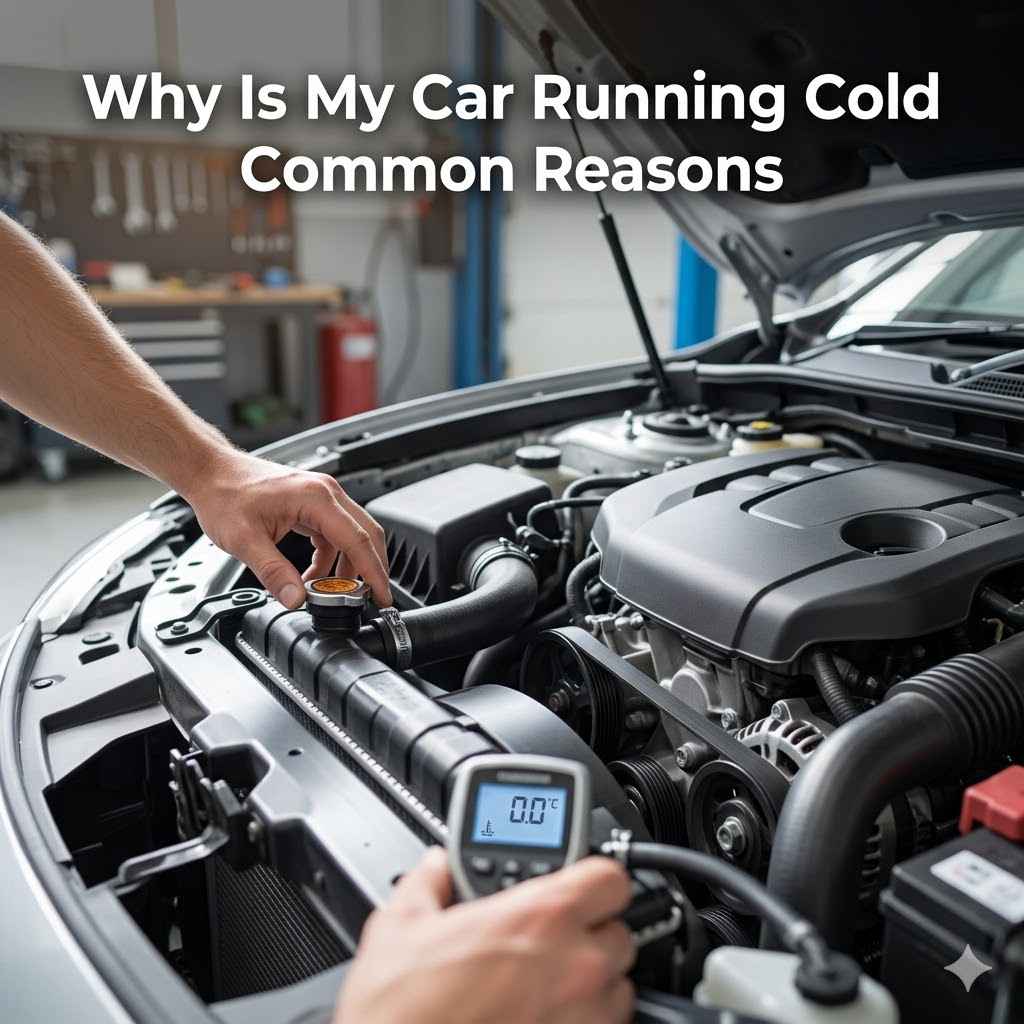
Why Is My Car Running Cold? Common Reasons
It can be confusing when your car’s temperature gauge stays low. You might wonder, Why Is My Car Running Cold? Common Reasons?
This is a common issue, especially for those new to car care. It might seem like a big problem, but often it’s just a few simple parts not working right. We’ll walk through it step by step, making it easy to figure out what’s going on.
Let’s look at what might be making your engine run cooler than it should.
Understanding Why A Car Runs Cold
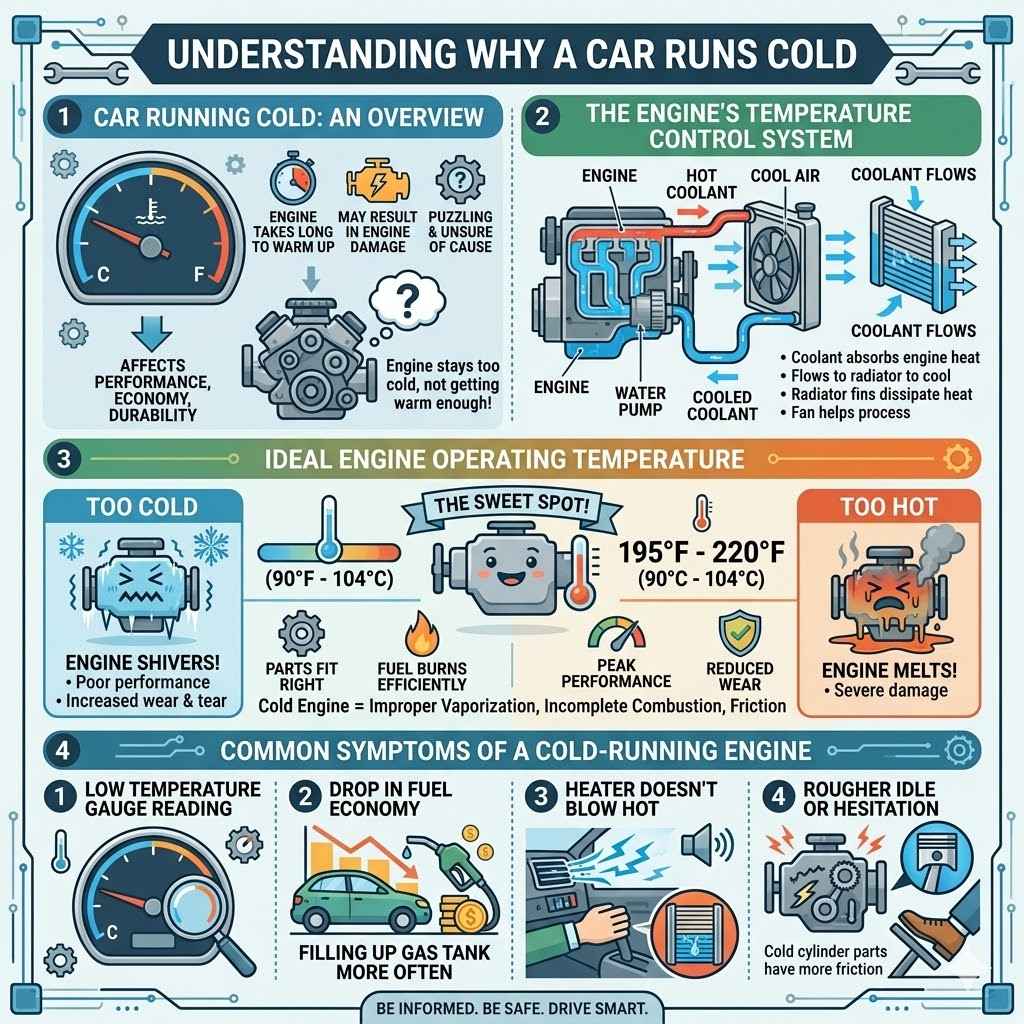
A car engine needs to reach a specific operating temperature to work efficiently and safely. When the temperature gauge stays in the lower part of the dial or even points to cold, it means the engine isn’t getting warm enough. This isn’t just a minor annoyance; it can affect performance, fuel economy, and even lead to engine damage over time.
For many car owners, seeing the temperature gauge stuck on cold can be a puzzling situation, leaving them unsure of the cause.
This section explores the fundamental reasons behind a car running cold. We’ll break down the basic principles of engine temperature regulation and highlight the key components involved. By understanding these basics, you’ll be better equipped to identify and address the problem.
The Engine’s Temperature Control System
Your car’s engine generates a lot of heat when it runs. This heat is normal, but too much can cause serious damage. So, vehicles have a cooling system to keep the engine at its ideal operating temperature.
This system is like your body’s way of staying cool. It uses a fluid called coolant to absorb heat from the engine.
The coolant then flows through a network of hoses to the radiator. The radiator is like a heat exchanger. Air passes through its fins, cooling the hot coolant.
A fan often helps this process, especially when the car is stopped. The cooled coolant then circulates back into the engine to absorb more heat.
This continuous cycle keeps the engine from overheating. But what happens if something in this system goes wrong and the engine doesn’t get warm enough? This is where the issue of a car running cold comes into play.
Ideal Engine Operating Temperature
Most gasoline engines are designed to operate best between 195 and 220 degrees Fahrenheit (90 to 104 degrees Celsius). This is when the engine parts fit together just right, and fuel burns most efficiently. It’s a sweet spot for performance and reducing wear and tear.
When the engine is too cold, things don’t work as smoothly. Fuel might not vaporize properly, leading to incomplete combustion. This can mean your car uses more gas and produces more pollution.
Also, colder engine parts have more friction, which can cause them to wear out faster over time.
Think of it like your body. If you’re too cold, you shiver and your muscles don’t work well. Your engine needs to be warm to perform at its peak.
Common Symptoms of a Cold-Running Engine
Besides the obvious temperature gauge reading low, you might notice other signs when your car runs too cold. Your car might take a very long time to warm up, even after a long drive. You could also experience a drop in fuel economy, meaning you’re filling up the gas tank more often.
Some drivers report that their heater doesn’t blow as hot as it usually does. This is because the heater core gets its heat from the engine’s coolant. If the coolant isn’t getting very hot, the heater won’t either.
In some cases, you might even notice a rougher idle or a slight hesitation when you accelerate. These symptoms, combined with a low temperature reading, point to a problem with the engine’s heating system.
Why Is My Car Running Cold? Common Reasons Explained
Several components work together to keep your car’s engine at the right temperature. When one of these parts fails or malfunctions, it can cause the engine to run colder than it should. Understanding these common reasons is key to diagnosing and fixing the problem.
We’ll now explore the most frequent culprits behind a cold-running engine. Each of these parts plays a vital role, and a problem with any of them can lead to the temperature gauge staying low. Let’s find out what might be going on under the hood.
The Thermostat A Critical Component
The thermostat is a small, simple valve that controls the flow of coolant to the radiator. It’s usually located where the upper radiator hose connects to the engine. Its job is to keep the engine at its ideal temperature.
When the engine is cold, the thermostat stays closed. This blocks the coolant from flowing to the radiator, allowing the engine to warm up quickly. Once the coolant reaches a specific temperature, the thermostat opens, letting the coolant flow to the radiator to be cooled.
If the thermostat gets stuck open, it means coolant is always flowing to the radiator. Even when the engine is cold, the radiator is working to cool the coolant. This prevents the engine from ever reaching its proper operating temperature.
This is perhaps the most common reason why a car runs cold.
How a Thermostat Works
A thermostat typically contains a wax pellet. When the wax heats up, it expands and pushes a spring-loaded valve open. As the wax cools, it contracts, allowing the valve to close.
This mechanism is designed to be very reliable.
When the coolant temperature rises, the wax melts and expands. This expansion pushes against a piston, which opens the thermostat valve. The open valve allows hot coolant to flow from the engine into the radiator.
There, it is cooled by the air passing through the radiator’s fins.
After the coolant is cooled, it flows back into the engine. The thermostat then senses the cooler temperature. The wax inside cools down and shrinks, allowing a spring to push the valve shut again.
This cycle repeats, maintaining a stable engine temperature.
Symptoms of a Faulty Thermostat Stuck Open
The primary symptom of a thermostat stuck open is the engine temperature gauge reading consistently low. The engine may take an unusually long time to reach normal operating temperature, if it ever does. You might also notice poor fuel economy because the engine is running too cool.
In colder weather, the cabin heater may not produce very warm air. This is because the heater core relies on the hot coolant circulating from the engine. If the coolant is not getting hot enough, the heater will not be effective.
Some drivers might also experience a check engine light illuminated on the dashboard, though this isn’t always the case for a stuck-open thermostat.
This issue is quite common, and replacing a thermostat is a relatively straightforward repair for most mechanics. It’s a relatively inexpensive part to replace.
Thermostat Replacement Cost
The cost to replace a car thermostat can vary. The part itself is usually quite affordable, often ranging from $10 to $30 for the thermostat. The labor cost, however, can add more to the total.
A mechanic might charge between $75 and $150 for labor, depending on how accessible the thermostat is on your specific car model.
Therefore, a complete thermostat
Issues with the Coolant Temperature Sensor
The coolant temperature sensor, also known as the Engine Coolant Temperature (ECT) sensor, is crucial for your car’s computer system. It tells the engine control unit (ECU) how hot the engine coolant is. This information is used for many things, including adjusting fuel injection and ignition timing.
If this sensor malfunctions and incorrectly reports a colder temperature to the ECU, the computer might act as if the engine is cold, even if it’s actually warming up. This can lead to incorrect fuel mixtures or other performance issues. While it might not always cause the gauge to read “cold,” it’s worth considering, especially if other symptoms are present.
How the Coolant Temperature Sensor Works
The coolant temperature sensor is typically a small, threaded component that screws into the engine block or cylinder head. It is in contact with the engine coolant. Inside the sensor is a thermistor, which is a resistor whose resistance changes with temperature.
When the coolant is cold, the thermistor has high resistance. As the coolant heats up, the thermistor’s resistance decreases. This change in resistance is measured by the car’s ECU.
The ECU then converts this resistance value into a temperature reading.
This temperature reading is then used to control various engine functions. It helps ensure optimal engine performance, fuel efficiency, and emissions control. The sensor also sends this information to the dashboard temperature gauge, so you know what’s happening.
Symptoms of a Bad Coolant Temperature Sensor
A faulty coolant temperature sensor can cause a variety of symptoms. If the sensor is sending a signal that the engine is always cold, the ECU might enrich the fuel mixture, leading to decreased fuel economy. You might also experience a rough idle, poor acceleration, or engine stalling.
The check engine light is often illuminated when the ECT sensor malfunctions. Diagnostic trouble codes (DTCs) related to the sensor’s performance or circuit can be read by an OBD-II scanner. While a faulty sensor can sometimes cause the temperature gauge to read incorrectly, it’s more likely to affect the engine’s running performance and emissions rather than solely making the gauge read “cold.”
If the sensor is faulty and tells the computer the engine is cold when it is hot, it can prevent the cooling fans from turning on, potentially leading to overheating. Conversely, if it tells the computer the engine is hot when it is cold, it can keep the engine running rich and prevent it from warming up properly.
Coolant Temperature Sensor Replacement Cost
Replacing a coolant temperature sensor is generally a straightforward and inexpensive repair. The sensor itself typically costs between $15 and $40. Labor costs for replacement are usually minimal, often ranging from $50 to $100, as the sensor is usually easy to access.
The total cost for a coolant temperature sensor
Low Coolant Levels
Coolant, also known as antifreeze, is essential for regulating your engine’s temperature. It absorbs heat from the engine and carries it to the radiator for dissipation. If your car is running cold, it might seem counterintuitive, but low coolant levels can sometimes play a role.
While typically associated with overheating, a very low coolant level can disrupt the entire cooling system’s ability to circulate fluid properly. This can lead to pockets of air in the system, which don’t transfer heat as effectively as liquid coolant. This can, in turn, affect how the thermostat operates and how the temperature sensor reads the actual engine temperature.
It’s important to check your coolant level regularly. A consistent drop in coolant can also indicate a leak somewhere in the system, which needs to be addressed.
The Role of Coolant in Temperature Regulation
Coolant is a mixture of water and ethylene glycol or propylene glycol, along with corrosion inhibitors. Water alone would freeze in winter and boil in summer. The antifreeze additive lowers the freezing point and raises the boiling point of the water.
The coolant absorbs heat from the engine’s combustion process. This hot coolant then travels through hoses to the radiator. In the radiator, heat is transferred from the coolant to the air flowing through the radiator’s fins.
This process lowers the coolant’s temperature before it circulates back into the engine.
This continuous circulation and heat exchange are vital. If there isn’t enough coolant, the system cannot effectively absorb and dissipate heat. This can lead to uneven temperatures within the engine and affect the accuracy of temperature readings.
Why Low Coolant Can Cause a Cold Engine
While it might seem odd, low coolant levels can sometimes contribute to a car running cold, especially if it causes air pockets to form within the cooling system. Air does not transfer heat as efficiently as liquid coolant does. If air gets trapped around the thermostat, it can prevent it from opening properly, even if the engine itself is getting warm.
This trapped air can give the thermostat a false reading of cooler temperatures, causing it to stay closed or open only partially. This further restricts coolant flow, paradoxically preventing the engine from reaching its optimal operating temperature in certain areas. It disrupts the uniform heat distribution that the cooling system is designed to maintain.
Furthermore, if the coolant level is too low, the water pump might not be able to circulate the fluid effectively. This can lead to inadequate heat transfer throughout the engine block and cylinder head. The temperature sensor might therefore report a lower temperature than what is actually being generated in localized hot spots.
Checking and Topping Up Coolant
Checking your coolant level is a simple maintenance task. Make sure your engine is completely cool before opening the radiator cap or the coolant reservoir cap. The reservoir is usually a translucent plastic tank with “Min” and “Max” lines.
If the level is below the “Min” line, you need to add coolant. Use a 50/50 mixture of antifreeze and distilled water, or a pre-mixed coolant specific to your vehicle’s requirements. Never use plain water, especially in freezing temperatures.
After adding coolant, start the engine and let it run for a few minutes with the heater on high. This helps to circulate the new coolant and purge any air pockets. Recheck the level after the engine has cooled down and top up if necessary.
If you find you are constantly needing to add coolant, it indicates a leak that needs professional attention.
Radiator Fan Malfunctions
The radiator fan is designed to pull air through the radiator when the vehicle is moving slowly or stopped. This is crucial for cooling the coolant, especially in warmer weather or when the engine is under load. If the fan isn’t working correctly, the coolant might not be cooled sufficiently when the car isn’t moving at speed.
However, in the context of a car running cold, a malfunctioning radiator fan is less likely to be the primary cause unless it’s a very specific scenario. Usually, fan issues lead to overheating because the coolant isn’t being cooled when needed. But a fan that runs constantly, even when the engine is cold, could theoretically keep the coolant cooler than desired.
This is less common than a stuck-open thermostat.
The Purpose of the Radiator Fan
The radiator fan’s main job is to ensure adequate airflow through the radiator when the vehicle’s speed is too low to provide sufficient natural airflow. This happens most often when a car is idling in traffic or driving at low speeds. Without the fan, the coolant would not be cooled effectively, leading to overheating.
There are typically two types of radiator fans: engine-driven fans and electric fans. Engine-driven fans are powered by the engine’s crankshaft via a belt. Electric fans are powered by the car’s battery and are controlled by temperature sensors and the ECU.
Electric fans are more common in modern vehicles because they can be more precisely controlled.
When the engine coolant reaches a certain temperature threshold, the fan is activated to draw air through the radiator. This process cools the coolant before it circulates back into the engine. This continuous cooling prevents the engine from exceeding its safe operating temperature.
How a Faulty Fan Might Affect Engine Temperature
A radiator fan that is stuck on constantly, regardless of engine temperature, could potentially contribute to a car running cooler than normal. If the fan is running even when the engine is cold or at highway speeds where natural airflow is sufficient, it could over-cool the coolant. This continuous cooling effect might prevent the thermostat from reaching its optimal opening temperature or could lead to the coolant being cooled more than necessary.
This scenario is less common than a thermostat issue. Most fan problems lead to overheating because the fan fails to turn on when needed. However, a faulty fan control module or sensor that incorrectly signals the fan to remain on can lead to this unusual situation.
The constant airflow over the radiator would effectively act like a larger radiator or a radiator that is always in use, making it harder for the engine to warm up to its ideal operating range.
It’s important to note that this is a less frequent cause compared to other components. Typically, if the fan is the issue and causing the car to run cold, it’s because the fan is running at an inappropriate time.
Diagnosing Radiator Fan Issues
Diagnosing radiator fan issues often involves checking if the fan turns on when the engine reaches a certain temperature. For electric fans, this might involve using a diagnostic scanner to check fan activation signals and temperatures. You can also test them manually.
A simple test is to let the car idle until the temperature gauge reaches the point where the fan should normally engage. If it doesn’t, there could be a problem with the fan motor, the fan relay, the fuse, or the temperature sensor that controls it. For engine-driven fans, you would check the fan clutch for proper operation; it should engage when the engine is hot.
If you suspect the fan is running constantly and causing your car to run cold, you would look for any unusual wiring or control module issues. A mechanic can perform these tests efficiently.
Heater Core Issues
The heater core is like a small radiator located inside your car’s dashboard. Hot coolant from the engine flows through it. The car’s fan blows air over the heater core, warming the air that comes out of your vents.
If the heater core is clogged or damaged, it can restrict the flow of coolant. While this usually leads to the cabin not getting hot air, a severe clog could, in theory, affect the overall circulation of coolant in the engine. This might indirectly influence how the thermostat and temperature gauge report engine temperature.
However, a heater core problem is more directly linked to a lack of heat inside the car, not necessarily a consistently cold engine.
What is a Heater Core
The heater core is essentially a heat exchanger. It’s a compact radiator, usually made of aluminum or brass, with many small tubes and fins. It’s positioned within the vehicle’s HVAC (Heating, Ventilation, and Air Conditioning) system.
When you turn on your car’s heater, hot coolant from the engine is routed through the heater core. Simultaneously, the blower motor pushes air through the fins of the heater core. As the air passes over the hot tubes and fins, it absorbs heat from the coolant.
This warmed air is then directed into the car’s cabin through the vents.
The amount of heat delivered to the cabin can be controlled by a blend door, which adjusts how much air passes through the heater core versus by-passing it. Some systems also have a valve that can regulate the flow of coolant through the heater core.
Heater Core Clogs and Cold Engines
A clogged heater core can restrict the flow of coolant through that part of the cooling system. In rare cases, a severely clogged heater core, or a malfunctioning heater control valve, might impede the overall circulation of coolant. If coolant flow is significantly restricted throughout the system, it can prevent the engine from reaching its normal operating temperature efficiently.
This is because the thermostat relies on consistent coolant circulation to accurately sense temperature and regulate flow to the main radiator. If coolant isn’t moving properly, it can create cold spots or prevent the engine from warming up evenly. This can make the temperature gauge appear lower than it should.
However, it is much more common for a clogged heater core to result in a lack of heat inside the car. The engine itself might still reach a normal temperature, but the coolant isn’t effectively routed to the heater core for cabin heating. So, while possible, it’s not the first place to look for a cold-running engine.
Heater Core Repair Costs
Repairing or replacing a heater core can be one of the more expensive cooling system repairs. This is because the heater core is usually located deep within the dashboard, requiring significant labor to access. The cost of the part itself can range from $50 to $150.
However, labor costs can be substantial, often ranging from $400 to $800 or even more, depending on the vehicle’s make and model and how complex the dashboard disassembly is. Total replacement costs can therefore easily run from $450 to over $950. For these reasons, mechanics often check simpler causes like the thermostat first.
Real-Life Scenarios and Examples
Understanding the technical aspects is important, but seeing how these issues play out in real situations can be very helpful. Here are a couple of scenarios that illustrate why a car might be running cold.
Scenario 1 A Long Commute Without Heat
Sarah drives a 10-year-old sedan. For the past week, her morning commute, which is about 45 minutes, has left her shivering. The temperature gauge on her dashboard never gets above the halfway mark, and her heater blows only lukewarm air.
She also notices her gas mileage has dropped a bit.
She initially thought it was just a weak heater. However, the consistent low reading on the temperature gauge made her concerned. After a visit to her mechanic, they found that the thermostat in her car was stuck in the open position.
The mechanic explained that because the thermostat was always open, the coolant was constantly flowing to the radiator. This prevented the engine from reaching its normal operating temperature, leading to both the cold cabin and the lower gauge reading. A simple thermostat replacement fixed the problem completely.
Scenario 2 A New Car With an Unexpected Light
Mark recently bought a used car. After a few days, he noticed the check engine light came on. He also felt like the engine was taking a very long time to warm up, and the temperature gauge was often sitting quite low.
He took the car to an auto shop, and they connected a diagnostic scanner. The scanner revealed a fault code related to the engine coolant temperature sensor. The sensor was intermittently reporting a very cold temperature, even when the engine was running for a while.
The mechanic explained that this faulty sensor was tricking the car’s computer into thinking the engine was always cold. This resulted in a richer fuel mixture (which is why the check engine light came on, indicating an emissions issue) and poor performance. Replacing the sensor corrected the problem, and the car’s temperature gauge returned to normal.
How To Prevent A Car Running Cold
Preventing issues that cause a car to run cold mostly involves regular maintenance and paying attention to your car’s signals. By keeping up with routine checks, you can catch potential problems early.
Here are some key steps you can take to keep your cooling system in good shape and avoid the headache of a cold-running engine.
Regularly check your coolant level. Ensure it is between the minimum and maximum marks in the overflow reservoir when the engine is cool. Low coolant can cause a variety of problems, and while often linked to overheating, it can also affect temperature regulation.
Inspect your cooling system for leaks. Look for puddles under your car, signs of corrosion around hoses and the radiator, or a sweet smell when the engine is running. Leaks mean your system isn’t holding the right amount of coolant, which can lead to temperature issues.
Follow your car’s recommended maintenance schedule. This includes flushing and replacing coolant at the intervals specified in your owner’s manual. Old coolant can become less effective at transferring heat and can also cause corrosion within the system, potentially damaging components like the thermostat.
Listen to your car and observe the temperature gauge. If you notice the engine taking too long to warm up, or if the temperature gauge is consistently lower than usual, don’t ignore it. Addressing these symptoms early can prevent more significant and costly repairs down the line.
Frequently Asked Questions
Question: Can a car run too cold for too long without causing damage
Answer: Yes, running a car too cold for extended periods can cause damage. It leads to inefficient fuel combustion, increased wear on engine parts due to poor lubrication at lower temperatures, and can cause the engine control unit to run a richer fuel mixture, which is bad for emissions and fuel economy.
Question: Is it safe to drive a car that is running cold
Answer: While not as immediately dangerous as an overheating engine, it is not ideal to drive a car that is running too cold for extended periods. It impacts performance, fuel efficiency, and can lead to premature wear of engine components.
Question: How often should I check my car’s coolant
Answer: It’s a good practice to check your coolant level at least once a month, especially before long trips. Also, check it if you notice any signs of overheating or if the temperature gauge is behaving strangely.
Question: What is the difference between antifreeze and coolant
Answer: Antifreeze is the concentrated chemical that lowers the freezing point and raises the boiling point of water. Coolant is the mixture of antifreeze and water (typically 50/50) that circulates in your car’s cooling system.
Question: Can a faulty water pump make a car run cold
Answer: While a faulty water pump usually causes overheating by not circulating coolant effectively, in some rare cases, if the pump is failing very gradually or has issues with its impeller, it might lead to slower circulation that doesn’t quite get the engine up to optimal temperature. However, this is less common than other causes like a thermostat issue.
Summary
If your car is running cold, the most common culprit is a thermostat stuck open. Other possibilities include issues with the coolant temperature sensor, low coolant levels, or sometimes problems with the radiator fan or heater core. Regular maintenance and prompt attention to your car’s temperature gauge can help prevent these problems and keep your engine running efficiently and safely.