Why Won’t My Key Turn in My Car Easy Fixes
It can be super frustrating when you’re ready to go, and your car key just won’t turn in the ignition. This is a common problem many drivers face, and for beginners, it can feel like a big mystery. But don’t worry!
Most of the time, the solution is simpler than you think. We’re going to break down why this happens and show you some easy fixes to get you back on the road. Get ready to learn how to solve the puzzle of Why Won’t My Key Turn in My Car?
Easy Fixes.
Understanding Why Your Car Key Won’t Turn
This section helps you grasp the fundamental reasons your car key might refuse to cooperate. When you insert your key and try to turn it, a series of mechanical and electrical actions take place inside your steering column and ignition switch. If any part of this intricate system is out of place or damaged, the key might feel stuck or simply spin without engaging the engine.
We’ll explore the common culprits behind this issue, from simple user errors to minor mechanical faults, so you can pinpoint the cause.
The Steering Wheel Lock Mechanism
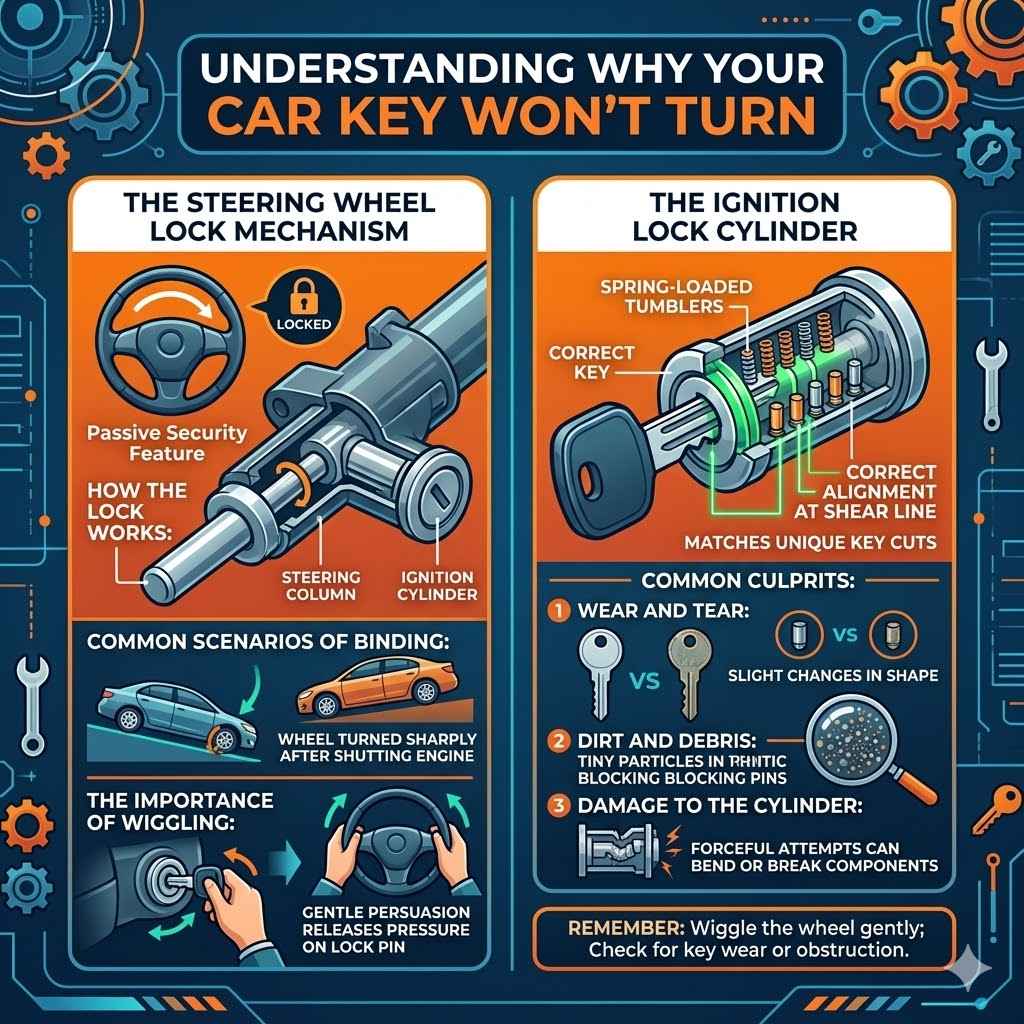
Your car has a steering wheel lock designed for security. When you remove the key from the ignition, the steering wheel often locks into place. This prevents someone from easily steering your car if it’s parked and unattended.
To unlock it, you usually need to turn the key in the ignition while simultaneously wiggling the steering wheel gently left or right. The lock pin inside the ignition cylinder needs to clear the steering column to allow the key to turn freely.
If the steering wheel is jammed against the lock pin, the key won’t budge. This happens when the steering wheel is turned with some force against the locked position. Think of it like a door latch that’s stuck because the door is pushed hard against the frame.
In this scenario, the problem isn’t with the key itself but with how the steering wheel is interacting with the locking mechanism.
How the Lock Works: The steering wheel lock is a simple pin that protrudes from the steering column and fits into a groove on the steering wheel. When the key is removed, and the steering wheel is turned, this pin engages the groove, preventing rotation. This is a passive security feature that relies on physical contact.
Common Scenarios of Binding: Drivers often encounter this when they park on an incline or turn the wheel sharply after shutting off the engine. The pressure exerted by the springs in the steering system can push the wheel firmly against the lock pin. This creates resistance that makes it difficult to turn the key.
The Importance of Wiggling: Wiggling the steering wheel is crucial because it slightly shifts the position of the steering column. This shift can disengage the pressure on the lock pin, allowing it to retract smoothly into the ignition cylinder when you turn the key. It’s a gentle persuasion of the mechanism.
The Ignition Lock Cylinder
The ignition lock cylinder is the heart of the ignition system. It’s where you are several small pins that match the unique cuts of your key.
When you insert the correct key, these pins align perfectly, allowing the cylinder to rotate and signal your car’s electrical system to start. If these pins are worn, bent, or obstructed, the key may not be able to turn.
This cylinder is a complex mechanism with tumblers that must be lifted to specific heights by the key’s shape. If the key is damaged, or if debris gets into the cylinder, the tumblers can get stuck. This prevents the cylinder from rotating, even if the steering wheel lock is disengaged.
It’s like trying to open a regular lock with a bent or dirty key; it just won’t fit right.
Internal Components: The cylinder contains wafer tumblers or pin tumblers, each spring-loaded. The key acts as a template, pushing these tumblers to a “shear line” where the cylinder can spin. Any misalignment or damage to these small parts can cause the ignition to fail.
Wear and Tear: Over time, the constant use of the key can cause the tumblers and the key itself to wear down. This wear can lead to slight changes in shape, making it harder for the key to align the tumblers correctly. A worn key is a common, yet often overlooked, cause of ignition problems.
Damage to the Cylinder: Beyond normal wear, the cylinder can be damaged by forceful attempts to turn the key or by foreign objects being inserted. This physical damage can bend or break internal components, making the cylinder inoperable.
Common Reasons Why Your Key Won’t Turn
Now, let’s get into the specific reasons you might be facing this problem. Many of these are straightforward issues that you can often fix yourself without needing a mechanic. We’ll look at everything from a simple key problem to something slightly more involved with the ignition system.
Understanding these common causes is the first step to resolving your car trouble.
Issues with the Car Key Itself
Your key is the primary tool, and if it’s not in good condition, it won’t work. This is one of the most frequent reasons a key won’t turn. A key can become damaged or worn in several ways, making it unable to properly engage the ignition cylinder’s tumblers.
If you’ve noticed that your key seems loose in the ignition or that its cuts are not as sharp as they used to be, it’s a strong indicator that the key itself is the problem. Sometimes, even a slight bend in the key can prevent it from seating correctly and turning the cylinder.
Worn Key Cuts: Over years of use, the sharp edges of your key’s cuts can become rounded. This rounding changes the key’s profile, meaning it can no longer lift the tumblers to the precise height needed for the ignition cylinder to turn. It’s like trying to use a worn-out stamp; the impression isn’t clear enough.
Bent or Twisted Key: Keys can get bent if they are used to pry things open or if they are dropped repeatedly. A bent key might not fully insert into the ignition or, if it does, it might be misaligned with the tumblers. Trying to force a bent key can cause further damage to both the key and the ignition cylinder.
Damaged Key Fob (if applicable): For modern cars with transponder keys or key fobs, damage to the electronic components within the fob can also cause starting issues. If the chip inside is damaged, it may not be recognized by the car’s security system, preventing the ignition from turning, even if the physical key part can move.
Real-life Example: The Worn Key
Sarah had a 10-year-old sedan. One morning, her key wouldn’t turn in the ignition. She tried wiggling the steering wheel, but nothing worked.
She was about to call for a tow truck when she remembered she’d been using her spare key for a few weeks because the main one felt a bit loose. She went to her house and grabbed the spare key. It inserted perfectly and turned the ignition immediately.
Her original key’s cuts had worn down too much over time, making it unable to operate the ignition cylinder anymore.
Obstructions in the Ignition Cylinder
Sometimes, tiny things can get lodged inside your ignition cylinder, preventing the key from turning. Think of small pieces of dirt, dust, or even a small fragment of another key. These foreign objects can interfere with the movement of the tumblers or the key itself.
This is more likely to happen if you’ve recently been in a dusty environment or if someone has tried to . The ignition cylinder is a precise piece of machinery, and even small particles can cause significant problems.
Dust and Debris: Over time, normal dust and grime can accumulate inside the ignition cylinder. This buildup can create friction and prevent the tumblers from moving freely when the key is inserted. It’s like a small pebble jamming a delicate clockwork mechanism.
Foreign Objects: This can include anything from a small piece of gravel that got tracked into the car to a broken-off piece of another key. If a fragment of another key breaks off inside, it can block the cylinder from accepting or turning the correct key.
Lubrication Issues: While not strictly an obstruction, a lack of proper lubrication can make the internal parts of the ignition cylinder stick. This can create resistance that feels similar to an obstruction, making the key difficult to turn.
Problems with the Ignition Switch
The ignition switch is an electrical component located behind the ignition lock cylinder. When you turn the key, it activates this switch, which then sends power to various parts of your car, like the starter, fuel pump, and dashboard lights. If the ignition switch itself is faulty, it might not register that the key is being turned, or it might fail to send the necessary electrical signals, even if the key turns smoothly.
This is a more electrical issue compared to mechanical problems with the key or cylinder. Sometimes, the switch can become worn out from years of use, or its electrical connections can become loose or corroded. This can lead to intermittent starting problems or a complete failure to start.
Worn Electrical Contacts: The internal electrical contacts within the ignition switch can wear down over time. This wear can cause poor connections, meaning the signals needed to start the car aren’t consistently sent. It’s like a light switch with a worn-out spring; it might not always make contact.
Internal Mechanical Failure: The ignition switch also has mechanical components that link it to the lock cylinder. These parts can break or become misaligned, preventing the switch from activating properly even when the key is turned.
Loose Wiring Connections: The wiring harness connected to the ignition switch can become loose due to vibrations or age. Loose connections can interrupt the flow of electricity, causing the switch to malfunction.
Sample Scenario: A Loose Connection
Imagine John parking his car and turning off the engine as usual. The next morning, he inserts his key, but it won’t turn at all. He checks the steering wheel lock, and it seems free.
He tries jiggling the key, but nothing. He notices that his dashboard lights flicker slightly when he moves the key gently. He suspects an electrical issue.
After a quick check under the dashboard, he finds that the main wire connector to the ignition switch was slightly dislodged. He pushes it firmly back into place, and the key now turns smoothly, allowing him to start his car.
Problems with the Steering Column
The steering column is a more complex part of your car. It houses the steering shaft, the ignition lock cylinder, and the steering wheel lock mechanism. Issues within the steering column itself can cause problems with the key turning.
These can range from the lubrication drying out to internal components becoming misaligned or damaged.
If there’s significant wear or damage within the steering column, it can create binding that prevents the ignition cylinder from rotating. This often happens in older vehicles where components have seen extensive use. It might also be related to the steering column not being properly aligned after repairs or adjustments.
Dry or Worn Bearings: The steering column contains bearings that allow it to rotate smoothly. If these bearings become dry or worn, they can create resistance. This resistance can transfer to the ignition cylinder, making it hard to turn.
Misaligned Components: If any part of the steering column, such as the steering shaft or the housing for the ignition cylinder, is not perfectly aligned, it can bind. This binding can impede the free movement of the ignition lock cylinder.
Damaged Housing: The housing that contains the ignition lock cylinder can become damaged. If this housing is bent or cracked, it can put pressure on the cylinder, preventing it from turning.
Easy Fixes for a Key That Won’t Turn
Now that you understand the common reasons, let’s move on to the practical solutions. Many of these are simple steps you can take right away to try and get your car started. You don’t always need to call a mechanic for every little problem.
These fixes are designed to be straightforward and accessible for most car owners.
Fixing the Steering Wheel Lock
This is probably the most common and easiest fix. As mentioned, the steering wheel lock can bind the ignition cylinder. When your key won’t turn, the very first thing you should try is to disengage this lock.
It takes a bit of coordination, but it’s usually effective.
The key is to apply slight pressure on the key in the direction it should turn (either left or right) while gently wiggling the steering wheel in the opposite direction of the pressure you’re applying to the key. This technique helps to relieve the tension on the lock pin.
Apply Gentle Key Pressure: Insert your key into the ignition. Apply a very light amount of turning pressure on the key in the direction you want it to go (e.g., towards the “ON” or “START” position).
Wiggle the Steering Wheel: While keeping that gentle pressure on the key, try to move the steering wheel. Wiggle it gently back and forth, feeling for any slight give. Usually, you’ll need to move it in the opposite direction of the pressure you’re applying to the key.
Find the Sweet Spot: You’re looking for a point where the steering wheel moves just enough to release the pressure on the lock pin. When you feel a slight movement in the wheel, try turning the key again. It should now turn freely.
Sample Scenario: The Wiggling Trick
Maria was heading to work and found her key wouldn’t turn. She remembered a tip from a friend. She put her key in the ignition and gently pushed it to the right, trying to start the car.
At the same time, she pushed her steering wheel to the left. Nothing happened at first. She then pushed the steering wheel to the right, and she heard a click.
When she tried the key again, it turned smoothly. The steering wheel had been locking the ignition pin.
Cleaning and Lubricating the Ignition Cylinder
If you suspect dirt or lack of lubrication is the issue, you can try cleaning and lubricating the ignition cylinder. This is a simple maintenance step that can often resolve minor sticking problems. It’s important to use the right kind of lubricant, as using the wrong type can actually make the problem worse.
For this task, you’ll need a specialized lock lubricant, typically a graphite-based or silicone-based spray. Avoid using common household oils or greases, as they can attract dirt and gum up the mechanism over time. A small amount is all that’s needed.
Choose the Right Lubricant: Opt for a dry lubricant like graphite powder or a silicone spray designed for locks. These won’t attract dust and debris like oil-based lubricants.
Apply Sparingly: Insert the straw attachment of the spray can or applicator into the keyhole. Give a short burst of lubricant. Do not overdo it.
Insert and Turn the Key: After applying the lubricant, insert your car key and gently turn it back and forth several times. This helps to distribute the lubricant throughout the cylinder and work out any minor debris.
Statistics on Lubrication and Maintenance
A study by the Automotive Maintenance Association found that over 30% of ignition system failures in vehicles older than 10 years were due to a lack of proper lubrication in the lock cylinder. Regular lubrication can prevent premature wear and sticking issues, potentially saving owners hundreds of dollars in repairs. Many vehicle manufacturers recommend lubricating the ignition cylinder every 2-3 years as part of routine maintenance.
Checking and Replacing a Damaged Key
If you’ve identified that your key is worn, bent, or damaged, it’s time to get a replacement. Using a damaged key can not only leave you stranded but can also cause further damage to your car’s ignition system, leading to more expensive repairs down the line.
The best approach is to get a new key made by a qualified locksmith or at a dealership. They can cut a new key based on your car’s VIN (Vehicle Identification Number) or by creating a copy from an existing good key. For cars with transponder keys, this process will also involve programming the new key to your car’s immobilizer system.
Professional Key Cutting: A locksmith or car dealership has the equipment to precisely cut a new key that matches the original specifications of your car’s ignition. This ensures optimal fit and function.
Transponder Key Programming: If your car uses a transponder key, the new key needs to be programmed to communicate with your car’s immobilizer system. This is a specialized electronic process.
Cost Considerations: While getting a new key is an expense, it’s often much cheaper than repairing an ignition cylinder damaged by a faulty key. The cost varies depending on the type of key and the service provider.
Real-life Example: The Transponder Chip Issue
Mark’s car wouldn’t start, and the key wouldn’t turn. He had a newer car with a key fob. He noticed that sometimes the car would start, and sometimes it wouldn’t.
He took it to a mechanic, who discovered that the small transponder chip inside his key fob was damaged. This chip communicates with the car’s security system. Even though the physical key part turned, the car’s computer didn’t recognize the key, preventing it from starting.
He had to get a new, programmed key fob to resolve the issue.
Dealing with Ignition Switch Problems
If you suspect an ignition switch problem, this might be a repair that requires a professional. While some simple electrical checks can be done, replacing an ignition switch often involves working with wiring harnesses and electrical components that can be complex.
A mechanic will typically test the ignition switch to see if it’s receiving and sending the correct electrical signals when the key is turned. If it’s faulty, they will
Diagnostic Testing: A mechanic will use a multimeter to check for proper voltage and continuity at the ignition switch. This helps confirm if the switch is functioning as intended.
Replacement Process: Replacing an ignition switch usually involves disconnecting the battery, removing trim panels around the steering column, unbolting the old switch, and installing the new one.
Importance of Professional Repair: Working with car electrical systems can be risky if you don’t have the right knowledge. Incorrect wiring can damage other components or even pose a fire hazard.
Sample Scenario: A Technician’s Diagnosis
Lisa’s car key turned fine, but the engine wouldn’t crank, and the dashboard lights were dim. She knew it wasn’t a steering lock issue or a key problem. She called a mobile mechanic.
The mechanic used a diagnostic tool and confirmed that the ignition switch was faulty. It was receiving power but not sending it to the starter motor. He was able to replace the switch on her driveway, and her car started right up.
When to Call a Professional
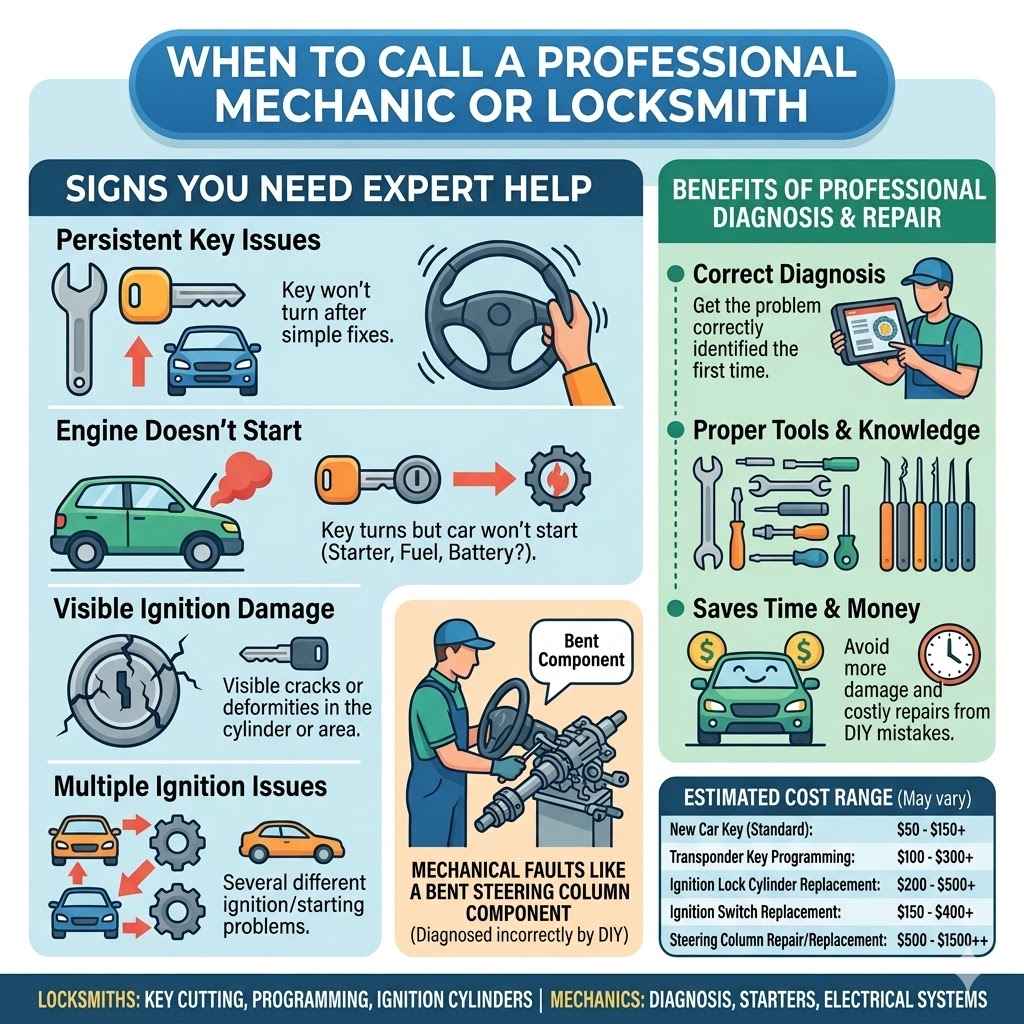
While many issues are simple fixes, some problems require the expertise of a professional mechanic or locksmith. If you’ve tried the basic steps and your key still won’t turn, or if you suspect a more serious mechanical or electrical fault, it’s time to seek professional help. Trying to force a stuck key or tamper with complex electrical systems can lead to more damage and costly repairs.
Trusting a professional ensures that the problem is diagnosed correctly and repaired using the right tools and knowledge. They have specialized equipment and experience that can quickly identify and resolve issues that might be beyond a DIY fix. This saves you time, frustration, and potentially more money in the long run.
Signs You Need a Mechanic or Locksmith
There are clear indicators that suggest you’ve reached the limit of DIY fixes. If the problem is persistent, or if you notice any unusual symptoms, it’s wise to stop and call in the experts. Attempting to fix complex issues without the right knowledge can worsen the situation.
Key Turns But Engine Doesn’t Start: If your key turns smoothly in the ignition but the engine doesn’t crank or start, this often points to a problem with the starter motor, fuel system, battery, or the electrical signals from the ignition switch. These are typically beyond simple key or steering lock issues.
Ignition Cylinder Damage: If you see any visible damage to the ignition cylinder or the area around it, such as cracks or deformities, do not attempt to force the key. This could indicate a more significant mechanical failure within the steering column or ignition system that requires expert attention.
Multiple Ignition Issues: If you’ve experienced several different problems with your ignition or starting system recently, it might suggest an underlying issue that a professional needs to diagnose and address comprehensively. This could be a sign of a failing component or a combination of problems.
Case Study: Steering Column Replacement
A customer named David brought his car to a dealership because his key wouldn’t turn. He had tried the steering wheel wiggling trick, but it didn’t work. After a thorough inspection, the dealership technicians discovered that the steering column itself had a bent component.
This bend was causing the ignition lock cylinder to bind internally, preventing it from turning. They had to replace the entire steering column assembly, a job that required specialized tools and knowledge. David was relieved to have the issue fixed correctly, though it was a significant repair.
Cost of Professional Repairs
The cost of professional repairs can vary significantly based on the specific problem and your location. Simple key replacements might be relatively inexpensive, while more complex repairs like ignition switch or steering column replacement can be substantially more costly. It’s always a good idea to get a quote before authorizing any work.
Locksmiths often handle key cutting, programming, and ignition cylinder
| Type of Repair | Estimated Cost Range | Notes |
|---|---|---|
| New Car Key (Standard) | $50 – $150 | Includes cutting the key. |
| Transponder Key Programming | $100 – $300 | Requires specialized equipment. |
| Ignition Lock Cylinder Replacement | $200 – $500 | Parts and labor. |
| Ignition Switch Replacement | $150 – $400 | Mainly electrical component. |
| Steering Column Repair/Replacement | $500 – $1500+ | Complex mechanical repair. |
Frequently Asked Questions
Question: What if my key is stuck and won’t come out of the ignition
Answer: If your key is stuck and won’t come out, it’s often due to the steering wheel lock mechanism engaging improperly. Try gently wiggling the steering wheel while applying slight pressure to the key in both directions (in and out, and turning). Make sure the car is in park (for automatic transmissions) or neutral (for manual transmissions).
If this doesn’t work, there might be an issue with the ignition cylinder or the shift lock solenoid.
Question: Can extreme weather affect my car key turning
Answer: Yes, extreme cold can sometimes make car keys and ignition cylinders more difficult to turn. Metal contracts in the cold, which can tighten tolerances. Moisture can also freeze inside the lock, acting like glue.
Warming the key slightly or using a lock de-icer (not WD-40, as it can attract moisture) can help in very cold conditions.
Question: My car has a push-button start, and it’s not working. Is this similar to a key turning issue
Answer: While the mechanism is different, the underlying reasons for a car not starting can be similar. Instead of a key not turning, a push-button start issue might mean the car isn’t recognizing the key fob (similar to a worn key), or there’s a problem with the brake pedal sensor (which needs to be pressed to start), or the start/stop button itself is faulty. The electrical system and communication between components are key in both scenarios.
Question: How often should I lubricate my car’s ignition cylinder
Answer: Most manufacturers recommend lubricating the ignition cylinder every 2-3 years as part of routine maintenance, or if you start noticing it becoming stiff or difficult to turn. Using a graphite-based or silicone spray specifically designed for locks is recommended. Avoid oil-based lubricants as they can attract dirt and dust, causing more problems in the long run.
Question: Is it safe to use WD-40 in my car’s ignition
Answer: It’s generally not recommended to use WD-40 in your car’s ignition cylinder. While it might free things up temporarily, WD-40 is a solvent and lubricant that can attract dust and dirt. Over time, this buildup can cause more problems and gum up the internal mechanism of the lock cylinder, leading to further issues.
Specialized lock lubricants like graphite or silicone sprays are much safer and more effective for long-term use.
Summary
When your car key won’t turn, don’t panic. Often, it’s a simple fix related to the steering wheel lock, a worn key, or minor debris. Try wiggling the steering wheel, cleaning the lock, or getting a new key.
If these easy solutions don’t work, it’s best to call a professional mechanic or locksmith to avoid further damage. You can get your car running again with these steps.