How to Turn Off a Car With a Key: Traditional & Push-Button
To turn off a car with a traditional key, shift into Park (or Neutral for a manual) and turn the key counterclockwise back to the Off position. Push-button start cars work differently: with the key fob somewhere inside the cabin and the transmission in Park, a single press of the Start/Stop button cuts the engine — the position of your foot on the brake pedal does not usually matter for that specific step. This guide walks through both ignition types, plus what to check if the key will not turn or the engine refuses to shut off.
Understanding Your Car’s Ignition System
BEST FOR A DEAD KEY FOB BATTERY
 |
CR2032 Key Fob Battery Replacement (2 Pack) – $9.99 If a push-button start car will not respond to the fob at all, a weak CR2032 cell is the most common cause — this universal 2-pack fits most Honda, Toyota, Nissan, and Subaru fobs.
|
Most cars sold in the U.S. use one of two ignition designs: a traditional key-and-cylinder system, or a push-button start that still relies on a key fob. Traditional systems use a physical key you insert directly into the ignition cylinder and turn to start or stop the engine — common in older Hondas, Fords, and budget trims well into the mid-2010s. Push-button systems, standard on most new cars today, do not take a key at all; the fob just needs to be somewhere in the cabin, and the engine starts and stops with a button on the dash. Knowing which system your car has is the first step to shutting it down correctly.
Turning Off a Car With a Traditional Key Ignition
This is the older, more straightforward setup, and it works the same way in nearly every car that has it. Here is the full process from a rolling stop to a locked car.
Step 1: Bring the Car to a Complete Stop
Make sure the car is fully stopped before you touch the key. Shift into Park for an automatic transmission, or Neutral (with the parking brake set) for a manual. Skipping the parking brake on any kind of slope is how cars end up rolling a few feet on their own after the engine goes quiet.
Step 2: Turn the Key to the “Off” Position
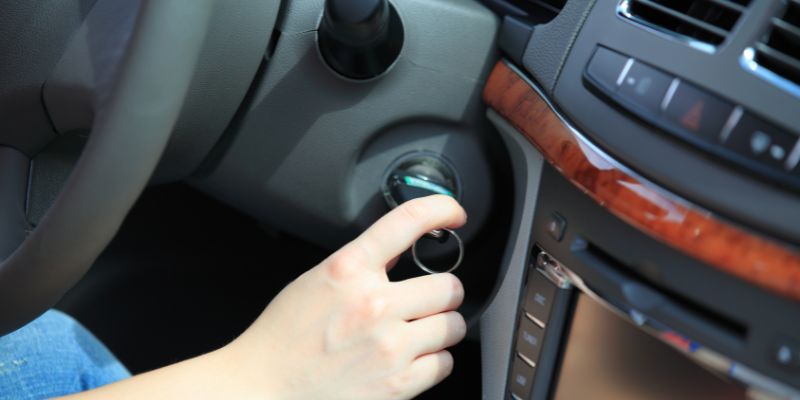
With the key already in the ignition, turn it counterclockwise back through Run to the Off position. The engine should stop right away, and the dashboard lights and warning chimes should go dark with it. If the key feels stuck partway, do not force it — there is a specific fix for that later in this guide.
Step 3: Remove the Key
Once the engine is off, the key should pull straight out. A few older models, including some Fords, need the key pushed in slightly while it is turned the rest of the way to Lock before it will release — if the key will not come out, try that small push-and-turn motion before assuming something is broken.
Step 4: Check Accessories
On some cars, the radio, interior lights, or wipers stay powered briefly after the engine shuts off. If that happens, turn the key one click to Accessory and then back to Off; that second cycle usually kills anything still running. If it does not, your owner’s manual will list where the dedicated accessory cutoff is.
Turning Off a Car With a Push-Button Start and Key Fob
Push-button start is standard on most new vehicles now, and it trips up a lot of first-time users because there is no key to turn. Here is what actually happens under the hood of the process.
Step 1: Stop the Car
Just like with a traditional key, shift into Park (automatic) or Neutral with the parking brake set (manual) before doing anything else. Most push-button systems will not let the engine shut off cleanly, or will throw a warning chime, if the shifter is not fully seated in Park.
Step 2: Keep the Key Fob Inside the Car
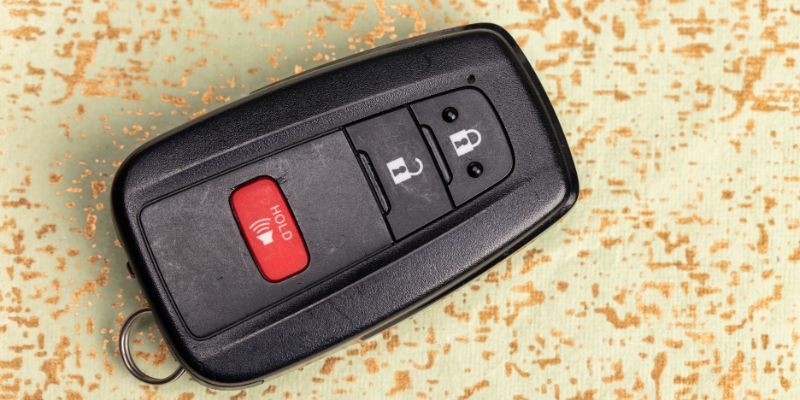
The system needs to detect the fob somewhere in the cabin to let you start or stop the engine with the button — it does not need to be in a specific spot, just inside, whether that is your pocket, the console, or a cupholder. Leave the fob outside the car (in a jacket on the seat next to you, for example, if you step out first) and the button can stop responding entirely.
Step 3: Press the Start/Stop Button
With the transmission already in Park, a single press of the start/stop button on the dash shuts the engine off. Unlike starting the car, this step generally does not require your foot to be on or off the brake pedal — the brake mostly matters for actually starting the engine, or for cycling through Accessory and On modes while the engine is already off and parked. If nothing happens on the first press, double-check that the shifter is fully in Park rather than just close to it, since that is the most common reason the button seems unresponsive.
Step 4: Verify Everything Is Off
Confirm the engine and accessories are actually off, not just quiet. Some cars leave the radio or climate control running for a moment after the engine stops. If that happens, press the button again, or check your owner’s manual for how many presses that specific model uses to fully power down versus just switching modes.
Troubleshooting Common Issues When Turning Off a Car
Turning off a car is not always as simple as it sounds. Here are the issues that come up most often, and what actually fixes each one.
Stuck Key in a Traditional Ignition
If the key will not turn to Off, first confirm the car is fully in Park or Neutral — many ignition switches lock the key in place if the shifter is not correctly seated. Next, gently wiggle the steering wheel; a locked steering column is a very common cause of a stuck key, since the two mechanisms are interlocked by design. If neither fixes it, the ignition cylinder itself may be worn, and that is a job for a mechanic rather than more force on the key.
Push-Button Won’t Turn Off
If the button does not respond, the shifter is almost always the first thing to check — it needs to be fully in Park, not just resting near it. The second most common cause is a weak key fob battery: the system can still detect a dying fob at close range but fail intermittently, which looks exactly like a broken button. Swap in a fresh CR2032 fob battery and try again before assuming the button itself has failed.
Accessories Stay On
If the radio or interior lights stay on after the engine shuts off, cycle a traditional key back to Accessory and then to Off again. On push-button cars, a second press of the start/stop button (with the shifter in Park) usually clears any lingering accessory power. If lights specifically will not go dark on their own, that can point to a separate wiring fault rather than a normal shutdown quirk — see this guide on Ford lights that won’t turn off for that specific failure mode.
Engine Seems to Restart on Its Own
Many modern cars use auto stop-start technology, which shuts the engine off automatically at a red light or in stopped traffic and restarts it the instant you lift your foot off the brake. That is normal behavior, not the car ignoring you — it is not the same as fully turning the car off. To shut the engine off completely rather than just idle-stop, put the transmission in Park first; most stop-start systems only engage while the car is still in Drive.
Car Won’t Stop While Still Moving (Rare Emergency Only)
If a push-button car ever fails to respond to normal braking, shift into Neutral and apply the brakes steadily first — that alone stops nearly every runaway-acceleration scenario. Only as a last resort, holding the start/stop button down for two to three seconds, or pressing it rapidly several times, will force the engine off even while the car is moving. This is an emergency procedure, not a routine shutdown method, since cutting the engine at speed also disables power steering and power brake assist.
Differences Across Car Brands and Models
Not every car shuts off exactly the same way, even within the two broad ignition types. Here is a general reference for a few common examples:
| Car Brand/Model | Ignition Type | How to Turn Off |
|---|---|---|
| Honda Civic (2005) | Traditional Key | Turn key counterclockwise to “Off” |
| Toyota Camry (2020) | Push-Button with Fob | Press start/stop button once in Park |
| Ford F-150 (2015) | Traditional Key | Turn to “Off,” push key in slightly to remove |
| Mazda CX-5 (2020) | Push-Button with Fob | Press start/stop button once in Park |
| Chevrolet Malibu (2018) | Push-Button with Fob | Press button, keep fob nearby |
Always check the owner’s manual for your specific model — some cars require two quick presses instead of one, or a slightly different sequence for cycling through power modes without starting the engine. Manuals are the fastest way to settle any brand-specific quirk.
Safety Tips When Turning Off Your Car
A few habits make shutting down safer and more reliable, regardless of ignition type:
- Park on a Flat Surface: On any hill, set the parking brake and turn the front wheels toward the curb so the car cannot roll if the brake alone were to fail.
- Turn Off All Accessories: Lights, wipers, and the radio left running are one of the most common causes of a dead battery overnight.
- Take the Key or Fob With You: Never leave a key or fob inside an unattended car, even for a quick errand — it is one of the easiest ways for a vehicle to be stolen.
- Check Your Surroundings: Confirm you are not blocking traffic, a driveway, or a fire hydrant before you finish parking and shut down.
What to Do If Your Car Won’t Turn Off
A car that will not shut off is stressful, but the fix is usually mechanical rather than electrical. Work through these steps in order:
- Check the Gearshift: Confirm the car is fully in Park or Neutral. A shifter that is slightly out of position is the single most common reason a key or button will not shut the engine off.
- Wiggle the Steering Wheel: A locked steering column can jam a traditional key in place. Move the wheel gently side to side while turning the key toward Off.
- Test the Fob Battery: For push-button cars, a nearly-dead fob battery can cause intermittent failures that look like a stuck engine. Swap in a fresh CR2032 cell before assuming anything more serious is wrong.
- Call a Mechanic: If none of the above works, the ignition cylinder or a related electrical component likely needs professional attention — see the cost breakdown below.
Maintaining Your Ignition System
A well-maintained ignition system is far less likely to give you trouble at shutdown. A few habits go a long way:
- Clean the Key: Dirt and grime on a traditional key can jam the cylinder over time. Wipe the key down every few months.
- Lubricate a Sticky Ignition: A graphite-based lock lubricant, not oil, is the right product for a traditional ignition cylinder that feels stiff or sticky.
- Replace Fob Batteries Proactively: Most CR2032 cells last one to two years in daily use. Swapping it before it dies avoids the intermittent no-start, no-shutoff symptoms a weak battery causes.
- Get an Annual Checkup: A mechanic can spot a worn ignition cylinder or a failing push-button module during routine maintenance, well before it strands you.
Why Knowing How to Turn Off Your Car Matters
Shutting a car down correctly is not just a convenience — it affects safety, fuel use, and your ignition system’s lifespan. Leaving the engine running unattended can waste gas for no reason and makes the car far easier to steal, since anyone can simply get in and drive off. Forcing a stuck key or repeatedly slamming a start/stop button can also damage the ignition switch or the push-button module itself, turning a minor annoyance into a real repair bill.
Proper shutdown also prevents unnecessary battery drain — a radio or set of headlights left on overnight is one of the most common reasons a battery is dead by morning. Knowing the correct steps for your specific ignition type keeps the car ready to go the next time you need it.
When to Call a Professional
Call a mechanic if the key will not budge after trying the gearshift and steering-wheel checks above, or if a push-button system stops responding even with a known-good fob battery. A failed ignition cylinder typically runs about $150 for diagnosis plus roughly $200 for the replacement part and labor. A push-button system that will not respond at all can point to a fob issue or a fault in the car’s body control module, and a shop diagnostic for that usually runs $100 to $300 depending on the vehicle.
Conclusion
Turning off a car with a key looks simple until you run into a system you are not used to. A traditional ignition just needs the car in Park, the key turned counterclockwise, and a pull to remove it. A push-button start needs the same Park position, the fob somewhere inside the cabin, and one press of the button — brake pedal position included. When something does not shut off cleanly, the shifter position and the fob battery explain the vast majority of cases before a mechanic ever needs to get involved.
FAQs
How do I turn off a car with a traditional key?
Shift into Park (or Neutral with the parking brake set), then turn the key counterclockwise to the Off position and remove it.
How do I turn off a car with a push-button start?
Shift into Park with the key fob somewhere inside the car, then press the start/stop button once. The engine should stop immediately.
Do I need my foot off the brake to turn off a push-button start car?
No, not to shut off a running engine that is already in Park. Brake pedal position matters mainly for starting the engine, or for cycling through Accessory and On modes while the car is parked and the engine is already off.
Why won’t my car turn off with the key?
The most common causes are a shifter that is not fully in Park or Neutral, or a locked steering wheel jamming the ignition. Try wiggling the wheel while turning the key; if it still will not budge, have a mechanic check the ignition cylinder.
What do I do if my push-button car won’t turn off?
Confirm the shifter is fully in Park, then press the button again. If it still does not respond, swap in a fresh CR2032 key fob battery before assuming the button or module has failed.
Can leaving accessories on drain my car’s battery?
Yes. Headlights, the radio, or interior lights left on overnight are one of the most common reasons a car battery is dead the next morning.
How do I know if my car has a traditional or push-button ignition?
If you insert a physical key into a slot near the steering column, it is a traditional ignition. If there is a button on the dash and a key fob instead of a key, it is push-button start. The owner’s manual will confirm either way.
Products related to this article
Sponsored / affiliate links. As an Amazon Associate I earn from qualifying purchases. I may earn additional commission from eligible campaigns.