Will a 1993 Chevy Gen 5 454 Fit a 1989 Mark IV 454
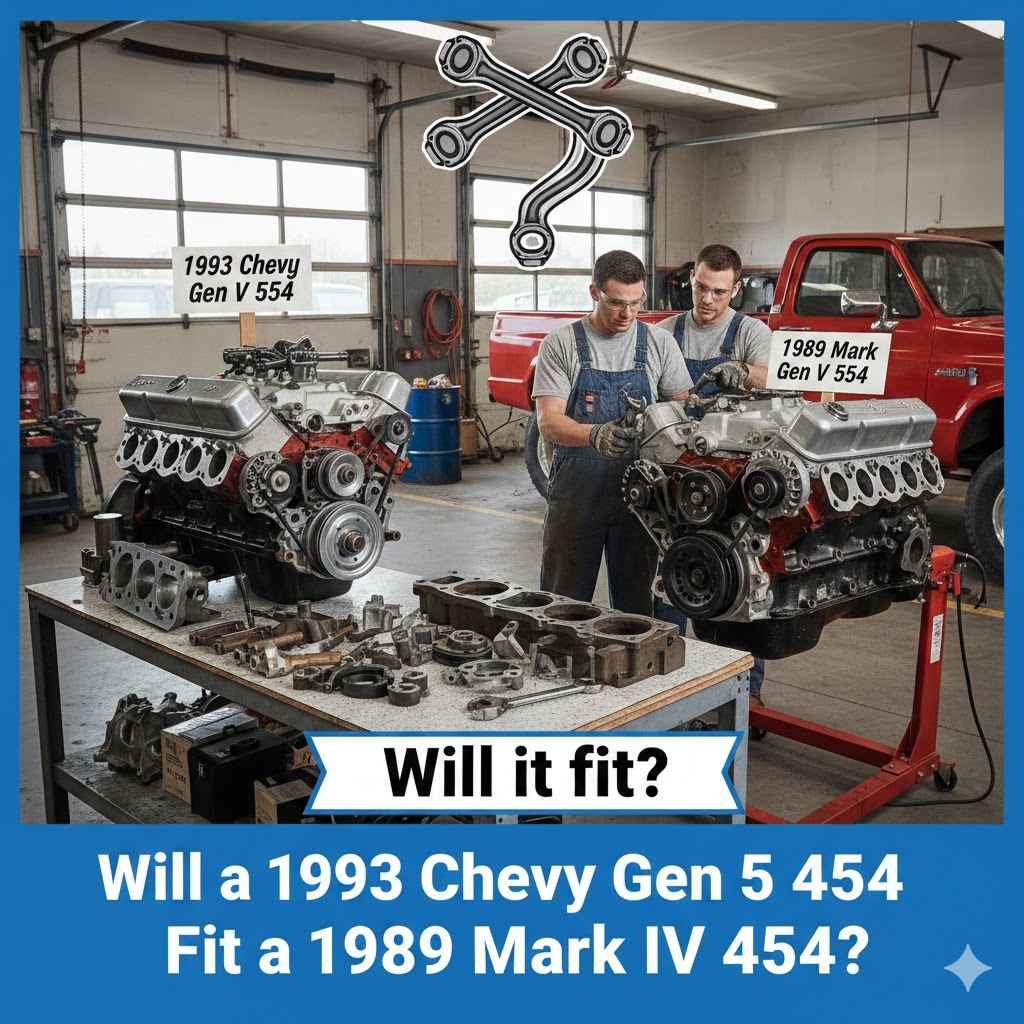
Have you ever wondered, “Will a 1993 Chevy Gen 5 454 Fit a 1989 Mark IV 454?” This question pops up a lot for folks working on their classic Chevy trucks or muscle cars. It can seem tricky with different engine generations. But don’t worry! We’re going to break it down very simply, step by step. You’ll learn exactly what you need to know to make the right choice for your project. Get ready for clear answers.
Engine Generations and Fitment Considerations
Understanding Chevy Big Block Engine Families
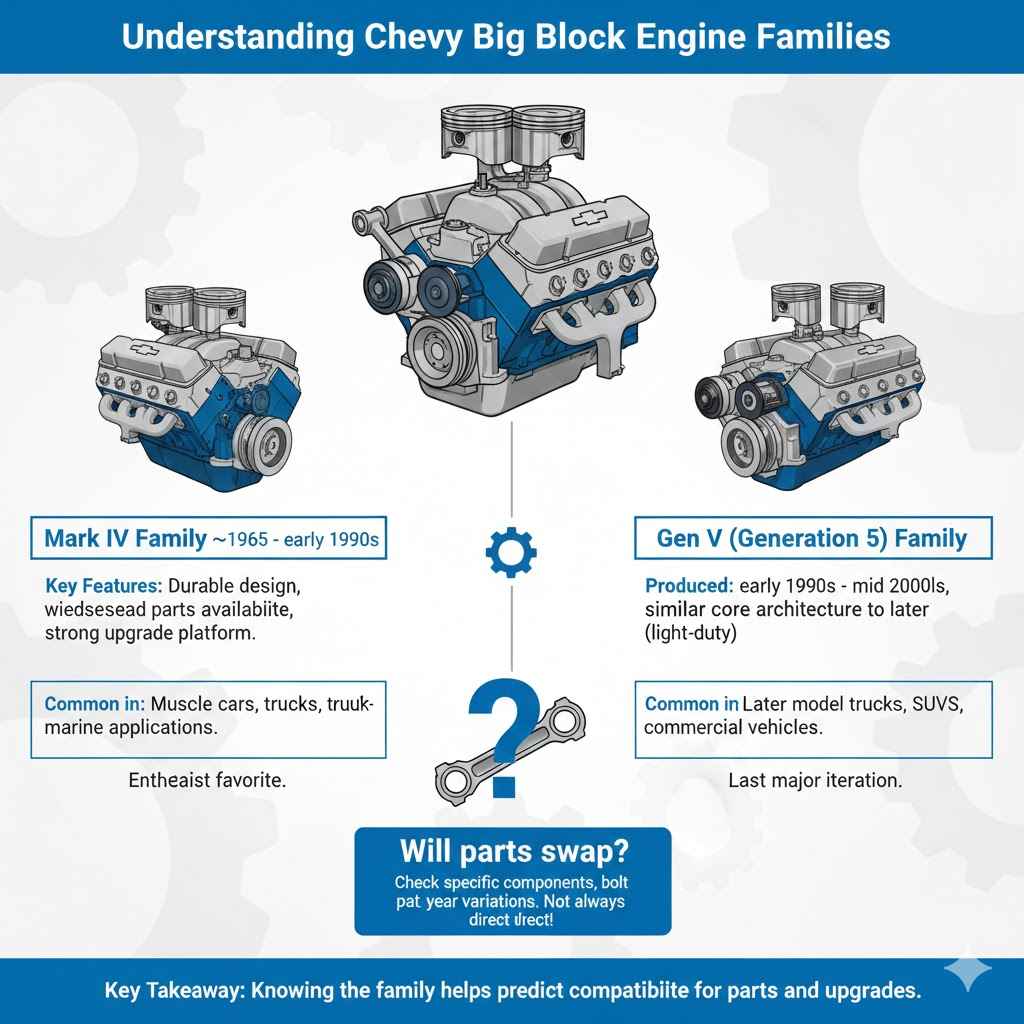
The Chevrolet big-block V8 engine family is legendary. It powered many iconic trucks and performance cars for decades. Over its long life, Chevy made some updates. These changes sometimes affect how parts swap between different years. The key is knowing which family your engine belongs to. This helps predict if it will bolt up where you need it.
The term “Mark IV” refers to a specific era of Chevrolet big-block engines. These were produced roughly from 1965 through the early 1990s. They are known for their durability and performance potential. Many enthusiasts love working with Mark IV engines because parts are generally available. They also offer a strong foundation for upgrades.
The “Gen 5” or “V” designation typically refers to the last major iteration of the big-block design before its eventual discontinuation in light-duty applications. This generation saw some refinements in materials and design. However, the core architecture remained similar to its predecessors, particularly the later Mark IV designs.
The Core Question Will a 1993 Chevy Gen 5 454 Fit a 1989 Mark IV 454?
This is a common question for anyone looking to swap engines or upgrade their vehicle. The 454 cubic inch V8 is a powerful choice. Knowing if a later model engine fits an earlier chassis is crucial. It saves a lot of headaches and money if you can do a direct swap or know what modifications are needed.
Many people assume engines from different years won’t mix. This can be true for very different engine families. But with Chevrolet big blocks, the lineage is often closer. The difference between a 1989 Mark IV 454 and a 1993 Gen 5 454 is not as vast as one might think. They share a common ancestry and design principles.
The main considerations for fitment are engine dimensions, transmission bolt patterns, and accessory mounting locations. Chevrolet engineers aimed for a degree of parts interchangeability within families. This design philosophy helps mechanics and DIYers over time. So, the answer to “Will a 1993 Chevy Gen 5 454 Fit a 1989 Mark IV 454?” often leans towards yes, with some caveats.
External Dimensions and Physical Fitment
The physical size of an engine is one of the first things to check. Will the block clear the firewall and front end of the vehicle? Thankfully, Chevrolet big-block engines, regardless of the specific generation within the Mark IV family and its successors like the Gen 5, share very similar external dimensions. This is a significant advantage.
The length, width, and height of a 454 from the late 80s and early 90s are nearly identical. This means if a Mark IV 454 fits in your 1989 vehicle, a Gen 5 454 from 1993 should also physically clear the engine bay. This includes the frame rails, inner fenders, and hood clearance.
There are no major differences in the basic block casting that would prevent one from occupying the same physical space as the other. This is due to Chevrolet’s design continuity for this engine platform. The engine mounts themselves are also typically in the same locations on both blocks. This is a huge plus for swapping.
Engine Mounts and Chassis Compatibility
Engine mounts are critical for securing the engine to the vehicle’s frame. They are designed to align the engine correctly. For Chevrolet big blocks within this era, the engine mount locations on the side of the engine block are standardized. This means the mount brackets on your 1989 chassis will likely bolt directly to the 1993 Gen 5 454 engine block.
If your 1989 vehicle came with a 454 Mark IV engine, the original engine mount system is designed for a big-block V8 of this size and general configuration. The 1993 Gen 5 454 retains this critical mounting interface. This compatibility greatly simplifies the engine installation process.
Minor variations might exist in the specific design of the rubber isolators or brackets used over the years, but the bolt hole patterns on the engine block itself are consistent. This makes the direct fitment of engine mounts very probable, reducing the need for custom fabrication.
Transmission Compatibility
When swapping engines, transmission compatibility is a major concern. Will your existing transmission connect to the new engine? For Chevrolet big blocks, this is generally a strong point of interchangeability. The bell housing bolt pattern is a key factor here.
The Mark IV and Gen 5 big-block engines use the common Chevrolet big-block bell housing pattern. This pattern is compatible with a wide range of Chevrolet automatic transmissions like the TH400, TH350 (with an adapter or correct bellhousing), and manual transmissions like the Muncie or BorgWarner T-10.
If your 1989 vehicle has a transmission designed for a Mark IV 454, it will most likely bolt up directly to the 1993 Gen 5 454. This means the torque converter and flywheel or flexplate will also be compatible. This significantly simplifies the powertrain swap.
Bell Housing Bolt Pattern Standardization
Chevrolet has a history of standardizing key components to simplify production and aftermarket support. The big-block bell housing bolt pattern is a prime example. This pattern has remained consistent across many generations of big-block V8s. It ensures that transmissions designed for these engines can be paired with them.
The 1993 Gen 5 454 engine features this same standardized bolt pattern. This means that any transmission that correctly bolted to your 1989 Mark IV 454 will also mate up to the 1993 Gen 5 454. This is a huge relief for mechanics and DIY enthusiasts.
This standardization is a testament to smart engineering that benefits owners looking to upgrade or replace their engines. It means less custom work and more direct compatibility.
Accessory Drive Systems and Mounting
Accessory drive systems include the alternator, power steering pump, air conditioning compressor, and their related brackets and pulleys. This is where some differences might arise, though usually not insurmountable. The basic locations for mounting these accessories are often similar, but the specific brackets can vary.
A 1993 Gen 5 454 engine will have provisions for mounting common accessories. These might be slightly different in design or placement compared to a 1989 Mark IV. For example, the power steering pump bracket might be shaped differently, or the alternator bracket might have updated mounting points.
However, because the underlying accessory mounting bosses on the block and heads are often similar, it’s usually possible to adapt brackets from your original 1989 engine or purchase aftermarket brackets designed for this swap. This is often a matter of swapping over your old accessory brackets or buying new ones.
Brackets and Pulleys
Brackets are the metal arms that hold the accessories in place. They attach to the engine block or cylinder heads. Pulleys are the wheels that the belts spin around, driving the accessories. The design of these components can change between engine generations to accommodate different accessory designs or to optimize belt routing.
For the “Will a 1993 Chevy Gen 5 454 Fit a 1989 Mark IV 454?” question, the critical part is that the mounting surfaces for these brackets are present on both engines. If you are using your original 1989 accessory brackets, you might find they bolt directly to the 1993 Gen 5 454. If not, you might need brackets specific to the Gen 5 or aftermarket solutions.
Sometimes, the pulley alignment needs to be perfect. This means ensuring the pulleys on the crankshaft, water pump, and accessories all line up properly so the belts run true. This is often achieved by using the correct combination of pulleys or shims.
Intake and Exhaust Manifold Fitment
Intake and exhaust manifolds are key components that connect to the cylinder heads. Their fitment can be affected by cylinder head design changes, even within the same engine family. However, for the Mark IV and Gen 5 big blocks, this is often a straightforward swap.
The cylinder heads on these engines share a very similar bolt pattern for both intake and exhaust manifolds. This means that intake manifolds designed for a Mark IV 454 will typically bolt onto a Gen 5 454 cylinder head, and vice versa. The same applies to exhaust manifolds, though port shapes might differ slightly.
This similarity in manifold mounting greatly eases the transition. You can often reuse your existing manifolds, which can save time and money. This is another reason why the answer to “Will a 1993 Chevy Gen 5 454 Fit a 1989 Mark IV 454?” is generally positive.
Intake Manifold Variations
The intake manifold sits on top of the engine and feeds fuel and air into the cylinders. While the bolt pattern is similar, there can be subtle differences in the port shape or gasket sealing surface between different head designs. However, for most Mark IV and Gen 5 applications, aftermarket intake manifolds are designed to fit both.
If you are using an original factory intake manifold, it is important to check if the ports on the manifold match the ports on the cylinder head. Often, minor port matching can be done with a grinder if there is a slight mismatch. However, for the 454 from these specific years, this is rarely a major issue.
The gasket surface where the intake manifold seals to the heads is usually the same. This ensures a good seal and prevents vacuum leaks.
Exhaust Manifold Considerations
Exhaust manifolds bolt to the sides of the cylinder heads and carry exhaust gases away. Like intake manifolds, the bolt pattern is very similar between Mark IV and Gen 5 big blocks. This means your existing exhaust manifolds should bolt up to the 1993 Gen 5 454.
However, some later model Gen 5 heads might have slightly different exhaust port shapes than older Mark IV heads. This could mean a slight mismatch with aftermarket headers or even some factory manifolds. Again, this is usually a minor issue that can be addressed with a bit of grinding or by using headers specifically designed for the Gen 5.
The primary concern is ensuring a good seal at the cylinder head to prevent exhaust leaks, which are noisy and inefficient. Using a quality gasket is essential.
Electrical System and Fuel Delivery
This is an area where more significant differences might exist. The electrical system and fuel delivery methods can change between generations. A 1989 vehicle likely uses a carbureted fuel system and a more basic ignition system. A 1993 engine might have features like electronic fuel injection (EFI) or an updated ignition system.
If your 1989 vehicle is carbureted, and the 1993 Gen 5 454 engine you are considering is fuel-injected, you will need to address this difference. You might need to convert the 1993 engine back to a carburetor or adapt your vehicle’s electrical system to support the EFI.
Similarly, ignition systems can vary. Older systems might use points and a condenser, while newer ones use electronic ignition modules. Ensuring compatibility between the engine’s ignition requirements and your vehicle’s system is vital for the engine to run correctly.
Carburetor vs. Fuel Injection
The transition from carburetors to electronic fuel injection was a major shift in automotive technology. Carburetors use a mechanical system to mix fuel and air. EFI uses sensors and a computer to precisely control the fuel mixture. This impacts how the engine is fueled.
If your 1989 vehicle has a carbureted 454, and you want to swap in a 1993 Gen 5 454 that is originally EFI, you have a few options. You can remove the EFI components from the 1993 engine and install a carburetor and intake manifold designed for it. This is often the simplest route if your vehicle is set up for a carburetor.
Alternatively, you can adapt your 1989 vehicle to accept the 1993 engine’s EFI. This involves installing the EFI computer, fuel pump, injectors, and necessary wiring harness. This can provide better performance and fuel economy but requires more complex electrical work.
Ignition System Compatibility
The ignition system provides the spark to ignite the fuel-air mixture in the cylinders. Older vehicles might have a points-style distributor, while later models use electronic ignition. A 1993 Gen 5 454 is likely to have an electronic ignition system.
If your 1989 vehicle has a points-style ignition, you’ll need to ensure the 1993 engine’s electronic ignition system can be integrated. Often, this involves replacing the distributor on the 1993 engine with one compatible with your 1989 vehicle’s ignition module, or vice versa.
Some people opt to swap the entire ignition system over to a modern electronic setup for improved reliability and performance. This can simplify things by ensuring a matched system for the engine.
Cooling System and Radiator Fitment
The cooling system is vital for engine longevity. This includes the radiator, water pump, thermostat, and hoses. While the engine block itself is physically compatible, the cooling system components might need consideration.
A 1993 Gen 5 454 engine uses a water pump that circulates coolant. The radiator’s capacity and flow rate must be sufficient to cool the engine adequately. If your 1989 vehicle came with a 454, its radiator was likely designed for that engine’s heat output.
The 1993 Gen 5 454 might have slightly different cooling characteristics or require a specific type of water pump pulley arrangement. It’s important to ensure your existing radiator and fan setup can handle the cooling demands of the new engine.
Water Pump and Radiator Core Support
The water pump bolts to the front of the engine and has a pulley driven by a belt. The radiator sits in front of the engine, often behind a radiator support structure. The core support is the frame that holds the radiator in place.
For the question “Will a 1993 Chevy Gen 5 454 Fit a 1989 Mark IV 454?”, the water pump itself should be compatible in terms of mounting to the engine block. However, the pulley system might differ. This can affect belt alignment with other accessories.
The radiator core support is a structural part of the vehicle. If your 1989 vehicle originally housed a 454 Mark IV, its core support is likely designed to accommodate the size of a big-block engine and its associated radiator. Generally, the physical space for the radiator should be adequate.
Hose Connections and Fan Clearance
Radiator hoses connect the engine’s water pump and thermostat housing to the top and bottom of the radiator. The placement and diameter of these connections on the engine might differ slightly between the Mark IV and Gen 5.
You might need to use different radiator hoses or adaptors to connect your existing radiator to the 1993 Gen 5 454. This is usually a simple fix with readily available hose options.
Fan clearance is also important. The engine fan, whether electric or belt-driven, needs enough space to rotate without hitting the radiator or other components. Since the physical dimensions of the engines are similar, fan clearance should not be a major obstacle if the original setup worked.
Case Study: A Successful Engine Swap
John was working on his beloved 1988 Chevrolet C10 pickup. It came with a 454 Mark IV engine, but it was tired. He found a complete 1993 Gen 5 454 engine with low miles and decided to swap it in. He was worried about fitment, especially concerning “Will a 1993 Chevy Gen 5 454 Fit a 1989 Mark IV 454?”.
John discovered that the engine physically dropped into the engine bay with no issues. His original engine mounts bolted right up. The transmission bolted to the Gen 5 454 using the same bell housing pattern. He reused his exhaust manifolds as the bolt patterns matched.
The main challenges were the electrical system and accessories. His 1988 was carbureted, while the 1993 engine had EFI. John decided to convert the 1993 engine back to a carburetor. He swapped the intake manifold, distributor, and ignition system from his old engine onto the new one. He also reused his old alternator and power steering pump brackets. After some minor hose adjustments and a tune-up, the truck ran beautifully.
Sample Scenario 1 Engine Swap
You have a 1972 Chevrolet Chevelle with a 454 Mark IV engine. You want to upgrade to a 1994 Gen 5 454.
1. Verify that your 1972 Chevelle’s engine bay can accommodate the physical dimensions of a big block. This is generally true for these cars.
2. Check the transmission bolt pattern. If you have a TH400, it will bolt directly to both engines.
3. Your current engine mounts will likely bolt to the new engine block.
4. Reuse your current intake and exhaust manifolds, as they should align with the cylinder head bolt patterns.
5. If the 1994 engine has EFI and your 1972 is carbureted, you will need to either convert the engine to carb or adapt the car for EFI. Converting to a carb is usually simpler for older cars.
Sample Scenario 2 Engine Swap
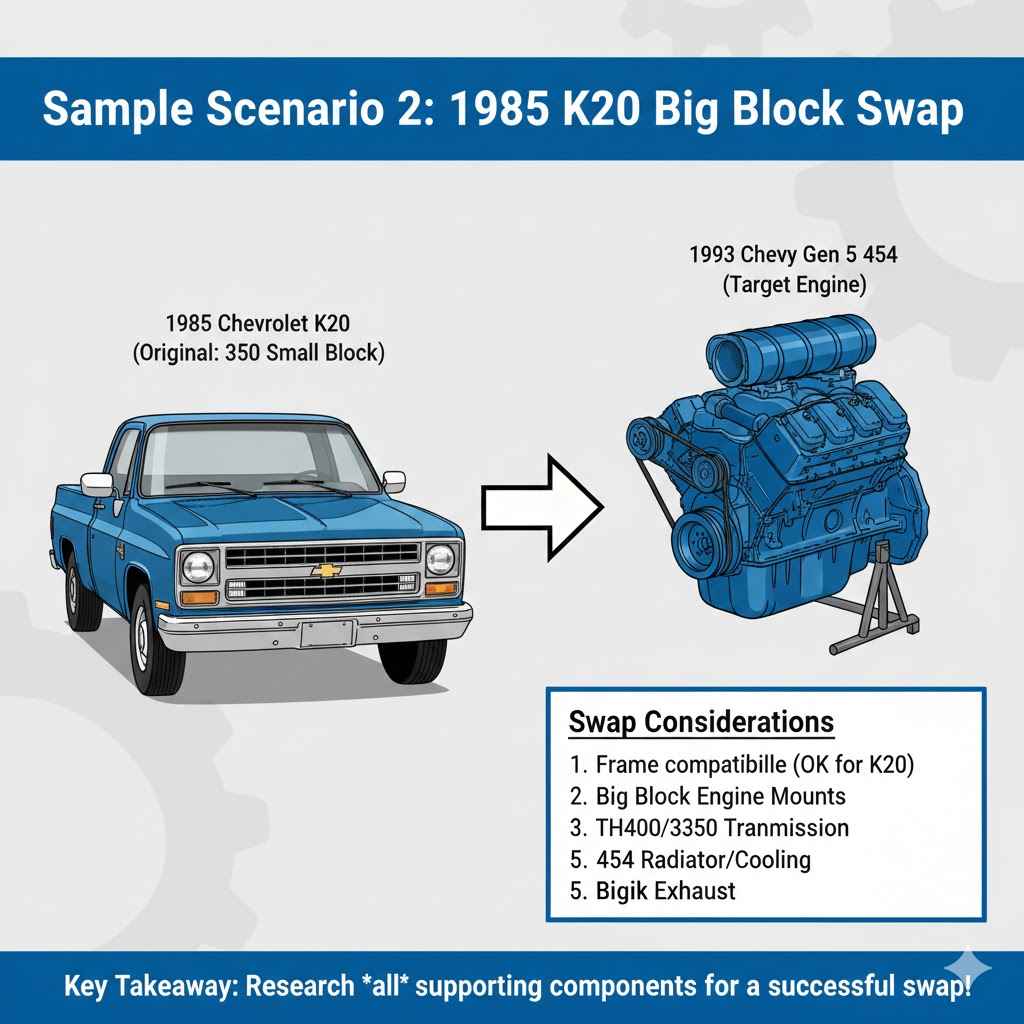
You are restoring a 1985 Chevrolet K20 pickup that originally had a 350 small block. You want to install a 1993 Gen 5 454.
1. Confirm your K20’s frame can handle the weight and size of a big block. Many K20s came with big blocks, so this is usually fine.
2. You will need big-block engine mounts for your truck’s frame.
3. You will need a transmission designed for a big block, such as a TH400 or a heavy-duty TH350 with the correct bellhousing.
4. You will need a radiator and cooling system suitable for a 454. The original 350 radiator may be too small.
5. Consider the exhaust system. You will need big-block exhaust manifolds or headers.
Frequently Asked Questions
Question: Are the engine blocks identical between a 1993 Gen 5 454 and a 1989 Mark IV 454?
Answer: The basic engine block casting is very similar, retaining key dimensions and mounting points. While there might be minor internal or external casting differences, the overall structure and compatibility for fitment are largely the same.
Question: Can I use my 1989 Mark IV 454 exhaust manifolds on a 1993 Gen 5 454?
Answer: Yes, in most cases, the exhaust manifolds will bolt directly to the cylinder heads of the 1993 Gen 5 454. The bolt patterns are typically the same.
Question: What if the 1993 Gen 5 454 engine I found is fuel injected and my 1989 vehicle is carbureted?
Answer: You will need to decide whether to convert the engine to a carburetor or adapt your vehicle to support fuel injection. Converting the engine to a carburetor is often the simpler route for older vehicles.
Question: Will the transmission from my 1989 Mark IV 454 work with a 1993 Gen 5 454?
Answer: Absolutely. The bell housing bolt pattern for Chevrolet big-block engines has remained consistent across these generations, so your transmission will bolt up directly.
Question: Are there any major differences in the overall length of a 1993 Gen 5 454 compared to a 1989 Mark IV 454?
Answer: No, the overall length, width, and height of these engines are nearly identical, meaning physical clearance in the engine bay should not be an issue if the Mark IV fit.
Conclusion
So, to answer “Will a 1993 Chevy Gen 5 454 Fit a 1989 Mark IV 454?”, the answer is a resounding yes. These engines share a common design lineage, meaning most core components like the block, bell housing, and accessory mounting points are compatible. You can often reuse your existing engine mounts, transmission, and even manifolds. The main areas to watch are the electrical and fuel systems, which may require adaptation if you’re switching between carburetor and fuel injection. With a little planning, swapping a Gen 5 454 into a Mark IV application is a very achievable project.