Best 3M Adhesive Removers for Cars (2026): Research Shows
For painted panels, 3M Adhesive Remover Aerosol is the better pick for controlled spot work on cured paint, while 3M General Purpose Adhesive Cleaner fits bigger, tougher residue jobs. Use the wrong solvent or too much rubbing and you can haze clear coat, swell trim, or leave sticky residue behind. This guide compares both 3M options for paint-safe use on stickers, emblems, tape, and glue.
Quick comparison
| Product | Badge | Best for | Price | ||
|---|---|---|---|---|---|
 |
3M General Purpose Adhesive Cleaner, 08987, 15 fl oz |3M | Our pick | 15 fl oz · aerosol · general purpose | $30.88
Price as of 23 Oct 2026
|
View |
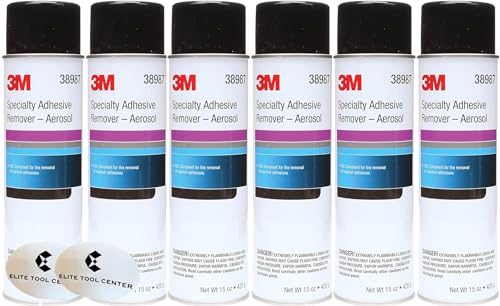 |
6 Pack 3M 38987 15oz Aerosol Specialty Adhesive RemoverElite Tool Center | Also great | 6 pack · aerosol · solvent-based | $209.99
Price as of 23 Oct 2026
|
View |
The split is straightforward: the aerosol gives tighter control on small patches and curved panels, while the general-purpose cleaner is the practical choice when you need to clear a wider adhesive field faster. Both can be used with care on cured automotive paint, but finish condition and wipe method matter.
Surface safety starts on painted metal. A solvent that behaves on a cured panel can still leave a dull spot if it sits too long, gets spread around, or is worked into a sensitive edge.
How we chose
These two picks are the most relevant for car owners comparing 3M adhesive removers for paint-safe use. The selection focuses on four things that matter on a vehicle panel: cured paint compatibility, control on vertical surfaces, cleanup speed on tape or decal residue, and the risk of overspray, smear, or finish damage.
One more filter matters. The right remover depends on the adhesive type. Sticker residue, emblem glue, tape transfer, and vinyl wrap glue do not behave the same, so the better tool changes with the mess.
- Paint-safe use on cured automotive finishes
- Control on vertical panels and small targets
- Cleanup speed for tape, decal, and emblem residue
- Lower risk of overspray, smear, and finish damage
3M Adhesive Remover Aerosol: best for spot cleaning
The 3M Adhesive Remover Aerosol is the cleaner fit when you want a controlled application on cured automotive paint and a non-abrasive solvent blend. Its aerosol format makes it easier to aim at a sticker edge, tape transfer patch, or emblem outline without flooding the surrounding panel.
That matters on painted metal, where finish sensitivity is real. A spot-treated area can be wiped clean with less spread, which lowers the chance of residue smear on adjacent paint or trim. The product is designed for safe use on cured automotive paints, so it belongs in the conversation for body panels that are fully cured and otherwise sound.
The drawback is the same thing that gives it precision: it is not the fastest answer for a wide field of hardened adhesive. If the residue covers a broad quarter panel, door skin, or rear hatch, a more general cleaner may move the job along with fewer passes.
Best-use wipe-down method: apply to the residue, let it work only as needed, then wipe with a clean microfiber or soft towel in one direction. If the glue starts to smear instead of lift, stop and reapply lightly rather than scrubbing harder.
Where it makes the most sense
Use the aerosol for cured paint, small label ghosts, emblem adhesive, and tape residue on a single panel. It is also the more sensible choice when you want to minimize overspray on nearby trim or plastic badges.
Suppose a 2-inch strip of tape residue is left on a door edge after a repair label comes off. The aerosol can be aimed directly at the patch, which reduces waste and keeps the solvent off the rest of the panel.
Where it can struggle
It is less efficient on thick, heavy buildup. If the adhesive has been layered over with dust, road film, or old wax, the first wipe may only soften the top film and leave the rest behind.
A common first-timer mistake is letting the residue sit and then rubbing harder when it turns gummy. That can spread the adhesive into a wider smear, especially on warm panels.
3M General Purpose Adhesive Cleaner: best for tougher messes
3M General Purpose Adhesive Cleaner is the better fit when the job is bigger and the residue is tougher. Bob Vila lists it among best-for-tough-messes picks, and that matches its role as a spray-on cleaner for sticky residue that needs broader coverage, not just point cleaning.
This is the more practical option for larger adhesive fields on painted surfaces, vinyl, and fabric, especially when you need to move quickly across a wide area. It is still a solvent-based cleaner, so it belongs in the stronger category of adhesive removers rather than the mild citrus or soy end of the scale. The same source notes solvent-based removers are the strongest on the market, while citrus-based removers are best for mild to moderate residue and soy-based removers are stronger than citrus-based products.
The drawback is control. A general-purpose spray can be more convenient, but it also raises the odds of overspray and cleanup on surrounding surfaces if you are working on a vertical panel or near trim. On fresh or delicate finishes, that is a reason to slow down rather than reach for a heavier product first.
Best-use wipe-down method: mist only the residue zone, give it brief dwell, then wipe clean with a soft cloth before it migrates. On clearcoat, finish with a second dry wipe so no softened film is left behind.
Quick decision table for car use
| Car scenario | Recommended use | Caution | Wipe-down method |
|---|---|---|---|
| Cured paint | Aerosol for controlled spot cleaning on fully cured automotive paint | Do not assume fresh or uncured paint will tolerate the same solvent contact | Light application, short dwell, then a single clean microfiber wipe |
| Clearcoat | Aerosol first; General Purpose Cleaner if the residue field is wider | Overworking can haze the finish or leave smear on the clearcoat | Wipe gently in one direction, then dry-buff with a clean towel |
| Vertical panels | Aerosol for pinpoint control; General Purpose Cleaner only if drip control is manageable | Runoff can carry solvent onto trim or lower bodywork | Apply sparingly and wipe before the product migrates downward |
| Emblem residue | Aerosol for the small adhesive ring around badges or emblems | Badge edges and surrounding paint can trap softened glue | Use a folded cloth edge for the perimeter, then a full cloth for the panel |
| Heavy adhesive buildup | General Purpose Cleaner for faster coverage on larger, stubborn residue | Repeated passes can spread softened adhesive and extend cleanup time | Break the area into small sections and wipe each section before moving on |
What to know about formula types
Adhesive removers usually fall into citrus-based, soy-based, and solvent-based groups. That matters because the chemistry changes how much residue they can break down, how fast they work, and how much care you need around paint.
The same source notes that adhesive removers break down molecular bonds, and that solvent-based removers are the strongest on the market. Citrus-based products are better for mild to moderate residue, while soy-based products sit above citrus in strength. For car work, stronger is not automatically better. A more aggressive formula can be the wrong call on a panel that only needs a light touch.
That is why the product choice should follow the residue, not the label hype. A vinyl decal ghost on cured paint, a tape transfer patch on a door edge, and heavy glue from an emblem base all ask for different levels of strength and control.
How to remove sticker residue from car paint without damage
Start with the least harsh option that can still move the residue, then test on a hidden spot. On cured paint, use a controlled spray, a soft microfiber, and short dwell times. Avoid aggressive scrubbing, and stop as soon as the adhesive lifts so you do not dull the finish.
The key is to prevent smear. If the residue starts to drag, reapply lightly and wipe again instead of pressing harder. On painted metal, the wrong pressure can leave visible trails even when the solvent itself is paint-safe.
- Confirm the panel is fully cured and clean off loose dust.
- Apply a small amount of remover to the adhesive, not the whole panel.
- Let it sit only until the residue softens.
- Wipe with a clean microfiber in one direction.
- Repeat in small sections if needed.
- Finish with a dry wipe to remove leftover film.
How long should adhesive remover dwell before wiping?
Keep dwell time short. The goal is to soften the adhesive, not soak the panel. On cured automotive paint, a brief wait followed by a wipe is safer than letting the product sit long enough to haze clearcoat or seep into an edge.
If the residue does not move after a short dwell, reapply lightly rather than extending the wait far beyond what the label suggests. Longer dwell can increase cleanup effort and can turn a clean lift into a sticky smear.
Which one should you buy?
Choose the aerosol if you want tighter control and lighter residue removal on cured paint. It is the better fit for emblem glue, small decal ghosts, and spot work where overspray matters more than raw coverage speed.
Choose the general-purpose cleaner if you need faster coverage on stubborn buildup. It makes more sense when the residue area is wider, the adhesive is heavier, or the job involves repeated passes across a larger section of painted surface.
Start with the least harsh option first, and spot-test before you commit to a visible panel. Heavy-duty remover is not automatically the safest choice for every piece of paint, trim, or fresh finish.
If the mess is vinyl wrap glue residue, the same rule applies: use the smallest effective amount, then step up only if the residue resists a controlled pass. For reactive adhesives used on decals or wheel weights, a stronger solvent path may be needed, but only after confirming the surface can take it.
Choose 3M adhesive remover aerosol if…
You are working on cured paint and want the cleanest control around a small residue patch. You need to clean emblem adhesive, label ghosting, or tape transfer without flooding the panel. You are trying to limit overspray on nearby trim or along a vertical surface.
Choose 3M general purpose adhesive cleaner if…
You are facing a larger adhesive field and want faster cleanup. The residue is thicker, more stubborn, or spread across more painted area than a small spot treatment can handle well. You can manage the spray carefully and do not need the narrowest application pattern.
Frequently asked questions
What is the best 3M adhesive remover for cars?
For most painted panels, the better all-around pick is 3M Adhesive Remover Aerosol for controlled spot cleaning on cured paint. If the residue area is larger or heavier, 3M General Purpose Adhesive Cleaner is the faster cleanup option. The best choice depends on panel size, finish condition, and how much control you need.
Is 3M adhesive remover safe on automotive paint?
3M Adhesive Remover is designed for safe use on cured automotive paints, and its solvent blend is non-abrasive. That said, paint safety depends on cure status, dwell time, and wipe method. Fresh paint, sensitive trim, and prolonged soaking all raise the risk of dulling or softening the finish.
Should I use aerosol or liquid adhesive remover on a car?
Use aerosol when you need tighter control on small spots, emblems, or vertical panels. Use a liquid or broader spray cleaner when the adhesive covers more area and you need faster coverage. The trade-off is control versus speed, and the safer choice depends on how much surface you need to clean.
What is the difference between Goo Gone and 3M adhesive remover?
In practical car use, the difference is usually strength, format, and control. 3M’s aerosol and general-purpose cleaner options are aimed more directly at painted automotive surfaces. Goo Gone includes heavier-duty and household-oriented options, such as a drip-free spray gel and a trusted all-purpose liquid, which can suit different messes but are not identical in control or automotive focus.
Can adhesive remover be used on cured automotive paint?
Yes, if the product is labeled for that use and the paint is fully cured. 3M Adhesive Remover is designed for safe use on cured automotive paints. Still, a spot test is smart, especially on clearcoat edges, older finishes, or any area where the paint condition is uncertain.
What should I use to remove vinyl wrap glue residue?
Start with the least harsh product that can soften the glue without spreading it. For smaller residue patches, the aerosol gives more control on cured paint. For wider glue transfer, the general-purpose cleaner may work faster. The main goal is to lift the residue without overworking the panel or leaving a smear.
Products related to this article
Sponsored / affiliate links. As an Amazon Associate I earn from qualifying purchases. I may earn additional commission from eligible campaigns.