Best Wire Caps for Car Stereo Wiring: Crimp vs Twist-On Picks
The right wire cap keeps a car stereo splice from vibrating loose or shorting against the metal dash. Closed-end crimp caps make the strongest permanent joint, while twist-on caps let you connect wires by hand with no tool.
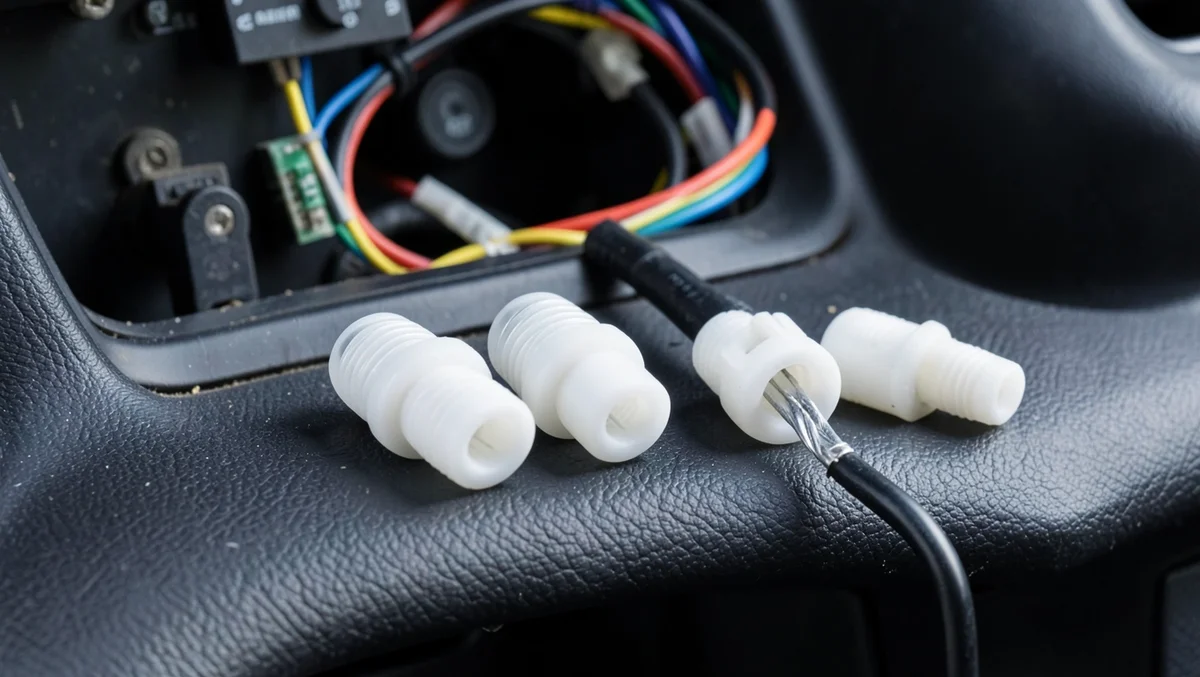
Most car stereo installs need at least a few spliced connections — joining a wiring harness adapter to the factory harness, adding a ground wire, or tapping into a remote turn-on lead. Bare twisted wire alone will work loose over thousands of miles of engine vibration and road noise, and it leaves exposed copper that can short against the metal dash or steering column. A wire cap solves both problems: it clamps the twisted wires together and insulates the joint in one piece, no electrical tape required.
There are two different styles sold under the “wire cap” name, and they aren’t interchangeable in how you use them. Closed-end crimp caps are a nylon or plastic shell you squeeze permanently onto the wires with a crimping tool — they can’t be removed without cutting them off, and they’re what pro installers use for connections that should never come apart. Twist-on caps (also called wire nuts) screw on by hand with no tool, which makes them faster for a DIY job, but a twist-on connection can back off over time if it isn’t seated firmly. Two of the three picks below are closed-end crimp caps and one is a twist-on kit, so check which type matches how permanent you need the connection to be before you buy.
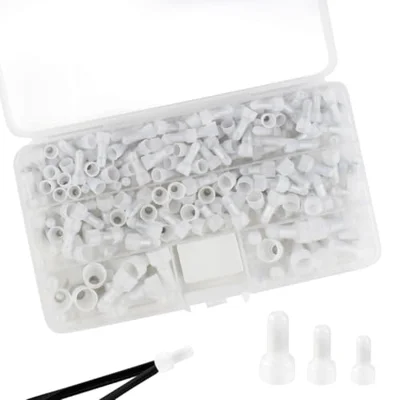
1. 250 Pcs Closed End Wire Crimp Connectors and Terminals Kit – 22-18 18-14 12-10 AWG
- Type: Closed-end crimp cap (permanent, needs a crimping tool)
- Wire range: 22-18, 18-14, and 12-10 AWG in one kit
- Color: White nylon shell over an aluminum crimp sleeve
This is a closed-end connector, not a twist-on cap — you crimp it shut with a tool and it stays shut, which is what you want for a splice you’ll never need to reopen, like a factory-harness-to-adapter join buried behind the dash. The kit covers three gauge ranges in one box (130 pcs for 22-18 AWG, 90 pcs for 18-14 AWG, 30 pcs for 12-10 AWG), so it works for both thin speaker leads and heavier power wire without buying separate packs. The nylon shell fully covers the aluminum sleeve, so there’s no exposed metal once it’s crimped.
Advantages
- Three gauge ranges (22-18, 18-14, 12-10 AWG) in one kit, so one box handles speaker wire and heavier power leads.
- Closed-end design fully encloses the crimp, unlike open butt connectors that leave a bare metal seam.
- No solder or heat shrink needed — insert the wire, crimp once, done.
- 250-piece count is enough for a full stereo, amp, and alarm install with spares left over.
Our Recommendation
Pick this one if you want a splice that’s permanent and completely insulated — behind a dash panel, under carpet, or anywhere you won’t revisit the connection later. You will need a crimping tool (or crimping pliers) to close them properly; squeezing one shut with regular pliers can leave it loose.
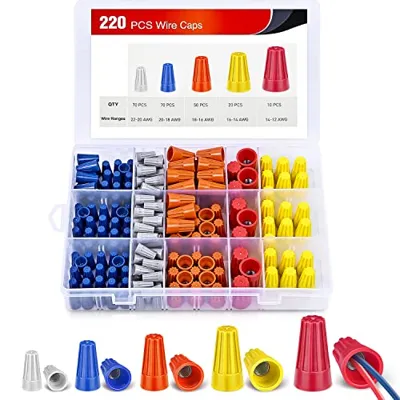
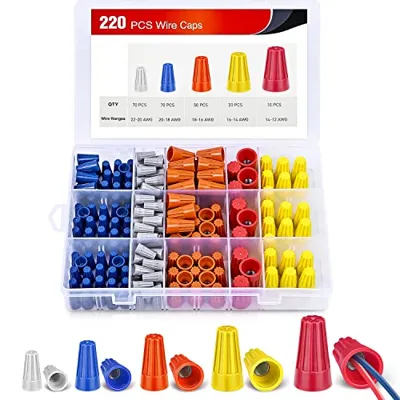
2. Nilight 220PCS Wire Screw Caps Terminals Kit, 5 Sizes, 22-12 AWG
- Type: Twist-on cap with a spring-thread copper coil inside (no tool required)
- Wire range: 5 sizes covering 22-20 through 14-12 AWG
- Included: Sorting case with labeled compartments
- Case size: About 2 x 2 x 2 inches
Unlike the two crimp-cap kits on this page, this Nilight set is a twist-on connector — twist the bare wires together, thread the cap on clockwise by hand until it’s snug, and the internal spring coil bites into the copper. That makes it the fastest of the three to use since no tool is required, but a twist-on cap can back off if it wasn’t threaded on tightly enough or if it sits somewhere with constant vibration, so give it a firm tug-test after installing. Five color-coded sizes cover almost any speaker or power wire you’ll run into on a stereo job, and tapping into a specific harness wire, like the pink accessory lead, is one of the more common places this kit gets used.
Advantages
- No crimping tool needed — twist on by hand, which is faster for a quick tap into a harness.
- Five sizes cover a wider AWG range (22-12) than either crimp kit alone.
- Can be removed and reused if you need to redo a connection, unlike a crimp cap.
- Sorting case with labeled compartments keeps the five sizes from getting mixed up.
Our Recommendation
Pick this one if you want to work without a crimping tool, or if you might need to reopen a connection later — it’s the only twist-on option of the three. Thread each cap on until it stops turning easily, then tug-test the wires before closing up the dash.
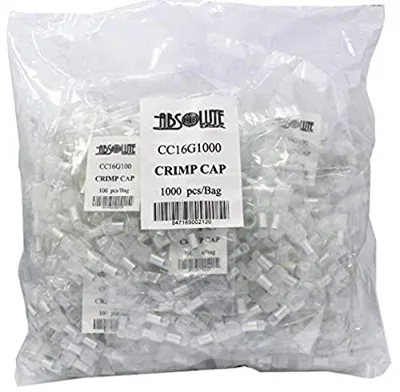
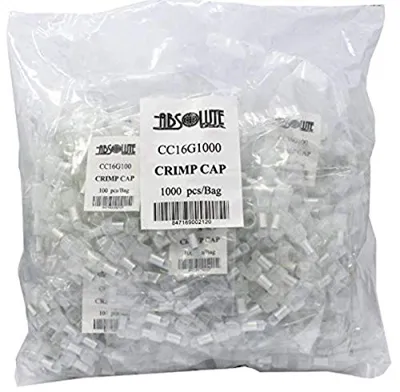
3. Absolute CC16G1000 Crimp Caps, 1,000-Piece Pack (100 x 10)
- Type: Closed-end crimp cap (permanent, needs a crimping tool)
- Brand: Absolute, a car audio and security accessory brand
- Count: 1,000 caps total, sold as 10 bags of 100
- Color: White
This is a bulk single-size crimp cap aimed at installers who go through a lot of connectors, not a one-off DIY project — 1,000 pieces is far more than a single stereo install needs. If you’re only doing one car, the 250-piece kit above with three gauge sizes will cover more of the job for less money. This pack makes more sense for a mobile installer or shop that’s running the same wire gauge across many vehicles and wants to buy connectors once a year instead of restocking a small box every few jobs.
Advantages
- 1,000-piece count works out cheaper per connector than either smaller kit on this page.
- Closed-end crimp design, same permanent-splice style as the top pick.
- From a car audio and security-focused brand, so it’s built for the same gauge wire most head units and alarm harnesses use.
- Bagged in 10 packs of 100, so you can grab one bag for a job instead of digging through a loose pile.
Our Recommendation
Pick this one if you install car audio regularly and want to stock up once, not for a single weekend project — the per-piece price is good, but 1,000 caps is overkill for one car.
Frequently Asked Questions
What Are Wire Caps Used For In Car Stereos?
Wire caps connect and secure electrical wires. They prevent exposed wires from touching and causing short circuits.
How Do I Choose The Right Wire Caps For My Car Stereo?
Check the wire gauge on the connectors you’re joining and pick a cap rated for that AWG range, then decide whether you need a permanent closed-end crimp or a removable twist-on cap. A cap that’s too loose for the wire gauge won’t hold under vibration, and one that’s too tight can crack.
Can Wire Caps Improve Car Stereo Sound Quality?
Wire caps ensure stable connections, reducing signal loss. This can help maintain sound quality but doesn’t directly improve it.
Are Wire Caps Easy To Install On Car Stereos?
Twist-on caps are the easiest — twist the wires together, thread the cap on by hand, and it’s done. Closed-end crimp caps take one extra step: insert the twisted wires and squeeze them shut with a crimping tool.
What Is The Difference Between Crimp Caps And Twist-On Wire Caps?
Crimp caps are closed-end connectors you squeeze permanently onto twisted wires with a crimping tool, and once closed they can’t be reopened without cutting the connection off. Twist-on caps thread onto twisted wires by hand with no tool, and can be removed and reused, but they can loosen over time in a spot that vibrates a lot.
Do Wire Caps Need Electrical Tape Or Heat Shrink Over Them?
No, a properly seated wire cap already has its own insulated shell, so tape isn’t required for basic insulation. Adding heat shrink over the joint is still a good extra step in high-vibration spots, like under the dash or near the engine bay, since it adds strain relief the cap alone doesn’t provide.
Buying Guide: How to Choose Wire Caps for a Car Stereo
Wire caps are a small part of a stereo install, but the wrong size or type is a common cause of a dead speaker channel or a dash rattle a few months down the road. Work through these points before you buy:
1. Match the wire gauge
Check the AWG (wire gauge) printed on your factory harness or aftermarket wire, and buy a cap rated for that exact range. Car stereo wiring is commonly 18, 16, or 14 AWG for speaker and accessory leads, with heavier power and ground wire running 12 AWG or thicker on higher-power amps. A cap sized for a smaller gauge won’t seat over thicker wire, and one sized for thicker wire will sit loose on thin speaker leads.
2. Decide: crimp or twist-on
Closed-end crimp caps need a crimping tool but make a permanent, tighter connection — use these for splices you’ll never need to redo, buried behind trim panels. Twist-on caps need no tool and can be reopened, which is better for a connection you might want to test or change later, like a temporary ground while you’re troubleshooting.
3. Check the material and insulation
Look for a nylon or hard plastic outer shell over a metal (usually aluminum or copper) core — the shell is what stops the joint from shorting against the dash frame or steering column. Avoid thin, brittle plastic that can crack when you crimp or twist it, since a cracked shell defeats the point of using a cap instead of bare tape.
4. Buy enough, plus spares
Count the connections your install needs (speaker pairs, ground, remote turn-on, power) and add a few extra for mistakes — a crimped cap that’s misaligned has to be cut off and redone with a fresh one. An assortment kit with multiple sizes is usually more useful than a single-size bulk pack unless you already know you’re only working with one gauge.
Conclusion
The right wire cap for a car stereo comes down to two questions: what gauge is the wire, and does this connection need to be permanent? Match the AWG range first, then pick a closed-end crimp cap for a splice you’ll never touch again, or a twist-on cap if you might need to reopen it. Either type beats leaving a twisted splice wrapped in electrical tape — both hold up better under the vibration and heat a car’s electrical system deals with every day.
Products related to this article
Sponsored / affiliate links. As an Amazon Associate I earn from qualifying purchases. I may earn additional commission from eligible campaigns.