
YouTube Guide More Power Honda Ruckus
Want to make your Honda Ruckus faster and stronger? Many people look online for a YouTube Guide: More Power from a Honda Ruckus. Sometimes, these guides can seem a bit tricky, especially if you are new to working on scooters.
Do not worry! This guide will break down how to get more power from your Ruckus in a way that is easy to follow. We will look at simple steps and useful tips so you can get the most from your ride.
Let’s find out what makes your Ruckus tick and how to give it a boost.
Honda Ruckus Power Upgrade Basics
Getting more power from your Honda Ruckus starts with understanding what makes it go. Think of your engine like a small car engine. It needs air, fuel, and a good spark to run.
When you want more power, you usually want to help it breathe better, get more fuel, or make that spark happen more efficiently. This guide will walk you through the main parts you can change to achieve that extra punch for your Ruckus. We will cover everything from simple tweaks to slightly more involved upgrades.
This section sets the stage for how we can improve your scooter’s performance.
Engine Airflow Improvements
A big part of getting more power is letting your engine take in more air. When an engine has more air, it can burn more fuel, which creates a bigger bang and more power. Think about taking a deep breath – the more air you can get in, the better you feel.
For your Ruckus, this often means changing the air filter or even the whole air intake system.
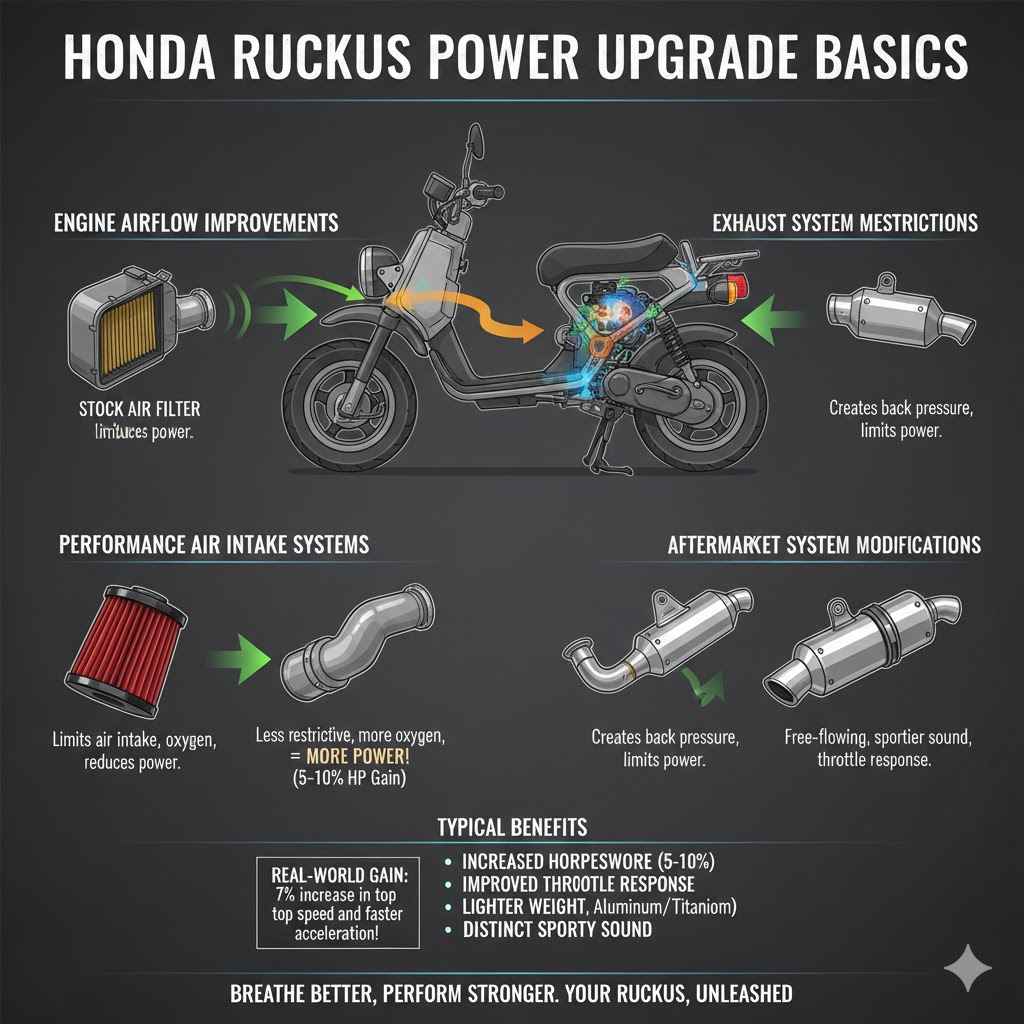
Stock Air Filter Limitations
The original air filter on your Honda Ruckus is made to keep dirt out and last a long time. It works well for normal riding. However, it can also limit how much air can get into the engine.
This is like wearing a mask that makes it a little harder to breathe deeply. For simple upgrades, just replacing this filter with a less restrictive one can make a noticeable difference in how the engine sounds and performs, especially at higher speeds.
A common performance air filter is made of materials that allow more air to pass through while still catching most of the dust and debris. Some are reusable, which means you can clean them and use them again, saving money in the long run. Others use a special oil to trap dirt.
When you swap out the stock filter, you might notice your Ruckus feels a bit more responsive when you twist the throttle. It’s one of the easiest ways to start making your scooter more powerful.
Performance Air Intake Systems
For a bigger jump in performance, some people upgrade the entire air intake system. This means replacing not just the filter but also the pipes and housing that bring air to the engine. These aftermarket systems are often designed to be more open, allowing air to flow much more freely.
They might also help to bring cooler air into the engine, which is denser and contains more oxygen. More oxygen means more fuel can be burned, leading to more power. It’s like upgrading from a small straw to a big, wide pipe for your engine to drink from.
This type of upgrade usually requires more work than just swapping a filter, but the power gains can be significant. It’s a popular next step for Ruckus owners looking for a serious boost.
Exhaust System Modifications
Just like letting more air in is important, letting the burnt gases out quickly is also key to engine performance. The exhaust system on your Ruckus helps get rid of the exhaust gases produced by the engine. A stock exhaust system is designed to be quiet and meet emission rules.
However, this can restrict airflow. Changing the exhaust can improve how well your engine breathes, leading to more power. Think of it like unblocking a drain – the water flows away much faster.
This is a very common upgrade in the world of scooter tuning.
Stock Muffler Restrictions
The stock muffler on your Honda Ruckus is usually quite restrictive. It has baffles and chambers inside that are designed to quiet down the engine noise. While this makes your Ruckus quiet, it also makes it harder for the engine to push exhaust gases out.
This back pressure can limit how much power the engine can make. It’s like trying to blow air through a pinched hose. For many Ruckus owners, simply replacing the stock muffler with a less restrictive one is one of the first steps they take to gain more power and a better sound.
Aftermarket Exhaust Systems
Switching to an aftermarket exhaust system can make a big difference. These systems are often designed with larger diameter pipes and less baffling. This allows exhaust gases to escape much more freely.
The result is often a louder, sportier sound and a noticeable increase in engine power, especially at higher RPMs. Many aftermarket exhausts are also lighter than the stock ones, which can slightly improve the scooter’s overall performance. When you install a new exhaust, you might also find that the engine revs up more quickly and feels more energetic.
It’s a popular way to give your Ruckus a more aggressive feel and performance.
Here’s a quick look at typical benefits:
- Increased Horsepower: Aftermarket exhausts can add 5-10% more horsepower, depending on the model and other modifications.
- Improved Throttle Response: Engines breathe better, meaning they can react faster to throttle inputs.
- Lighter Weight: Performance exhausts are often made from lighter materials like aluminum or titanium.
- Distinct Sound: They produce a more aggressive and sporty exhaust note.
For example, one user reported a 7% increase in top speed after installing a popular aftermarket exhaust on their stock Ruckus, along with a noticeable improvement in acceleration. This kind of gain makes daily riding more enjoyable and gives the scooter a sportier feel. It’s a solid choice for anyone looking to get more performance out of their ride without deep engine work.
Fuel Delivery Adjustments
Once you have improved how your engine breathes with better airflow and exhaust, you need to make sure it gets enough fuel to match. Think of it like a chef preparing a meal. If you give them more ingredients (air), they need more spices and sauces (fuel) to make a great dish.
For your Honda Ruckus, this often means adjusting the carburetor or, if you have a fuel-injected model, remapping the fuel injection system. These adjustments ensure the right mix of air and fuel for optimal power.
Carburetor Tuning
Many Honda Ruckus models come with a carburetor, which is a device that mixes air and fuel. For a stock Ruckus, the carburetor is set up to provide a safe air-fuel mixture for everyday use. However, when you add performance parts like a freer-flowing air filter or exhaust, the engine needs more fuel to take full advantage of the extra air.
This is where carburetor tuning comes in. It involves changing the size of the jets inside the carburetor, which are like tiny nozzles that control fuel flow.
For instance, if you install a larger air filter, the engine can suck in more air. The stock carburetor might not be able to supply enough fuel to create the ideal air-fuel ratio for this extra air. This can lead to a lean condition, which is not good for the engine.
By installing larger main jets, you allow more fuel to be mixed with the incoming air. This helps the engine run stronger and safer. It requires careful adjustment, often done through trial and error, to find the perfect balance.
Many enthusiasts spend time experimenting to get their Ruckus running at its best after performance upgrades. Online forums and videos often provide detailed instructions on how to do this.
Here is a look at typical carburetor jet sizes for a modified Ruckus:
| Modification | Stock Main Jet Size (Example) | Modified Main Jet Size (Example) |
|---|---|---|
| Performance Air Filter | 72 | 80-85 |
| Performance Exhaust | 72 | 85-90 |
| Both Air Filter & Exhaust | 72 | 90-100+ |
These numbers are just examples, and the exact sizes needed can vary based on the specific parts used and riding conditions.
Fuel Injection (EFI) Re-mapping
Some newer Honda Ruckus models, or those that have been converted, use Electronic Fuel Injection (EFI) instead of a carburetor. EFI systems are computer-controlled and automatically adjust the air-fuel mixture. When you make performance upgrades, the stock EFI settings might not be ideal.
To get the most power, you often need to re-map the EFI. This means changing the data in the engine’s computer to tell it how to inject fuel differently.
Re-mapping EFI can be done in a few ways. One common method is using an aftermarket EFI controller. This device is installed between the engine’s sensors and the main computer.
It allows you to adjust fuel delivery for different engine speeds and throttle positions. Another method is flashing the original ECU (Engine Control Unit) with new software. This is more permanent and requires specialized tools.
For example, a re-mapped EFI system might provide a richer fuel mixture at wide-open throttle, which is essential for maximizing power when you are accelerating hard or riding at high speeds. It’s a more advanced modification, but it offers precise control over your engine’s performance and can help prevent damage from running too lean.
Consider these scenarios for EFI re-mapping:
- Scenario 1: Bolt-on Modifications. You’ve added a high-flow air filter and a performance exhaust. Your EFI controller can be programmed to slightly increase fuel delivery across the board, especially at mid to high RPMs, to better match the increased airflow.
- Scenario 2: Camshaft Upgrade. If you’ve installed a performance camshaft, which changes how the engine valves open and close, you’ll likely need significant EFI adjustments to optimize fuel delivery for the new valve timing. This requires fine-tuning for specific RPM ranges.
Ignition System Enhancements
Getting more power from your Honda Ruckus isn’t just about air and fuel; the spark that ignites the fuel-air mixture is also very important. A stronger, more consistent spark can lead to a more complete burn of the fuel. This means more energy is released, and your engine runs more efficiently, producing more power.
Think of it like having a brighter, hotter match to light a fire – it catches faster and burns hotter. Enhancing the ignition system is a way to ensure every bit of fuel is used effectively.
Upgraded Spark Plugs
The spark plug is the part that creates the spark inside the engine’s cylinder. While a stock spark plug works fine for normal operation, an upgraded one can offer benefits for performance. Performance spark plugs are often designed to create a hotter spark or a more robust spark.
Some have special electrode designs that help focus the spark, leading to a more efficient combustion. This can result in a slightly better throttle response and a more consistent power delivery. They are a simple and inexpensive upgrade that can complement other performance modifications.
For instance, a common upgrade is to a platinum or iridium spark plug. These materials are more durable and can maintain a sharper electrode tip over time compared to standard copper plugs. This means the spark stays consistent for longer, providing reliable performance.
While the power gain from just a spark plug might be small, it’s a vital component in the chain of creating more power. It ensures that the fuel and air you’ve worked to optimize are ignited effectively. Many Ruckus owners swap these out as part of a routine maintenance or as a small, easy performance tweak.
Performance CDI Units
The CDI (Capacitor Discharge Ignition) unit is the “brain” of your Ruckus’s ignition system. It controls when the spark plug fires and the strength of that spark. A stock CDI is programmed for a specific ignition timing curve that is best for fuel economy and emissions.
However, for performance, you often want the spark to happen at a different time, especially at higher engine speeds.
A performance CDI unit can alter the ignition timing. It might advance the timing at higher RPMs, which helps the engine produce more power. Some performance CDIs also offer a stronger spark.
This is because they can store and discharge more electrical energy. By using a performance CDI, you can optimize the combustion process for the modifications you’ve made to your air intake and exhaust. It’s like telling your engine the best moment to ignite the fuel for maximum output.
This upgrade can significantly improve acceleration and top-end speed, especially when paired with other engine mods. It’s a more advanced tuning part but offers significant benefits for those serious about performance.
Here’s a scenario:
- Scenario: Performance Camshaft and Exhaust. With these modifications, the engine can rev higher and faster. A stock CDI might not be optimized for this. A performance CDI can be programmed to provide a stronger spark and advance the ignition timing at the higher RPMs your modified engine is now reaching, thus extracting more usable power.
Gearing and Drivetrain Upgrades
While engine modifications focus on making more power, gearing and drivetrain upgrades focus on how that power is delivered to the rear wheel. Sometimes, your engine might be making more power, but it’s not being used effectively because the gearing isn’t right. Think of it like having a powerful engine in a truck but using it to pull a very heavy load uphill – it strains.
Proper gearing helps your Ruckus use its power more efficiently for acceleration or top speed, depending on your goals.
Transmission Gear Ratios
Your Honda Ruckus uses a Continuously Variable Transmission (CVT). This system allows the gear ratio to change smoothly as you accelerate. However, the stock CVT is set up for a balance of acceleration and fuel economy.
For performance, you might want to change the gear ratios. Shorter gear ratios (often called “low gearing”) will make your Ruckus accelerate faster but will reduce your top speed. Longer gear ratios (or “high gearing”) will increase your top speed but make acceleration slower.
For example, if your main goal is to have quicker acceleration for city riding, you might install a shorter final drive gear set. This means the engine will rev higher for each rotation of the rear wheel, giving you more “oomph” off the line. On the other hand, if you do a lot of highway riding and want to reach a higher top speed, you might look into performance CVT weights or a different CVT setup that allows the engine to stay in a higher gear longer.
Many performance parts are available for the Ruckus CVT system, allowing owners to tune their scooter for their specific riding needs. It’s a crucial part of making the most of your engine’s newfound power.
Roller Weights and Clutch Springs
Within the CVT system, components like roller weights and clutch springs play a big role in how the transmission behaves. Roller weights are small metal or plastic cylinders inside a variator (part of the CVT). They move outwards as the engine speeds up, changing the gear ratio.
Lighter roller weights will cause the CVT to shift to a higher gear at lower engine speeds, leading to quicker acceleration. Heavier roller weights will delay this shift, allowing the engine to rev higher before the ratio changes, which can help with top speed or when carrying a heavier load.
Clutch springs also affect the CVT. The clutch engages as the engine speed increases. Stiffer clutch springs will require higher engine RPMs before the clutch engages and transfers power to the rear wheel.
This is often done to prevent clutch slippage at higher engine speeds, especially after adding more power. By matching the roller weights and clutch spring tension to your engine’s power band, you can ensure that your Ruckus is always in the most effective gear for the situation. For instance, if you have a Ruckus that makes its best power at higher RPMs, using lighter roller weights and stronger clutch springs can help keep the engine in that power band more often, maximizing acceleration.
It’s a delicate balance to achieve optimal performance.
Here’s how these parts work together:
- Roller Weights: Determine when the variator shifts gear ratios. Lighter weights = quicker acceleration. Heavier weights = higher top speed.
- Clutch Springs: Control when the clutch engages. Stiffer springs = engagement at higher RPMs, preventing slippage with more power.
- Torque Driver Spring: Affects how quickly the clutch disengages. A stiffer spring can help keep the engine in its power band.
Common Challenges and Solutions
When you start modifying your Honda Ruckus for more power, you might run into a few common issues. It’s normal for things not to be perfect right away. Knowing what to expect and how to fix it will save you time and frustration.
The goal is always to make your Ruckus run better and last longer, not to cause problems.
Lean vs. Rich Fuel Mixtures
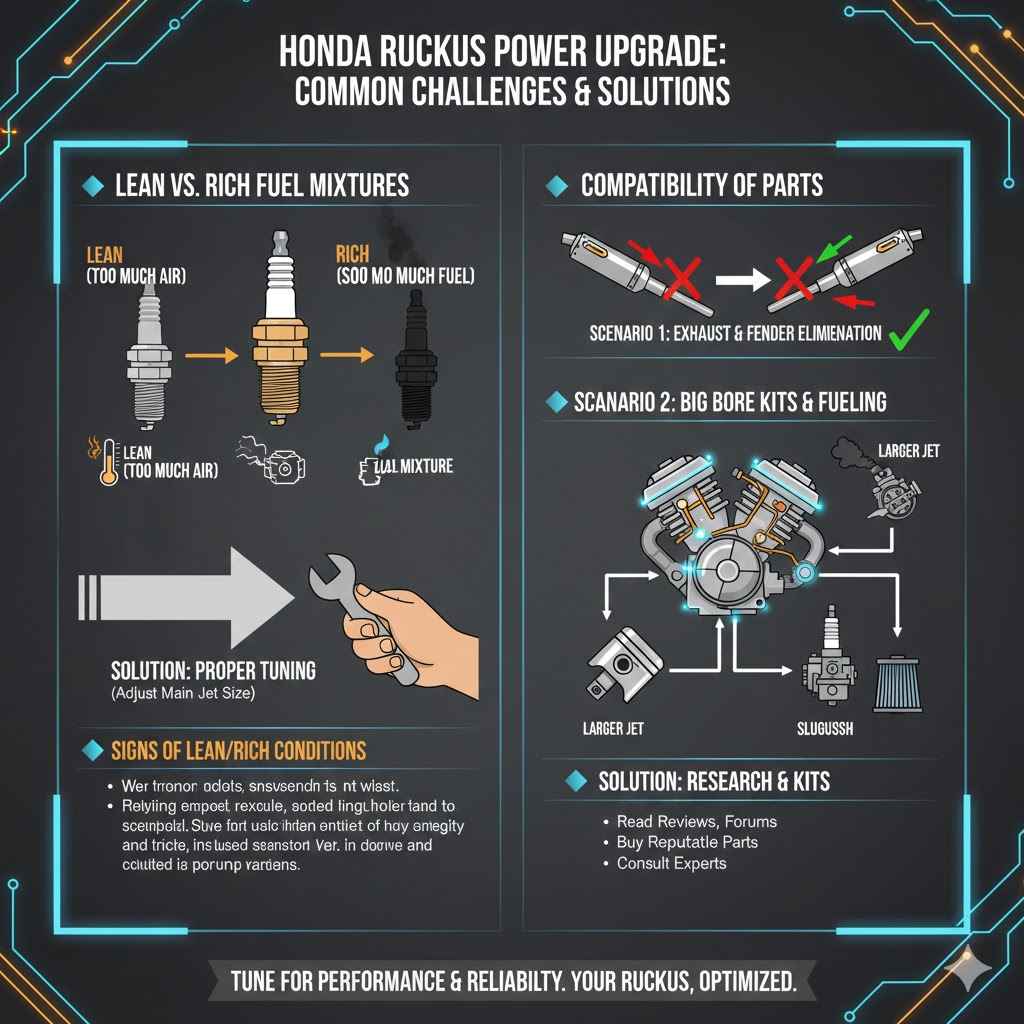
One of the most common problems when upgrading air intake and exhaust is getting the air-fuel mixture wrong. If there’s too much air and not enough fuel, the engine is running “lean.” This can cause the engine to run hot, leading to damage like a blown head gasket or a seized piston. You might notice sputtering, poor acceleration, or the engine cutting out.
If there’s too much fuel and not enough air, the engine is running “rich.” This can lead to poor fuel economy, fouling spark plugs, and a loss of power, making the engine feel sluggish or bog down.
The solution is proper tuning. After installing new parts, you must adjust your carburetor or EFI to compensate. For carburetors, this usually means changing the main jet size.
If the engine is lean, you need a larger jet. If it’s rich, you need a smaller jet. You can often tell if you’re lean by the color of your spark plug’s insulator – if it’s white or very light gray, it’s lean.
If it’s black and sooty, it’s rich. The ideal color is a light tan or brown. This is why having a proper tuning guide or seeking help from experienced mechanics is important.
It’s about finding that sweet spot where the engine performs at its best.
Here are some signs of lean and rich conditions:
- Lean Conditions: Engine runs hot, sputtering, deceleration popping, white spark plug insulator, loss of power at high RPMs.
- Rich Conditions: Black smoke from exhaust, fouled spark plugs, poor fuel economy, sluggish acceleration, engine feels “bogged down.”
A real-world example: A rider installed a new exhaust and air filter but only cleaned the old one without changing the jets. The Ruckus started to run hot and lost power on hills. After installing a larger main jet in the carburetor, the engine ran smoothly again, and power was restored.
This shows how critical the air-fuel mix is.
Compatibility of Parts
Not all performance parts are made to work together seamlessly. Sometimes, a part designed for one specific model or modification might not fit well with another. For example, an exhaust system that fits a stock Ruckus perfectly might not clear the frame if you’ve installed a different type of rear shock.
Similarly, an air intake designed for a specific carburetor might not fit if you’re using a different brand.
The best way to avoid compatibility issues is to do your research. Read reviews, ask questions on forums, and buy parts from reputable manufacturers known for their quality. Many companies offer “kits” that include multiple performance parts designed to work together, which can simplify the process.
If you’re unsure, it’s always a good idea to consult with a knowledgeable mechanic or an experienced Ruckus enthusiast. They can help you choose parts that are known to work well together and provide the performance you’re looking for. Making informed choices upfront can save you a lot of headaches and ensure your modifications are successful.
Consider these scenarios for part compatibility:
- Scenario 1: Exhaust and Fender Elimination. Some aftermarket exhausts for the Ruckus are designed to work with a fender eliminator kit. If you keep the stock fender, the exhaust might not fit correctly or might cause clearance issues.
- Scenario 2: Big Bore Kits and Fueling. If you install a “big bore” kit (which increases engine displacement), you will absolutely need to re-jet the carburetor or re-map the EFI. A performance air filter and exhaust are usually also required to support the larger engine.
Frequently Asked Questions
Question: What is the easiest way to add power to a Honda Ruckus?
Answer: The easiest way is usually to upgrade the air filter to a high-flow performance one and
Question: Do I need to re-jet my carburetor if I just change the air filter?
Answer: It’s highly recommended. Even a less restrictive air filter allows more air in, so you’ll likely need to increase fuel delivery by changing the main jet to keep the air-fuel mixture balanced and avoid running lean.
Question: How much horsepower can I expect from a full exhaust and intake setup?
Answer: With a good performance air filter and exhaust system, plus proper carburetor tuning, you can typically expect a gain of around 5-10% more horsepower on a stock Ruckus. This means your scooter will feel noticeably quicker.
Question: Can I make my Ruckus faster without touching the engine?
Answer: Yes, you can improve acceleration and top speed by modifying the CVT system. Upgrading components like roller weights and clutch springs can help your Ruckus utilize its existing engine power more effectively.
Question: Is it safe to modify my Honda Ruckus?
Answer: Yes, it can be safe if done correctly. The key is to research parts, ensure compatibility, tune the engine properly to avoid lean conditions, and understand the modifications you are making. Always prioritize safe riding practices.
Summary
This guide explored how to get more power from your Honda Ruckus. We looked at improving airflow with better filters and intakes. We also covered exhaust upgrades for better breathing.
Adjusting fuel delivery with carburetor tuning or EFI re-mapping is key. Enhancements to the ignition system provide a stronger spark. Finally, gearing and CVT upgrades help deliver power effectively.
Addressing common challenges like lean mixtures and part compatibility ensures a smooth upgrade process. Your Ruckus can be a lot more fun and capable with these simple steps.