The Connection Between Food and Car Culture in America
Food and car culture shaped each other through places where motion meets appetite: drive-ins, cruising, road trips, car shows, and food trucks all favor foods that stay portable, hold heat, and feed crowds fast. Ignore that rule and you get soggy food, long lines, messy interiors, and events that feel less like car culture than cafeteria logistics. This guide explains how those food habits grew with automotive life and why the best car-culture food is built for parking lots, trunks, and open hoods.
What is car culture?
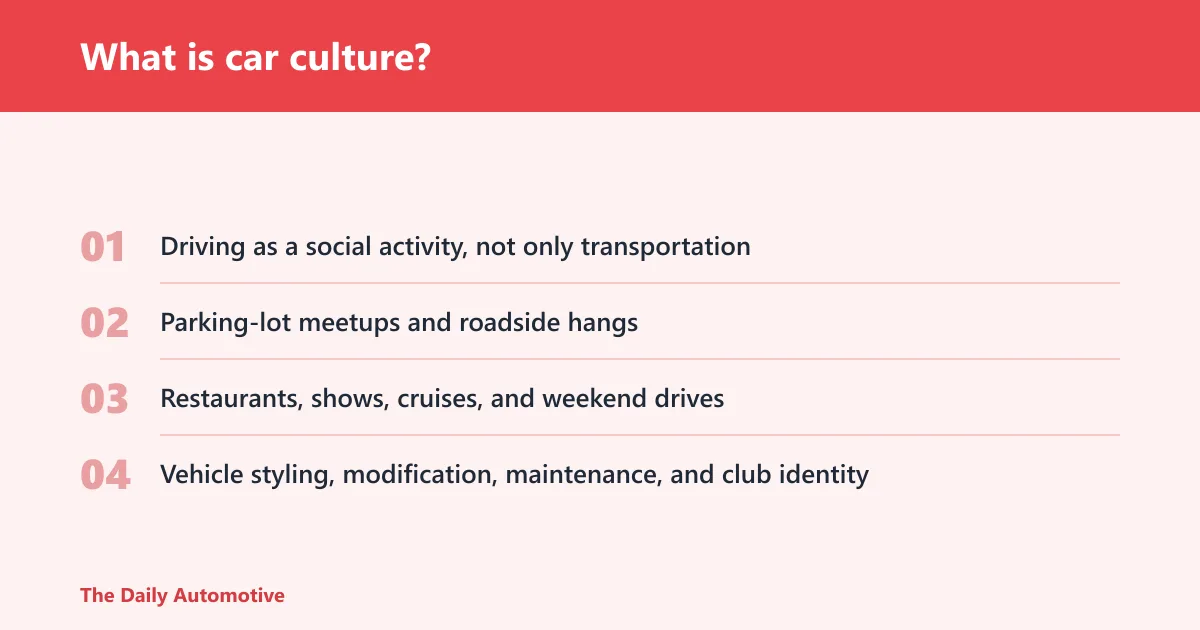


Car culture is more than driving from point A to point B. It includes the social habits around cars, the places where people gather, and the rituals that form around meets, cruises, diners, wrenching, parking-lot conversations, and shared identity tied to ownership, style, and movement.
American car culture grew with suburban development, highway expansion, and the idea that the car could be both transport and social space. That is why food keeps appearing in the story. The vehicle is only part of the setting; the lot, the curb, and the gathering are the rest.
Car culture also depends on shared public space. A parking lot outside a diner, a row of cars at a meet, or a cruise down a main drag creates a temporary social scene where people can look, talk, eat, and move on without leaving the automotive world.
What car culture includes
- Driving as a social activity, not only transportation
- Parking-lot meetups and roadside hangs
- Restaurants, shows, cruises, and weekend drives
- Vehicle styling, modification, maintenance, and club identity
How did drive-ins connect food and car culture?
Drive-ins tied food to the car by letting people order, eat, and socialize without leaving their vehicles. The Daily Automotive says the drive-in era turned cars and fast food into a social experience, and that simple format made the parking lot part of the dining room.
Drive-ins peaked in mid-20th-century America because they matched postwar mobility, suburban growth, and youth culture. Carside service mattered, but so did the theater of being seen. The car became part of the experience, and the drive-in became a place people could linger in rather than just pass through.
That format also linked directly to cruising. Young drivers could circle a district, stop for food, and keep the evening alive without settling into formal dining. The result was an auto-centered social loop: drive, gather, eat, repeat.
Why the drive-in mattered
- Carside service reduced the need to park and walk inside
- Staying in the vehicle kept the social scene visible
- Menus favored foods that could travel well from counter to car
- The format fit cruising, dating, and youth identity
Why do cars and diners go together in American culture?
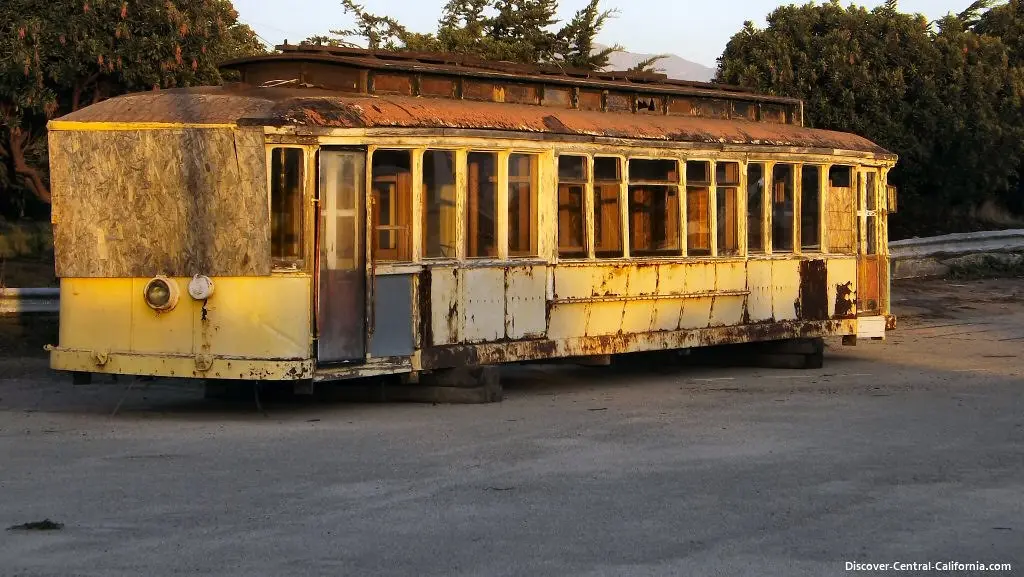
Cars and diners fit the American roadside because both depend on easy access, quick turnover, and public visibility. Highways and suburban sprawl made the diner a natural stop before a drive, after a meet, or between errands, while big parking lots turned the place into an informal gathering point.
The diner also suited shared social time. People could arrive in different cars, eat, talk, and leave on their own schedule. That matters in car culture, where the vehicle is often the center of the outing but not the whole point of it.
Cruising strengthened the diner connection. A cruise is leisure-oriented driving, often tied to music, youth identity, and a route that ends in a parking lot or along a strip with familiar food stops. Diners and cruising both reward repetition, visibility, and a sense of local scene.
Why diners became automotive meeting spots
- They were easy to reach from highways and arterial roads.
- They offered parking that worked for groups and clubs.
- They gave drivers a place to pause without losing the car-centered vibe.
- They supported before-drive and after-drive meetups.
Why are fast food and road trips linked?
Fast food fits road trips because it is fast, portable, and usually cheap enough to repeat over a long drive. The Daily Automotive links drive-thru burgers to road trip standards, and that makes sense: road food has to work under time pressure, in traffic, and with minimal interruption.
Road-trip food is different from normal snacking because it has to survive heat, movement, and distraction. The Daily Automotive says road trip food must survive heat, movement, and distraction. That means less grease on the steering wheel, less crumbling in the seat, and less need to look down for long stretches.
Burgers and fries became common car-culture foods because they are familiar, quick to hand over, and easy to count on. They are not perfect, though. Fries go limp, sauces leak, and oversized sandwiches become a liability once the car starts moving again.
Road-trip food logic
- Heat resistance: the food should stay acceptable after sitting in a car for a while
- Mess risk: the food should not stain upholstery or require a cleanup kit
- One-hand usability: one hand should stay free for the wheel, shifter, or door
- Low distraction: the food should not require constant assembly or intense attention
Say your passenger reaches for a powdered pastry in a warm car on a 95-degree day. The first bite sheds crumbs onto the seat, the glaze softens, and the wrapper slips. A better road-trip choice would be a sealed protein bar or wrapped sandwich that can be opened and eaten without a cleanup stop.
How do food trucks fit into car culture?
Food trucks fit car culture because they are mobile kitchens on wheels. The Daily Automotive describes food trucks as a popular trend in recent years and calls food trucks and pop-ups meals on wheels. That mobility matches cruises, meets, and show days, where food follows the crowd.
They work especially well at car shows and cruises because event-based placement solves a basic logistics problem: people already gather in one place, often outdoors, and they need food close to the rows of cars. A truck can park near the action, serve quickly, and leave when traffic thins.
There is a real difference between budget street food and gourmet food trucks. The Daily Automotive frames gourmet food trucks as a fusion of flavors and wheels. These trucks often use chef-led menus and premium ingredients in limited cooking space, which makes them a separate car-culture experience from a drive-thru burger line.
Food-truck advantages at automotive events
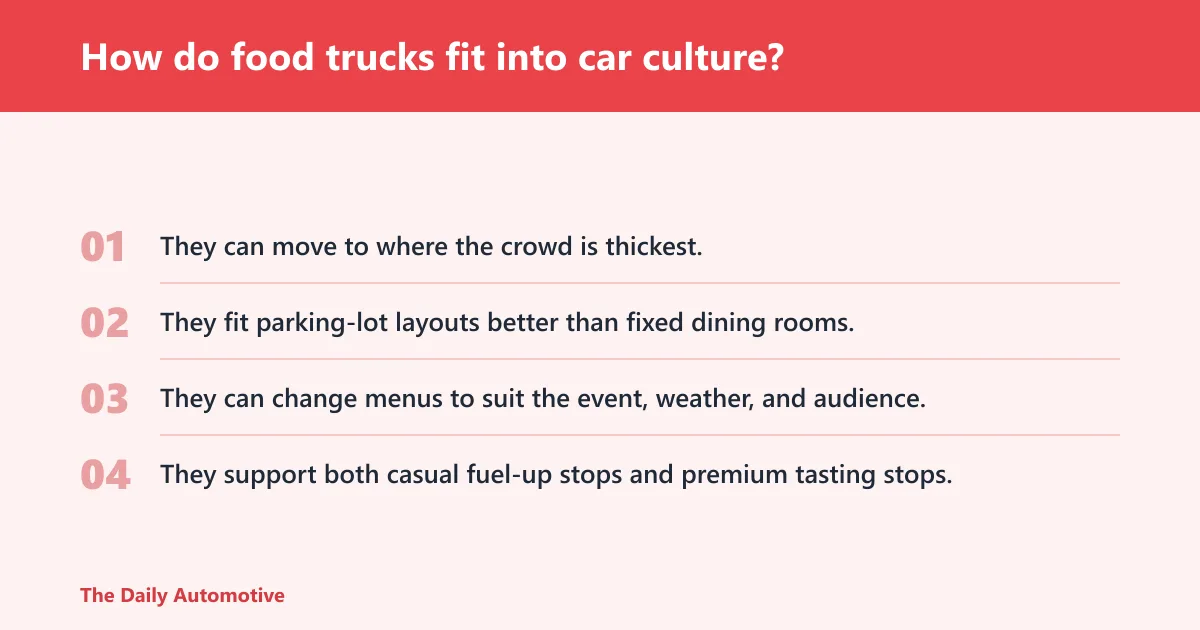
- They can move to where the crowd is thickest.
- They fit parking-lot layouts better than fixed dining rooms.
- They can change menus to suit the event, weather, and audience.
- They support both casual fuel-up stops and premium tasting stops.
How food trucks and car shows overlap
The Daily Automotive says car shows now include culinary vendors, and that changes the attendee experience. Food becomes part of the event flow, not an afterthought. A truck near the entrance can absorb early traffic, while another near the far end can keep attendees moving through the show grounds.
That matters for queue flow and cleanup. Long lines choke a lot, so placement should leave room for strollers, folding chairs, and people carrying plates back to their cars. Trash cans should sit near the serving area, not across the lot.
What makes road trip food different from normal snacks?
Road-trip food has to work under motion. Normal snacks can be messy or fragile because they are eaten at a desk, couch, or picnic table. In a car, the standards are stricter: the food should tolerate heat, resist crushing, leave little residue, and require as little attention as possible.
That is why a road-trip snack can fail even if it tastes good. Chocolate melts in the glove box. Frosted pastries smear. Loose chips spill with a sharp turn. Fresh fruit can be fine, but only if it is pre-portioned and easy to handle without peeling, slicing, or wiping juice from every surface.
Good and bad examples in a moving car
- Works well: wrapped sandwiches, jerky, nuts, sealed granola bars, whole fruit with a sturdy peel
- Works poorly: powdered donuts, saucy wings, soft-serve desserts, sticky cinnamon rolls, drip-heavy tacos
- Needs caution: anything with loose toppings, hot grease, or multiple wrappers
What foods are best for car shows and cruises?
The best foods for car shows and cruises are the ones that fit the event’s rhythm: quick service, low mess, and enough durability to survive a parking lot, a folding chair, or a slow walk between rows. The food should support the scene, not interrupt it.
Car shows often bring vendor ecosystems with them, so food pairing matters. A greasy burger may work for a long outdoor meet, while a cooler, cleaner option may suit a daytime show with more foot traffic. Cruises are different again because eating may happen before or after the drive, not during it.
A common first-timer mistake is choosing food that seems fine at first but can fall apart fairly quickly in warm conditions. Wet slaw, overloaded sauces, and delicate pastries can collapse fast when the temperature rises and the crowd keeps moving.
Car-culture food fit checklist
| Food | Heat resistance | Mess risk | One-hand usability | Prep time | Best event fit |
|---|---|---|---|---|---|
| Wrapped sandwich | Good | Low | Good | Low | Road trips, cruises |
| Burger and fries | Fair | Medium | Fair | Low | Road trips, car shows |
| Jerky | Excellent | Very low | Excellent | Low | Road trips, meets |
| Tacos with heavy sauce | Fair | High | Poor | Low | Stationary meetups only |
| Gourmet bowl | Good | Medium | Poor | Medium | Car shows, vendor areas |
| Ice cream | Poor | High | Poor | Low | Short stops only |
How to plan a car meet with food vendors
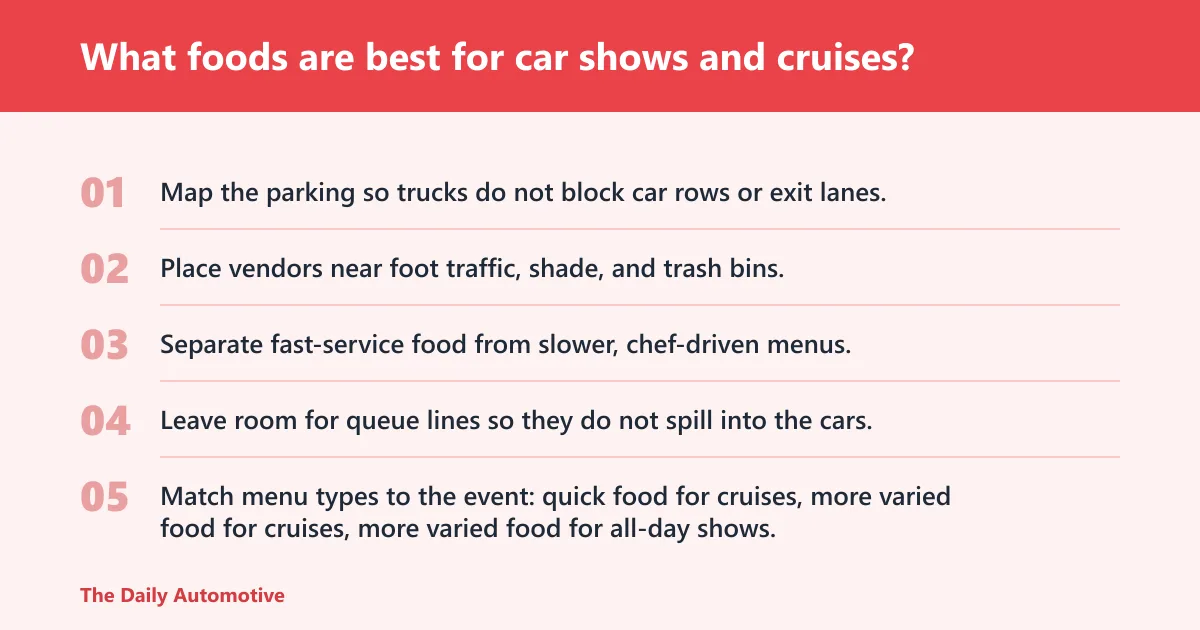
- Map the parking so trucks do not block car rows or exit lanes.
- Place vendors near foot traffic, shade, and trash bins.
- Separate fast-service food from slower, chef-driven menus.
- Leave room for queue lines so they do not spill into the cars.
- Match menu types to the event: quick food for cruises, more varied food for all-day shows.
- Check power, water, and waste needs before the first car arrives.
Frequently asked questions
What is car culture?
Car culture is the social world built around cars: driving, modifying, meeting, displaying, and talking about vehicles. It includes routes, restaurants, parking lots, clubs, cruises, and shows. Food becomes part of it because the car is often the reason people gather, but the gathering is what gives the car scene meaning.
How did drive-ins connect food and car culture?
Drive-ins made the car part of the meal. Carside service let people stay in their vehicles, and the format peaked in mid-20th-century America when suburban life, youth culture, and cruising all expanded. That turned eating into a public, car-centered activity instead of a private stop inside a dining room.
Why are fast food and road trips linked?
Fast food fits road trips because it is quick, portable, and usually inexpensive. The Daily Automotive links drive-thru burgers to road trip standards. On long drives, food has to be easy to buy, easy to hold, and easy to eat without turning the cabin into a cleanup project.
What foods are best for car shows and cruises?
Foods that resist heat, keep mess low, and can be eaten with one hand work best. Wrapped sandwiches, jerky, and sturdy snacks are safer choices than saucy or delicate foods. Car shows and cruises reward foods that fit the event flow, not foods that slow down the crowd.
How do food trucks fit into car culture?
Food trucks fit car culture because they are mobile kitchens that can park near gatherings, follow crowds, and adapt menus to events. The Daily Automotive describes them as a popular trend in recent years and says car shows now include culinary vendors, which makes them part of the event, not a side note.
Why do cars and diners go together in American culture?
Cars and diners belong together because both grew around highways, suburbs, and easy parking. Diners gave drivers a place to stop before or after a drive, while the lot itself became a social space. That made diners natural anchors for cruising, meetups, and other car-centered routines.
Products related to this article
Sponsored / affiliate links. As an Amazon Associate I earn from qualifying purchases. I may earn additional commission from eligible campaigns.