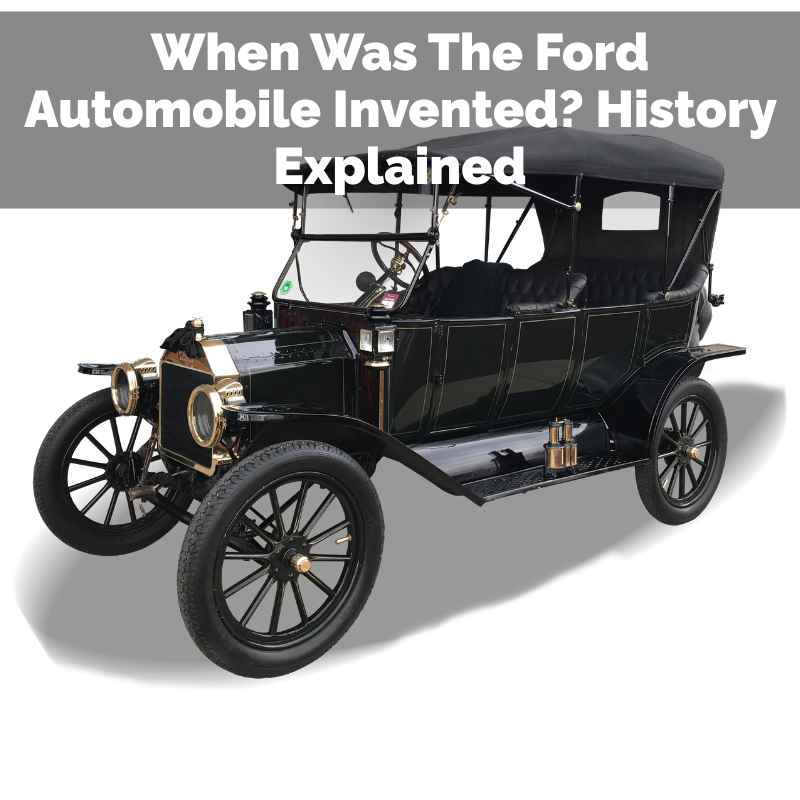
When Was The Ford Automobile Invented? History Explained
Have you ever stopped to wonder about the very first Ford car? It’s a question many of us have when we see those iconic blue oval logos on the road. The story behind the Ford automobile is more than just an invention; it’s a tale of vision, hard work, and a drive to change the world.
This journey explains how one man’s dream put America on wheels.
The Ford automobile was not invented on a single day. Henry Ford introduced his first experimental car, the Quadricycle, in 1896. However, the Ford Motor Company, which truly brought the automobile to the masses, was founded in 1903. The widely recognized Model T, which revolutionized car ownership, was launched in 1908.
The Spark: Henry Ford’s Early Life and Mechanical Fascination
Before there was a Ford Motor Company, there was a young boy named Henry Ford. He grew up on a farm in Michigan during the late 1800s. Even then, Henry wasn’t keen on farming.
His true passion lay with machines. He loved taking things apart and putting them back together. This curiosity was the seed for everything that followed.
As a teenager, Henry would sneak away from farm chores. He’d visit machine shops in Detroit. He watched engineers and mechanics at work — see our related guide, Who Made the Cars? A Brief History of Automakers.
These experiences fueled his desire to understand how things ticked. He learned about steam engines and other new technologies of his time. This hands-on learning was his early education in mechanics.
Henry’s first job was as a machinist’s apprentice. He later worked for Thomas Edison’s company. There, he became chief engineer.
These roles gave him valuable experience. He learned about electricity and gasoline engines. He also saw how businesses were run.
All these lessons were building blocks for his future.

The First Wheels: The Quadricycle and Early Experiments
Henry Ford’s dream was to create a self-propelled vehicle. He worked on this in his spare time. In his small kitchen, he tinkered with engines.
He faced many setbacks. Parts were hard to find. He had limited money.
His family and friends sometimes questioned his obsession.
But Henry persisted. He worked in a shed behind his home. He used scrap metal and parts from other machines.
After years of effort, he finally succeeded. In 1896, he built his first working automobile. He called it the Quadricycle.
It was a simple, four-wheeled vehicle.
The Quadricycle had a tiller for steering. It had bicycle wheels. It ran on a two-cylinder engine.
It wasn’t fancy, but it moved! Henry famously drove it around the streets of Detroit. He even crashed it into a lamppost on one of his first trips.
This showed that building cars was still a new and challenging task.
This invention was a huge personal triumph for Henry. It proved his theories were correct. It showed that a gasoline-powered car could work.
However, the Quadricycle was not a commercial success. It was more of a prototype. It proved the concept and ignited Henry’s ambition further.
At this point, the car was a novelty. It was expensive and unreliable. Most people saw it as a rich person’s toy.
Henry knew it needed to be better. He knew it needed to be more accessible. This vision would shape the future of car making.
Early Automotive Pioneers
Key Innovators Before Ford:
- Karl Benz: Often credited with the first practical automobile (1886).
- Gottlieb Daimler: Also developed early gasoline engines and vehicles around the same time.
- Nikolaus Otto: Invented the four-stroke internal combustion engine, a foundational technology.
Henry Ford built upon the work of these and other pioneers. His genius was in scaling production and making cars affordable.
From Dream to Company: The Founding of Ford Motor Company
Building the Quadricycle was just the beginning for Henry Ford. He wanted to make cars that ordinary people could buy. He knew that to do this, he needed to create a company.
He tried to start car companies before, but they didn’t work out.
In 1903, Henry Ford, along with a group of investors, founded the Ford Motor Company. This was a pivotal moment. The company was established in Detroit, Michigan.
It started with a small factory and a dedicated team. Their goal was clear: to build reliable and affordable automobiles.
The early days were tough. They had to design and build cars. They also had to find customers.
Their first production car was the Model A. It was a simple car. It was made in small numbers.
It was still quite expensive for most families.
Henry Ford had a strong belief. He believed that cars should be for everyone. He envisioned a car that a farmer could use to get to town.
He imagined a car that a family could take on a trip. This idea was revolutionary at the time.
The company faced competition. Other automakers were also starting up. But Henry Ford had a vision that set him apart.
He wasn’t just interested in building a car. He was interested in changing how cars were made and sold. He wanted to change the world with them.
The Game Changer: The Ford Model T
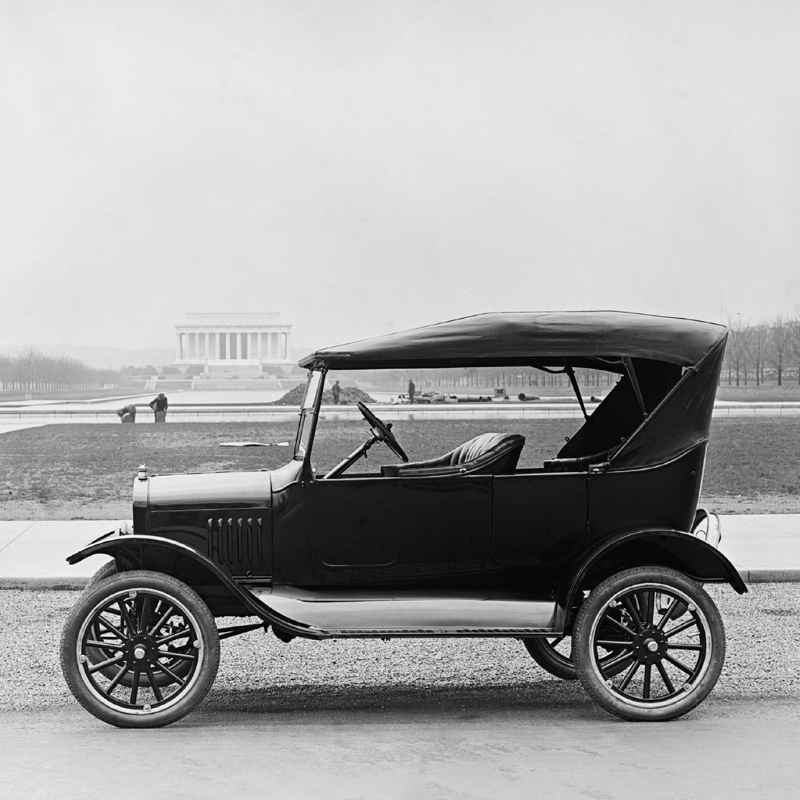
The year 1908 marked a turning point. This was the year the Ford Motor Company introduced the Model T. This car wasn’t just another automobile; it was an icon.
It was designed to be simple, durable, and affordable. Henry Ford famously said it would be available in “any color so long as it is black.”
Why black? Black paint dried the fastest. This speed was crucial for the production methods Henry Ford was developing.
The Model T was built to last. It could handle the rough roads of early 20th-century America. It became known as “the car that put the world on wheels.”
The Model T was a huge success. It sold in the hundreds of thousands. Then, in the millions.
It was far more affordable than any car before it. This was thanks to a new way of making things: the moving assembly line.
Before the assembly line, cars were built by skilled craftsmen. Each car was made by hand. This took a lot of time and money.
Henry Ford wanted to speed this up. He wanted to reduce costs.
The moving assembly line changed everything. Workers stood at their stations. They performed one specific task over and over.
As the car chassis moved along a conveyor belt, each worker added their part. This made production incredibly efficient. It dramatically cut down the time it took to build a car.
This innovation made the Model T much cheaper. The price dropped significantly over the years. This put car ownership within reach of many middle-class families.
It changed American life forever. People could travel farther and more easily. This led to new suburbs and industries.
Model T Facts at a Glance
- Introduction Year: 1908
- Nickname: Tin Lizzie
- Engine: 20 horsepower, 4-cylinder
- Top Speed: About 45 mph
- Production Run: Over 15 million units
- Impact: Made car ownership accessible to the masses.
The Assembly Line’s Impact Beyond Production
Henry Ford’s assembly line was a revolution. It wasn’t just about building cars faster. It had a ripple effect on society and the economy.
The efficiency gained meant Ford could pay his workers more. In 1914, he introduced the five-dollar day wage.
This was an astonishing amount of money at the time. Most factory workers earned far less. This high wage had a dual purpose.
First, it reduced worker turnover. Building cars on the assembly line was repetitive and tiring. Higher pay made people want to keep their jobs.
Second, Ford wanted his workers to be able to buy the cars they were making. If workers earned more, they had more money to spend. This idea created a cycle: more production, higher wages, more consumer spending, and thus more demand for products like the Model T.
This strategy helped build the American middle class. It showed that industrialization could lead to shared prosperity. It was a radical idea that challenged the norms of the time.
Many business owners thought it was foolish.
The assembly line also changed the nature of work. It broke down complex tasks into simple, repetitive steps. This meant workers didn’t need as much training.
It made labor more accessible to a wider range of people. However, it also led to criticisms about the monotony of such work.
The impact of this system spread far beyond the auto industry. It was adopted by manufacturers in many other fields. It became a standard method for mass production.
It shaped how goods were made and consumed for decades.
Ford’s Innovations and the Evolution of the Automobile
Henry Ford was not content to rest on his laurels. Even after the success of the Model T, he continued to innovate. He was always looking for ways to improve the automobile and its production.
One key area was standardization. The Model T was built with interchangeable parts. This meant that if a part broke, it could be easily
Ford also invested in vertical integration. This meant controlling as much of the production process as possible. He owned iron mines, rubber plantations, and lumber mills.
This ensured a steady supply of raw materials. It also helped to control costs.
The company also experimented with new materials. They looked for ways to make cars lighter and stronger. They were always trying to refine the design.
This continuous improvement was a hallmark of Ford’s approach.
While the Model T was a masterpiece of its time, it eventually became outdated. Its design was simple and functional. But as technology advanced and consumer tastes changed, new competitors emerged.
Cars from companies like General Motors offered more options and features.
In 1927, after producing over 15 million Model Ts, Ford stopped production. This was a bold move. It meant a significant interruption in manufacturing.
But it was necessary. The company needed to retool and develop a new, more modern car.
The successor to the Model T was the Model A. It was a more stylish and powerful car. It showed that Ford could adapt and evolve.
The company continued to introduce new models and technologies throughout the 20th century.
Ford’s Enduring Legacy
Key Contributions:
- Mass Production: Pioneered the moving assembly line.
- Affordability: Made automobiles accessible to average people.
- Worker Wages: Introduced the $5 day, influencing labor practices.
- Standardization: Promoted interchangeable parts for easier repairs.
The Ford Automobile Invention: A Continuing Story
The invention and popularization of the Ford automobile didn’t happen overnight. It was a process driven by one man’s vision and relentless innovation. Henry Ford’s journey from a farm boy fascinated by machines to a titan of industry is inspiring.
His initial experiments with the Quadricycle laid the groundwork. The founding of Ford Motor Company brought that vision to life. But it was the Model T, made possible by the moving assembly line, that truly changed the world.
It wasn’t just about building a car; it was about building a new way of life.
The impact of Ford’s work is still felt today. The principles of mass production and standardization are fundamental to manufacturing. The idea that good wages can drive consumer demand is a cornerstone of modern economics.
When you see a Ford vehicle on the road, remember its deep roots. Remember the ingenuity and determination that went into its creation. The Ford automobile invention is a testament to human progress and the power of a single idea to transform society.
Real-World Context: How Cars Changed American Life
The arrival of affordable cars like the Ford Model T had profound effects on American life. Before the car, most people lived and worked in very small areas. Travel was slow.
It was usually done by horse or train.
With the car, people gained mobility. They could live further away from their jobs. This led to the growth of suburbs.
Families could visit relatives who lived in other towns. This broadened social connections.
New industries sprang up to support the automobile. Gas stations, repair shops, and motels appeared along roadsides. The demand for better roads increased.
This led to vast road-building projects across the country.
Tourism boomed. People could take vacations to places they’d only dreamed of before. The car also changed commerce.
Businesses could transport goods more easily and quickly. This fueled economic growth.
The car even influenced culture. It became a symbol of freedom and independence. Road trips became a quintessential American experience.
The landscape of America began to be shaped by the automobile.
A Day in the Life: Before and After the Automobile
Before the Car:
- Most travel was local.
- Journeys took a long time.
- Limited access to distant towns or cities.
- Daily life was confined to a small radius.
After the Car:
- Increased personal freedom and mobility.
- Development of suburbs and highways.
- Growth of new industries and tourism.
- Broader access to jobs, education, and recreation.
What This Means for You: Understanding Automotive History
Learning about when the Ford automobile was invented helps us appreciate today’s vehicles. It shows the incredible progress made in just over a century. The cars we drive now are sophisticated marvels of engineering.
They are safer, more efficient, and more comfortable than anything Henry Ford could have imagined. Yet, the core idea remains the same: personal transportation. The desire for freedom and the ability to go where you want, when you want, is still central.
Understanding this history also highlights the importance of innovation. Henry Ford didn’t just build a car. He challenged existing ideas about manufacturing.
He believed in making progress accessible. This spirit of innovation continues to drive the automotive industry forward.
When you next get behind the wheel, take a moment to think about the journey. Think about the early tinkering, the risky investments, and the revolutionary assembly line. It’s a story of how a simple machine became a powerful force for change.
Simple Checks and Reflections
- Is your car still running smoothly? Think about the maintenance needed.
- When was your car made? Newer cars have advanced safety and tech.
- How has your car changed your life? Consider its impact on your freedom and routine.
Quick Fixes & Tips: N/A
This article focuses on the history and invention of the Ford automobile. As such, there are no specific “fixes” or “tips” to offer in the traditional sense. The aim is to provide understanding and appreciation for this historical development.
Frequent Questions
Who invented the first car?
While Henry Ford is famous for making cars affordable, Karl Benz is widely credited with inventing the first practical automobile, the Benz Patent-Motorwagen, in 1886. Gottlieb Daimler also developed early gasoline-powered vehicles around the same time. Henry Ford’s significant contribution was making cars accessible to the masses.
When did Henry Ford invent the car?
Henry Ford built his first experimental car, the Quadricycle, in 1896. However, this was a prototype. His major impact came with the founding of the Ford Motor Company in 1903 and the introduction of the revolutionary Model T in 1908.
What was the first Ford car called?
Henry Ford’s very first experimental automobile was called the Quadricycle. The first production car from the Ford Motor Company, launched in 1903, was the Model A.
Why was the Model T so important?
The Model T was important because it was the first automobile that was affordable for ordinary people. Its production, using the moving assembly line, dramatically lowered costs and made car ownership possible for millions, fundamentally changing transportation and society.
How much did the first Ford car cost?
The Quadricycle, Henry Ford’s first experimental car, was not sold commercially, so it didn’t have a price. The Ford Model A, the first car sold by the Ford Motor Company in 1903, cost around $850, which was still very expensive at the time. The Model T, when introduced in 1908, started at around $825, but its price was significantly reduced over time due to mass production.
What was the biggest innovation Ford introduced?
Henry Ford’s most significant innovation was the moving assembly line for mass production. While others had concepts of assembly, Ford perfected and implemented it on a massive scale, revolutionizing manufacturing efficiency and making products like the Model T affordable.
Conclusion
The story of the Ford automobile invention is a testament to vision and persistent effort. It shows how one person’s dream can reshape the world. From early experiments to mass production, Ford’s impact is undeniable.
It’s a journey that put America, and much of the world, on wheels.
Sponsored / affiliate links. As an Amazon Associate I earn from qualifying purchases. I may earn additional commission from eligible campaigns.
Products related to this article