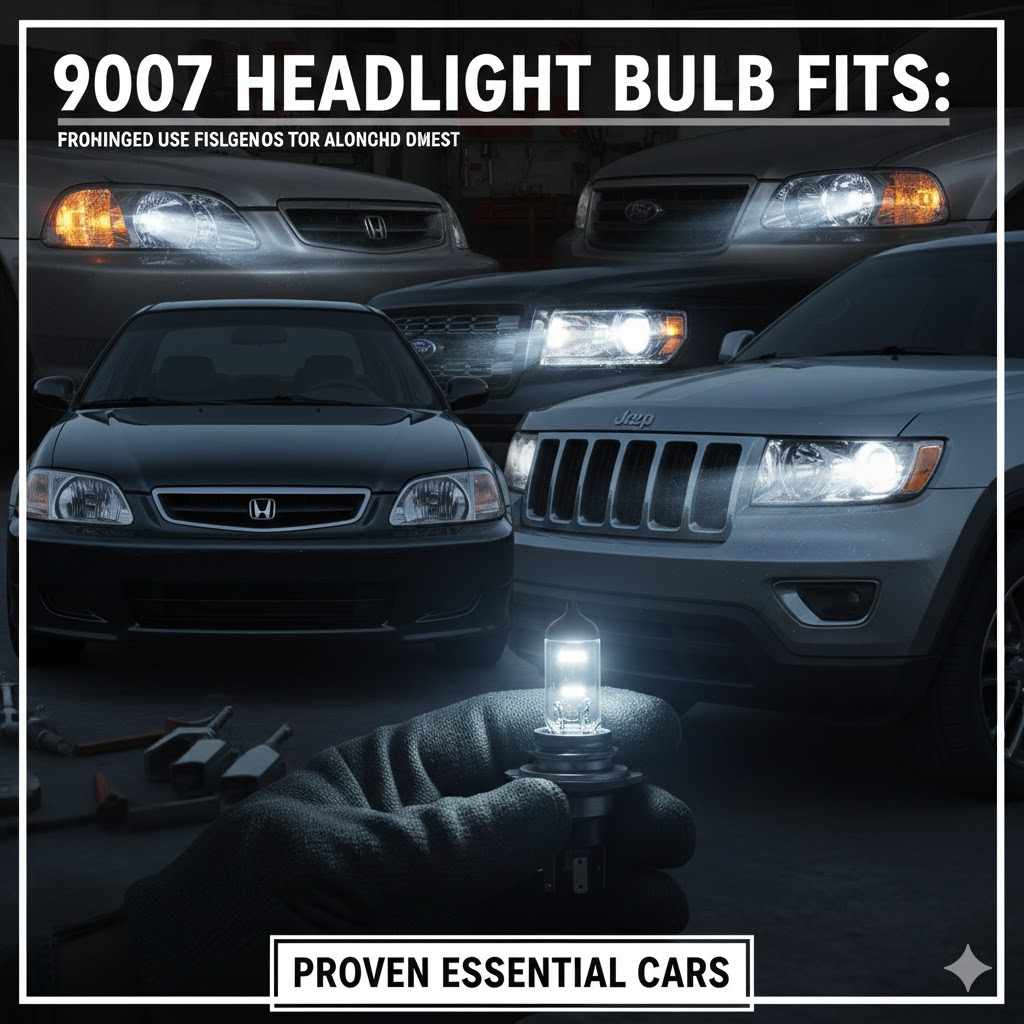
9007 Headlight Bulb Fits: Proven Essential Cars
The 9007 headlight bulb is a common fit for many older model Ford, Dodge, and Toyota trucks and SUVs, especially those built in the late 1990s through the mid-2000s. Always double-check your owner’s manual or use a reliable online fitment guide before purchasing to ensure your specific vehicle uses this dual-filament bulb type.
Are you staring at a dark headlight, wondering which replacement bulb you actually need? You are not alone! Car bulb sizes can feel like a secret code. If you keep seeing “9007,” you might be wondering, “Does this fit my truck or SUV?” The 9007 bulb is a staple in many popular American and Japanese vehicles from a specific era.
Knowing the right bulb saves you time, frustration, and an unnecessary trip back to the auto parts store. We are going to break down exactly which cars rely on the reliable 9007, making bulb replacement simple and stress-free. Stick with me, and you’ll be confident about your next bulb purchase!
Understanding the 9007 Headlight Bulb Standard
Before we list the cars, let’s quickly cover what the 9007 bulb actually is. Think of it like a specific clothing size for your headlights. It’s an older standard, but it was very popular for many years. The key thing to remember about the 9007 bulb is that it’s a dual-filament bulb. What does that mean for you?
- Dual Function: It handles both your low beam (the regular driving light) and your high beam (the bright, long-distance light) in one single bulb unit.
- Connection Type: It uses a specific three-prong connector that locks into place.
- Technology: Most factory 9007 bulbs are Halogen (the standard yellowish-white light), though many drivers upgrade to LED or HID replacements that share the same 9007 base.
If your vehicle uses separate bulbs for high and low beams (like some modern cars that use 9005 and 9006 bulbs), it likely does not use the 9007. The 9007 is popular on vehicles where the entire light assembly shares one bulb for both functions.
Proven Essential Cars That Use the 9007 Headlight Bulb
The 9007 bulb reigned supreme in the late 1990s and early 2000s, especially across Ford and Dodge truck lines. While manufacturers change bulb types frequently, here is a list of proven vehicles where the 9007 bulb is the standard factory fitment for the main headlight unit. Remember, always confirm the exact year and trim level!
Ford Trucks and SUVs (The 9007 Powerhouse)
Ford used the 9007 bulb extensively across its most popular and durable truck and SUV models during this time. If you drive one of these classics, there’s a very high chance you need a 9007 bulb.
- Ford F-150: Many models from 1997 through 2003 rely on the 9007 bulb. This generation of F-series is incredibly common, making this one of the most frequent searches for 9007 fitment.
- Ford Expedition: Similar to the F-150, the full-size Expedition from the late 90s and early 2000s often uses this setup.
- Ford Explorer: Many popular mid-size Explorers from 1998 to 2001 also utilized the 9007 bulb for their primary lighting.
- Ford Ranger: This reliable compact truck often came equipped with the 9007 bulbs through the early 2000s.
- Ford Mustang: Certain generations, particularly the SN95 platform (1994-2004), commonly used the 9007 bulb, especially those equipped with composite headlights.
Dodge Trucks and Vans
Mopar vehicles, particularly their workhorses, also adopted the 9007 standard. These vehicles often saw heavy use, meaning bulb replacement is a common maintenance task.
- Dodge Ram (1500/2500/3500): Look for the 9007 fitment on Ram trucks primarily built between 1994 and 2001.
- Dodge Durango: Early models of this SUV share parts compatibility with the Ram and often use the 9007 bulb.
- Dodge Dakota: The mid-size truck sibling to the Ram also commonly featured this bulb configuration.
Other Brands (Toyota and Others)
While Ford and Dodge were the biggest adopters, the 9007 bulb made its way into a few other popular models:
- Toyota Tundra: Early generation Tundras (especially around 2000–2004) sometimes used the 9007 bulb, although Toyota often mixes bulb types, so checking is vital here.
- Lexus Models: Some Lexus SUVs from the late 90s that shared platforms with Toyota trucks might also utilize this bulb standard.
When Does the 9007 Stop Being Used? (The Age Factor)
The 9007 bulb is almost exclusively found in vehicles manufactured before about 2005. Why the shift? Automotive lighting technology evolved rapidly:
- Separation of Beams: Many manufacturers started separating the high beam (often moving to a 9005 bulb) and the low beam (often moving to a 9006 bulb) into two distinct, dedicated bulbs within the same housing.
- Projector Headlights: The rise of projector-style headlights often necessitated different bulb bases for better light control.
- Newer Standards: Modern vehicles often jump straight to more advanced lighting, like H11 or proprietary LED arrays.
If your vehicle is newer than 2005 and is not a very specific heavy-duty model, it is less likely to use the 9007. This helps narrow down your search quickly!
How to Be 100% Sure: Verifying Your Bulb Size
Even with reliable lists, the safest way to buy a replacement bulb is to verify it yourself. Guessing can lead to a time-consuming error. As an automotive guide, I stress verification above all else for safe driving!
Method 1: Check Your Owner’s Manual (The Easiest Way)
Your car’s owner’s manual is the ultimate authority. Head to the section labeled “Specifications,” “Maintenance,” or “Bulb Replacement Guide.” It will explicitly state the required bulb type (e.g., “Headlamp Low/High Beam: 9007”).
Method 2: Look at the Old Bulb
If you can safely remove the old bulb (usually by twisting it out of the back of the headlight housing), the size code—like 9007, H11, or 9006—is often printed directly on the plastic base or the metal collar of the bulb itself. This is the most direct confirmation you can get.
Method 3: Use an Online Fitment Guide
Many reputable online auto parts stores offer a “Find Parts for Your Vehicle” tool. You input your Year, Make, and Model, and it tells you the exact bulb size required. For example, Philips and Sylvania maintain large, searchable databases. For government standards on lighting safety and regulations, you can often consult resources from the National Highway Traffic Safety Administration (NHTSA), though they focus more on standards than specific part numbers for consumer models.
Quick Comparison: 9007 vs. Other Common Bulbs
Drivers sometimes confuse the 9007 with other similar-looking bulbs. Here is a quick chart showing why the 9007 is unique, particularly when compared to the very common 9006 (low beam only) and 9005 (high beam only) bulbs often used side-by-side in modern housings.
| Bulb Type | Function | Filaments | Typical Use Case |
|---|---|---|---|
| 9007 | Low Beam & High Beam | Dual | Single bulb assembly for both functions (common in older trucks). |
| 9006 | Low Beam Only | Single | Often paired with a 9005 for separate high/low beams. |
| 9005 | High Beam Only | Single | Provides the separate bright light in dual-bulb setups. |
| H11 | Low Beam or Fog Light | Single | Very common low beam bulb on post-2005 vehicles. |
The critical takeaway from this table is the filament count. If you only have one socket for both lights, you need the dual-filament 9007!
Beginner’s Guide: Changing a 9007 Headlight Bulb
Once you have your correct 9007 bulb, replacing it is a straightforward DIY job you can complete in about 15 minutes. Safety first—never work on lights when the engine is running or when the lights have been on recently (they get hot!).
Tools You Might Need:
- Your new 9007 bulb (Halogen, LED, or HID).
- Gloves (to keep oils off the glass bulb).
- A flat-head screwdriver (sometimes needed to release a retaining clip).
Step-by-Step Replacement Process:
- Access the Bulb: Pop the hood. Locate the back of the headlight assembly. You will usually see a plastic dust cover or a connector plug attached directly to the bulb.
- Disconnect Power: Carefully unplug the electrical connector attached to the back of the old bulb. This usually involves squeezing a tab and pulling straight off.
- Remove the Old Bulb: The 9007 bulb is typically held in place by a twist-lock mechanism. Gently turn the bulb counter-clockwise (usually about a quarter turn) until it unlocks. Then, gently pull it straight out of the housing.
- Handle with Care: Hold your new 9007 bulb only by its plastic or metal base. Do not touch the glass or quartz capsule with your bare fingers. The oils from your skin create hot spots that can cause the bulb to shatter prematurely when illuminated.
- Install the New Bulb: Line up the tabs on the base of the new 9007 bulb with the slots in the housing. Push it gently inward until it seats fully. Turn the bulb clockwise until it locks securely into place—you should feel it click or stop turning firmly.
- Reconnect Power: Push the electrical connector firmly back onto the prongs until it clicks. Ensure it is fully seated for a reliable connection.
- Test Your Work: Get back in the driver’s seat and test both the low beams and the high beams. If they work, you’re done! If the high beam doesn’t work, unplug and re-seat the bulb, as it might be slightly misaligned.
If you are upgrading to an LED 9007 replacement, you might notice that the LED fins are bulky. You may need to remove the dust cover, install the bulb, and then secure the cover, sometimes requiring aftermarket dust caps if the original won’t fit over the large LED heat sink. Always follow the specific instructions provided by your LED manufacturer.
Troubleshooting Common 9007 Issues
Even after replacing a bulb, sometimes things don’t work perfectly. Here are quick fixes for common problems specific to the 9007 dual-filament setup:
- Only Low Beam Works, But Not High Beam (or vice versa): This almost always means the bulb is not seated correctly in the socket. The 9007 has two filaments; if it’s slightly rotated, only one filament will make contact. Turn off the car, disconnect the plug, twist the bulb slightly, reseat it firmly, and reconnect.
- New Bulb Burns Out Immediately: This is often caused by touching the glass (as mentioned above) or by a voltage issue. If you installed a non-standard HID or LED kit, ensure the wiring harness or ballast is correctly grounded.
- Bulb Flickers: Check the electrical connection again. A loose connection allows intermittent power flow, causing flickering. If the connection is tight, the issue might be in the wiring harness leading to the headlight itself.
Upgrading Your 9007: Halogen vs. LED
Since many drivers using 9007 bulbs drive older vehicles, upgrading the light output is a very popular DIY project. Here is a quick comparison to help you decide if you want to stick with standard Halogen or jump to LED.
| Feature | Standard Halogen 9007 | LED 9007 Replacement |
|---|---|---|
| Light Color | Warm Yellow/White (Around 3200K) | Bright White or Blueish White (5000K – 6500K) |
| Lifespan | 400 – 1,000 hours | 15,000 – 30,000 hours |
| Brightness (Lumens) | Lower (Standard Output) | Significantly Higher |
| Installation Difficulty | Easiest (Plug and Play) | Easy to Moderate (May require ballast/fan clearance) |
| Cost | Low | Medium to High |
For maximum visibility and longevity in your classic truck or SUV, an LED upgrade is usually worthwhile, provided you purchase a high-quality kit designed to plug directly into the existing 9007 socket without extensive wiring modifications.
Frequently Asked Questions (FAQ) About the 9007 Bulb
Q1: Can I use a 9007 bulb in a housing that requires a 9005 bulb?
A: No, you cannot safely interchange them. The 9007 has a different base shape and locking tabs than the 9005. Forcing it will break the housing or cause a dangerous electrical short. Always use the exact bulb type specified for your vehicle.
Q2: How do I know if my high beam or low beam is the 9007 filament?
A: The 9007 bulb contains both filaments within that single bulb. When you turn on your low beams, one filament lights up; when you switch to high beams, the second filament turns on, often supplementing the first one, resulting in a much brighter combined light.
Q3: Can I use an HID kit instead of a standard 9007 halogen bulb?
A: Yes, you can buy an HID (Xenon) conversion kit that uses a 9007 base. However, these kits require installing a ballast and sometimes modifying the dust cap. Make sure your local laws allow HID conversions, as some regions have strict rules about beam patterns.
Q4: If only one side of my headlight works, is it the 9007 bulb?
A: It could be the bulb, but it could also be the fuse or the wiring harness leading to that light. If you swapped the bulb and it still doesn’t work, check the corresponding fuse in your vehicle’s fuse box first, as this is often the cheapest fix.
Q5: What is the difference between 9007 and 9007ST?
A: The “ST” often stands for “Super Tech” or a specific upgrade level offered by some manufacturers, usually indicating a longer life or slightly whiter light than the basic, standard halogen 9007. Functionally, they fit the exact same socket.
Q6: Do I need to replace both 9007 bulbs at the same time?
A: While not strictly necessary, it is highly recommended. Headlight bulbs dim slightly over time. If one bulb is new and bright, and the other is five years old, your light output will be uneven. Replacing both ensures matching color and brightness for optimal nighttime visibility.
Conclusion: Driving Confidently with the Right Bulb
Finding the correct headlight bulb doesn’t have to feel like deciphering ancient texts. The 9007 standard belongs to a specific, rugged era of trucks and SUVs, most famously the Ford F-150s and Dodge Rams built between the late 1990s and early 2000s. Now you know exactly where to look!
Remember the key takeaway: the 9007 is your go-to dual-filament bulb for both high and low beams in compatible vehicles. By checking your owner’s manual or inspecting the old bulb, you can confidently purchase the right part. Replacing it is easy, and whether you choose a reliable standard halogen or upgrade to a modern LED replacement, you’ll have bright, safe light shining on the road ahead. Happy driving, and enjoy the confidence that comes with handling your own basic vehicle maintenance!