Car Air Fresheners: Vent Clip, Hanging & Wood Options Compared
A vent clip, a hanging card, and a wood block all do the same basic job differently: they release fragrance into your car to cover up odors from smoke, food, pets, or a musty interior. The type you should buy depends on how strong you want the scent, how long you want it to last, and whether you’d rather avoid synthetic fragrance altogether.
This guide compares the main types of car air fresheners on the market, how each one actually works, roughly how long it lasts, and what to know about safety before you clip one onto your vent.
Quick Answer
Vent clips (like Febreze Unstopables) give the strongest, most adjustable scent and typically last two to four weeks. Hanging cards are cheaper but fade faster. Wood or pine clips and essential oil diffusers use fewer synthetic fragrance chemicals and appeal to buyers who want a more natural option, though they generally need refilling or replacing more often than a vent clip.
What Types of Car Air Fresheners Are There?
Natural Wood Pick
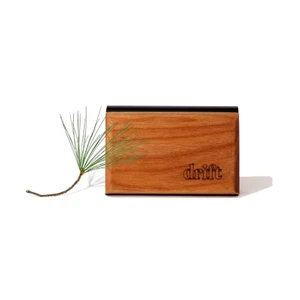 |
Drift Car Air Freshener – Pine Scent Starter Kit – $12.95 A solid wood clip infused with essential oils instead of aerosol fragrance — a good fit if you’d rather skip synthetic scent entirely.
|
Most car air fresheners fall into one of six categories. They differ mainly in how the scent is released and how long a single unit keeps working before it needs to be replaced or refilled.
| Type | How It Works | Typical Duration | Best For |
|---|---|---|---|
| Vent clip (e.g., Febreze Unstopables) | Clips onto an AC vent fin; airflow carries the scent through the cabin | 2–4 weeks, longer at a low intensity setting | A strong, consistent, adjustable scent while driving |
| Hanging card / rearview mirror freshener | Scented cardboard or fabric hangs from the mirror | 1–3 weeks | Low cost and a lighter scent |
| Essential oil car diffuser | A small reservoir wicks a water-and-oil blend passively into the air | Reservoir needs refilling every 1–2 weeks | Customizing your own scent with essential oils |
| Wood or pine clip (e.g., Drift) | A solid wood block infused with essential oils clips to a vent or visor | Up to 30 days per piece | Avoiding synthetic aerosol fragrance |
| Spray | Aerosol or pump spray applied directly into the cabin air | Minutes to a few hours per application | A quick fix right before a trip |
| Gel or canister | A gel absorbs liquid fragrance and releases it slowly over time | 30–60 days | A set-and-forget option under a seat or on the floor |
Vent Clip Fresheners
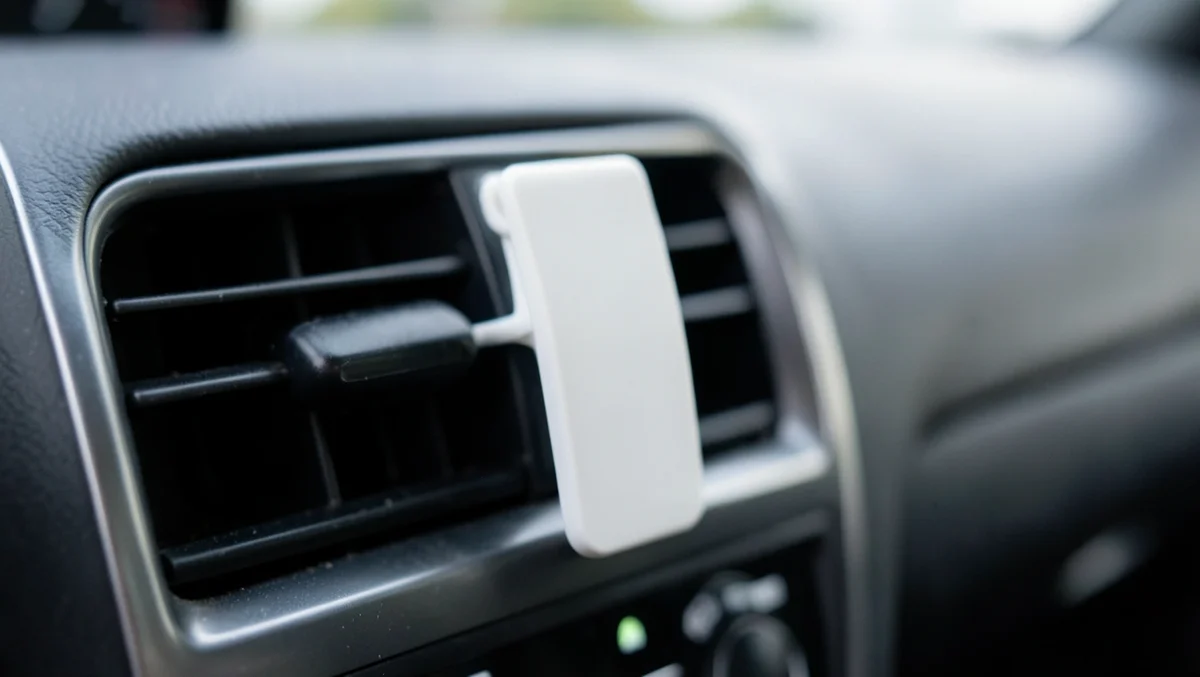
Vent clip fresheners are the most common style sold for cars, and Febreze’s Unstopables Car Vent Clips are one of the best-known examples. A small scented capsule clips directly onto an air vent fin, so the fragrance only releases when the fan is blowing — which is also why the scent can feel inconsistent if you mostly run your AC on low or leave the vents closed. Most vent clips include an intensity dial so you can turn the scent down for a subtler effect or up for a stronger one; the packaging on Febreze’s version claims up to roughly 160 days of freshness at the lowest setting, though most drivers running it at a normal intensity will notice the scent fade over two to four weeks.
If you specifically want a breakdown of Febreze’s car scent lineup and how its vent clips compare to its other car products, we cover that in more detail in our guide to Febreze car air fresheners.
Hanging and Essential Oil Diffuser Fresheners
Hanging cards are the cheapest option and the easiest to swap out — they’re just scented cardboard or fabric on a string, hung from the rearview mirror mount. They fade faster than a vent clip because there’s no airflow forcing the scent into the cabin; it simply diffuses passively, so the effect is milder overall.
Car-specific essential oil diffusers work differently. A small clip or vent-mounted holder wicks a blend of water and essential oil into the air, similar to a home diffuser but scaled down. These appeal to drivers who want to control exactly what’s in the scent — lavender for a calmer cabin, citrus for something brighter — rather than relying on a pre-mixed synthetic fragrance. The tradeoff is more upkeep: the reservoir needs topping off every week or two, and the scent is generally lighter than a dedicated vent clip.
Wood and Pine Fresheners: A Natural Option
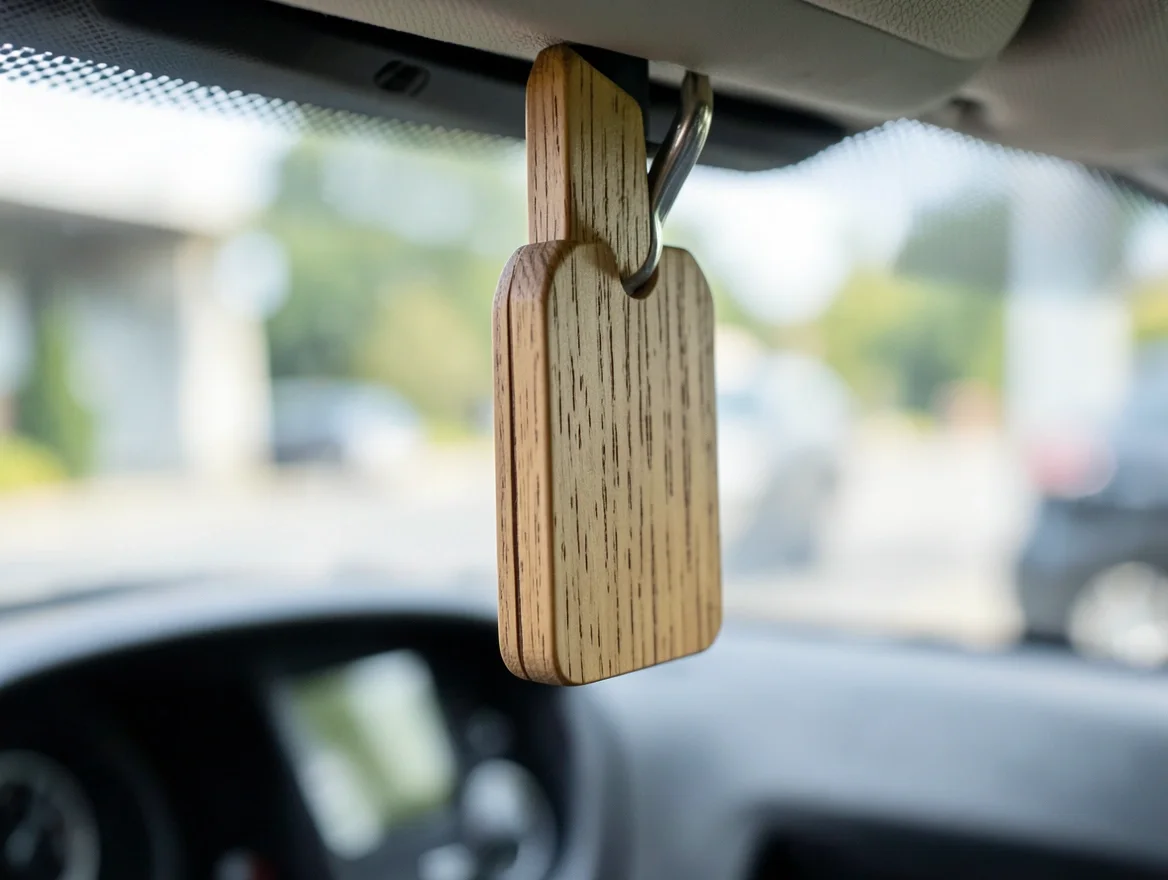
Solid wood clips, like the pine-scented Drift kit above, work on a simpler principle: the wood itself is infused with essential oils rather than a synthetic fragrance blend, and it releases scent slowly as it clips to a vent or sun visor. There’s no aerosol, no liquid reservoir to spill, and no plastic capsule to eventually run dry and need replacing with a new cartridge — you generally just swap the whole wood piece once the scent has faded, which most manufacturers put at around 30 days of regular use.
This category tends to appeal specifically to buyers who want to avoid synthetic air-freshener chemicals altogether, which is a real and reasonable concern — see the safety section below for what the research on that actually says.
Are Car Air Fresheners Safe? What the Research Says
Most car air fresheners are safe for everyday use, but it’s fair to say the industry doesn’t have a great track record on ingredient transparency. In a widely cited 2007 test by the Natural Resources Defense Council, researchers checked 14 popular air freshener products and found that none of them listed phthalates on the label — yet nearly all of them contained phthalates anyway. Phthalates are a class of chemicals used to help fragrance last longer, and they’ve been linked to hormone disruption in other contexts.
Separately, air fresheners in general (not just car-specific ones) can emit volatile organic compounds, or VOCs, when they’re new or used in a small, enclosed space like a car cabin. The U.S. EPA notes that VOC exposure at high enough levels can cause headaches, eye and throat irritation, or nausea, though a single vent clip or wood block at normal use is a very different exposure level than an industrial setting. If you’re sensitive to fragrance, have asthma, or are shopping for a child’s car seat area specifically, a wood or essential-oil option with a shorter ingredient list, cracked windows for ventilation, and a lower intensity setting are reasonable ways to reduce exposure without giving up a scented cabin entirely.
How to Choose the Right One for Your Car
- Want the strongest, most consistent scent: a vent clip with an adjustable intensity dial.
- Want the cheapest option and don’t mind swapping it often: a hanging card.
- Want to control the exact scent yourself: an essential oil diffuser.
- Want to avoid synthetic fragrance: a wood or pine clip.
- Need something for one trip, not an ongoing fixture: a spray.
- Want to set it and forget it for a month or two: a gel or canister freshener.
Frequently Asked Questions
How Long Do Car Air Fresheners Last?
It depends on the type. Vent clips typically last two to four weeks at a normal intensity setting, though manufacturers often claim much longer at the lowest setting. Wood and pine clips generally last around 30 days. Hanging cards fade the fastest, often within one to three weeks, since there’s no airflow pushing the scent into the cabin. Sprays only last minutes to a few hours per application.
Are Car Air Fresheners Safe to Use?
Most are safe for everyday use in a well-ventilated car. The main concerns are phthalates, which past testing has found in some air fresheners without them being listed on the label, and VOC exposure in a small, enclosed cabin. Cracking a window occasionally, using a lower intensity setting, and choosing a wood or essential-oil option with fewer synthetic ingredients can reduce exposure if you’re sensitive to fragrance.
Which Type of Car Air Freshener Lasts Longest?
Gel or canister fresheners and vent clips run on the low intensity setting tend to last the longest, often 30 to 60 days per unit. Wood and pine clips are close behind at around 30 days. Hanging cards and essential oil diffusers need the most frequent attention, typically every one to three weeks.
Can Car Air Fresheners Stain or Damage Your Interior?
Liquid and oil-based fresheners carry the most risk if they leak or spill directly onto upholstery, plastic trim, or a dashboard, which can leave a stain or a sticky residue. Vent clips, hanging cards, and wood clips are lower risk since they don’t hold liquid in the open. Always keep any liquid reservoir upright and away from direct contact with painted or fabric surfaces.
Is a Wood or Pine Air Freshener Better Than a Spray?
They serve different purposes rather than one being strictly better. A wood or pine clip provides a steady, lower-intensity scent over roughly a month and uses essential oils instead of an aerosol propellant. A spray gives an immediate, strong burst of scent but fades within hours and needs to be reapplied. If you want a set-and-forget option, a wood clip is generally the better fit; if you need a quick fix before a single trip, a spray works better.
What’s the Best Car Air Freshener for Allergies?
If fragrance sensitivity or allergies are a concern, an essential oil diffuser where you control the exact oil used, or a wood clip with a shorter, simpler ingredient list, are generally easier on sensitive noses than a heavily synthetic vent clip or aerosol spray. Running the freshener at a lower intensity and cracking a window for airflow also helps.
The Bottom Line
There isn’t one universally “best” car air freshener — the right pick depends on how strong you want the scent, how often you’re willing to replace it, and whether avoiding synthetic fragrance matters to you. A vent clip like Febreze Unstopables gives you the strongest, most adjustable scent (see our dedicated Febreze car freshener guide for scent-by-scent details), while a wood or pine clip like the Drift kit above trades a bit of intensity for a simpler, more natural ingredient list. Either way, keep an eye on how the freshener is mounted and how much liquid, if any, it holds, so it doesn’t end up staining your interior.
Products related to this article
Sponsored / affiliate links. As an Amazon Associate I earn from qualifying purchases. I may earn additional commission from eligible campaigns.