Does Window Tint Make Your Car Hotter?
No, quality window tint keeps a car cooler, not hotter. Premium ceramic film rejects up to 80% of incoming solar heat and blocks over 99% of UV rays, and even the cheapest dyed film still cuts solar heat by roughly 35 to 45%.
The myth persists because a dark window looks like it should trap more heat. In reality it’s the film’s infrared-rejection technology, not how dark the glass looks, that decides how much heat actually gets through — and every legitimate tint film is designed to block that heat before it enters the cabin, not hold it in.
The Physics: Why Tinted Windows Run Cooler, Not Hotter
BEST FOR DIY CERAMIC WINDOW TINT
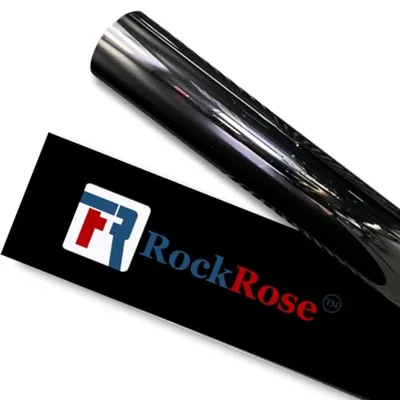 |
RockRose 20% Nano Ceramic Window Tint (36in x 25ft) – $58.95 This nano-ceramic film rejects 99% of UV rays and 85% of infrared heat – the same heat-blocking technology this article recommends over cheap dyed tint.
|
Sunlight hitting a car window carries three kinds of energy: roughly 45% is visible light, about 52% is infrared heat, and only around 3% is ultraviolet radiation. Untreated glass lets nearly all of that infrared energy pass straight through, where it strikes the dashboard, seats, and steering wheel and gets absorbed. Those surfaces then re-radiate the stored energy back into the cabin as long-wave heat that has a much harder time escaping through the glass than it did entering — the same greenhouse effect that turns a closed car into an oven on a sunny afternoon.
Window tint intercepts a share of that infrared energy before it ever reaches the interior. A film’s total solar energy rejection (TSER) rating measures exactly how much of the combined visible, infrared, and UV energy it blocks. The higher a film’s TSER number, the less heat makes it inside the cabin in the first place — the opposite of trapping heat.
How Much Heat Does Window Tint Actually Block?
Not all tint films work the same way, and the technology behind a film matters more than its brand name or price tag. Here’s how the four common types compare on real heat rejection:
| Film Type | How It Works | Typical Heat Rejection | Trade-Off |
|---|---|---|---|
| Dyed film | Layers of colored dye absorb sunlight | 35–45% | Cheapest option, but fades and can lose effectiveness within a few years |
| Metalized film | Microscopic metal particles reflect heat and light | 45–60% | Durable and non-fading, but can interfere with GPS, radio, and cell signal |
| Carbon film | Carbon particles block heat without metal | 50–60% | No signal interference, doesn’t fade, but costs more than dyed film |
| Ceramic (nano-ceramic) film | Ceramic particles reject infrared energy directly | Up to 80–96% of infrared heat | Best overall performance and clarity, but the most expensive tier |
Why Some People Think Tint Makes a Car Hotter
Two real experiences fuel this myth. First, drivers compare a tinted car parked in full summer sun to their memory of how hot an untinted car felt, and blame the tint for heat that’s actually coming from the sun’s raw intensity and how long the car sat closed up — that oven effect happens with or without tint, just to a lesser degree with it.
Second, cheap, thin dyed film with poor infrared rejection can absorb heat within the dye layer itself and slowly release a portion of it into the cabin after hours in direct sun. That effect is real but minor, and it still doesn’t come close to offsetting the heat that same film blocks compared to bare, untinted glass.
Does Darker Tint Always Block More Heat?
No. A film’s visible light transmission (VLT) — how dark the glass looks — is measured completely separately from its heat rejection, and darkness alone doesn’t decide how much heat gets blocked. Independent film testing shows a 35% VLT ceramic tint can out-perform a 5% VLT dyed tint on total heat rejected, despite letting through roughly seven times more visible light. What matters is the film’s underlying technology, not how dark it looks on the glass.
Other Real Benefits of Tinted Windows
Beyond temperature, tint blocks a large share of UV radiation that would otherwise reach your skin and fade upholstery and dashboards over time — untreated automotive glass already blocks most UVB but lets a surprising amount of UVA through, which is what tint is closing that gap on. Tint also cuts glare for safer daytime driving and adds a layer of privacy and security for whatever’s inside the car.
If you’re waiting on a tint appointment or driving an untinted car in the meantime, cracking the windows for a few minutes before you get in can vent out some of that trapped heat while you wait for the AC to catch up.
Is Tinting Your Car Windows Legal?
Yes, tinting is legal everywhere in the U.S., but every state sets its own minimum VLT for how much light your windows must still let through, and the limits vary widely — some states allow as little as 25% VLT on front windows, others require 70%. Installing tint darker than your state allows can mean a fine or a mandatory removal order. See our full state-by-state legal tint guide for the exact VLT limit where you live before you buy film.
Frequently Asked Questions
Does Window Tint Increase Heat?
No, window tint reduces heat rather than increasing it. It blocks a portion of the sun’s UV and infrared energy before that energy ever reaches your dashboard and seats, which keeps the cabin cooler and reduces how hard your air conditioner has to work.
Does Tinting Make a Car Cooler?
Yes. Quality window tint lowers interior temperature by blocking solar heat and UV rays at the glass instead of letting them heat up the cabin. Ceramic film can reject up to 80% of total solar heat, while basic dyed film typically blocks 35 to 45%.
What Is the Disadvantage of Window Tint?
Tint that’s too dark can reduce visibility at night and may violate your state’s legal VLT limit, risking a fine. Metalized film can also interfere with GPS, radio, and cell signals, and poor installation can trap air bubbles that ruin the finish.
Does Darker Tint Block More Heat?
Not necessarily. How dark a tint looks (its VLT, or visible light transmission) and how much heat it blocks are measured separately, and film technology matters more than darkness. A 35% VLT ceramic film can reject more total heat than a 5% VLT dyed film, even though it lets in far more visible light.
Conclusion
Window tint doesn’t make a car hotter — it blocks a real share of the sun’s heat before it ever reaches the interior, and ceramic film does that job better than any other type on the market. Choose a quality, heat-rejecting film within your state’s legal VLT limit, and have it installed properly to get the full benefit.
Products related to this article
Sponsored / affiliate links. As an Amazon Associate I earn from qualifying purchases. I may earn additional commission from eligible campaigns.
 RockRose 5% Air Nano Ceramic Car Window Tint 40 in x 10FT 2PLY Charcoal Privacy Film Heat, UV 99%, and IRR 93% to 95% for Auto or Home Adhesive Film Easy Shrink, Plotter FriendlyRockRose 60% Air Nano Ceramic Car Window Tint 20 in x 15FT 2PLY Charcoal Privacy Film Heat, UV 99%, and IRR 93% to 95% for Auto or Home Adhesive Film Easy Shrink, Plotter Friendly