Are Cars 4 Stroke Engines? Proven Power
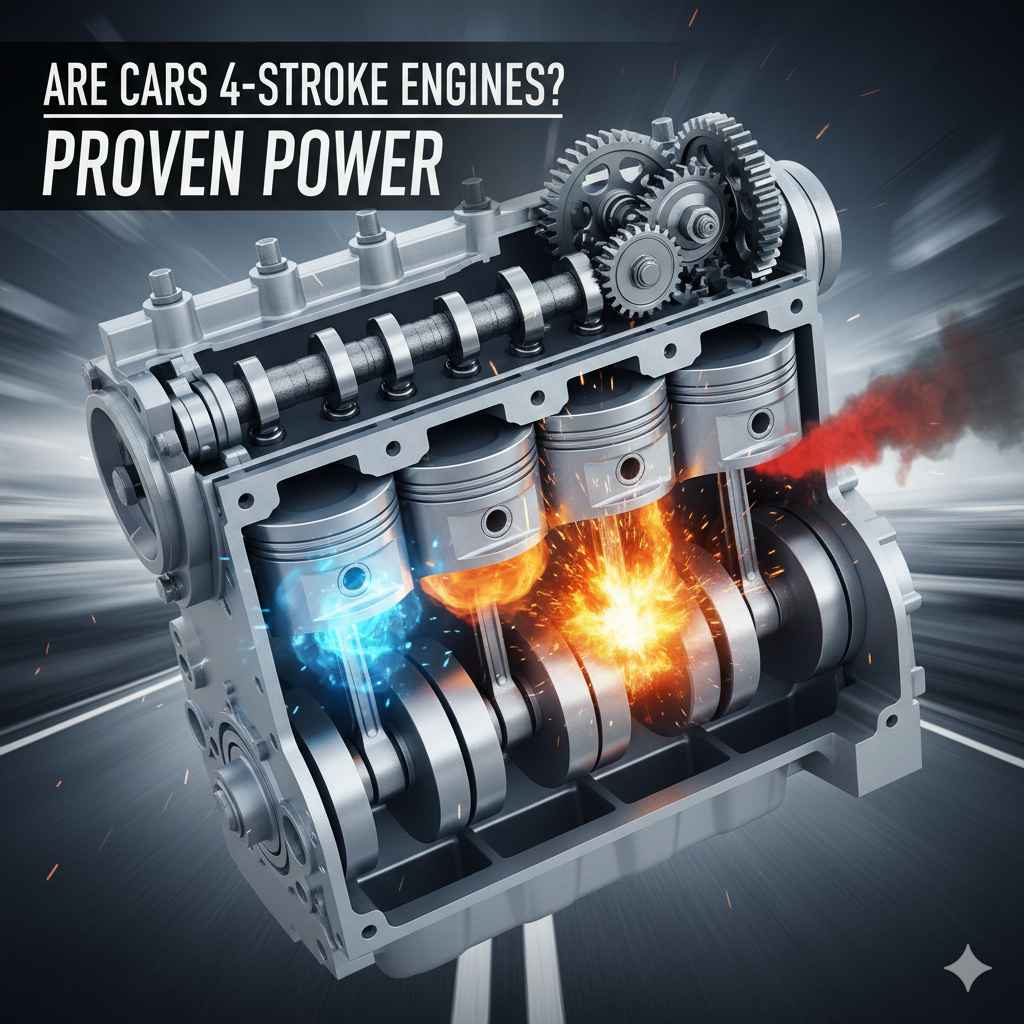
Yes, the vast majority of cars on the road today use 4-stroke engines. This design, known for its efficiency and reliability, is the proven power behind your daily commute and long road trips. Understanding how it works will demystify your car’s heart!
Ever wonder what makes your car go? It’s a question many of us have, especially when a strange noise starts or we’re just curious about the mechanics under the hood. For most cars, the answer is a marvel of engineering: the four-stroke engine. While it might sound technical, it’s actually a pretty straightforward process that powers your vehicle reliably, day in and day out. Let’s break down this essential part of your car in a way that’s easy to grasp.
We’ll go step-by-step through how a four-stroke engine works, why it’s so common, and what makes its power so dependable. By the end, you’ll have a clear picture of the heart of your car and feel more confident understanding your automotive companion.
What Exactly is a Four-Stroke Engine?
At its core, a four-stroke engine is an internal combustion engine where the piston completes four distinct movements, or “strokes,” for every single power-producing cycle. Think of it as a rhythmic dance happening thousands of times per minute inside your engine. These strokes are the secret sauce that turns fuel into the motion you need to get from point A to point B.
The “strokes” refer to the up and down movement of the piston within the cylinder. Each stroke has a specific job, and when they work together in perfect sequence, they create the power that drives your car. This design has been the standard for decades because it strikes a great balance between power, efficiency, and emissions control.
You’ll often hear this type of engine called a “Reciprocating Engine” because of the back-and-forth motion of the pistons. It’s the powerhouse behind gasoline and diesel vehicles alike, though there are slight differences in how they ignite the fuel.
The Four Strokes: A Step-by-Step Breakdown
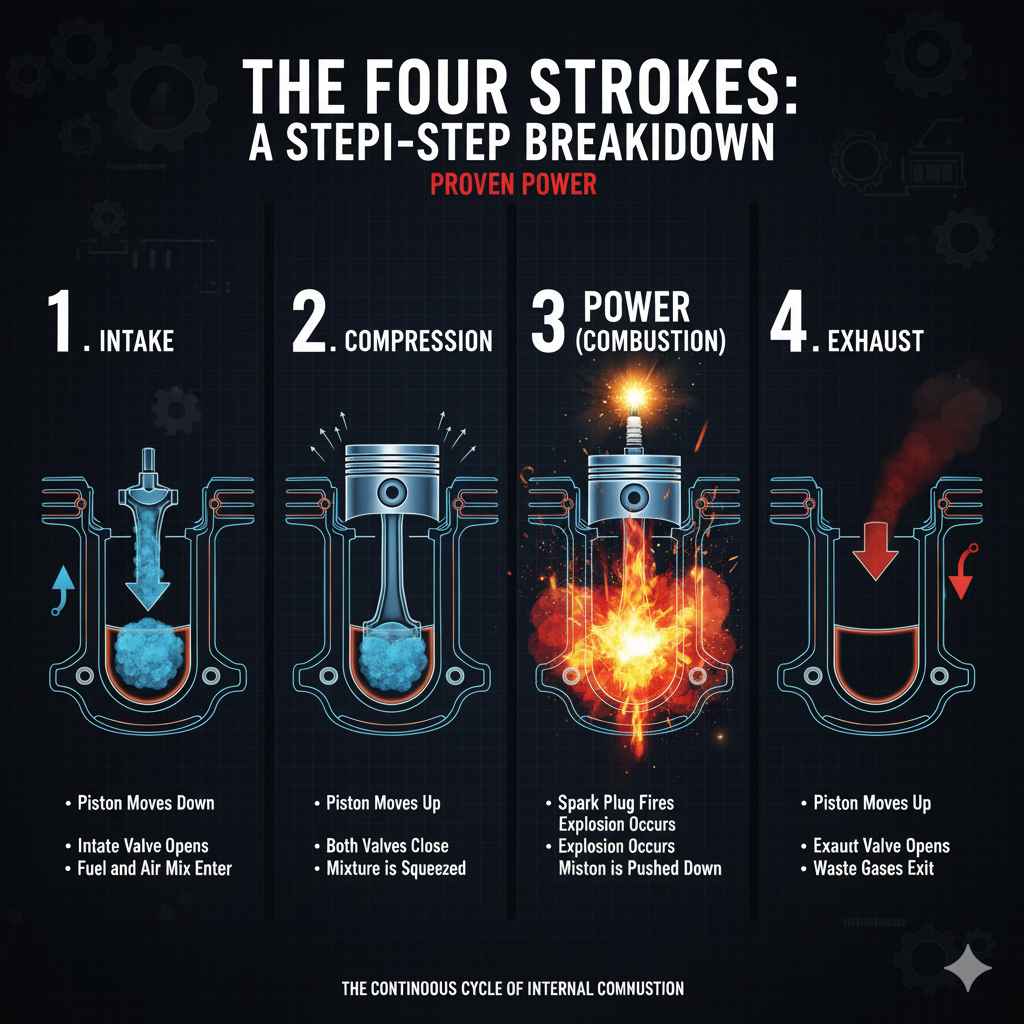
Let’s dive into the four key steps that make all the magic happen. Imagine you’re looking inside one of your car’s cylinders. You’ll see a piston moving up and down, and valves that open and close. Here’s what’s happening:
Stroke 1: Intake
- Piston Moves Down: The piston starts at the top of the cylinder and moves downward.
- Intake Valve Opens: As the piston descends, the intake valve opens.
- Fuel and Air Mix Enter: This creates a vacuum, sucking a mixture of air and fuel into the cylinder. Think of it like drawing breath into your lungs.
Stroke 2: Compression
- Piston Moves Up: The piston travels back up the cylinder.
- Both Valves Close: Both the intake and exhaust valves are now shut, sealing the cylinder.
- Mixture is Squeezed: The piston compresses the air-fuel mixture into a much smaller space at the top of the cylinder. This makes the mixture highly volatile and ready for ignition.
Stroke 3: Power (Combustion)
- Spark Plug Fires: Just as the piston reaches the very top, the spark plug ignites the highly compressed air-fuel mixture.
- Explosion Occurs: This rapid explosion creates a burst of heat and pressure.
- Piston is Pushed Down: The force of this explosion drives the piston powerfully down the cylinder. This is the stroke that generates the engine’s power!
Stroke 4: Exhaust
- Piston Moves Up: The piston moves upward again.
- Exhaust Valve Opens: The exhaust valve opens, allowing the burnt gases (exhaust) to be pushed out of the cylinder.
- Waste Gases Exit: These gases then travel through the exhaust system and out of your car.
Once the exhaust stroke is complete, the piston is back at the top, and the cycle begins all over again with the intake stroke. This continuous cycle is what keeps your engine running smoothly.
Why is the Four-Stroke Engine So Popular?
The dominance of the four-stroke engine in modern vehicles isn’t by accident. It’s a testament to its well-balanced performance characteristics. Here’s why it’s the go-to choice for automakers:
- Efficiency: Compared to older engine designs like two-stroke engines, four-stroke engines are significantly more fuel-efficient. They burn fuel more cleanly and completely, meaning you get more miles per gallon. This also translates to fewer emissions.
- Reliability: The distinct separation of strokes for intake, compression, power, and exhaust allows for more controlled combustion. This leads to less wear and tear on engine components and a longer lifespan for the engine.
- Power Output: While earlier designs might have had simpler mechanics, the four-stroke system, especially with advancements in technology, provides excellent power-to-weight ratios, making cars feel responsive and capable.
- Emissions Control: The controlled combustion and separate exhaust stroke make it easier to manage and reduce harmful emissions, which is crucial for meeting environmental regulations. The use of catalytic converters, for instance, works effectively with the exhaust gases from a four-stroke engine. You can learn more about emissions control from the U.S. Environmental Protection Agency (EPA).
- Quieter Operation: The design generally results in a smoother and quieter running engine compared to some alternatives.
Understanding Engine Components
To fully appreciate the four-stroke cycle, it helps to know a few key players:
- Cylinder: The main chamber where the piston moves up and down.
- Piston: A metal cylinder that moves up and down inside the engine cylinder.
- Connecting Rod: Connects the piston to the crankshaft, converting the piston’s linear (up-and-down) motion into rotational motion.
- Crankshaft: A rotating shaft that converts the up-and-down motion of the pistons into the rotational force that eventually turns your car’s wheels.
- Valves (Intake & Exhaust): Act like doors, opening and closing to let the air-fuel mixture in and the exhaust gases out.
- Camshaft: A rotating shaft with lobes that push on the valves, opening them at precisely the right moments in the cycle.
- Spark Plug: (In gasoline engines) Creates the spark that ignites the air-fuel mixture.
- Fuel Injector: Delivers the fuel into the cylinder or intake manifold.
Gasoline vs. Diesel Four-Stroke Engines
Most cars you see are gasoline-powered, but many trucks and some cars use diesel engines. Both are typically four-stroke, but they have a fundamental difference in how they ignite the fuel:
| Feature | Gasoline Engine | Diesel Engine |
|---|---|---|
| Ignition Method | Spark plug ignites a compressed air-fuel mixture. | High compression heats the air enough to ignite injected fuel (no spark plug needed for ignition). |
| Fuel Type | Gasoline | Diesel fuel |
| Compression Ratio | Lower (e.g., 8:1 to 12:1) | Much Higher (e.g., 14:1 to 25:1) |
| Efficiency | Good fuel efficiency. | Generally higher fuel efficiency and torque. |
| Emissions | Produce more CO2 and NOx historically, but greatly reduced with modern technology. | Historically produced more particulate matter (soot) and NOx, also heavily managed now. |
| Complexity | Requires spark ignition system. | Relies on high compression, fuel injection is critical. |
The core four strokes – intake, compression, power, exhaust – remain the same for both, but the way that power stroke is initiated is the key difference. Diesel engines are known for their durability and pulling power, often found in heavy-duty applications.
The “Proven Power” Aspect
The phrase “Proven Power” in the context of cars, especially when referring to 4-stroke engines, highlights a few key benefits:
- Time-Tested: The four-stroke design has been refined over more than a century. It’s not a new or experimental technology; it’s a mature, well-understood system that has consistently delivered reliable performance.
- Dominant in the Market: Because it works so well for everyday driving, it’s the engine type you’ll find in the vast majority of passenger cars, SUVs, and light trucks worldwide. This widespread use is a testament to its proven success.
- Foundation for Innovation: While the basic principles are old, modern four-stroke engines are incredibly sophisticated. They incorporate advanced technologies like variable valve timing, direct fuel injection, turbocharging, and sophisticated engine management systems all built upon the reliable four-stroke foundation. These innovations enhance efficiency, power, and reduce emissions without changing the fundamental cycle. The reliability of the core design allows engineers to focus on these advanced features.
When buying a new or used car, you can be confident that a four-stroke engine is a solid, reliable choice. It’s the workhorse that has powered global transportation for generations.
Maintenance for Your Four-Stroke Engine
While four-stroke engines are reliable, they still need regular care to keep them running smoothly and to preserve that “proven power.” Here are a few essential maintenance steps:
- Oil Changes: This is arguably the most critical maintenance task. Engine oil lubricates all the moving parts, reduces friction, and helps keep the engine cool. Follow your car’s owner’s manual for the recommended oil type and change intervals. Edmunds provides excellent guidance on oil change schedules.
- Air Filter Replacement: The air filter makes sure that only clean air enters your engine. A clogged filter restricts airflow, hurting performance and fuel economy. These are usually easy to replace yourself.
- Spark Plug Replacement: Over time, spark plugs wear out and won’t create as strong a spark, leading to misfires and poor performance. They are typically replaced in sets as part of scheduled maintenance.
- Coolant Flushes: The cooling system prevents your engine from overheating. Regular checks and flushes of the coolant ensure it’s doing its job effectively.
- Timing Belt/Chain: This is a vital component that synchronizes the crankshaft and camshafts. A broken timing belt can cause catastrophic engine damage. Check your manual for the recommended replacement interval.
Performing these basic maintenance tasks on schedule will help ensure your four-stroke engine delivers its proven power for many years and miles to come. It’s a great way to save money on repairs and keep your car reliable.
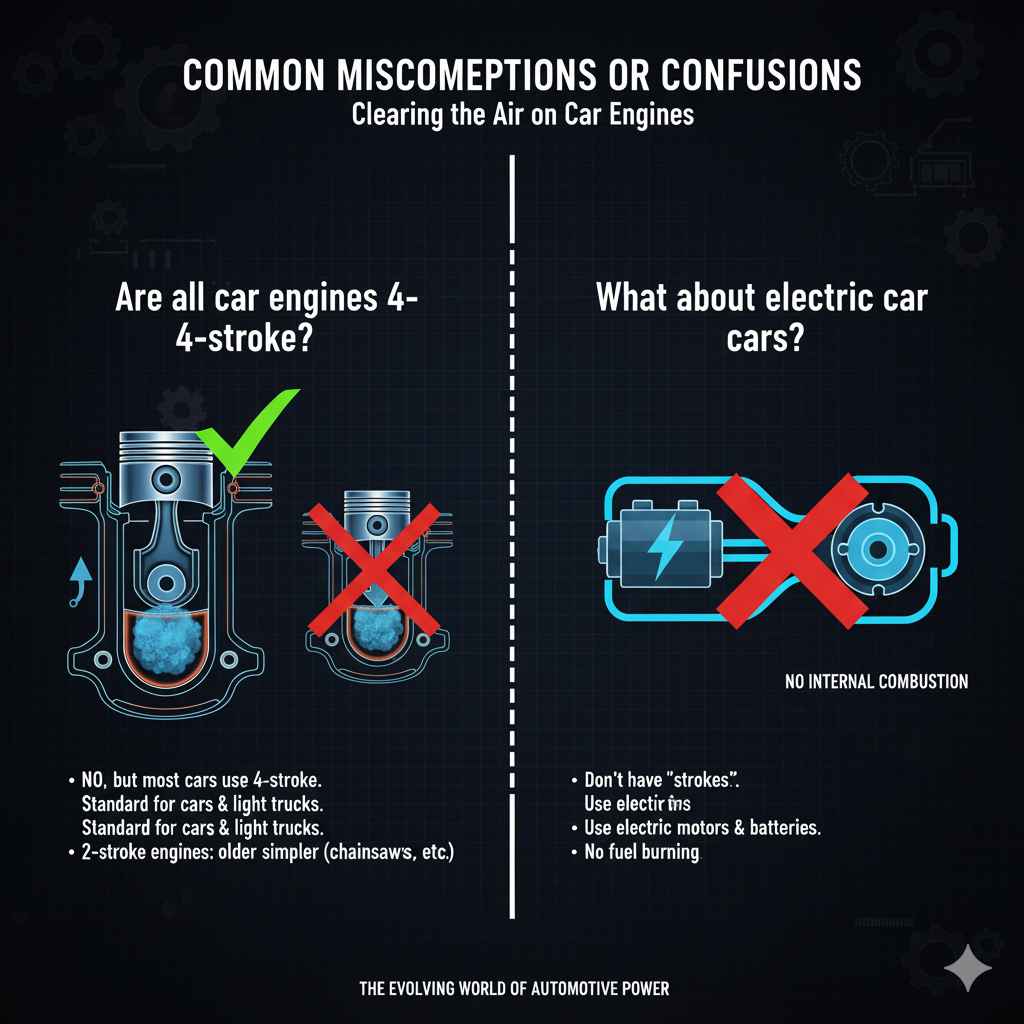
Common Misconceptions or Confusions
It’s easy to get a little confused with all the technical terms out there. Let’s clear up a couple of common points:
Are all car engines 4-stroke?
No, not all, but the overwhelming majority of cars and light trucks on the road today use 4-stroke engines. Some older vehicles, very specialized high-performance engines, or certain small engines (like in some chainsaws or leaf blowers) might use 2-stroke engines. But for your daily driver, 4-stroke is the standard. Two-stroke engines have a different, simpler cycle where intake/exhaust and compression/power happen in just two piston movements. They can be lighter and simpler but are generally less efficient and produce more emissions.
What about electric cars?
Electric cars are very different! They don’t have internal combustion engines at all. Instead, they use electric motors powered by a battery pack. So, the concept of “strokes” doesn’t apply to them. When we talk about 4-stroke engines, we’re specifically referring to vehicles that burn fuel internally.
Frequently Asked Questions (FAQs)
What are the main parts of a 4-stroke engine?
The core parts include the cylinder, piston, connecting rod, crankshaft, intake valve, exhaust valve, camshaft, and in gasoline engines, a spark plug. These components work together in a precise sequence.
How many times does a 4-stroke engine cycle per minute?
This varies greatly depending on engine speed (RPM – Revolutions Per Minute). At 2000 RPM, the crankshaft turns 2000 times per minute. Since one power stroke happens every two crankshaft revolutions, the engine produces power 1000 times per minute in one cylinder. A typical car engine has multiple cylinders, so power strokes are happening constantly.
Is a 4-stroke engine more powerful than a 2-stroke engine?
Not necessarily. A 2-stroke engine can produce power once per revolution, potentially leading to higher power output for its size or weight. However, 4-stroke engines are generally more efficient, produce less pollution, and have a broader powerband (deliver usable power over a wider range of RPMs), making them better suited for everyday driving.
What is the role of the crankshaft in a 4-stroke engine?
The crankshaft is crucial. It captures the force from the piston’s downstroke (during the power stroke) and converts the linear up-and-down motion into rotational motion. This rotation is then sent through the transmission to turn the car’s wheels.
Why do cars need oil in a 4-stroke engine?
Oil is the lifeblood of your engine. It lubricates moving parts to reduce friction and wear, cools engine components, cleans away debris, and helps seal the piston rings. Without proper lubrication, metal parts would grind against each other, leading to rapid engine failure.
How does a 4-stroke engine create pollution?
During the combustion process, not all fuel burns perfectly. Incomplete combustion and chemical reactions can produce pollutants like carbon monoxide (CO), nitrogen oxides (NOx), and unburned hydrocarbons (HC). Modern vehicles use catalytic converters to significantly reduce these harmful emissions into less harmful substances like carbon dioxide (CO2), water vapor, and nitrogen.
Conclusion
So, to sum it all up, yes, the engine powering most cars on the road today is indeed a four-stroke engine. This incredibly common and effective design has earned its reputation for “Proven Power” due to its balance of efficiency, reliability, and performance. From the moment the piston inhales air and fuel, through squeezing it, exploding it for power, and finally expelling the waste, each of the four strokes plays a vital role in keeping you moving.
Understanding these basic principles doesn’t require a mechanic’s degree, just a little curiosity. By knowing how your engine works and performing basic maintenance, you’re not only taking better care of your vehicle but also building confidence in your ability to be a savvy car owner. The four-stroke engine is a testament to ingenious engineering, and now you’ve got a clearer picture of the proven power driving your adventures.