Are Electric Car Plugs Universal? Your Complete Guide
Are electric car plugs universal? This is a question on the minds of many considering the switch to an EV, and the answer isn’t a simple yes or no. Understanding the different charging connectors is crucial for a seamless charging experience, whether you’re at home or on the go. This guide will break down the various plug types, their compatibility, and what you need to know to charge your electric vehicle with confidence.
While there isn’t a single universal plug type for all electric cars globally, North America and Europe have established dominant standards that make charging widely accessible within those regions. The key is understanding the different connector types and the charging levels they support.
Key Takeaways
- Electric car plugs are not universally the same across all manufacturers and regions, but dominant standards exist.
- In North America, J1772 is standard for Level 1 and Level 2 AC charging, while CCS and NACS (Tesla’s) are common for DC fast charging.
- Europe primarily uses the Type 2 connector for AC charging and CCS 2 for DC fast charging.
- Most EVs come with adapters, and public charging stations offer a variety of connector types to ensure broad compatibility.
- Understanding charging levels (Level 1, Level 2, DC Fast Charging) is as important as knowing the plug type.
What is Electric Vehicle Charging and Why the Different Plugs?
Electric vehicles (EVs) require charging to replenish their batteries, much like a smartphone. This charging process involves connecting the vehicle to a power source. The reason for different plug types boils down to a combination of historical development, regional standards, and the different power delivery capabilities needed for various charging speeds.
Imagine trying to plug a high-voltage industrial machine into a standard household outlet – it wouldn’t work safely or efficiently. Similarly, EV charging needs can range from a slow trickle charge overnight to a rapid replenishment of power in minutes. The plugs and the systems they connect to are designed to handle these different power demands safely and effectively.
The evolution of EVs has seen various manufacturers develop their own systems. Over time, industry bodies and regional agreements have led to the standardization of certain connectors to promote interoperability and make charging infrastructure more accessible and user-friendly for consumers. This standardization is crucial for widespread EV adoption.
Charging Levels Explained
- Level 1 Charging: Uses a standard household outlet (typically 120V in North America). It’s the slowest form of charging, suitable for overnight charging of plug-in hybrids or EVs with smaller batteries. This level uses the J1772 connector in North America.
- Level 2 Charging: Uses a higher voltage (240V) and is much faster than Level 1. This is the most common type of charging for homes and public charging stations. It utilizes the J1772 connector in North America and the Type 2 connector in Europe for AC power.
- Level 3 Charging (DC Fast Charging): Delivers direct current (DC) power at very high voltages (400V to 1000V) for rapid charging. This is ideal for long road trips or when you need to add significant range quickly. Common connectors include CCS (Combined Charging System), CHAdeMO, and NACS (North American Charging Standard, formerly Tesla’s proprietary connector).
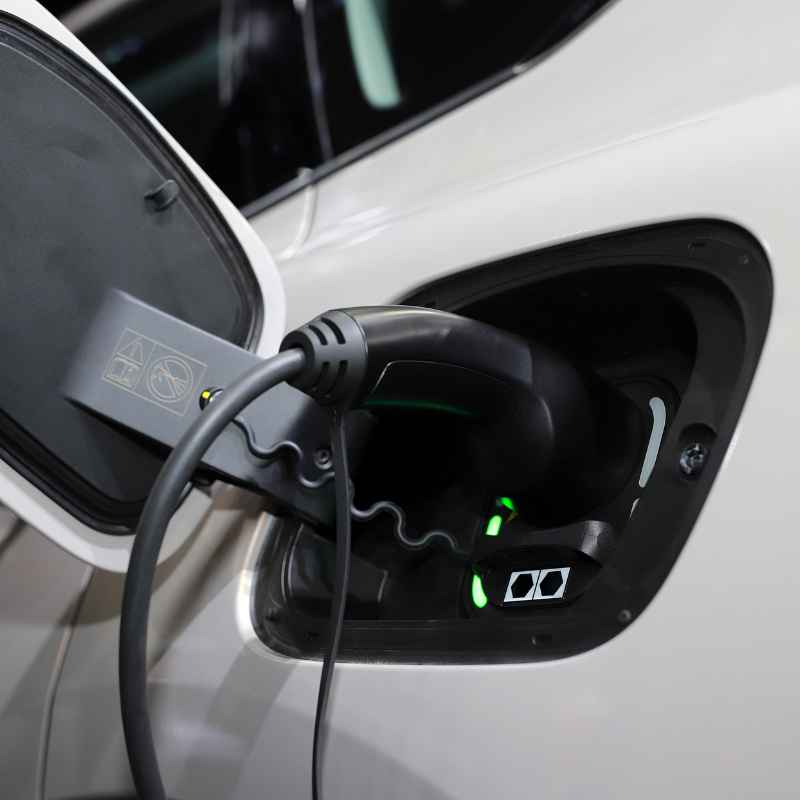
North American Charging Connectors: J1772, CCS, and NACS
In North America, the charging landscape has largely coalesced around a few key connector standards, though a recent shift is notable. For standard AC charging, the SAE J1772 connector has been the dominant force for many years, ensuring that most electric vehicles sold in the US and Canada can plug into most public and home charging stations for Level 1 and Level 2 charging.
However, when it comes to DC fast charging, the picture has been more varied. Historically, North America saw the widespread adoption of CCS Combo 1, which adds two large DC pins below the J1772 connector. This allows for both AC and DC charging through a single port.
Tesla, of course, had its own proprietary connector, often referred to as the NACS (North American Charging Standard), which offered excellent performance and access to its extensive Supercharger network.
The significant development in recent times is Tesla’s decision to open its NACS standard, leading many other automakers to announce they will adopt it for future vehicles. This move is expected to simplify the charging experience for many EV owners, potentially reducing the need for adapters for DC fast charging on many new models.
| Connector Type | Charging Level | Region | Notes |
|---|---|---|---|
| J1772 | Level 1 & Level 2 AC | North America | Standard for most EVs for AC charging. |
| CCS Combo 1 | Level 1, Level 2 AC & DC Fast Charging | North America | Combines J1772 with DC pins. |
| NACS (Tesla) | Level 1, Level 2 AC & DC Fast Charging | North America | Tesla’s proprietary standard, now being widely adopted. |
| CHAdeMO | DC Fast Charging | Global (less common in new NA vehicles) | Older DC standard, still found on some older EVs. |
The gradual adoption of NACS by other manufacturers is a significant step towards a more unified DC fast charging standard in North America.
Warning: Older EVs may still use the CHAdeMO connector for DC fast charging. Always check the connector type at a charging station to ensure compatibility with your vehicle.
European Charging Connectors: Type 2 and CCS 2
Europe has taken a more unified approach to EV charging connectors. The Type 2 connector, standardized by VDE-AR-N 4100, is the prevailing standard for AC charging (Level 1 and Level 2) across the continent. This means that a single Type 2 cable can generally be used to charge any EV equipped with a Type 2 inlet at any compatible AC charging station in Europe.
For DC fast charging, Europe has largely standardized on CCS Combo 2. This connector builds upon the Type 2 AC connector by adding two larger DC pins below it. This allows for a single port on the vehicle that can accept both AC charging via the Type 2 portion and high-speed DC charging using the CCS configuration.
The widespread adoption of Type 2 for AC and CCS 2 for DC fast charging in Europe significantly simplifies the charging experience for drivers. This uniformity fosters a more robust and accessible charging infrastructure, making cross-border EV travel more straightforward compared to regions with a more fragmented connector landscape.
The Advantage of European Standardization
- Reduced Complexity: Drivers only need to be familiar with one primary AC connector (Type 2) and one primary DC fast charging connector (CCS 2).
- Increased Interoperability: Any EV with a Type 2 AC port can charge at any Type 2 AC station, and any EV with a CCS 2 port can utilize CCS 2 DC fast chargers.
- Simplified Infrastructure: Charging station manufacturers can focus on producing fewer types of connectors, leading to more efficient manufacturing and deployment.
- Easier Travel: Tourists and business travelers can confidently plan charging stops across different countries without worrying about unique regional connectors.
Adapters and Tesla’s Role
Given the historical differences in charging plugs, adapters play a vital role in ensuring flexibility. Most EVs come equipped with an adapter for Level 1 charging (if not already built-in for the vehicle’s native connector). For other charging scenarios, various adapters are available on the market.
For instance, a Tesla owner with a NACS port can use an adapter to charge at a J1772 station, and vice versa.
Tesla’s influence on charging standards cannot be overstated. Their Supercharger network, powered by the NACS connector, has been a major draw for Tesla owners. As other automakers begin to adopt the NACS standard for their new EVs, it’s becoming the de facto standard for DC fast charging in North America.
This transition is likely to lead to greater charging convenience and a more unified network.
However, it’s important to note that older EVs, especially those manufactured before the widespread adoption of CCS or NACS, might still rely on CHAdeMO for DC fast charging, particularly in certain Asian markets. While less common for new vehicle sales, these older connectors remain a part of the charging ecosystem.
| Vehicle Type | AC Charging (Level 1/2) | DC Fast Charging | Common Adapters Needed |
|---|---|---|---|
| Most EVs (NA) | J1772 | CCS Combo 1 or NACS | NACS to J1772 (for older Tesla chargers), or adapter for CCS if needed. |
| Tesla (NA, newer) | NACS (can use J1772 adapter) | NACS | J1772 to NACS adapter (less common now with NACS adoption). |
| Most EVs (Europe) | Type 2 | CCS Combo 2 | Generally none needed within Europe for compatible chargers. |
Using adapters wisely can ensure you can always find a way to charge your electric vehicle, regardless of the plug type at the station.
Important: When using adapters, always ensure they are certified for the type of charging (AC or DC) and the power levels involved to prevent damage to your vehicle or the charging equipment.
What Factors Influence Charging Speed?
The speed at which your electric car charges isn’t solely determined by the plug type. Several other factors come into play, impacting how quickly you can add miles to your range. Understanding these variables helps in estimating charging times and planning your charging stops effectively.
The charging station’s power output is a primary factor. A Level 1 charger delivers a slow trickle of power, while a DC fast charger can pump out hundreds of kilowatts. Your car’s battery management system also plays a role; it will regulate the charging rate to protect the battery from damage, especially at higher power inputs.
The battery’s current state of charge and temperature are also significant. Batteries generally charge faster when they are not completely depleted and when they are at an optimal temperature, avoiding extreme heat or cold.
Key Factors Affecting Charging Speed
- Charging Station Output (kW): Higher kilowatt (kW) ratings mean faster charging. Level 1 chargers are typically 1-2 kW, Level 2 chargers range from 3 kW to 19 kW, and DC fast chargers can go from 50 kW up to 350 kW or more.
- Vehicle’s Onboard Charger Capacity: Your car has a limit to how much AC power it can accept. A high-power Level 2 charger won’t charge your car faster if the car’s onboard charger can only handle 7 kW.
- Vehicle’s DC Fast Charging Capability: For DC fast charging, the vehicle has a maximum DC charging rate it can accept.
- Battery State of Charge (SoC): Batteries charge fastest when between 20% and 80% SoC. Charging slows down significantly as the battery approaches full capacity to prevent overcharging and protect battery health.
- Battery Temperature: Extremely hot or cold battery temperatures will cause the vehicle’s system to reduce charging speed to maintain battery integrity.
- Cable and Connector Quality: The thickness and quality of the charging cable and the efficiency of the connector can also influence charging speed, though this is less of a factor with modern, well-maintained equipment.
- Grid Load and Network Issues: In some cases, the overall demand on the local power grid or issues within the charging network itself can temporarily affect charging speeds.
For example, charging a typical EV from 20% to 80% on a 150 kW DC fast charger might take 20-40 minutes, whereas charging the same amount with a 7 kW Level 2 charger could take over 8 hours.
Common Mistakes to Avoid When Charging
While charging an electric car is generally straightforward, a few common pitfalls can lead to frustration or even damage. Being aware of these mistakes can help ensure a smooth and efficient charging experience every time you plug in.
One of the most frequent errors is not checking connector compatibility. While many chargers and vehicles are designed to work together, assuming compatibility without verifying can lead to wasted time or, in rare cases, damage to the charging port. Another common mistake is overestimating charging speed; people sometimes expect a rapid charge when using a slower AC charger.
- Not checking connector compatibility: Always verify that the plug on the charging station matches your vehicle’s charging port. While adapters exist, they aren’t always available or suitable for all situations.
- Underestimating AC charging times: Level 1 and Level 2 chargers are significantly slower than DC fast chargers. Plan your charging sessions accordingly, especially if you need to add a substantial amount of range.
- Charging to 100% unnecessarily: For daily use, charging to 80% is often sufficient and better for long-term battery health. Charging to 100% frequently can accelerate battery degradation.
- Using damaged cables or connectors: Never use charging equipment that appears damaged, frayed, or has bent pins. Report any damage to the charging station operator.
- Ignoring charging station instructions: Each charging station may have specific instructions for initiating a charging session, such as app authentication, RFID card swipe, or payment methods.
- Leaving your car plugged in longer than necessary at public stations: This can incur idle fees and prevent other drivers from charging. Unplug once charging is complete.
Avoiding these common mistakes will help you maximize the efficiency and longevity of your EV charging experience.
Frequently Asked Questions
Are electric car charging plugs the same worldwide?
No, electric car charging plugs are not the same worldwide. While regions like Europe have largely standardized on Type 2 for AC and CCS 2 for DC, North America has used J1772 for AC and has seen a shift from CCS 1 and CHAdeMO towards the NACS standard for DC fast charging. Other regions may have different dominant standards.
Can I use a Tesla charger with a non-Tesla car?
Yes, increasingly you can. Tesla has opened its NACS standard, and many non-Tesla EVs are now being equipped with NACS ports. Furthermore, adapters are available, allowing older Tesla Superchargers (with the NACS plug) to charge non-Tesla EVs equipped with CCS ports, and vice versa, though the availability and functionality of these adapters can vary.
What is the difference between CCS and CHAdeMO?
CCS (Combined Charging System) and CHAdeMO are both DC fast charging standards. CCS adds two large DC pins below the standard AC charging connector (J1772 in North America, Type 2 in Europe), allowing for a single port for both AC and DC charging. CHAdeMO is a separate DC fast charging connector that doesn’t integrate with AC charging standards in the same way and is less common on new vehicles in North America and Europe.
How do I know which plug my car uses?
Your car’s charging port will visually indicate the type of plug it accepts. For example, a J1772 port in North America has a specific shape. If it also has two larger pins below it, it’s a CCS Combo 1 port.
Tesla vehicles have a NACS port. Always consult your vehicle’s owner’s manual for precise information on its charging port type and compatibility.
Will all electric cars eventually use the same plug?
While a universal plug is unlikely in the immediate future, the industry is moving towards greater consolidation. In North America, the NACS standard is gaining significant traction among automakers, potentially leading to a de facto standard for DC fast charging. In Europe, Type 2 and CCS 2 are already well-established as dominant standards.
This consolidation makes charging much more accessible than it was a decade ago.
Final Thoughts
Understanding the various electric car plugs and their regional prevalence is key to a smooth EV ownership experience. While there isn’t a single global universal plug, North America’s move towards NACS and Europe’s established Type 2 and CCS 2 standards have greatly simplified charging. Always check your vehicle’s port and the charging station’s connector, and utilize adapters when necessary to ensure you can always power up.
Products related to this article
Sponsored / affiliate links. As an Amazon Associate I earn from qualifying purchases. I may earn additional commission from eligible campaigns.