Are Front-Wheel-Drive Cars Good in Snow? Yes, With Caveats
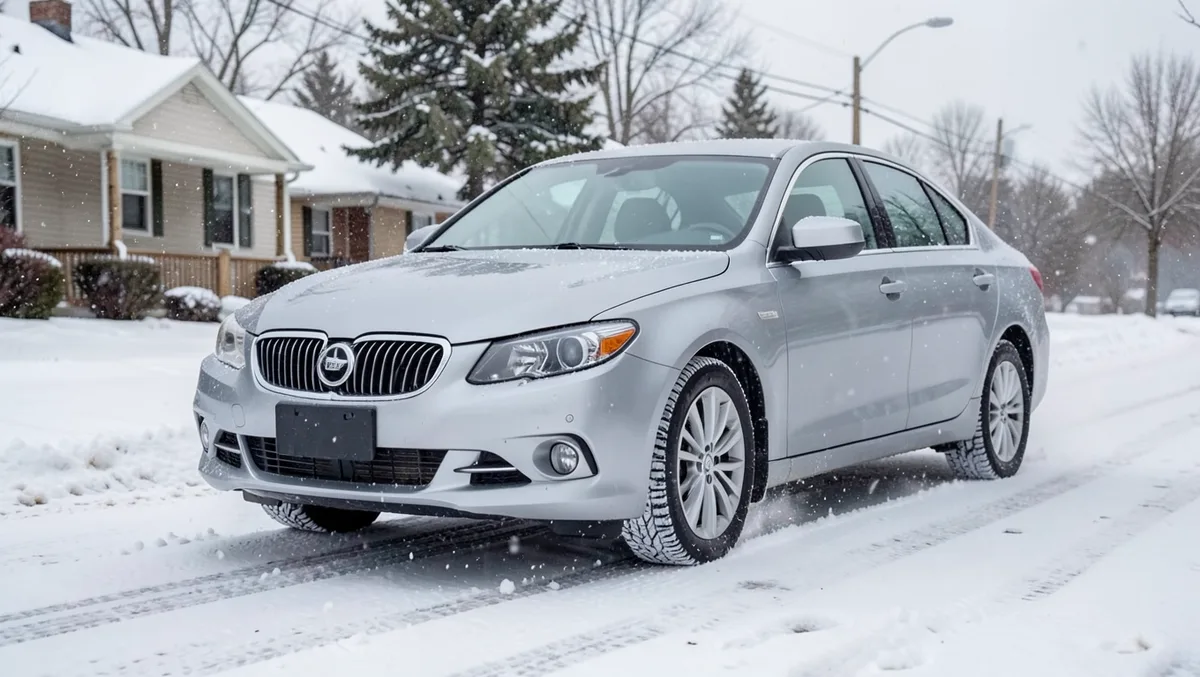
Yes — front-wheel-drive (FWD) cars are good in light-to-moderate snow. The engine and transmission sit directly over the drive wheels, pressing the front tires down into the road and giving FWD noticeably better traction off the line than rear-wheel drive.
Where FWD runs out of road is deep snow, ice, and steep unplowed grades, since only two wheels get power instead of four. A dedicated set of winter tires closes most of that gap — winter rubber stays soft in cold temperatures and bites into snow and ice far better than an all-season tire does. For most drivers in areas with moderate snowfall, a well-maintained FWD car on winter tires is a safe, budget-friendly choice; all-wheel drive only becomes clearly worth the extra cost where snow is frequent and heavy, or the roads are steep and rarely plowed.
FWD Cars in Snowy Conditions
BEST FOR INSTANT WINTER TRACTION
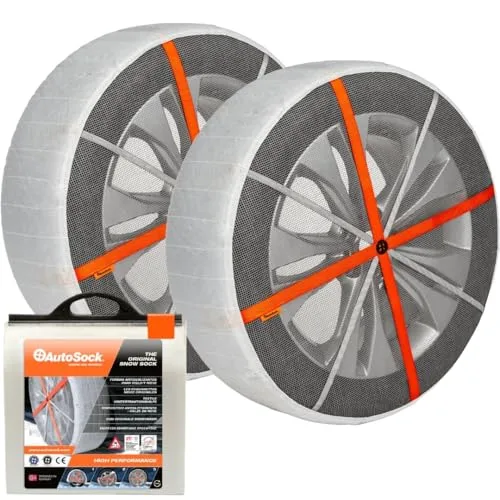 |
AutoSock HP697 Snow Socks (Pack of 2) – $120.95 A fabric traction sock that stretches over your existing front tires in about 5 minutes, giving any FWD car snow-tire-level grip for the one or two storms a year that actually need it.
|
Every front-wheel-drive car puts its engine, transmission, and driven wheels at the same end of the vehicle. That concentration of weight over the front axle is FWD’s biggest advantage in snow: the drive tires get pressed harder into the road, so they generate more grip than a rear-wheel-drive car at the same wheel speed. FWD cars also tend to be lighter than comparable AWD models, which helps them get moving smoothly in soft snow instead of bogging down, and the simpler drivetrain means fewer parts to maintain and better fuel economy year-round.
The tradeoff shows up once the snow gets deep or the road turns to ice. With power going to only two wheels, a FWD car can spin a tire and lose momentum in snow deeper than a few inches, and it has less reserve traction for climbing a steep, unplowed grade. Ice is the bigger limiting factor of the two: FWD has no real advantage there over any other drivetrain, since the fix for ice is tire grip, not where the power goes. Winter tires close most of that gap; all-wheel drive covers the rest. (If you’re curious how the front-drive layout is built, we’ve also covered whether front-wheel-drive cars have a drive shaft.)
Performance on Slippery Roads
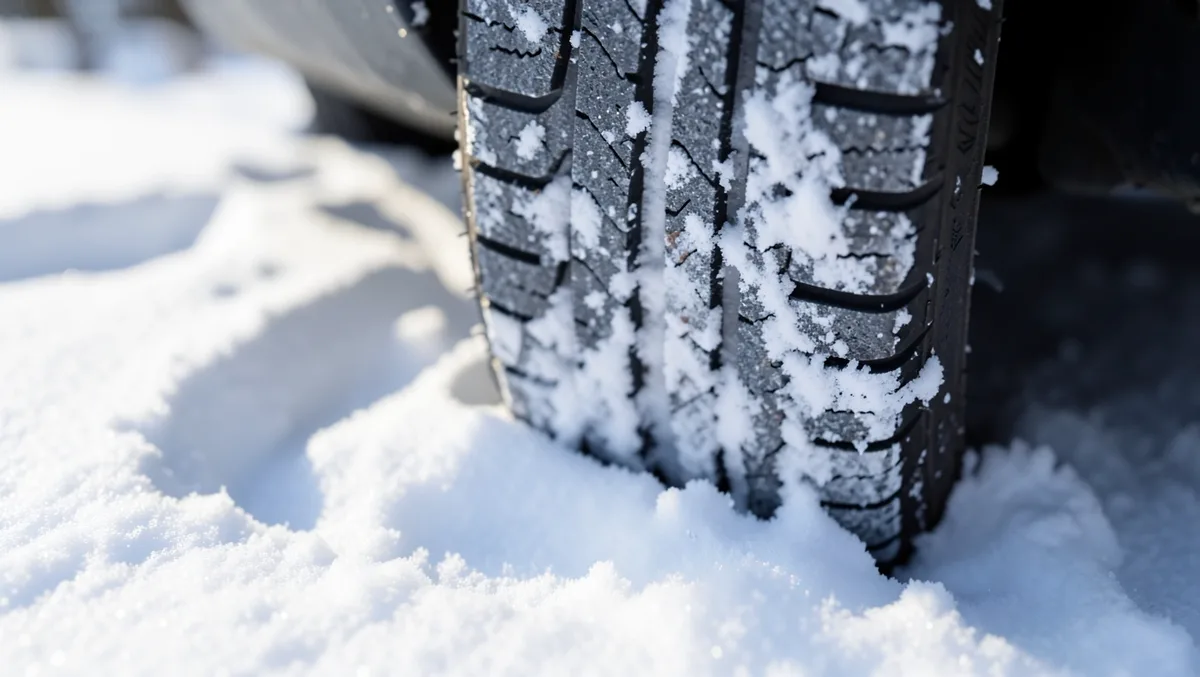
On slick pavement, most FWD cars lean on an electronic traction control system that cuts engine power or brakes an individual wheel the moment it starts to spin. Combined with the front wheels pulling the car forward, this gives FWD noticeably better grip on light snow and slush than an unassisted rear-wheel-drive car, and it takes most of the drama out of the first few feet of acceleration.
The same layout that helps in a straight line works against FWD in a turn. Because the front tires are asked to steer and put down power at the same time, FWD cars are prone to understeer on snow — the front end pushes wide instead of following the wheel. The fix is procedural, not mechanical: slow down before you turn, brake in a straight line before you start steering, and give every input — throttle, brake, and wheel — more time than you would on dry pavement.
Comparing FWD With AWD and RWD
Price is where FWD usually wins outright. A front-wheel-drive car is simpler to build than an AWD or 4WD version of the same model, so it costs less to buy, gets better fuel economy, and needs less driveline maintenance over time — no transfer case, center differential, or extra driveshafts to service. Rear-wheel-drive splits the difference: its base price is often close to FWD, but pushing the car from the back axle instead of the front tends to hurt fuel economy, and without weight over the drive wheels, RWD is usually the weakest of the three in snow.
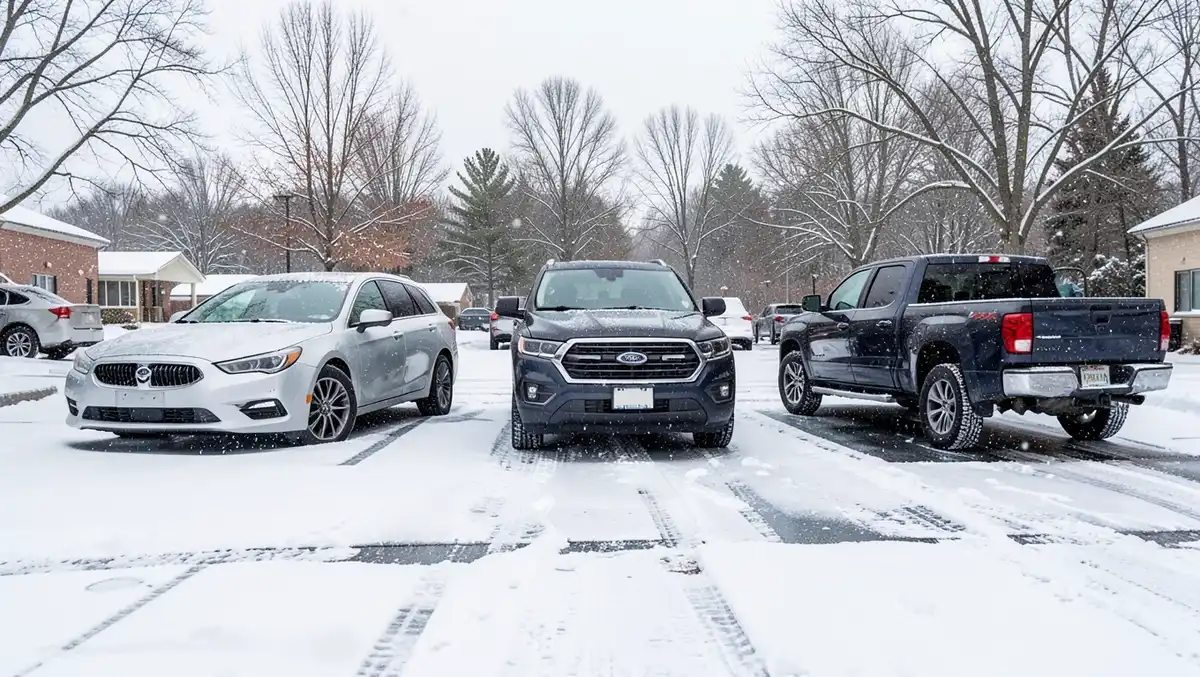
For winter capability, the order rarely changes: AWD sends power to all four wheels and handles deep snow and steep grades best of the three, FWD handles light-to-moderate snow well and is the practical middle ground, and RWD needs the most driver skill and the most tire help to stay controlled once the road gets slick. The gap between FWD and AWD narrows a lot once winter tires are on all four corners — outlets like Tire Rack and Consumer Reports have both published back-to-back winter tire tests where a FWD car on winter tires out-braked and out-accelerated an AWD car still running all-season tires.
Tire Selection for FWD Cars
Winter tires matter more to snow performance than the drivetrain does. Their rubber compound is formulated to stay soft below about 45°F, where all-season tires stiffen up and lose grip regardless of tread pattern. Winter tires also cut hundreds of extra sipes — thin slits — into the tread blocks, which bite into snow and ice and channel away slush that would otherwise make the tire hydroplane.
All-season tires are a compromise built to be adequate, not ideal, in any single condition, and snow is where that compromise shows the most: their harder rubber and shallower tread struggle for grip once the temperature drops and the road turns white. If you live somewhere that sees real winter weather, a dedicated set of winter tires on your FWD car will do more for your safety than switching to AWD would. If your area only sees the occasional snow event, a traction aid like the snow socks above is a cheaper way to cover those few days without a second set of tires.
Driving Techniques for Snow
Smooth inputs matter more than horsepower once the road is covered in snow. Ease onto the throttle instead of stabbing it — a sudden application spins the front tires and kills your forward momentum right when you need it most. Letting the car settle and roll a bit before adding more throttle gives the tires a moment to find grip instead of breaking it.
Braking works the same way in reverse: brake early, brake gently, and give yourself two to three times the following distance you’d use on dry pavement. If a wheel does lock up, ease off the brake pedal rather than pumping it — every modern FWD car comes with anti-lock brakes, which already pulse the brakes far faster than a driver can. Pumping the pedal on a car with ABS just fights the system instead of helping it.
Safety Features That Help FWD in Snow
Electronic stability control (ESC) has been standard on every new car sold in the U.S. since the 2012 model year, and it does most of the heavy lifting in snow. It watches for the difference between where you’re steering and where the car is actually going, and if it detects a skid, it brakes individual wheels to pull the nose back in line — faster than a human driver could react.
Anti-lock braking (ABS) handles the other half of the equation, preventing a locked wheel from skidding in a straight line under hard braking. Together, ESC and ABS matter more to how safe a FWD car feels in snow than the drivetrain itself; a well-equipped modern FWD car will out-brake and out-corner an older AWD car that lacks both systems.
Maintenance for Winter Readiness
A FWD car’s snow performance depends as much on upkeep as it does on the drivetrain. Worn brakes, a weak battery, or bald tires will undercut every advantage the front-heavy weight distribution gives you, so a short winter check-up before the first cold snap pays off all season.
Regular Check-Ups
Have the brakes and tires inspected before winter sets in — tread depth and pad wear both matter more once the road gets slick. Have the battery load-tested, too; cold weather is when a marginal battery finally fails, since starting an engine takes more current at low temperatures. Replace it ahead of time if it’s borderline. Swap in winter-rated wiper blades and top off the washer fluid with a freeze-rated formula so you can actually see through the first storm.
Preparing for Cold Weather
Check your antifreeze concentration before temperatures drop — a weak mix can let the coolant freeze and crack the engine block. Tire pressure falls roughly 1 PSI for every 10°F drop, so check it more often in winter than you would in summer. Keep the gas tank at least half full to reduce condensation in the fuel line, and pack a basic winter kit — blanket, water, snacks, a flashlight — in case you get stuck.
Real-World Experience With FWD in Snow
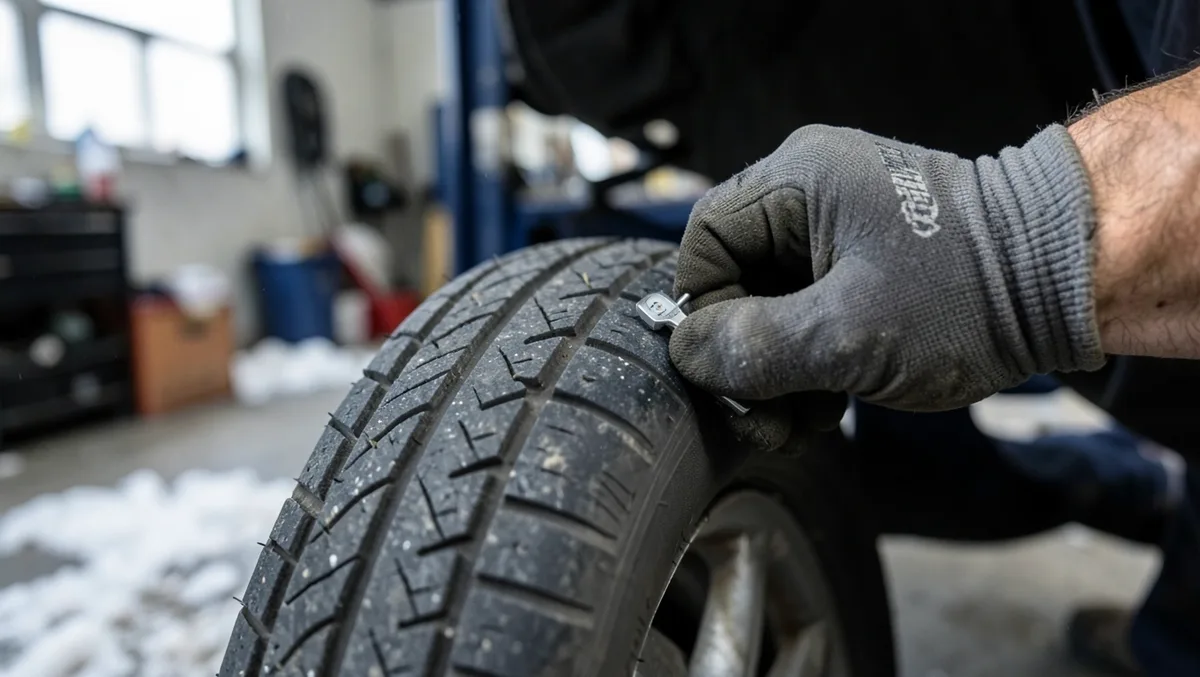
Beyond the specs, how a FWD car actually feels in snow comes down to two things drivers notice again and again: confident traction pulling away from a stop, and a need to slow down more than expected once a curve or hill shows up.
What FWD Owners Notice
Drivers who’ve run a FWD car through several winters tend to describe the same pattern: starting from a stop on a snow-covered street feels stable and predictable, since the drive wheels are also carrying most of the car’s weight. That confidence fades a little in deeper snow or on an unplowed hill, where the lack of rear-wheel power becomes obvious. Most owners land on the same fix — a dedicated set of winter tires — and report it closes nearly all of the gap they notice against AWD.
What the Data Says
The physics behind FWD’s snow traction is well established: weight over the drive wheels increases the normal force on those tires, which directly increases the friction they can generate. It’s equally well documented that tire choice, not drivetrain, is the single biggest lever for snow performance — independent winter tire tests from outlets like Tire Rack and Consumer Reports consistently show a FWD car on winter tires braking and accelerating better in snow than an AWD car on all-season tires.
Frequently Asked Questions
How Well Do FWD Cars Handle in Snow?
FWD cars handle light-to-moderate snow well, especially with winter tires mounted. Weight over the front wheels increases traction on takeoff and improves stability compared with rear-wheel drive. Drive cautiously, brake early, and keep extra following distance for the best results.
What Are the Disadvantages of FWD Cars?
FWD cars tend to understeer in sharp turns on snow, since the front tires handle steering and power delivery at the same time. Traction drops off in deep snow or on steep grades because only two wheels receive power. FWD also offers no real advantage on ice over other drivetrains, and it’s generally less capable than RWD for towing heavy loads.
Do I Need Snow Tires if I Have FWD?
Yes. Winter tires stay soft in cold temperatures and bite into snow and ice far better than all-season tires, regardless of drivetrain. Adding winter tires to a FWD car closes most of the performance gap against AWD.
What Is Better, FWD or AWD?
FWD is cheaper to buy, more fuel-efficient, and handles light-to-moderate snow well — a good fit for city and suburban driving. AWD costs more but sends power to all four wheels, making it the better choice for frequent heavy snow, steep unplowed roads, or rural routes that rarely get plowed.
Conclusion
FWD cars are good in snow for most everyday driving, thanks to engine weight sitting directly over the drive wheels. Winter tires close most of the remaining gap against AWD, and stability control plus ABS do more for your safety than the drivetrain alone ever could.
AWD still pulls ahead in deep snow, on steep unplowed grades, or where winter weather is severe and constant. For milder climates and typical commuting, a well-maintained FWD car on good winter tires is a practical, budget-friendly choice — drive smoothly, brake early, and give yourself extra room.
Products related to this article
Sponsored / affiliate links. As an Amazon Associate I earn from qualifying purchases. I may earn additional commission from eligible campaigns.