Why Do Deer Run in Front of Cars? The Real Reason Explained
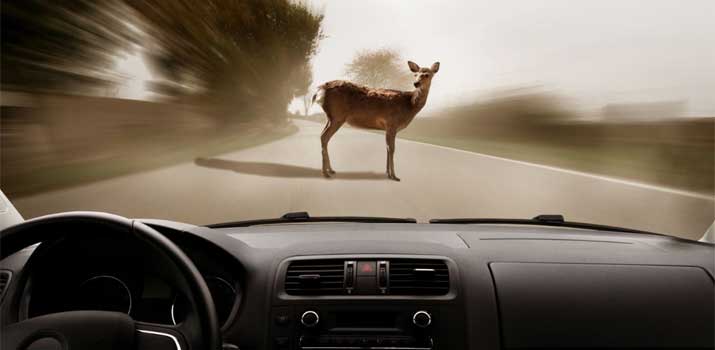
Deer run in front of cars because a sudden burst of headlight glare overwhelms their night-adapted eyes, triggering a “freeze first, flee second” instinct that evolved to dodge wolves and coyotes – not a 60 mph vehicle closing the distance in two seconds. Add in the fact that deer are most active at dawn and dusk, and that autumn’s breeding season sends them wandering with their guard down, and you get the split-second, seemingly random dashes drivers see every year.
It isn’t bad luck or a death wish. It’s a mismatch between millions of years of predator-evasion biology and a machine deer never evolved to read. Below is what’s actually happening in a deer’s eyes and brain in that moment, when the real danger windows are, and what a driver can do about it.
The Real Reason: Their Eyes Betray Them in the Dark
SEE DEER SOONER AT NIGHT
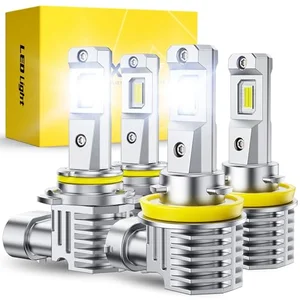 |
AUXITO H11/9005 LED Headlight Bulbs (4-Pack) – $38.67 Since the real danger window is dusk-to-dawn visibility, not deer psychology, a brighter, whiter beam gives you more reaction time before an animal is even in your lane.
|
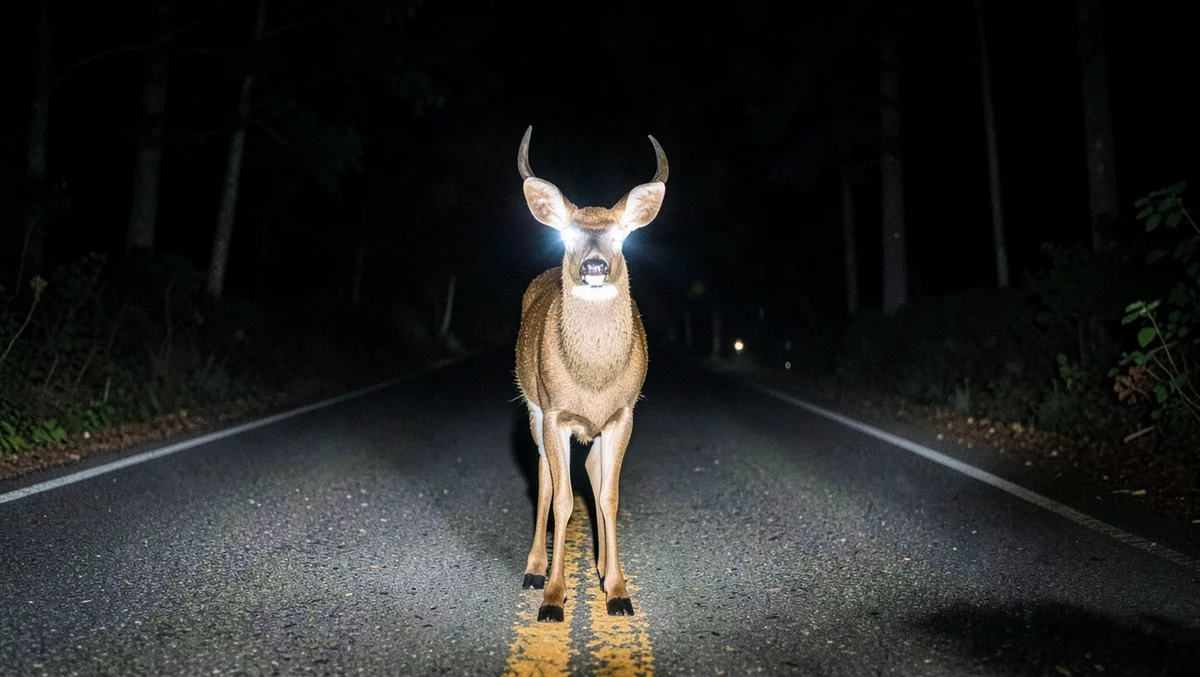
A deer’s eye is built almost entirely for low light. It has a much higher ratio of rod cells (light-sensing) to cone cells (color/detail-sensing) than a human eye, plus a mirror-like layer behind the retina called the tapetum lucidum that bounces incoming light back through the light-sensing cells a second time – the same structure that makes a deer’s eyes glow green or gold in your headlights. That setup is superb for spotting a wolf’s silhouette in near-darkness. It is terrible at handling a sudden 1,000+ lumen wall of light from 200 feet away.
When headlights hit a deer head-on, the tapetum amplifies the glare instead of helping the animal see past it, and the eye is briefly overwhelmed – not unlike stepping out of a dark room into full sun. The deer isn’t calmly deciding to stand still and stare you down. For a moment it genuinely can’t process where the light, or the danger, is coming from. Standing still is the deer’s default answer to “I can’t tell what’s happening,” which is exactly backwards for a moving car.
Instinct That Evolved for the Wrong Predator
Even once a deer’s vision recovers, its next move is often still wrong for the situation. Deer evolved their escape instincts around ground predators – wolves, coyotes, mountain lions – that stalk slowly, close in from one direction, and can be outmaneuvered by darting, doubling back, or crossing open ground to reach cover. None of those tactics work against a car, which closes distance in a straight line far faster than any four-legged predator ever could.
That mismatch explains the classic, maddening pattern drivers report: a deer that looks like it’s clear of the road suddenly reverses and darts back into your lane. It isn’t panicking randomly. It’s running the only escape playbook it has – and that playbook was never written with 3,000-pound machines in mind.
Crepuscular Hours: Why Dawn and Dusk Are the Riskiest Times
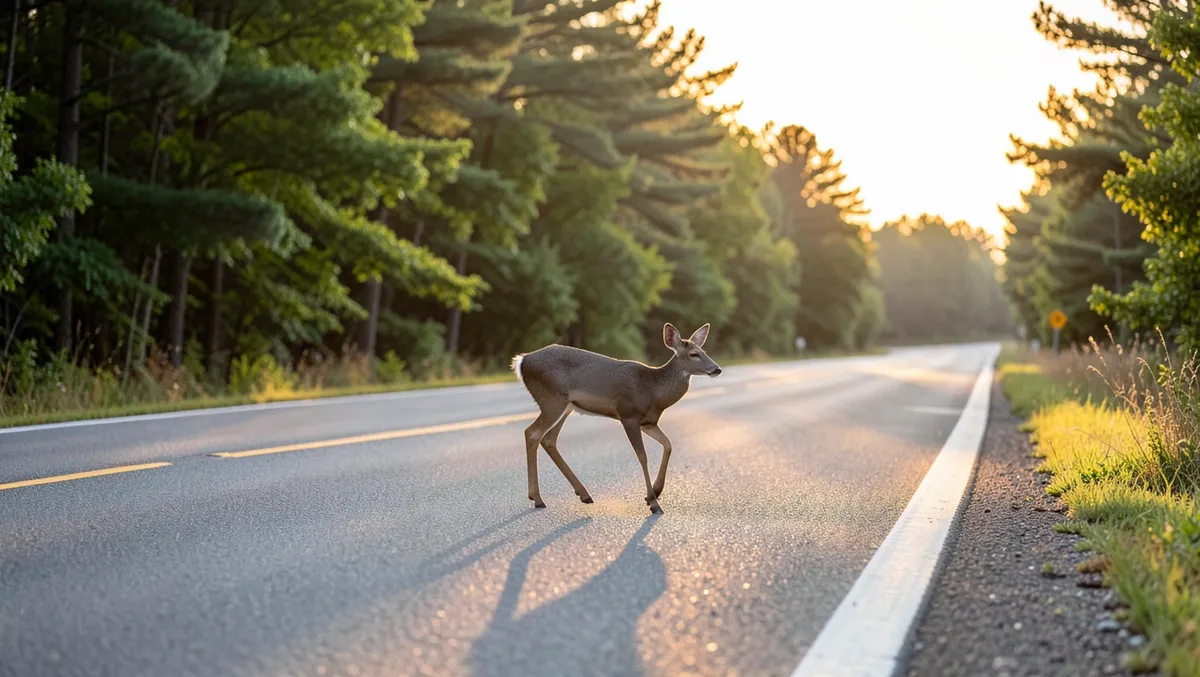
Deer are crepuscular, meaning their activity peaks in the low-light hours around sunrise and sunset rather than at midday or in the dead of night. That’s when they move most between bedding areas and feeding grounds – and it’s also exactly when a driver’s own vision is at its weakest, caught between fading daylight and headlights that haven’t fully taken over yet. The combination of more deer moving and worse driver visibility is why insurers and highway safety researchers consistently flag dusk-to-dawn hours, especially on rural two-lane roads, as the highest-risk window for deer strikes.
Rut Season: Why Autumn Is the Deadliest Stretch
Deer-vehicle collisions spike hard every fall, and the reason is biological, not coincidental. October through December is the whitetail rut (breeding season). Bucks range far outside their normal territory chasing does and paying little attention to roads, while does are being chased and moving unpredictably to escape unwanted attention. State Farm’s most recent nationwide claims data (covering July 2024 through June 2025) puts the odds of any driver hitting an animal at roughly 1 in 139 over a year, with deer responsible for the large majority of those claims – and November alone consistently logs the highest collision-claim rate of any month, with October and December close behind. That’s the rut playing out in real accident numbers, not a myth.
The encouraging part: total animal-collision claims actually ticked down slightly in that most recent reporting period compared to prior years, according to State Farm’s own data – but autumn still remains the clear high season, and the underlying rut-driven behavior hasn’t changed.
Habitat Loss Is Pushing More Deer Onto Roads
New roads and subdivisions built through former forest and farmland don’t remove deer from an area – they cut deer territory into smaller pieces with roads running straight through the middle. Deer still need to travel between bedding cover, water, and food sources, so they cross the same roads repeatedly, often on established paths that predate the pavement itself. That’s why certain stretches of road develop a reputation as a deer-crossing hot spot: it’s rarely random, it’s a travel corridor that existed long before the road did.
What To Do the Moment You See a Deer
Slow down and brake firmly in a straight line the moment you spot a deer near the road, especially at dusk, dawn, or during rut season on rural roads with tree lines close to the shoulder. Do not swerve to avoid it. Highway safety officials consistently warn that swerving is what turns a minor deer strike into a serious crash – drivers lose control, roll the vehicle, or cross into oncoming traffic or a fixed object, and those outcomes injure and kill far more people every year than the deer collision itself would have.
Deer also rarely travel alone. If one crosses in front of you, assume more are following and ease off the gas rather than accelerating away the moment the first one clears your lane. Using high beams whenever no oncoming traffic is present gives you meaningfully more time to spot eye-shine along the roadside before an animal is actually in your path.
If a strike does happen, pull over safely, turn on your hazards, and don’t approach an injured deer – a startled, wounded animal can seriously hurt you. For the full step-by-step on what to do immediately after impact, including when you’re legally required to report it, see what to do if a deer hits your car.
Do Deer Whistles and Warning Tech Actually Help?
Aftermarket deer whistles are marketed as a fix, but the honest answer is that the evidence for them is weak – no controlled field study has reliably shown they reduce collisions, and deer hearing doesn’t line up cleanly with the frequencies most whistles produce. We cover the actual research in detail in do deer whistles really work on cars if you want the full breakdown before buying one. If you still want to try one, our guide on installing deer whistles walks through correct placement.
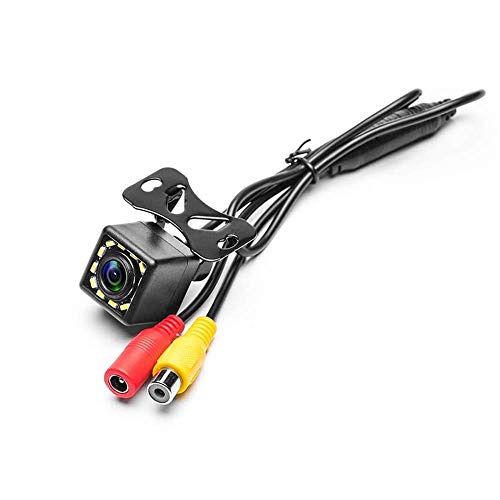
What has real evidence behind it is newer vehicle tech: forward collision warning systems with animal/large-object detection, and factory or aftermarket night-vision and infrared cameras that flag a heat signature well before a deer is visible to the naked eye. Neither eliminates the risk, but both extend your reaction window in exactly the low-light hours when deer strikes are most common. Slowing down in known deer zones and simply expecting the unexpected still does more than any single gadget.
Frequently Asked Questions
Why Do Deer Freeze Instead of Running Away?
A deer’s eyes are adapted for very low light, with a high density of rod cells and a reflective layer (the tapetum lucidum) that amplifies incoming light. A car’s headlights briefly overwhelm that system, similar to stepping into bright sunlight from a dark room. Freezing is the deer’s default response to sudden sensory overload, not a calm decision to stand still.
When Are Deer Most Likely To Run In Front Of A Car?
Risk peaks at dawn and dusk, when deer are naturally most active (they’re crepuscular animals), and during the fall breeding season from October through December, when bucks and does both move more erratically. State Farm’s nationwide claims data consistently shows November as the single highest-risk month for deer-vehicle collisions.
What Should I Do If A Deer Runs In Front Of My Car?
Brake firmly in a straight line and do not swerve. Swerving to avoid a deer is what causes most serious injuries in these incidents, since it can send a vehicle into oncoming traffic, off the road, or into a rollover. Stay alert for additional deer following the first one before you accelerate again.
Why Do Deer Get Hit By Cars So Often?
It’s a combination of factors stacking together: deer are most active exactly when driver visibility is worst (dawn and dusk), rutting season in autumn makes them move erratically across roads they’d normally avoid, and their evolved escape instincts – built for slow-approaching four-legged predators – simply don’t account for how fast and how straight a car approaches.
Do Deer Whistles On Cars Actually Work?
The evidence is weak. No controlled field study has reliably shown that aftermarket deer whistles reduce collision rates, and the frequencies most of them emit don’t clearly match what deer hear best. Slowing down in known deer areas and using high beams when safe remain far more effective than a whistle.
Is It True That A Deer In Your Path Is A Bad Omen?
That’s folklore, not fact – some people take a deer crossing their path as a symbolic nudge to slow down and pay attention, but there’s no evidence behind it beyond superstition. The real, biological reason a deer runs in front of your car has nothing to do with omens and everything to do with headlight glare, crepuscular activity, and rut-season behavior, covered above.
The Bottom Line
A deer darting in front of your car isn’t random bad luck – it’s headlight-overwhelmed eyes, a predator-evasion instinct that doesn’t account for straight-line speed, and, depending on the season and time of day, simple odds. You can’t change deer biology, but you can shift the odds in your favor: slow down at dawn and dusk, expect a spike every autumn, brake instead of swerving, and treat one deer crossing as a sign that more may follow.
Products related to this article
Sponsored / affiliate links. As an Amazon Associate I earn from qualifying purchases. I may earn additional commission from eligible campaigns.