Are Motorcycles Safer Than Cars? Proven Safety
While often perceived as riskier, motorcycles can be as safe as cars when riders are properly trained, equipped, and operate defensively. However, due to a lack of protection and visibility, motorcyclists face greater risks in many scenarios, making proactive safety measures paramount.
It’s a question many people ponder when they see a motorcycle weaving through traffic or hear about a rider involved in an accident. Are motorcycles inherently more dangerous than cars? It seems like an obvious yes, with riders exposed and cars offering a metal cage. But when we dig into the numbers and the reasons behind them, the answer becomes more nuanced. As your trusted guide to all things automotive, I’m here to break down the safety of motorcycles versus cars in a way that’s easy to understand, so you can make informed decisions and appreciate the risks and rewards involved, no matter your ride of choice.
Understanding the Risks: A Side-by-Side Comparison
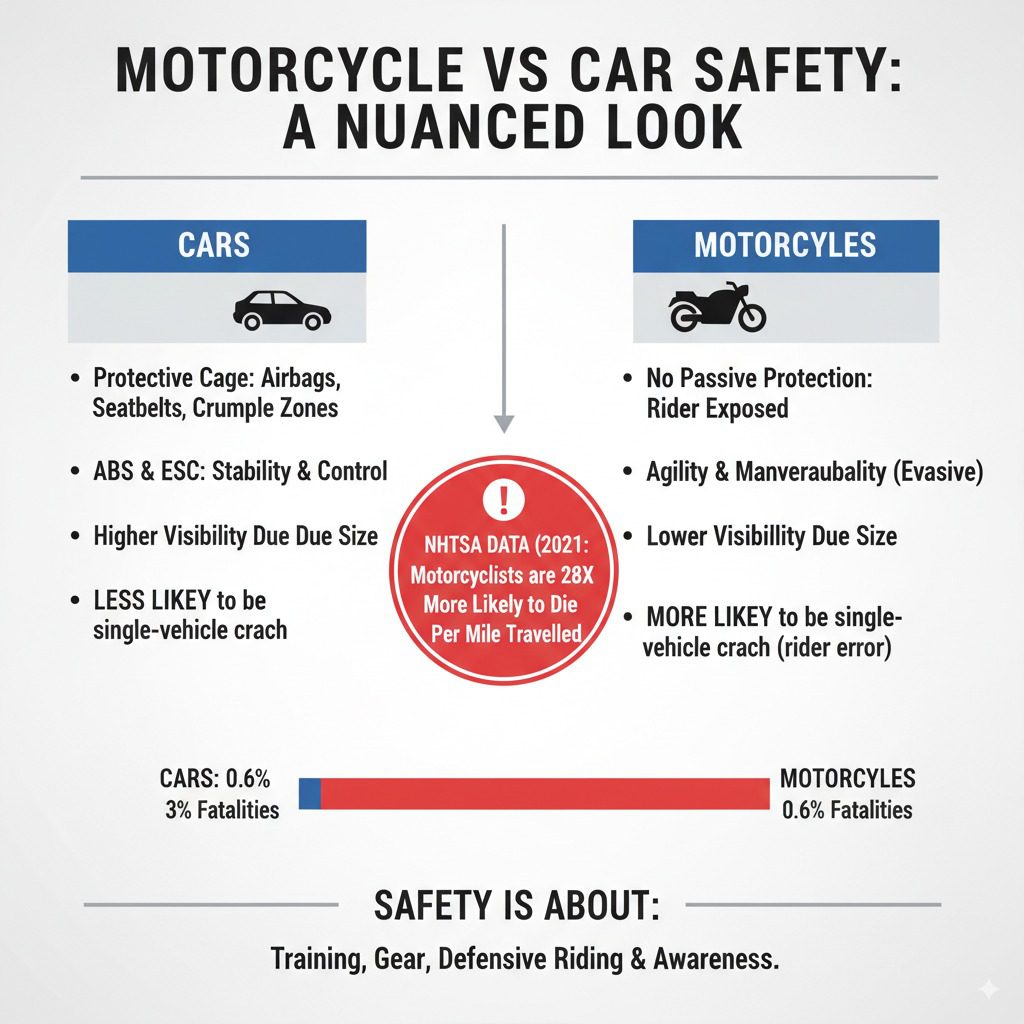
When we talk about safety, it’s crucial to look at the data and understand what factors contribute to those numbers. Cars, with their airbags, seatbelts, and crumple zones, offer a significant layer of protection that motorcycles simply cannot replicate. However, motorcycle riders have unique advantages, like agility and maneuverability, that can help them avoid dangerous situations. Let’s explore the proven safety aspects and statistics to get a clearer picture.
Statistics Don’t Lie: The Hard Numbers
The numbers can be stark but they tell a story. According to the National Highway Traffic Safety Administration (NHTSA), motorcyclists are disproportionately involved in fatal crashes compared to other vehicle occupants. This doesn’t mean riding is always unsafe, but it highlights the inherent vulnerabilities of a two-wheeled vehicle.
For example, in 2021, NHTSA data showed that while motorcycles accounted for only 3% of all registered vehicles and 0.6% of all registered vehicle miles traveled, they accounted for 14% of all vehicle fatalities and 17% of all vehicle accident injuries. This means that per mile traveled, motorcyclists are about 28 times more likely than to die in a motor vehicle crash than car occupants.
It’s also important to consider the type of crashes. Motorcycles are more likely to be involved in single-vehicle crashes, often due to rider error, and more likely to be involved in two-vehicle crashes where the other vehicle is turning left or failing to yield the right of way. This suggests that visibility and awareness play a massive role in motorcycle safety.
Protective Measures: What Cars Offer vs. What Riders Need
Cars are designed with a comprehensive safety cage. Think about these built-in protections:
- Seatbelts: Keep occupants secured in their seats during a crash, preventing ejection and reducing impact force.
- Airbags: Deploy rapidly to cushion occupants from striking hard surfaces within the vehicle.
- Crumple Zones: Designed to absorb and redirect impact energy away from the passenger cabin.
- Antilock Braking Systems (ABS): Help prevent wheel lock-up during hard braking, maintaining steering control.
- Electronic Stability Control (ESC): Helps prevent skids and loss of control by automatically applying brakes to individual wheels.
Motorcycles, on the other hand, offer no such passive protection. The rider is exposed. Therefore, safety relies heavily on an entirely different set of active measures and gear:
- Rider Expertise: Skillful riding, anticipation, and defensive techniques are paramount. This includes proper training, constant observation, and smooth control of the motorcycle.
-
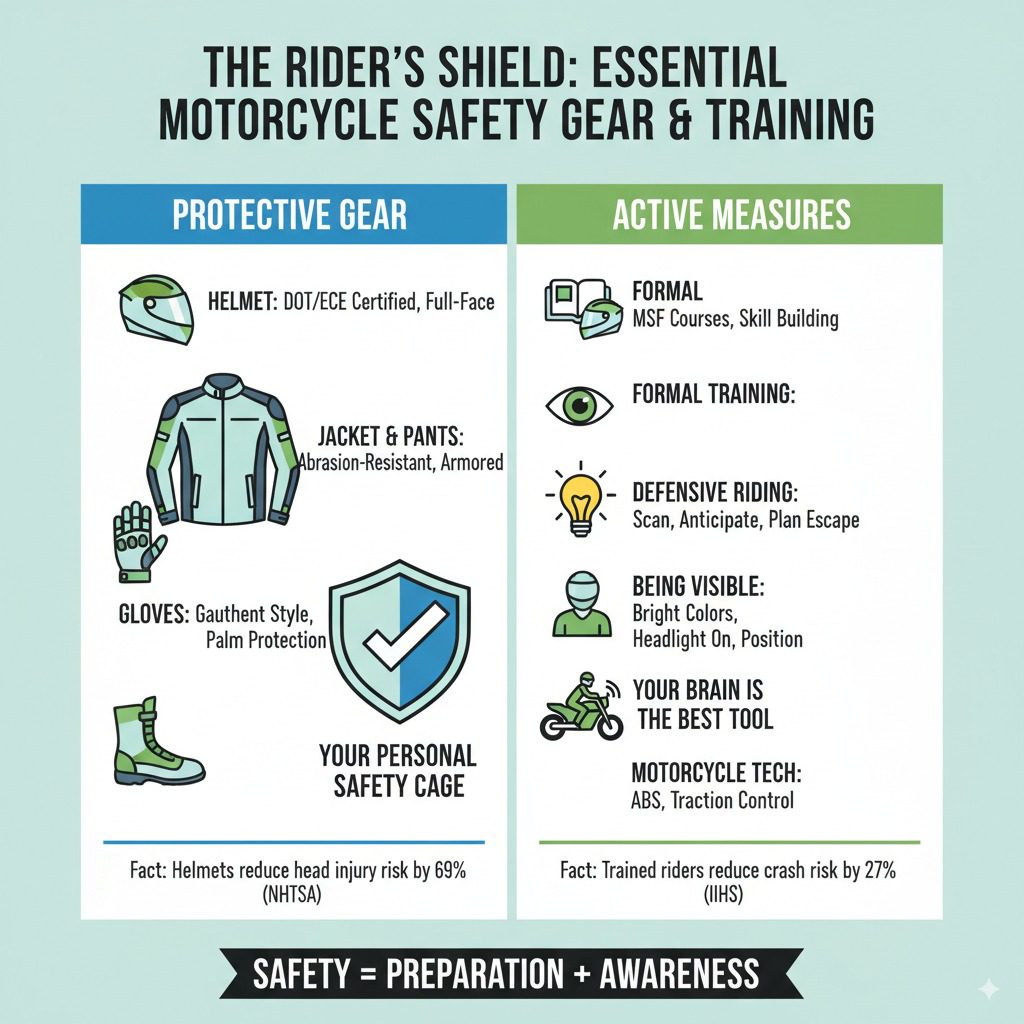
Protective Gear: This is the motorcyclist’s equivalent of a car’s safety cage. Essential gear includes:
- Helmet: The most critical piece of safety equipment, significantly reducing the risk of head injury. Look for helmets with DOT or ECE certification.
- Jacket and Pants: Made from abrasion-resistant materials like leather or specialized textiles, often with armor in key impact areas.
- Gloves: Protect hands from abrasion in a slide and can improve grip.
- Boots: Sturdy, over-the-ankle boots protect feet and ankles from impact and abrasion.
- Motorcycle Technology: Many modern motorcycles come equipped with ABS, contributing to safer braking. Some also offer traction control.
The Role of Rider Behavior and Training
It’s easy to point to exposure as the main reason motorcycles might seem less safe. However, the rider’s actions and preparation play an enormous role. A well-trained, experienced, and responsible motorcyclist, equipped with the right gear and practicing defensive riding, can mitigate many of the inherent risks.
The Importance of Formal Rider Training
Just like learning to drive a car, learning to ride a motorcycle requires specific skills and knowledge. Formal training courses provide a solid foundation and often improve a rider’s confidence and safety awareness. Organizations like the Motorcycle Safety Foundation (MSF) offer excellent courses designed for beginners and experienced riders alike.
These courses typically cover:
- Basic controls: Understanding how to operate the clutch, throttle, brakes, and gears smoothly.
- Starting and stopping: Mastering safe starting procedures and emergency braking techniques.
- Cornering: Learning proper body positioning and throttle control for safe turns.
- Hazard perception: Developing the ability to spot potential dangers and plan escape routes.
- Defensive riding: Strategies to anticipate other road users’ actions and avoid collisions.
Studies consistently show that riders who complete basic rider education courses are less likely to be involved in crashes. A study by the Insurance Institute for Highway Safety (IIHS) found that completing an Advanced Rider Course reduced the risk of a crash by 27 percent.
Defensive Riding Techniques: Your Best Defense
Cars offer protection, but motorcycles offer agility. The key is to use that agility and awareness to stay out of harm’s way. Defensive riding is about:
- Being Visible: Cars may not see you. Wear bright colors, use your headlight at all times, and position yourself in your lane where you’re most likely to be seen. Avoid blind spots.
- Maintaining Space: Leave plenty of space between yourself and other vehicles in front, behind, and to the sides. This gives you room to react.
- Scanning the Road: Constantly look ahead, to the sides, and check your mirrors. Identify potential hazards like potholes, gravel, oil slicks, and other drivers’ intentions.
- Planning Escape Routes: Always know where you can go if a situation becomes dangerous. If the car in front brakes suddenly, where can you steer?
- Anticipating Actions: Assume other drivers don’t see you. Watch for drivers looking to turn in front of you, change lanes without looking, or pull out from side streets.
Factors Influencing Motorcycle Safety
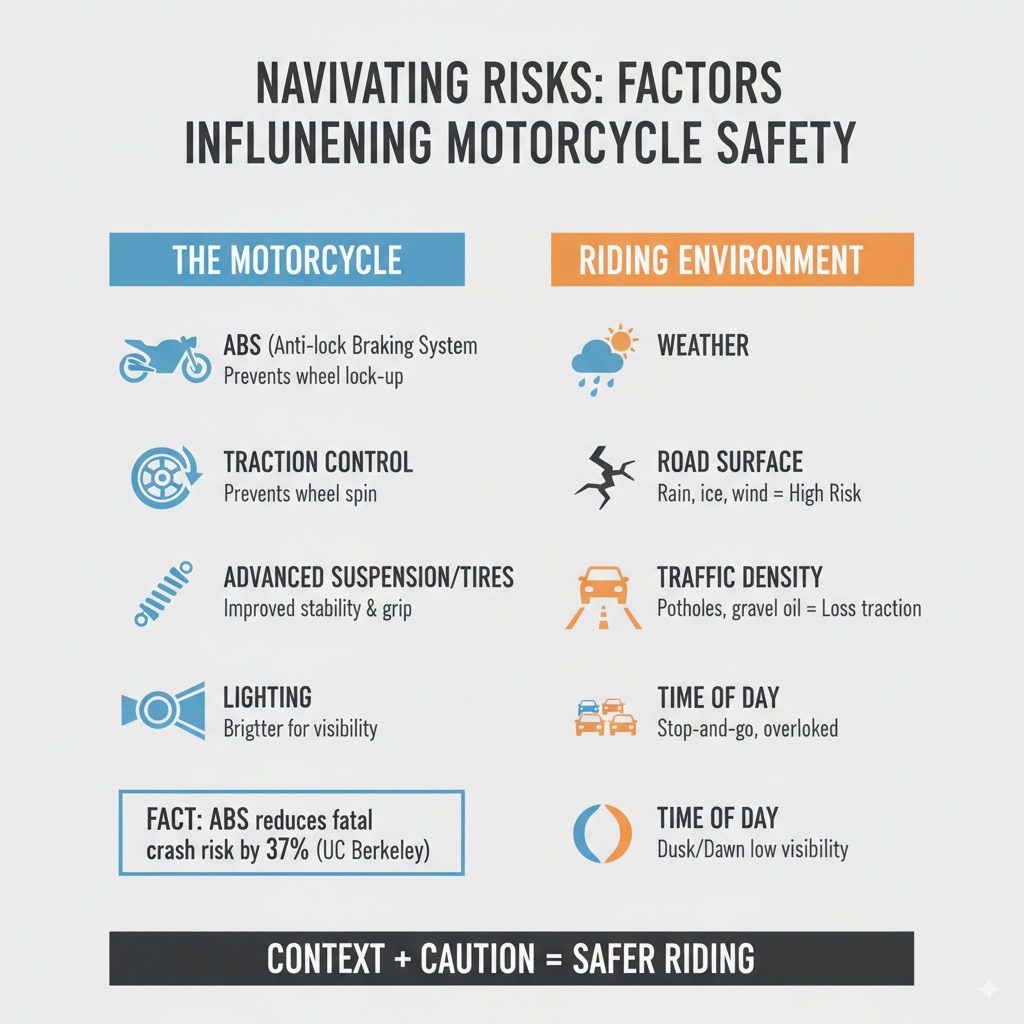
The safety of riding a motorcycle isn’t a static concept. It’s influenced by a variety of factors, including the rider, the environment, and even the motorcycle itself. Understanding these elements can help riders make smarter choices.
The Motorcycle Itself: Technology and Design
While the rider is the most crucial factor, the motorcycle’s design and features also contribute to safety. Modern advancements have made many motorcycles significantly safer than their predecessors.
- Anti-lock Braking System (ABS): This system prevents wheels from locking up during hard braking. This is a huge safety enhancement as it allows the rider to maintain steering control even under emergency braking. Many modern bikes come standard with ABS.
- Traction Control: Helps prevent the rear wheel from spinning out, especially on slippery surfaces or during aggressive acceleration.
- Advanced Suspension and Tires: Improved suspension systems can help maintain stability over rough roads, and modern tire technology offers better grip.
- Lighting: Brighter headlights and advanced LED turn signals can improve visibility.
A study by the University of California, Berkeley, found that motorcycles equipped with ABS were 37% less likely to be involved in a fatal crash compared to those without ABS.
Riding Environment and Road Conditions
The road can be a challenging place for riders.
- Weather: Rain, ice, and strong winds significantly increase risk. Riders need to be extra cautious or avoid riding in adverse weather.
- Road Surface: Potholes, gravel, sand, oil, and uneven pavement can all cause a loss of traction and control.
- Traffic Density: Riding in heavy, stop-and-go traffic presents unique challenges with many vehicles around, increasing the chance of being overlooked.
- Time of Day: Dusk and dawn can reduce visibility for both riders and other motorists.
Comparison of Accident Causes: Cars vs. Motorcycles
While both cars and motorcycles can be involved in accidents due to driver error or external factors, the outcomes and common causes differ. Here’s a general breakdown:
| Factor | Cars | Motorcycles |
|---|---|---|
| Primary Cause Categories | Driver error (distraction, impairment, speed), mechanical failure, environmental factors. | Rider error (speed, inexperience, intoxication), other vehicle driver error (failure to yield, improper turning), environmental factors. |
| Common Collision Types | Rear-end, side-swipe, head-on, intersection collisions. | Single-vehicle (loss of control), intersection collisions (especially left turns by other vehicles), lane splitting/sharing incidents. |
| Impact of Other Road Users’ Actions | Significant, but car’s structure absorbs much of the impact. | Extremely significant; motorcyclist is directly exposed to impact forces. |
| Role of Visibility | Good, due to larger size and more lights. | Crucial and often a major factor in accidents. Motorcyclists are less visible. |
This table really highlights how a car’s structure can mitigate certain types of collisions that would be far more dangerous for a motorcyclist. For cars, while defensive driving is crucial, the vehicle itself provides a significant safety buffer. For motorcycles, the rider’s awareness and avoidance are primary defenses.
Making Your Motorcycle Ride Safer: Practical Tips
So, if you’re a rider or contemplating becoming one, how can you maximize your safety? It all comes down to preparation, awareness, and consistent practice of safe habits.
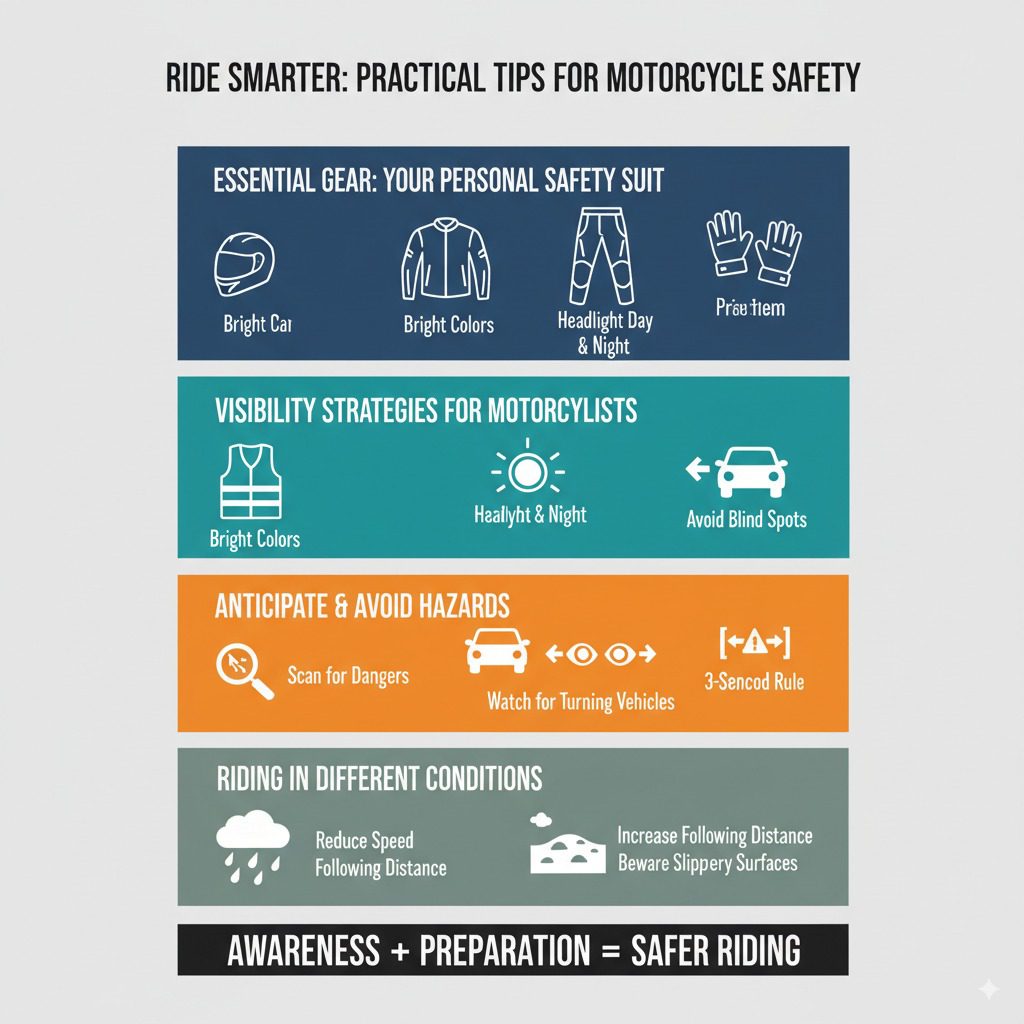
Essential Gear: Your Personal Safety Suit
As mentioned before, the right gear is non-negotiable. Invest in quality protective gear. Think of it as an investment in your well-being, not just clothing.
- Helmet: Always wear a DOT or ECE-approved full-face helmet. It’s the single most effective piece of safety equipment you can wear.
- Jacket: A motorcycle-specific jacket made of abrasion-resistant material (like leather or heavy textiles) with built-in armor for shoulders, elbows, and back.
- Pants: Similar to the jacket, abrasion-resistant pants with armor for knees and hips are vital.
- Gloves: Gauntlet-style gloves that cover the wrist offer the best protection.
- Boots: Over-the-ankle boots with ankle support and protective soles are a must.
Visibility Strategies for Motorcyclists
Making sure others see you is key to avoiding crashes.
- Wear bright colors and high-visibility accessories.
- Use your headlight day and night. Many modern bikes have automatic headlights.
- Be aware of blind spots around other vehicles.
- Position yourself in the lane to be seen. Sometimes this means riding slightly forward in your lane, other times slightly to the side, depending on what gives you the best visibility and escape path.
A study by the Virginia Tech Transportation Institute found that wearing a brightly colored helmet and jacket could increase a motorcyclist’s visibility by up to 37%.
Anticipating and Avoiding Hazards
Your brain is your best safety tool. Constantly practice hazard perception.
- Scan ahead for potential dangers like potholes, debris, or slippery surfaces.
- Watch for vehicles that might pull out in front of you or turn across your path.
- Be extra cautious at intersections and in situations where your line of sight is limited.
- Maintain a safe following distance – at least a 3-second gap from the vehicle ahead.
Riding in Different Conditions
Bad weather and poor road conditions are a motorcyclist’s enemies. If you can’t avoid riding in these conditions, you need to adapt.
- Reduce speed.
- Increase following distance.
- Brake and accelerate gently.
- Be highly aware of slippery surfaces like painted lines, manhole covers, and gravel.
Rethinking the “Safer” Question
So, back to our original question: Are motorcycles safer than cars? Based on the data, in terms of raw fatality and injury statistics per mile traveled, cars are generally safer. This is primarily due to the protective structure and passive safety features vehicles offer.
However, a motorcycle offers unparalleled freedom and a unique riding experience. The question isn’t necessarily about which is inherently safer, but rather about how to make motorcycle riding as safe as possible. By investing in training, wearing proper gear, and practicing diligent defensive riding, motorcyclists can significantly reduce their risk. It’s about mitigating the inherent vulnerabilities through skill and preparation.
Comparing a highly trained, well-geared motorcyclist to an untrained, unprepared one is like comparing a Formula 1 driver to someone who just got their learner’s permit in a basic family sedan. Both are driving, but the context and skill levels are vastly different. For those who love riding, the thrill and connection to the road are powerful motivators. By respecting the risks and actively working to manage them, the motorcycle experience can be enjoyed safely and responsibly.
Frequently Asked Questions (FAQ)
Q1: Are motorcycles more dangerous than cars?
A1: Yes, statistically speaking, motorcycles are more dangerous. Motorcyclists are 28 times more likely to die in a crash than car occupants, per mile traveled, due to less protection and less visibility.
Q2: What is the single most important piece of safety gear for a motorcyclist?
A2: A well-fitting, DOT or ECE-approved helmet is the most critical piece of safety equipment. It dramatically reduces the risk of severe head injury in a crash.
Q3: How can I make myself more visible when riding a motorcycle?
A3: Wear bright clothing and reflective gear, use your headlight at all times, and position yourself in your lane so other drivers can see you clearly.
Q4: Is motorcycle training really that important?
A4: Yes, very important. Formal rider training, like courses offered by the MSF, teaches essential skills, hazard awareness, and defensive riding techniques that significantly improve safety and reduce crash involvement.
Q5: What are the biggest dangers for motorcyclists in traffic?
A5: The biggest dangers often involve other vehicles not seeing the motorcyclist, especially when turning left in front of them or changing lanes. Poor road conditions, like gravel or wet surfaces, are also significant hazards.