Are Police Cars Bulletproof? Why Most Aren’t (Cost, Weight, 2026 FBI Update)
Quick Answer
Standard patrol cars are not bulletproof — most departments can’t afford to armor entire fleets, since even the lightest ballistic package adds $20,000-$25,000 per vehicle and the extra weight hurts handling and fuel economy. Only specialized units (SWAT, dignitary protection, some federal agencies) typically use fully armored vehicles with NIJ-rated ballistic glass and body panels.
Police cars serve as a vital tool for law enforcement, often facing dangerous situations. Many agencies equip their vehicles with protective features to enhance officer safety. While not entirely bulletproof, certain models include ballistic panels and reinforced glass. These upgrades help officers respond effectively during high-risk incidents.
Departments assess their needs based on crime rates and potential threats. Investing in armored vehicles can significantly improve safety for both officers and civilians. Understanding the capabilities and limitations of police vehicles is crucial for community awareness. This knowledge can foster better relationships between law enforcement and the public while highlighting the importance of officer protection.
Introduction To Police Car Armor
Police vehicles play a vital role in law enforcement. They ensure public safety and respond quickly to emergencies. These cars are often seen as symbols of authority. Many people believe police cars are completely bulletproof. This is not entirely true.
Most police cars have some armor for protection. They are designed to withstand certain gunfire and attacks. The level of protection varies by model and department. Some vehicles may have reinforced glass and other safety features.
Common misconceptions include the idea that all police cars can resist high-caliber bullets. In reality, many police cars are not fully armored. Understanding these facts can help clarify the capabilities of police vehicles.
The Reality Of Bulletproof Police Cars
Police cars are not fully bulletproof. They have protective features but can still be penetrated by certain bullets. The term bulletproof often refers to ballistic resistance. This means they can resist specific types of gunfire.
Standard police vehicles often include:
| Feature | Description |
|---|---|
| Armor Plating | Extra metal to protect against bullets. |
| Run-flat Tires | Tires that can keep moving even if punctured. |
| Reinforced Windows | Stronger glass to resist shattering. |
| Emergency Lights | Bright lights to alert other drivers. |
These features help keep officers safe during dangerous situations. Not all police cars have the same level of protection.
Why Don’t Police Car Windows Have Bulletproof Glass?
Most people assume every patrol car has bulletproof windows, but three practical problems stop departments from adding them fleet-wide.
- Cost. Even the lightest ballistic package that protects officers runs about $20,000–$25,000 per vehicle, and a basic B4-rated bulletproof windshield alone starts around $4,500. Equipping an entire fleet is rarely in a department’s budget.
- Weight. Ballistic glass is significantly thicker and heavier than standard automotive glass. Adding it usually means also reinforcing the suspension, brakes, and sometimes the engine just to compensate — which drives the cost up further and hurts fuel economy.
- Operational limits. Ballistic side windows are often too thick to roll down. That’s a real problem for a job that depends on talking to drivers during traffic stops, taking evidence through a window, or exiting the vehicle quickly.
Because of this, most agencies reserve full ballistic glass for specialized units and instead rely on run-flat tires, reinforced door panels, and training rather than bulletproof windows for everyday patrol cars.
What Are the Holes in the Back Windows of Some Police Cars?
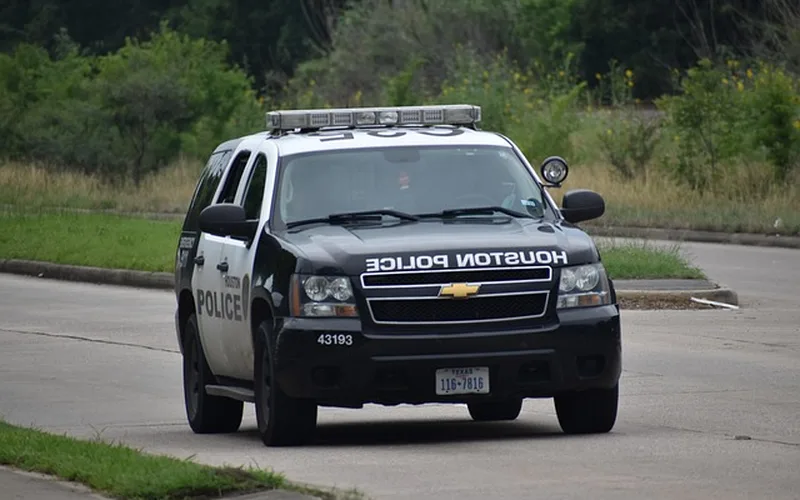
This one’s less mysterious than it looks. Rear door windows on patrol cars used for prisoner transport are usually fitted with a locking mechanism that only allows them to travel a few inches, similar to a child safety lock — enough for airflow, not enough for someone in the back seat to climb through or pass items in or out. Combined with the polycarbonate partition (the “cage”) between the front and back seats, this is a security feature, not a bulletproofing feature. It’s designed to keep a detainee contained and keep the officer up front protected from whatever’s happening behind them, not to stop bullets.
Which Cars Do the FBI and Secret Service Armor?
Federal protective details are a different world from local patrol cars, and the vehicles change over time. As of April 2026, the FBI has been shifting its executive protection fleet away from the GM Defense Suburban HD toward the armored BMW X5 Protection VR6 — reportedly because it blends into normal traffic better than a heavily armored SUV, while still offering military-grade ballistic resistance, spherical gun ports, and a self-sealing fuel tank.
| Vehicle | Approx. Cost | Notable Features |
|---|---|---|
| GM Defense Suburban HD | $600,000–$3.64 million | Military-grade armor plating, reinforced chassis/suspension/brakes |
| BMW X5 Protection VR6 | $230,000–$400,000+ | Discreet civilian styling, spherical gun ports, self-sealing fuel tank |
| Presidential state car (“The Beast”) | Not publicly disclosed | Custom-built Cadillac since 2018; the prior 2009–2018 model used 5-inch bulletproof glass and a sealed environmental system |
Local police departments don’t operate at this level — most patrol vehicles rely on the lighter, cheaper protective measures covered above, reserving true military-grade armor for federal protective details and select tactical units.
Levels Of Ballistic Protection
Police cars often use special armor for protection. This armor has different levels. Each level is rated based on its ability to stop bullets. Understanding these ratings is important for safety.
Armor ratings are based on tests. These tests show how well the armor can handle different calibers of bullets. Common ratings include:
| Armor Level | Protection Against |
|---|---|
| Level II | 9mm, .357 Magnum |
| Level IIIA | .44 Magnum, 12 gauge |
| Level III | 7.62mm NATO, .308 Win |
| Level IV | Armor-piercing rifle rounds |
Typical police cars usually have Level IIIA or Level III armor. This helps protect officers during high-risk situations. Understanding these levels aids in making informed decisions about safety.
Custom Armoring For Special Units
Special units like SWAT use custom armoring on their vehicles. These upgrades help protect against specific threats. Strong materials like ballistic glass and reinforced frames are common. Vehicles are tailored to face high-risk situations. These marked vehicles are easy to identify, unlike the plainclothes vehicles covered in how to tell an unmarked police car.
Common vehicles used by these teams include:
| Vehicle Type | Features |
|---|---|
| BearCat | Armored, fast, and tactical |
| MRAP | Mine-resistant, armored |
| Armored SUV | Stealthy, versatile, and protective |
Each vehicle serves a unique purpose. They help officers stay safe during dangerous operations. Custom upgrades ensure these vehicles can withstand firepower.
The Cost Of Armoring Police Vehicles
The cost of armoring police vehicles is significant. Many departments face tight budgets. Armored vehicles offer better safety for officers. But, they are much more expensive than regular cars.
Police departments must balance financial implications and safety needs. Some may need to prioritize community safety over costs. Others might struggle to find enough funding for armor upgrades.
Buying a new armored vehicle can cost between $50,000 to $100,000, similar to what civilian buyers pay for comparable rifle-rated ballistic glass alone even without a full armor package. Maintenance also adds more expenses. The choice often comes down to the local crime rate and available funds.
Maintenance And Operational Challenges
Armored vehicles face significant maintenance challenges. The added weight impacts acceleration and braking. This can lead to higher fuel consumption and increased wear on tires.
Regular checks on the suspension system and brakes are crucial. These components must support the extra weight. Ignoring these needs can cause safety hazards and performance issues.
| Maintenance Area | Importance |
|---|---|
| Suspension | Supports added weight and ensures stability |
| Brakes | Essential for safe stopping power |
| Tires | Must handle increased load and wear |
| Engine | Requires tuning for optimal performance |
Alternatives To Armoring
Many police cars use innovative materials instead of armor. These materials can provide good protection while keeping the car light. For example, high-strength steel and kevlar are popular choices. They help reduce weight and improve speed.
Non-armored safety measures also play a vital role. Features like reinforced windows and tire puncture resistance enhance safety. These options can be more cost-effective than full armor. They still offer important protection for officers.
| Material | Benefits |
|---|---|
| High-Strength Steel | Lightweight and durable |
| Kevlar | Flexible and strong |
| Reinforced Windows | Prevents shattering |
| Tire Puncture Resistance | Ensures mobility during chases |
Case Studies: Police Cars In Action
Police cars face dangerous situations every day. Some models have bullet-resistant features. These features help protect officers during high-risk encounters.
Case studies show different outcomes. In one event, a police car with armored doors stopped bullets effectively. Officers inside escaped unharmed. Another case showed a standard car taking hits. Sadly, the officers faced serious injuries.
Lessons learned from these events emphasize the need for improved vehicle safety. Better armoring can save lives. Future designs may include stronger materials and advanced technology. This can help police do their jobs more safely.
“The most common misconception I hear is that every squad car is basically a tank. In reality, budget is the deciding factor almost every time — a department covering a small town usually can’t justify $20,000+ per vehicle for ballistic glass on a fleet of patrol cars, so that protection level gets reserved for the calls where it’s actually needed most.”
— Md Meraj, The Daily Automotive
Public Perception And Police Safety
Public opinion greatly influences police equipment choices. Many people believe that officer safety is a top priority. This belief pushes law enforcement to seek better protection gear, including bulletproof cars.
Transparency is also important. Communities want to know how police protect them. Balancing transparency with officer safety can be a challenge. Police must decide what information to share.
Some worry that too much secrecy can lead to distrust. Others feel that police should have the best gear available. Understanding public views helps police departments make informed decisions.
Conclusion: The Future Of Police Car Armor
Police cars are getting better at protecting officers. Armor technology is advancing quickly. Lightweight materials help improve speed and maneuverability. New designs focus on balancing safety and performance.
Predictions indicate that law enforcement will need stronger protection. Police face increasing threats in many areas. Future vehicles may include advanced ballistic shields and reinforced glass. Smart technology could also enhance safety features in police cars.
| Emerging Trends | Description |
|---|---|
| Lightweight Armor | Improves speed while offering protection. |
| Smart Technology | Enhances vehicle safety and communication. |
| Advanced Ballistics | Stronger materials to resist high-caliber threats. |
Frequently Asked Questions
Are Police Cars Designed To Withstand Bullets?
Police cars are not entirely bulletproof but often feature reinforced components. Many models include ballistic panels in critical areas. This helps protect officers during high-risk situations. However, the level of protection varies by model and specific law enforcement requirements.
What Materials Make Police Cars More Secure?
Police cars typically use materials like reinforced steel and ballistic fiberglass. These materials enhance the vehicle’s resilience against bullets and other threats. Some vehicles may also have specialized glass to resist shattering. This combination improves officer safety during confrontations.
How Do Police Cars Compare To Military Vehicles?
Police cars are less fortified than military vehicles. They are designed for urban environments rather than extreme combat. Military vehicles often feature heavy armor and advanced technology. However, police cars prioritize speed, maneuverability, and functionality for law enforcement duties.
Which Cars Does the FBI Use for Armored Protection?
As of April 2026, the FBI has been transitioning its executive protection fleet from the GM Defense Suburban HD to the armored BMW X5 Protection VR6, largely because the BMW blends into normal traffic more easily while still offering military-grade ballistic protection. The GM Suburban remains in service for many protective details and costs significantly more, ranging from $600,000 to over $3.6 million depending on configuration.
Do All Police Cars Have Bullet-resistant Features?
Not all police cars have bullet-resistant features. The extent of protection depends on the vehicle type and department budget. Some agencies opt for standard vehicles for everyday use. Specialized units may use armored vehicles for high-risk situations.
Conclusion
Police cars are designed for safety, but they are not completely bulletproof. Their level of protection varies by model and purpose. Understanding these details can help the public appreciate the challenges law enforcement faces. Ultimately, the technology in police vehicles continues to evolve to enhance officer safety and effectiveness.
Products related to this article
Sponsored / affiliate links. As an Amazon Associate I earn from qualifying purchases. I may earn additional commission from eligible campaigns.