Automotive Services Examples: What to Fix, What It Costs, and What You Can Skip
You know the feeling. The check engine light pops on Tuesday, the brakes start squealing Thursday, and by Saturday your wallet is having a panic attack. Most drivers don’t lack care—they lack a clear picture of what automotive services actually involve, what they should cost, and which ones can wait.
This guide walks through the most common services you’ll face, from oil changes to transmission flushes, with realistic price benchmarks so you don’t get blindsided. You’ll also learn how to bundle work to save money, when DIY is genuinely safe, what EV owners need to watch, and how to spot a shop that’s padding the bill. By the end, you’ll have a practical maintenance plan you can actually stick to.

Qydipclin
Qydipclin 45Pcs Car Detailing Kit, Car Detailing…
- 45 Pcs-in-1 Car Detailing Kit: 1 vacuum with long cord & 3 attachments, 1 low-pressure foam gun with 6 accessories, 1 collapsible…
- Drill Brushes & Polishing Pads Kit: Comes with 4 newly designed drill brushes and a extra tire brush for easy cleaning wheel, rims…
- Car Vacuum & Foam Gun & Bucket & Windshield Cleaning Kit: The car vacuum with long cord and 3 accessories provides a strong suctio…
If you’re the type who likes to handle the light stuff yourself, a solid car care kit makes a real difference. The Qydipclin 45-piece detailing set covers everything from interior crevices to wheel brushes, and it packs into a tidy bag. It’s not a substitute for professional work, but it’ll keep your car looking sharp between shop visits.
What Counts as an Automotive Service?
An automotive service is any scheduled or diagnostic procedure that keeps a vehicle safe, reliable, and efficient. That’s broader than you might think. It includes routine maintenance like oil changes and tire rotations, safety inspections of brakes and suspension, and mechanical repairs like battery replacement or engine diagnostics.
Services fall into three buckets: preventive (things you do on a schedule), corrective (things you do because something broke), and predictive (things you do because a sensor or technician flagged a looming issue). Most of what you’ll pay for over a car’s life is preventive—and that’s a good thing, because skipping it turns cheap maintenance into expensive repairs.
The 12 Essential Services Every Driver Should Know
Routine Maintenance (Oil, Filters, Fluids)
Oil change. The classic. Conventional oil every 5,000–7,500 miles; synthetic can stretch to 10,000–15,000 depending on the manufacturer. Skipping it leads to sludge, which kills engines. Cost: $35–$75 for conventional, $65–$125 for synthetic.
Filter replacement. Engine air filters go every 15,000–30,000 miles; cabin air filters every 15,000–25,000. A clogged engine filter cuts fuel economy by up to 10 percent. Cabin filters affect your AC and defroster performance. Both are cheap—$20–$50 for parts, and you can swap them yourself in minutes.
Fluid flushes. Coolant, brake fluid, transmission fluid, and power steering fluid all degrade. Coolant every 30,000–50,000 miles (or 5 years), brake fluid every 2–3 years, transmission fluid every 30,000–60,000 miles for conventional automatics. Flushes run $75–$150 per fluid at a shop.
Safety-Critical Systems (Brakes, Tires, Suspension)
Brake repair. Pads last 30,000–70,000 miles depending on driving style. Rotors often need resurfacing or replacement at the same time. A full brake job—pads plus rotors on one axle—costs $150–$400 per axle for most cars. Squealing, vibration, or a soft pedal means it’s time.
Tire rotation and balancing. Rotate every 5,000–8,000 miles to even out wear. Balancing is usually done when you buy new tires or feel vibration at speed. Rotation costs $20–$50; balancing runs $15–$25 per tire. Many shops bundle both for about $60.
Suspension repair. Shocks, struts, and bushings wear out gradually. Warning signs: excessive bounce, uneven tire wear, or a clunking noise over bumps. Replacing struts on one axle costs $400–$800 including parts and labor. It’s not a job for beginners.
Mechanical & Electrical Repairs (Engine, Battery, AC)
Engine diagnostics. When the check engine light comes on, a shop runs a scan. That code read costs $50–$120, and the fee is often waived if you authorize the repair. Codes like P0300 (misfire) or P0420 (catalytic converter) point to specific issues—don’t let a shop upsell you into a parts cannon.
Battery replacement. Car batteries last 3–5 years. Symptoms: slow crank, dim lights, or needing a jump. A replacement runs $100–$250 installed, depending on whether your car needs an AGM battery. Many shops test batteries for free.
AC service. If the air blows warm, the system may just need a refrigerant recharge ($100–$200). But if the compressor is dead, that’s $600–$1,200. A quick check of the clutch and pressure readings will tell you which one you’re facing.
Realistic Cost Range for Each Service (2026 Prices)
| Service | Typical Cost Range | Frequency / Mileage | DIY Feasibility |
|---|---|---|---|
| Oil change (synthetic) | $65–$125 | 5,000–10,000 miles | Moderate |
| Tire rotation | $20–$50 | 5,000–8,000 miles | Hard (needs jack + stands) |
| Brake pad + rotor replacement (per axle) | $150–$400 | 30,000–70,000 miles | Advanced |
| Battery replacement | $100–$250 | 3–5 years | Easy (with basic tools) |
| Engine diagnostics (code scan) | $50–$120 | As needed | Easy with $20 OBD2 scanner |
| Transmission fluid flush | $125–$250 | 30,000–60,000 miles | Hard (special equipment) |
| Suspension strut replacement (per axle) | $400–$800 | 50,000–100,000 miles | Advanced |
| AC recharge | $100–$200 | As needed | Moderate (DIY kits exist) |
| Coolant flush | $75–$150 | 30,000–50,000 miles | Moderate |
| Wheel alignment | $75–$120 | Every 12,000 miles or after new tires | Not DIY |
How to Bundle Services and Save on Shop Visits
Shops make more money when you come in for one thing at a time. You can flip that dynamic by grouping work that shares labor time. Here’s how:
- Ask for a multi-point inspection before authorizing anything. Most shops will check brakes, tires, fluids, and belts for free or a small fee. That gives you a full list of what’s actually due.
- Pair oil changes with tire rotations. These two services require the car on a lift anyway. Many shops offer a combined package for $60–$80. Doing them separately could cost $100+.
- Combine brake work on both axles. If the front pads are shot, the rears are probably close. Replacing all four at once saves you a second trip and often a second labor charge for bleeding the system.
- Watch for seasonal specials. Shops run winterization packages (coolant check, battery test, wiper blades) and summer AC specials. These bundle services at a discount you won’t get by booking individually.
- Ask about a maintenance package. Some dealerships and independents sell a 3-year or 30,000-mile prepaid plan that locks in a discount. Do the math on your expected mileage before committing.
DIY vs. Professional Service: A Quick Decision Guide
Not every service needs a certified technician. But some jobs will cost you more in tools and frustration than you’ll save in labor. Here’s a practical breakdown.
Safe to DIY: Oil changes (if you have ramps and a wrench), air filter swaps, cabin filter swaps, battery replacement, wiper blades, and basic detailing. These jobs take under an hour each. A decent OBD2 scanner for $20–$50 lets you read engine codes at home—just don’t clear the code before a shop sees it, because that erases the diagnostic history.
Leave to a pro: Transmission work, suspension work, AC repairs, and anything involving airbags or ABS. These systems require specialized tools, lift access, and experience. A botched brake job isn’t a money-saving hack—it’s a safety hazard.
The gray zone: Coolant flushes and brake pad swaps. Both are doable with YouTube tutorials, but they’re messy and easy to screw up. If you’ve never turned a wrench, pay a shop the first time and watch how it’s done.
One honest caveat: DIY only saves money if you already own the tools. Buying a $200 torque wrench set for a single brake job doesn’t make financial sense unless you plan to use it again.
EV-Specific Services You Can’t Ignore

Electric vehicles have fewer moving parts, but they’re not maintenance-free. The services are different, and most traditional shops still don’t handle them well.
Battery cooling system checks. EV batteries generate heat during fast charging and heavy acceleration. The cooling system—pumps, hoses, and coolant—needs inspection every 30,000–50,000 miles. A failure can lead to reduced range or battery damage. Cost: $100–$200 for an inspection, more if coolant needs replacing.
Brake system service. EVs use regenerative braking, which means the friction brakes get used far less. That sounds great, but it also means rotors can rust and calipers can seize from disuse. Have the brakes inspected annually, and ask for a caliper lubrication service if you live in a salty climate.
Tire rotation is more critical. EVs are heavy, and instant torque eats tires faster than gas cars. Rotate every 5,000–6,000 miles, and expect to replace tires 20–30 percent sooner than you would on a comparable gas vehicle.
Software updates. Many EV services are actually over-the-air updates. But some updates—like battery management system recalibrations—require a dealer visit. Check your manufacturer’s app for pending updates before assuming a warning light means physical damage.
Service Schedule by Mileage (10k/30k/60k/100k)
Here’s a realistic schedule based on average driving conditions. Your owner’s manual is the final authority—especially for severe driving (extreme temperatures, heavy towing, lots of stop-and-go).
| Mileage | Service Checklist | Approximate Cost |
|---|---|---|
| 10,000 miles | Oil change, tire rotation, multi-point inspection, cabin air filter check | $80–$150 |
| 30,000 miles | Everything above, plus engine air filter, brake fluid flush, coolant check, battery test | $200–$400 |
| 60,000 miles | Everything above, plus transmission fluid flush, spark plug replacement (gas), suspension inspection, brake pad check | $400–$800 |
| 100,000 miles | Everything above, plus coolant flush, power steering fluid flush, timing belt inspection (if equipped), full vehicle inspection | $600–$1,200 |
Don’t panic at the 100k numbers. That spread covers everything from a basic sedan to a luxury SUV with complex suspension. Get a written estimate before authorizing any work, and ask which items are due now versus which can wait another 5,000 miles.
Red Flags: How to Spot a Bad Auto Shop
Not every shop is out to get you, but the bad ones follow predictable patterns. Watch for these:
- Vague estimates. A shop that quotes “brake work” without specifying parts, labor, or a total is setting you up for a surprise. Demand a line-item breakdown.
- Up-selling on unrelated items. You came in for an oil change and suddenly need a $400 throttle body cleaning? Politely decline and get a second opinion. Some services are legitimate, but a good shop will show you evidence—photos, worn parts—before pushing extras.
- Pressure to approve immediately. Legitimate repairs can wait for you to get a second quote. If a shop says the car is unsafe to drive and you must decide right now, that’s a red flag.
- No written warranty. Most reputable shops offer a 12-month/12,000-mile warranty on parts and labor. If they won’t put it in writing, walk away.
- Parts markup games. Ask if they use OEM (original equipment manufacturer) or aftermarket parts. Aftermarket is fine for many components, but the price should reflect the difference—OEM brake pads cost more than generic ones.
One more tip: check the shop’s reviews for complaints about recurring problems—like a brake job that needed repeating twice in a year. That pattern says more than a single bad review ever will.
Frequently Asked Questions
How often should I get a full vehicle inspection?
At least once a year, or every 12,000 miles. If you drive in severe conditions—extreme heat, dusty roads, heavy traffic—bump that to every 6 months. A full inspection covers brakes, tires, fluids, belts, hoses, and suspension. Expect to pay $50–$150, and many shops waive the fee if you authorize any needed repairs.
Can I skip the transmission fluid flush?
You can, but you’ll regret it. Transmission fluid breaks down and collects debris over time. Skipping the flush at 60,000 miles can lead to rough shifting and, eventually, a $3,000–$5,000 transmission replacement. If your transmission is already slipping, a flush won’t fix it—and some mechanics will advise against it because the new fluid can dislodge sludge that was holding things together.
What does the check engine light actually mean?
It means the engine control unit detected a fault. It could be something trivial like a loose gas cap (code P0455) or something serious like a misfire (P0300). You can’t tell which without reading the code. Most auto parts stores will read it for free, or you can buy a basic OBD2 scanner for about $20. Don’t ignore it for more than a week—small issues become big ones when left alone.
Is dealer service worth the extra cost?
For warranty-covered work, yes—you need dealer documentation to maintain coverage. For out-of-pocket repairs, usually not. Independent shops do the same work for 20–40 percent less because their overhead is lower. The exception is European or hybrid systems where specialized diagnostic tools are genuinely required. In that case, a dealer or a dedicated Euro specialist is worth the premium.
How do I know if a repair estimate is fair?
Get three quotes for any job over $300. Compare the parts and labor line items, not just the total. A shop quoting $400 for a brake job with aftermarket parts is worse than one quoting $450 with OEM parts. Check the labor rate too—anything above $150 per hour in a major metro area is on the high side. You can also look up the average cost for your specific make and model on repair estimator sites before you call.
The Bottom Line: Build a Maintenance Plan That Works
- Follow your owner’s manual schedule, not the shop’s upsell calendar. The manual is written by engineers who know your car.
- Bundle services around major milestones (30k, 60k, 100k) to cut labor costs by 15–25 percent.
- Handle the easy stuff yourself—air filters, wiper blades, battery swaps—and save your DIY energy for those.
- Get a written estimate before authorizing any work, and never approve a repair on the spot without a second opinion on anything over $300.
- Ask about OEM versus aftermarket parts and the warranty on both. A 12-month/12,000-mile warranty is standard.
- For EV owners, prioritize battery cooling checks and annual brake inspections—those are the two systems that fail silently.
- Keep a folder (physical or digital) with every service receipt. It helps with resale value and makes warranty claims far easier.
You don’t need to be a mechanic to stay ahead of car maintenance. You need a schedule, a budget, and the confidence to say no to unnecessary work. Start with the mileage table above, get your next inspection scheduled, and you’ll be in better shape than most drivers on the road. For more on choosing between repair options, discount service advice can help. And if you’re weighing whether a protection plan makes sense, extended warranty guidance covers the trade-offs.
Products related to this article
Sponsored / affiliate links. As an Amazon Associate I earn from qualifying purchases. I may earn additional commission from eligible campaigns.
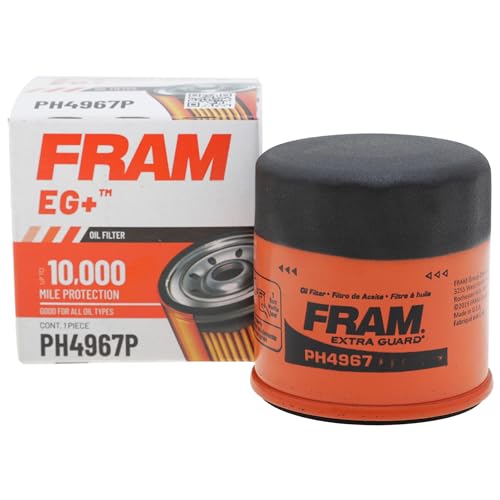 FRAM EG+ PH4967P, 10K Mile Change Automotive Replacement Interval Spin-On Engine Oil Filter for Select Vehicle Models
 CAN OBD2 Scanner MS309 Automotive Scanner Engine Diagnostic Tool EOBD Car Check Engine Code Reader Auto CAN Diagnostic Scan Tool Multi-Languages for All OBD II Protocol Vehicles (Red)