Best Brake Rotors: 6 Top Picks by Type and Brand
If you drive a car long enough, the rotors eventually wear thin, warp, or get scored past the point a resurface can save them. We compared six current brake rotor and rotor-kit options — cross-checking manufacturer specs, OE fitment data, and real buyer feedback on Amazon — to line up an OE-style pick for quiet daily driving, a budget option for a straightforward swap, a drilled-and-slotted upgrade for towing and heat, a premium OE-plus option, a complete kit for a one-box replacement, and the wind-back tool you’ll actually need to finish the job. The short version: the Bosch QuietCast is our overall pick for most daily drivers, the ACDelco Silver rotor is the budget pick if your GM truck or SUV just needs a clean OE-spec swap, and the PowerStop drilled-and-slotted kit is the one to reach for if you tow or ride the brakes on long grades.
Quick Picks
- Best Overall: Bosch QuietCast Premium Disc Brake Rotor — quiet, OE-style coated rotor built to factory tolerances.
- Best Budget: ACDelco Silver Coated Front Brake Rotor — GM-specific OE replacement at a lower price point.
- Best for Towing/Heavy Duty: PowerStop Drilled & Slotted Truck & Tow Kit — better heat dissipation for trucks and SUVs under load.
- Best Premium/OE Upgrade: Brembo UV Coated Front Disc Brake Rotor — the brand many automakers spec from the factory.
- Best Complete Kit: Detroit Axle Front & Rear Rotors + Pads Kit — rotors and pads together, front and rear, in one order.
- Best Tool to Pair With Your Rotors: 8MILELAKE Caliper Wind-Back Tool Set — the piston-compression tool nearly every rotor swap needs.
How These Brake Rotors Are Grouped
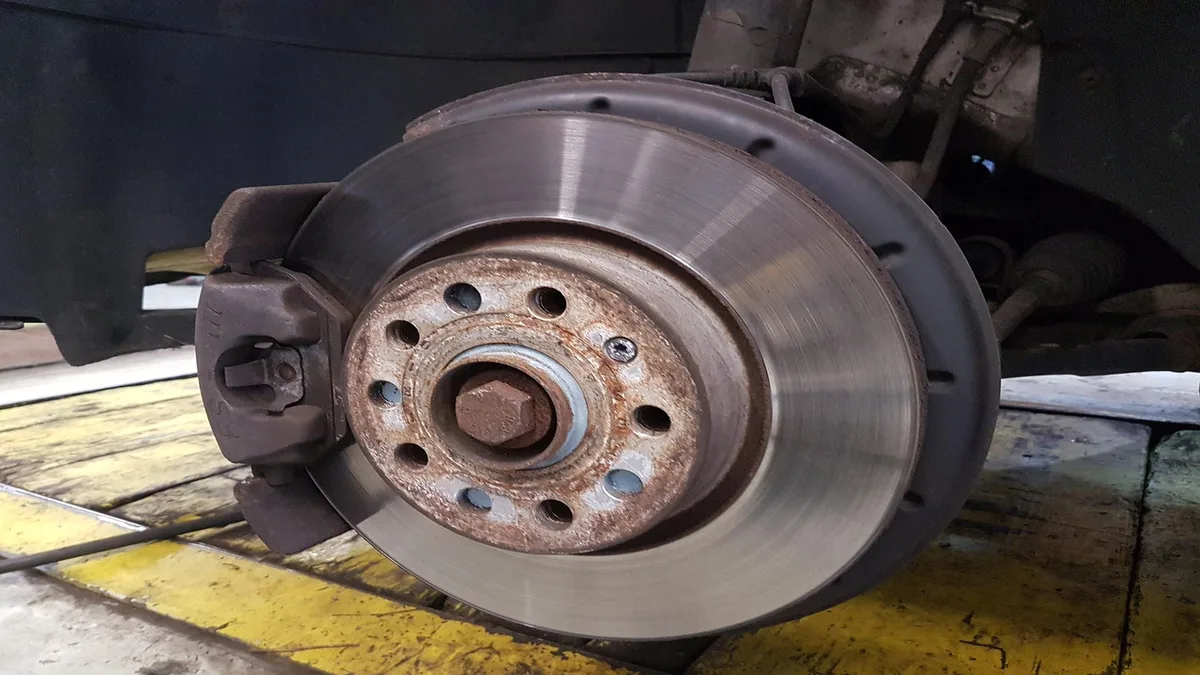
Rotors aren’t a one-size category — the right pick depends on what your car is (a commuter sedan vs. a tow-rated truck), how you drive it, and whether you’re replacing just the rotor or the whole corner. We grouped these six picks around the decisions that actually change which rotor is right for you:
- Surface style — blank/OE-coated rotors for quiet daily driving vs. drilled-and-slotted for extra heat and gas venting under load.
- Budget vs. OE-plus quality — a straightforward GM-spec replacement vs. a rotor from the same brand many automakers spec from the factory.
- Rotor-only vs. complete kit — buying just the rotor when your pads still have life left vs. a matched rotor-and-pad kit for a full corner refresh.
- The tool you’ll need either way — new rotors mean pushing the caliper piston back in, which almost always requires a wind-back tool, not just a C-clamp.
Comparison Table
| Pick | Surface/Type | Approx. Price | Best For |
|---|---|---|---|
| Bosch QuietCast (Best Overall) | Blank, coated | ~$45 | Quiet daily driving, OE fitment |
| ACDelco Silver (Best Budget) | Blank, silver-coated | ~$55 | Budget GM-spec replacement |
| PowerStop Kit (Best for Towing) | Drilled & slotted + pads | ~$230 | Trucks/SUVs that tow or haul |
| Brembo (Best Premium) | Blank, UV-coated | ~$70 | OE-plus quality upgrade |
| Detroit Axle Kit (Best Complete Kit) | Blank rotors + pads, front & rear | ~$140 | Full corner replacement in one order |
| 8MILELAKE Tool (Best Accessory) | 24-piece wind-back set | ~$30 | Compressing the caliper piston during install |
Full Reviews: 6 Brake Rotors Worth Buying
Best Overall: Bosch QuietCast Premium Disc Brake Rotor
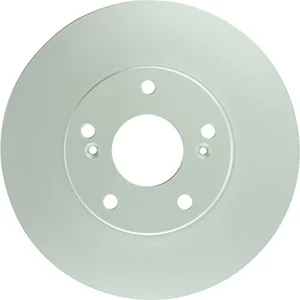
Bosch built QuietCast around one specific complaint owners have about aftermarket rotors: brake squeal. The rotors get a coating on the hat and outer edge to resist corrosion, and Bosch machines them to OE tolerances for balance and thickness, which is what actually controls vibration and pedal pulsation — not just the coating. For a daily-driven Accord, Civic, or ILX, that combination of quiet operation and factory-spec fitment is the reason this is our overall pick rather than the drilled-and-slotted option: most commuters never generate enough heat to need the extra venting, and a quieter rotor is a better everyday trade-off.
Best Overall • Approx. $45
Bosch QuietCast Premium Disc Brake Rotor
| Type | Blank, coated |
| Fitment | Select Acura/Honda models |
| Position | Front |
| Warranty | Limited lifetime |
- OE-spec balance and thickness for a smoother, quieter stop
- Corrosion-resistant coating on hat and edge
- Direct bolt-on fitment, no modification needed
- Blank surface only — not built for track or heavy towing use
- Single-rotor pack, so you’ll need two for an axle
Best Budget: ACDelco Silver Coated Front Brake Rotor
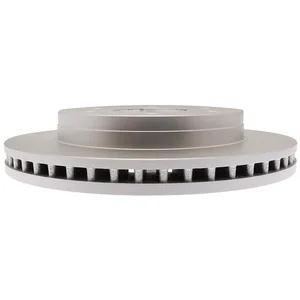
ACDelco is GM’s own parts brand, so the Silver line is engineered specifically to GM’s OE dimensions rather than a generic aftermarket casting. That matters more than it sounds: a rotor that’s slightly off on hat height or thickness variation is the most common cause of a new-rotor pulsation complaint. For a Silverado, Tahoe, or Escalade owner who just needs a clean, correctly-fitting replacement without paying premium-brand pricing, this is the practical choice — it’s not chasing performance, it’s chasing a correct fit at a lower cost, and knowing typical rotor prices helps you spot a fair deal.
Best Budget • Approx. $55
ACDelco Silver Coated Front Brake Rotor
| Type | Blank, silver-coated |
| Fitment | Select GM trucks/SUVs |
| Position | Front |
| Brand | GM’s OE parts division |
- Engineered to GM-specific OE dimensions
- Silver coating resists surface rust before installation and after
- Lower price than premium third-party brands
- GM-specific fitment only — not a universal option
- Blank surface, so no extra heat venting for towing
Best for Towing/Heavy Duty: PowerStop Drilled & Slotted Truck & Tow Kit
Drilled and slotted rotors exist for one real reason: extra surface area and venting to shed heat and gas faster than a blank rotor can. That mostly matters when a vehicle is under sustained load — towing, hauling, or riding the brakes down a long grade — which is exactly the use case PowerStop built this kit around, pairing the rotors with carbon-fiber ceramic pads and selling the two together so the pad compound is matched to the rotor’s higher heat tolerance. The trade-off buyers should know about going in: slotted rotors wear pads roughly 10–15% faster than a blank rotor because the slots are constantly cutting into the pad surface, so budget for pad replacement a little sooner than you would with an OE-style rotor.
Best for Towing/Heavy Duty • Approx. $230
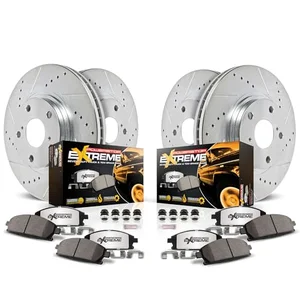
PowerStop Front & Rear Drilled/Slotted Brake Kit
| Type | Drilled & slotted + ceramic pads |
| Fitment | Select Toyota/Lexus trucks/SUVs |
| Position | Front & rear |
| Includes | Rotors + pads, matched set |
- Better heat and gas venting for towing or mountain driving
- Ceramic pads matched to the rotor for the full corner
- Front and rear included in one kit
- 10-15% faster pad wear than a blank rotor from the slots alone
- Higher price than a rotor-only purchase
Best Premium/OE Upgrade: Brembo UV Coated Front Disc Brake Rotor
Brembo doesn’t just sell aftermarket parts — it’s the OE brake supplier for a long list of automakers, including several BMW models, which is why this rotor is machined to the same specification some cars already leave the factory with. The UV coating is a step up from standard e-coat corrosion protection and holds up better in the box before installation and on the shelf. For someone replacing rotors on a car that came with Brembo hardware from the factory, or who simply wants an OE-plus rotor from a name with that manufacturing pedigree, this is the upgrade pick over a standard blank rotor.
Best Premium/OE Upgrade • Approx. $70
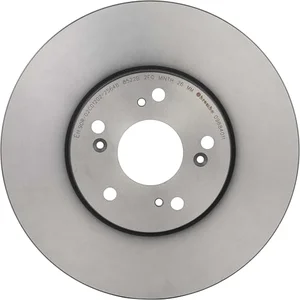
Brembo UV Coated Front Disc Brake Rotor
| Type | Blank, UV-coated |
| Fitment | Select BMW models |
| Position | Front, vented |
| Brand pedigree | OE supplier to multiple automakers |
- Same OE-supplier brand many cars ship with from the factory
- UV coating resists corrosion better than standard e-coat
- Precise OE tolerances for balance and pulsation control
- Higher price than a standard aftermarket blank rotor
- Model-specific fitment, so confirm your exact trim first
Best Complete Kit: Detroit Axle Front & Rear Rotors + Pads Kit
If your rotors are worn enough to replace, there’s a good chance the pads riding on them are close behind — and replacing only half of that pair means the new rotor is immediately breaking in against an old, unevenly-worn pad. Detroit Axle’s kit sidesteps that by bundling front and rear rotors with matching pads in one order, which is the simplest way to do a full brake refresh on an older Honda CR-V without piecing together rotors from one supplier and pads from another and hoping the combination behaves the way either was tested to perform.
Best Complete Kit • Approx. $140
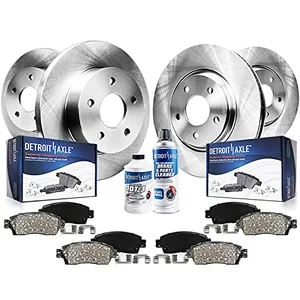
Detroit Axle Front & Rear Rotors Pads Brake Kit
| Type | Blank rotors + pads |
| Fitment | Select Honda CR-V (2005-2006) |
| Position | Front & rear |
| Includes | 4 rotors + pad sets |
- One order covers both axles instead of piecing parts together
- Matched pad compound avoids an old-pad/new-rotor mismatch
- Straightforward for a full brake system refresh
- Model-year specific — confirm exact fitment before ordering
- Blank surface, not built for towing-level heat
Best Tool to Pair With Your Rotors: 8MILELAKE Caliper Wind-Back Tool Set
New rotors are thicker than the worn ones they’re replacing, which means the caliper piston has to be pushed back further to clear them — and on most modern calipers, that’s not a job for a simple C-clamp. Many rear calipers use an electronic parking brake or a screw-type piston that has to be wound back in a rotating motion, not just pressed, and using the wrong technique can crack the piston seal. This 24-piece set covers both the standard push-back and the rotating wind-back styles, which is the reason it’s worth budgeting for alongside the rotors themselves rather than assuming the tool you already own will work.
Best Tool to Pair With Your Rotors • Approx. $30
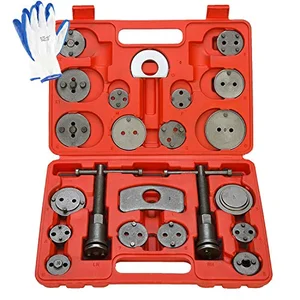
8MILELAKE Disc Brake Caliper Compressor Wind Back Tool
| Pieces | 24-piece set |
| Covers | Push-back & rotating wind-back calipers |
| Use case | Compressing the piston for new, thicker rotors |
| Case | Included storage case |
- Handles both standard push-back and rotating parking-brake calipers
- Avoids the piston-seal damage risk from forcing a C-clamp
- One set covers most common caliper types
- Adapters are sized generically, so double-check your caliper’s exact adapter needs
- Not a torque tool — you’ll still need a separate wrench for lug nuts and caliper bolts
How We Picked These Rotors
We’re not a brake dyno lab, so we didn’t run stopping-distance tests or fade cycles ourselves — and we’re not going to pretend otherwise. What we did do is cross-reference three things for every pick: the manufacturer’s own published specs (coating type, OE tolerances, warranty terms), real fitment data (confirming each rotor is actually listed for the vehicles we named, not a generic catch-all), and aggregated buyer feedback on Amazon for genuine, recurring complaints — a pattern of “warped within 5,000 miles” reviews tells you something a spec sheet never will. Every award category above maps to a real, distinct buying decision (surface style, budget vs. OE-plus quality, rotor-only vs. kit, and the tool the swap actually requires), not a generic “best of” label applied to six similar products.
Brake Rotor Buying Guide
Blank vs. Drilled and Slotted: Which Do You Actually Need?
Blank (or coated blank) rotors are the right call for the vast majority of daily drivers — they’re quieter, cheaper, and generate less pad wear, and for normal city and highway braking, rotor quality and correct fitment matter far more than surface pattern. Drilled rotors add holes that vent heat and gas, which shows up on high-end cars from BMW, Porsche, and Mercedes because those cars are engineered for higher-speed stops. Slotted rotors add grooves that keep pad surface fresh and improve initial bite, at the cost of eating into pad life 10–15% faster. Drilled-and-slotted kits combine both and make sense specifically for towing, mountain driving, or repeated hard stops — not for a commuter that mostly sees stop-and-go traffic.
Matching the Rotor to Your Pads
A rotor and pad wear against each other, so mismatching a soft ceramic pad against a rotor designed for a harder semi-metallic compound (or the reverse) accelerates wear on both sides and can contribute to the pulsation and noise complaints that get blamed on the rotor alone. This is the practical case for a matched kit like the Detroit Axle option above when you’re replacing both parts at once, rather than assuming any pad will pair cleanly with any rotor.
Why New Rotors Sometimes Still Vibrate
A brand-new rotor that pulsates under braking almost never means the rotor is defective — it usually means the lug nuts weren’t torqued evenly in a star pattern, the hub surface had rust or debris trapped behind the rotor before installation, or the caliper slide pins are seized and dragging unevenly. Cleaning the hub face and torquing lug nuts to spec in the correct sequence solves this far more often than a rotor exchange does.
How to Break In New Rotors (Bedding Procedure)
New rotors and pads don’t brake at their best right out of the box — they need a proper bedding-in cycle first, or you risk uneven pad material transfer that causes squealing and pulsation from day one. A common bedding procedure: perform 5 moderate-to-firm stops from about 40 mph down to 10 mph in quick succession without letting the brakes fully cool between them, then follow with 5 gentler stops from 35 mph down to 5 mph the same way. After that, drive for a few minutes at a moderate, steady speed without stopping completely, which lets the heat-cured resin in the pads cool evenly. When it’s done right, you’ll see a light gray film on the rotor face — that’s pad material transferring evenly, and it’s a good sign, not a defect.
Torquing Lug Nuts the Right Way
Most passenger cars call for 80–100 ft-lb on the lug nuts, and most trucks and SUVs run 100–145 ft-lb — check your owner’s manual for the exact number rather than guessing. Tighten in a diagonal star pattern, not a simple circle around the wheel, since a circular sequence can tilt the wheel slightly on the hub and leave it feeling tight while actually seated unevenly against the rotor. A safer two-stage approach: torque all lug nuts to about half of spec in the star pattern with the car’s weight partly on the tire, then finish by torquing every nut to full spec in the same sequence. Plan to recheck torque after 50–100 miles of driving, since the mating surfaces can settle slightly as everything heat-cycles for the first time, which can quietly reduce clamping force if it’s never rechecked.
Frequently Asked Questions
Do I need to replace rotors in pairs?
Yes — replace both rotors on an axle together, even if only one looks worn. Braking should be even side to side, and a mismatched pair (different thickness or wear pattern) can pull the car to one side under hard braking.
How long do brake rotors typically last?
Most rotors last 30,000–70,000 miles depending on driving style, pad compound, and climate, though city driving with frequent hard stops or a coastal/salted-road climate can shorten that noticeably.
Can I resurface rotors instead of replacing them?
Only if the rotor still has enough material left after machining to stay above the minimum thickness stamped on the rotor’s edge — most modern rotors are thin enough from the factory that a single resurface can push them past that limit, at which point replacement is the only safe option.
Do drilled and slotted rotors wear out pads faster?
Yes, typically 10–15% faster than a blank rotor, because the slots continuously scrape across the pad surface. That trade-off is usually worth it for towing or performance use, but not for a daily commuter.
What tool do I need to compress the caliper piston for new rotors?
A caliper piston wind-back tool, not a plain C-clamp — many rear calipers use a screw-type or electronic parking-brake piston that has to be rotated back in rather than pressed, and forcing it with a C-clamp risks damaging the piston seal.
Is it safe to only replace one rotor if the other looks fine?
No — always replace both rotors on the same axle at the same time, since uneven rotor thickness or wear between the two sides can cause the car to pull during braking.
Conclusion
For most daily drivers, the Bosch QuietCast is the pick that balances quiet operation with correct OE fitment. Budget-focused GM owners should look at the ACDelco Silver, and anyone towing or hauling regularly will get real benefit from the PowerStop drilled-and-slotted kit. Whichever rotor you choose, don’t skip a caliper wind-back tool — and if you want the fuller picture of what a rotor actually does and why it wears the way it does, our guide on what car rotors do covers that in more depth. For symptoms like squealing or grinding before you even get to replacement, see our guide on fixing squeaky brakes.
Products related to this article
Sponsored / affiliate links. As an Amazon Associate I earn from qualifying purchases. I may earn additional commission from eligible campaigns.