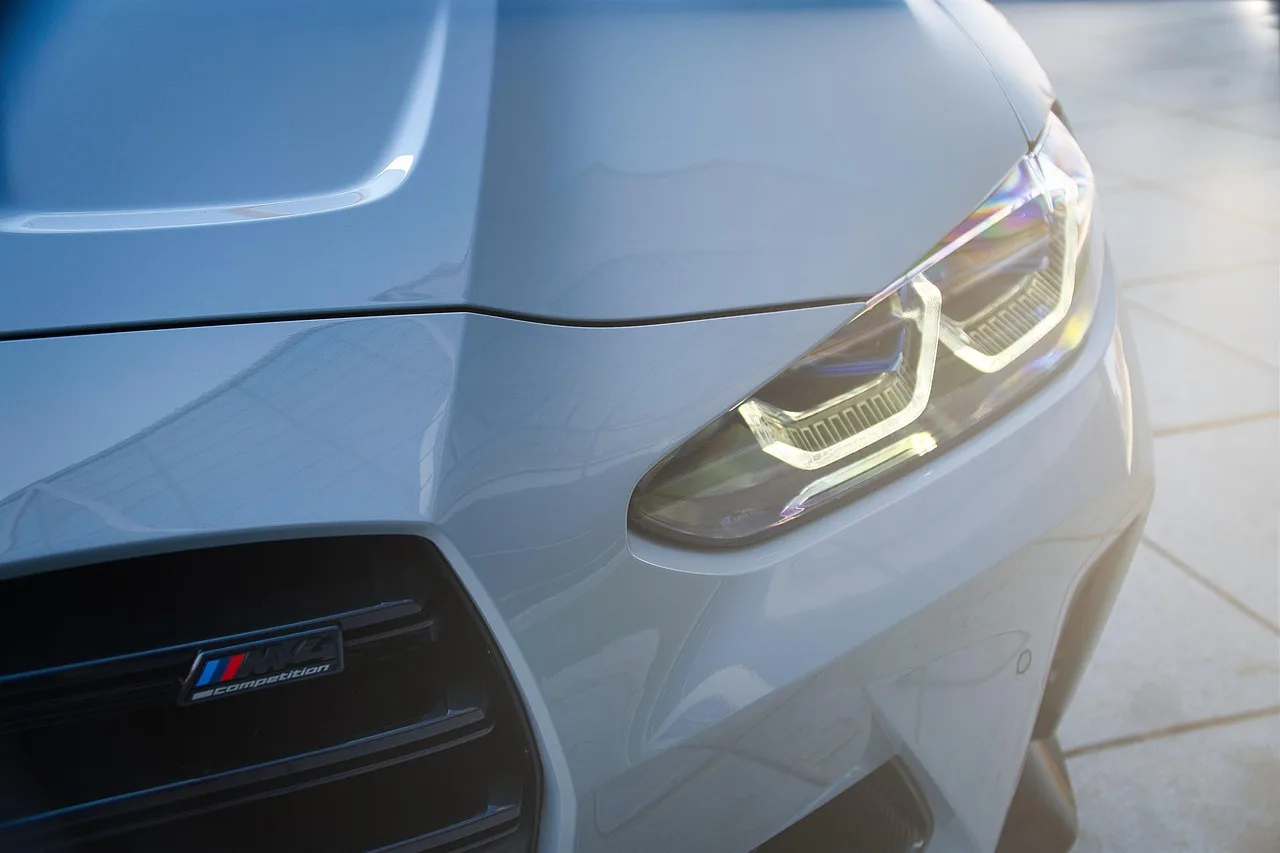
Halo Lights for Cars: Tested & Reviewed (3 Picks)
OPT7 Aura Pro is the top pick because it combines app control, music-synced lighting, and a fuller control stack than simpler halo kits. That makes it the strongest choice when you want show features without giving up day-to-day control stability. This guide compares the three picks from their listed features and fitment considerations rather than hands-on test data. Poor fitment can still cause leaks, flicker, bulb failures, or dash warnings, so installation matters as much as the light itself.
Top pick and quick verdict
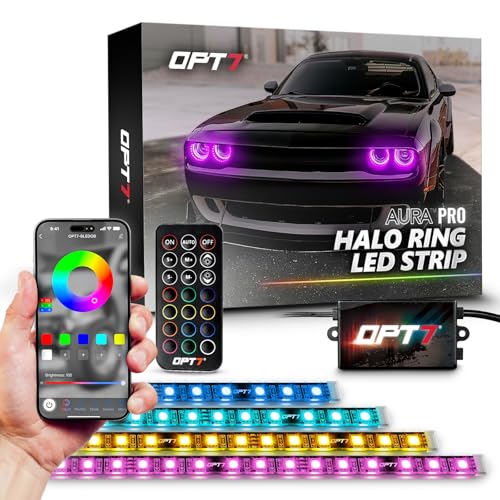


This guide ranks three halo light kits by fit risk, control reliability, and installation effort based on the product details available: OPT7 Aura Pro for the best overall balance, Qasim Angel Eyes for simpler ring-size-focused fitment, and Wogomz halo fog lights for buyers who want an integrated fog-light-area setup. Daily drivers should lean toward simpler, single-color or restrained RGB use. Show builds can take better advantage of app modes, gradients, and strobe effects.
Quick picks
- Best overall: OPT7 Aura Pro — app control on iOS and Android, plus music-synced lighting for broader feature control.
- Best RGB option: OPT7 Aura Pro — better for color changes, mode switching, and show use.
- Best simple option: Qasim Angel Eyes, a cleaner fitment-first pick in 80mm and 90mm sizes.
Halo lights checklist
| Ring size | Housing depth | Power input | Control type | Install difficulty | Best-use case |
|---|---|---|---|---|---|
| 80mm | Compact or shallow | Most often 12V | Single-color or RGB | Medium | Tighter bezels and smaller housings |
| 90mm | Medium-depth | 12V or 9-30V DC on some kits | Single-color or app-controlled RGB | Medium | Balanced fit when bezel clearance is moderate |
| 110mm | Deeper, larger housings | Verify vehicle electrical supply | Usually RGB on show-oriented kits | Hard | Large retrofit openings and more open housings |
| RGB halo kit | Any, if clearance works | Most often 12V | Bluetooth app, sometimes remote | Medium to hard | Show use, color changes, gradients, strobe modes |
| Single-color halo kit | Any, if clearance works | Often 12V; some 9-30V | Simple switch or remote | Easy to medium | Styling-focused installs with lower feature complexity |
Decision rule: choose the ring size that matches the vehicle’s measured opening and available depth. If the car is a daily driver, start with single-color unless you want app control and extra modes. If you want a show build, RGB is the better match. RGB colors, strobes, and some accent-light uses may be illegal on public roads depending on local law.
What size halo ring should you buy?
Choose ring size by bezel clearance, not by appearance alone. Use the vehicle’s actual opening and rear cavity measurements to decide whether an 80mm, 90mm, or 110mm ring is the better fit. Measure the visible bezel area and the space behind it before you order, because a ring that fits the front opening can still hit the housing behind it.
80mm compact fit
Qasim Angel Eyes is listed in 80mm size, which makes it the more obvious starting point for tighter housings and smaller bezels. Compact rings reduce the chance of interference with lens edges, reflector shapes, and internal fins that crowd the mounting area.
90mm medium fit
Qasim Angel Eyes is also listed in 90mm size, which gives more room for medium-size bezel openings without moving into oversized territory. For many retrofit-style headlights, this is the safer middle ground when you want a cleaner look without forcing a larger ring into a shallow shell.
110mm larger fit
A 110mm ring belongs in larger housings with enough bezel depth and clearance for a bigger circle. If the headlight opening is tight, a larger ring can create mounting stress, uneven spacing, or poor lens clearance. In that case, step down to 90mm instead of trying to force the fit.
Say your headlight has a narrow bezel and a shallow rear cavity. A 110mm ring may look fine on paper, then contact the housing or lens edge during install. The safer move is to check diameter and depth together, not one number by itself.
Which halo light type fits your use case?
RGB halos make sense when color change matters more than simplicity. Single-color halos make more sense when you want less setup, fewer control layers, and a cleaner daily-driver install. Halo fog light assemblies sit between the two by combining an inner LED with an outer ring, which can suit an integrated front-end build better than ring-only lighting.
RGB halos for show use
RGB halo lighting gives you multi-color output, Bluetooth app control, gradient modes, and strobe modes. OPT7 Aura Pro supports iOS and Android app control and offers music-synced lighting, which puts it squarely in the show-use category. That same feature set is also what can make RGB feel like too much for a simple commuter car.
Single-color halos for simpler installs
Single-color halo lighting is the cleaner choice when you want white or red variants with lower feature complexity. These kits are easier to live with because there are fewer pairing steps, fewer mode conflicts, and less temptation to run attention-grabbing patterns on public roads. They are usually the better fit for a styling-first daily driver.
Halo fog light assemblies for integrated front ends
Wogomz halo fog lights are described as universal fit, and that type of assembly is useful when you want the fog-light area to carry both an inner LED and an outer ring. This is often a better route than ring-only halos if the front end already has open fog-light space and you want a more complete visual package. Universal fit still depends on bracket style, housing size, and vehicle-specific compatibility limits.
Do halo lights need 12V wiring?
Most halo lights are built for 12V systems, though some kits are reported to support a wider DC range, such as 9-30V or 12V-24V compatibility. Verify the vehicle’s electrical supply before ordering, because voltage mismatch can create flicker, unstable brightness, or failed control modules.
Why constant current regulation matters
A constant current regulator helps prevent brightness fluctuations by keeping current steadier as voltage changes. Stable current supports more consistent brightness and longer component life. Cheap kits without that control can dim unevenly or drift as the electrical system changes load.
When a relay is useful and when it is not
A relay is useful when the circuit draw is high enough that you want to keep the switch or control path away from the main load. For many low-draw LED halos, a relay is not automatically necessary. If the kit includes a proper controller and the wiring is sized for the load, adding a relay may add complexity without solving a real problem.
Are app-controlled halo lights worth it?
App-controlled halos are worth it when you want more than on-off control and you are willing to accept one more setup step. Bluetooth pairing, iOS and Android support, mode switching, and music sync are strong features for show use, but a remote-controlled kit is often simpler and less dependent on phone connection quality. For a daily driver, simpler control often means fewer headaches.
Bluetooth pairing and app reliability
Bluetooth app control can be useful, but pairing quality matters more than the feature list. If the app disconnects often or mode changes lag, the extra functions stop feeling premium fast. A good app-controlled kit should connect predictably and remember settings without forcing repeated pairing steps.
Remote control versus app control
Remote control is usually easier for quick mode changes because it skips phone pairing and app permissions. App control gives you more options, including finer color selection and sometimes music-synced lighting. Choose the remote if you want simple operation; choose the app if you actually plan to use those extra modes.
Music sync, gradient modes, and strobe modes
Music-synced lighting, gradient modes, and strobe modes are show features first. They can look sharp at meets or events, but they are less practical on public roads and may create glare or distraction. If the car is a daily driver, these modes should be treated as occasional-use extras, not the main reason to buy.
How hard is installation on a daily driver?
Installation difficulty depends on headlight type, bezel depth, and mounting method. Open housings and retrofit-friendly shells are easier because they give you room to position the ring and route wiring. Tight housings raise the risk of adhesive failure, uneven ring placement, and contact with internal parts. You can sometimes install halos without changing the headlight assembly, but only if the housing opens cleanly and the mounting points are accessible.
Open housings versus tight housings
Open housings are easier to work with because they leave room for ring placement, wiring, and sealing. Tight housings often require more careful disassembly and a cleaner plan for where the ring will sit. If the headlight has limited access, a ring-only setup can become frustrating quickly, especially when you also need to protect the lens seal.
Fitment risk by headlight type and bezel depth
Projector-style headlights, shallow reflector housings, and deeply recessed bezels each create different fit risks. A ring that clears the front trim may still hit the rear shell, and a shallow bezel may leave no space for the controller or wire joints. Measure the bezel opening and the depth behind it before you buy.
Suppose you choose a 90mm ring for a medium housing, but the rear cavity is too shallow for the wire exit. The light may fit at first glance, yet the housing cannot close cleanly. That is a fitment problem, not a wiring problem.
Adhesive failure, waterproofing, and weather resistance
Weather resistance is about more than a marketing claim. Look for waterproof connectors, shockproof construction, and silicone sealing if you want a kit that can hold up in rain, heat, and road vibration. Adhesive-backed mounting can fail if the housing is dusty, curved, or exposed to heat cycling, so mechanical retention is better whenever the kit allows it.
Can halo lights be installed without changing the headlight assembly?
Yes, some halo lights can be installed without replacing the full headlight assembly if the housing can be opened and resealed cleanly. That works best on retrofit-friendly housings with enough room for the ring and wiring. If the headlight is sealed tightly or lacks access, a full assembly swap may be the cleaner path.
How to choose
Start with fitment, then choose features. If the housing is tight, choose 80mm or 90mm before thinking about color modes. If the car is a daily driver, favor single-color or restrained RGB with simple control. If you want show use, pick a kit with app control and mode flexibility, but only after confirming voltage, bezel depth, and mounting space.
- Measure the bezel opening and the depth behind it.
- Match the ring size to the space: 80mm, 90mm, or 110mm.
- Check whether the car is a 12V system or needs 9-30V DC compatibility.
- Decide between app control and remote control based on how often you will change modes.
- Choose RGB only if you will use color changes, gradients, or strobe modes often enough to justify them.
- Check for sealed connectors, silicone sealing, and shock resistance if the car sees bad weather.
Quick reviews of the three best halo light kits
OPT7 Aura Pro
OPT7 Aura Pro is the strongest all-around choice here because it combines iOS and Android app control with music-synced lighting. That makes it the best match for buyers who want a feature-rich RGB setup and are comfortable managing pairing and mode selection through a phone instead of a basic switch.
For daily use, the main question is restraint. The hardware can do more than most simple kits, but the buyer still needs to decide whether those show features are worth the extra setup and the higher chance of distraction. If you want the most flexible controls, this is the pick.
Qasim Angel Eyes
Qasim Angel Eyes is the fitment-first choice because it comes in 80mm and 90mm sizes. That makes it easier to match to smaller or medium housings without jumping into an oversized ring that could interfere with bezel depth or lens clearance.
This is the better option for a buyer who wants cleaner installation logic and lower control complexity than a full RGB show kit. It is the safer path when the main goal is style with fewer moving parts.
Wogomz halo fog lights
Wogomz halo fog lights are the integrated option, and their universal fit description makes them a practical choice for fog-light-area builds. The inner LED plus outer ring layout is useful when you want a front-end package that feels more complete than ring-only lighting.
This is the pick for buyers who already like the fog-light opening as a mounting point and want a more finished look there. It is less about pure ring styling and more about combining functions in one location.
Frequently asked questions
What are the best halo lights for cars?
The best halo lights for cars are the ones that match the housing, power system, and use case. OPT7 Aura Pro is the best overall here for app control and music sync, Qasim Angel Eyes is the fitment-friendly pick in 80mm and 90mm, and Wogomz halo fog lights are better for integrated fog-light-area builds.
Are RGB halo lights worth it for a daily driver?
RGB halo lights are worth it for a daily driver only if you actually want the extra modes and can live with more setup. Bluetooth pairing, gradients, and strobe effects are better suited to show use. For commuting, single-color kits are usually easier, less distracting, and simpler to keep legal-looking.
What size halo ring should I buy for my car?
A common fitment guideline is to choose about 80mm for compact housings, about 90mm for medium fitment, and about 110mm for larger housings with enough bezel depth. Measure the bezel clearance before buying. A ring that fits the front opening can still collide with the back of the housing or the lens edge.
Are halo fog lights better than ring-only halo lights?
Halo fog lights are better when you want an integrated front-end look and a universal-fit fog-light-area mount. Ring-only halos are better when you only want a styling ring and prefer a simpler install. The fog-light assembly makes more sense on builds that already have usable fog-light space.
Products related to this article
Sponsored / affiliate links. As an Amazon Associate I earn from qualifying purchases. I may earn additional commission from eligible campaigns.