Best Car Dashboard Cleaner Kits for Sparkling Interiors
The best dashboard cleaner kit depends on finish: use a matte-safe, residue-free spray with microfiber for soft-touch plastic, and a detailing brush for vents and seams. The wrong product can leave glare, streaks, sticky dust, or haze on touchscreens and trim. This guide matches kits to vinyl, leatherette, piano black, and touchscreen cleaning needs, with picks for dust, UV protection, and tight crevices.
Top cleaner kits compared by use case



Best overall: Armor All Car Interior Value Pack, because it covers the most common dashboard jobs in one kit: cleaning, UV protection, and glass wiping. It includes 90 total wipes split into three 30-count canisters, so it is the easiest pick for routine use across dashboards, vinyl, plastic, and glass.
Best for matte and residue-sensitive finishes: Good Stuff Interior Cleaner. It is ready to use with no dilution required, and it is designed for dashboards, door panels, center consoles, cockpit plastics, vinyl, and rubber trim. That makes it a strong fit when you want a natural finish without extra shine.
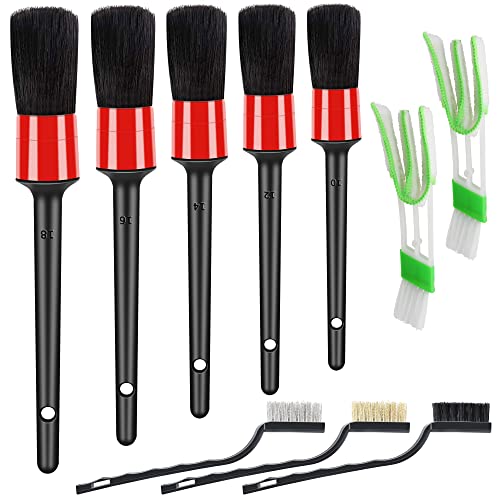
Best for vents and tight crevices: Chemical Guys 9-Piece Car Interior Cleaning Kit, because it includes three soft-bristle detailing brushes and three Workhorse Microfiber Towels. Soft brushes plus lint-free towels make it better for dust in seams, vent fins, and textured dash surfaces.
Best for UV protection and low-gloss protection: Armor All Protectant Wipes. The brand states they deliver UV protection with a medium shine, which suits dashboards that need fade protection more than a dead-matte finish.
Quick picks
- Armor All Car Interior Value Pack: best all-around wipe kit for cleaning, UV protection, and glass.
- Good Stuff Interior Cleaner: best for matte dashboards and residue-sensitive interiors.
- Chemical Guys 9-Piece Car Interior Cleaning Kit: best for vents, seams, and textured trim.
- Armor All Protectant Wipes: best when UV defense matters more than a flat finish.
Best overall dashboard cleaner kit
The best overall kit for most drivers is the Armor All Car Interior Value Pack. It gives you three jobs in one box: Armor All Cleaning Wipes for dashboards, vinyl, plastic, carpet, and fabric; Armor All Protectant Wipes for UV protection with a medium shine; and Armor All Glass Wipes that are lint-free and pre-moistened.
Why this kit should lead the list
Most dashboard messes are dust, fingerprints, sunscreen transfer, light film on trim, and haze on glass. A kit that handles all of that without a separate bottle and multiple towels is easier to keep in the car and more likely to get used often.
The pack also comes in three 30-count canisters, which helps with sorting tasks. Keep the cleaning wipes near the front seat, the protectant wipes for periodic use, and the glass wipes with the windshield tools.
Which dashboard materials it suits best?
Use it on vinyl, plastic, and rubber trim first. Those are the surfaces most likely to benefit from a wipe-down plus a separate protectant pass. For leather on some kits, check the label before use, especially if the surface has a matte coating or a delicate top layer.
It is also the better fit for drivers who want one kit for everyday cleanup. Rideshare drivers, pet owners, smokers, and high-mileage commuters often need a fast wipe system rather than a multi-step detailing setup.
Where it falls short
Wipes are convenient, but they are not the best answer for packed vent fins, deep seams, or heavily textured dashboards. They can also leave more residue risk than a well-chosen spray-and-microfiber setup on a matte dash.
For piano-black trim and touchscreen borders, a dedicated microfiber towel and a gentler cleaner are safer than a protectant-heavy wipe. If the surface shows every smudge, start with the least aggressive option.
Which kit fits your dashboard finish?
Finish matters as much as material. A matte dashboard should stay matte, a satin finish should keep its soft glow, and glossy or piano-black trim should not come away with haze, swirls, or a greasy film. Choose the kit type that preserves the look you already have.
Matte dashboards: keep the low-sheen look
For matte dashboards, the safest match is a residue-free spray or ready-to-use interior cleaner paired with a microfiber towel. Good Stuff Interior Cleaner fits that role well because it is made for dashboards, cockpit plastics, vinyl, and rubber trim, and it does not require dilution.
A matte dash should not look dressed. It should look clean. That means avoiding heavy protectants unless the label specifically says low sheen or matte safe.
Satin dashboards: clean without adding glare
Satin surfaces can tolerate a little more finish than matte, but they still should not turn shiny. A pH-balanced interior wipe or an all-in-one interior cleaner works well here if you follow with a dry microfiber towel to level any film.
Say your sedan has a satin dash and sun hits the top pad every afternoon. A medium-shine dressing may look fine in shade, then create glare when light lands on the panel directly in front of the driver.
Glossy and piano-black trim: avoid haze and swirls
Glossy trim is the easiest place to create scratch marks. Use a soft microfiber towel, a gentle interior cleaner, and very light pressure. Avoid stiff brushes, dry paper towels, and anything gritty that can drag dust across the surface.
A common first-timer mistake is wiping piano-black trim with the same brush used on vents. That can move trapped dust from the bristles straight onto a high-gloss panel and leave visible micro-marring.
Dashboard kit decision matrix
| Dashboard material | Finish | Common problem | Ideal tool type | What to avoid |
|---|---|---|---|---|
| Vinyl | Matte or satin | Dust, sunscreen film, light grime | pH-balanced interior wipes or all-in-one interior cleaner with microfiber towel | Gloss-heavy dressing, abrasive pad, paper towel |
| Plastic | Matte, satin, or glossy | Streaks, haze, fingerprints | Microfiber towel and residue-free spray | Strong solvent cleaners, stiff bristles on shiny trim |
| Rubber trim | Matte | Dust in seams, dry-looking surface | Soft synthetic bristles or microfiber brush | Silicone-heavy dressing that looks greasy |
| Leather on some kits | Matte or low sheen | Smudges, uneven appearance | Leather-safe cleaner and microfiber towel | Overwetting, all-purpose cleaner without leather guidance |
| Piano-black trim | Glossy | Swirls, haze, fingerprints | Microfiber towel with minimal pressure | Dry wiping, stiff brush, gritty residue |
| Textured dashboard plastic | Matte or molded texture | Dust packed in grain and seams | Soft synthetic bristles plus microfiber brush | Abrasive pad or very wet towel |
The matrix points to one rule: the more sensitive the finish, the softer and drier the final wipe should be. A brush helps before the wipe. A towel finishes the job. That order matters.
Brushes and gels for vents and seams
Dust in vents and seams needs a tool that reaches into narrow gaps without cutting the surface. That is where a microfiber brush, soft synthetic bristles, and reusable cleaning gel do the best work.
Microfiber brush for broad dust removal
A microfiber brush uses soft fibers that are safe on delicate surfaces and help lift dust from large dashboard areas. It is a good first pass for the top pad, upper trim, and textured plastic where loose dust sits on the surface.
Use it before liquid cleaner. That keeps loose grit from turning into smear lines once the dash is damp.
Soft synthetic bristles for vent fins
Soft synthetic bristles are non-abrasive and reach vents and seams well, which is why they appear in detailing brushes. The best examples use a metal-free design, which lowers scratch risk on plastic, vinyl, and rubber.
High-density bristle clusters spaced at 0.5 mm are specifically meant to lift fine dust from vents and seams. That spacing matters on narrow vent fins and textured edges where a flat cloth cannot reach.
Reusable cleaning gel for tight spaces
Reusable cleaning gel molds into tight spaces and lifts dust and grime from vents and crevices, and it is designed to leave no residue. It is useful when crumbs, pet hair, or ash collect in small openings that a towel cannot enter.
Are dashboard cleaning gels safe for vents and seams? Yes, as long as the gel is used as directed and pulled out cleanly after it picks up debris. It is a good fit for shallow vents and console seams, but it is not a substitute for a brush on deep, directional vent blades.
Metal-free design and scratch risk
Metal-free design matters because hidden wire ends or exposed ferrules can scratch trim edges, especially around piano-black panels and window switches. On sensitive interiors, a tool without metal parts is the safer default.
If the car has oversized vents, aim for a brush with flexible synthetic bristles rather than a rigid tool. Bigger vents trap more dust, but they also show every mark.
Wipes and sprays for fast maintenance
Wipes and sprays are the fastest route to a clean dashboard. They are also the easiest to misuse, especially when the finish is matte or the surface is already residue-sensitive. The right formula matters more than the package shape.
pH-balanced interior wipes
pH-balanced interior wipes are safe for dashboards and trim, and they give you pre-moistened convenience with streak-free or residue-free results when the formula is well matched to the surface. They are practical for quick wipe-downs between full details.
They suit drivers who want one grab-and-go item in the glove box or center console. That includes pet owners fighting fur dust, smokers dealing with film, and commuters who need to clear fingerprints before a meeting.
All-in-one interior cleaner
An all-in-one interior cleaner works on multiple interior surfaces, including dashboards, seats, and trim, with a spray-and-wipe method. It is the right choice when you want one bottle instead of separate products for every material.
Good Stuff Interior Cleaner fits this category and is designed for dashboards, door panels, center consoles, cockpit plastics, vinyl, and rubber trim. That makes it a stronger fit for matte and satin interiors than a shine-first dressing.
Microfiber towel for final wipe-down
A microfiber towel is lint-free and has high absorption, which makes it the best final wipe tool. It removes leftover cleaner, levels the surface, and reduces the chance of streaks on glossy trim and screens.
Use one towel for cleaning and one dry towel for the last pass if the dashboard is sensitive. That simple separation helps keep dust from reappearing as haze.
Residue control and finish choice
Do dashboard cleaner kits leave a greasy shine? Some do. The usual cause is a dressing or protectant that is too glossy for the surface, or too much product left behind after wiping. Matte dashboards need the least residue, while rubber trim can tolerate more conditioning if the label allows it.
Which kit is best for UV protection on the dashboard? Armor All Protectant Wipes are the clearest match here because they provide UV protection with a medium shine. That is a better fit for vinyl, rubber, and plastic than for a true matte dash that needs to stay flat.
Which kit is safest for plastic and vinyl?
The safest kit for plastic and vinyl is one that cleans without etching the surface or leaving a slick film. On those materials, pH-balanced interior wipes, a microfiber towel, and a residue-free spray are the most flexible combination. Armor All Cleaning Wipes are also safe for dashboards, vinyl, plastic, carpet, and fabric.
Compatible materials
Plastic and vinyl are common dashboard materials, and they usually tolerate the broadest range of interior products. That is why all-in-one interior cleaners and interior wipes are so common in glove-box kits.
Leather on some kits needs more caution. If the label does not mention leather, do not assume it is safe just because it works on vinyl or plastic.
Finish preservation
On plastic and vinyl, the finish is the real issue. A cleaner can be safe for the material and still ruin the look by making it too glossy. If the dash started matte, avoid a protectant that advertises a medium or high shine unless that is the goal.
When to skip a shine-heavy formula
Skip shine-heavy formulas on dashboards with strong sunlight, on piano-black trim, and on any surface that already shows glare. That includes many newer interiors with touchscreens, gloss trim rings, and reflective center stacks.
Can you use the same kit on touchscreens and glass? Sometimes, but only with the right product. Use a streak-free glass cleaner that is ammonia-free and safe for tinted glass, and keep it off the dashboard unless the label says it is interior-safe. Armor All Glass Wipes are lint-free and pre-moistened, which makes them a practical option for windows and mirrors.
Dashboard cleaning cost and value
Value is not only about the shelf price. It also comes down to how many cleans a kit can support, whether it needs refills, and how much product gets used up on one dashboard. Wipe count is the clearest way to compare kits with the facts available here.
| Kit | Pack count | Estimated dashboard cleans | Value signal |
|---|---|---|---|
| Armor All Car Interior Value Pack | 90 total wipes | About 90 light dashboard passes if you use one wipe per clean | Strong for frequent upkeep and split-use storage |
| Armor All Cleaning Wipes canister | 30-count canister | About 30 light dashboard passes per canister | Good for one car or one season of regular touch-ups |
| Armor All Protectant Wipes canister | 30-count canister | About 30 protectant applications per canister | Better for monthly UV care than daily use |
If a dashboard is dusty every day, a 90-count wipe pack can stretch farther than a bottle that gets overused. If the interior only needs occasional cleaning, a smaller bottle may be the more efficient choice even without a large wipe count.
For repeated use, refills and multi-canister packs usually beat single-purpose products. The Armor All Value Pack also weighs 1.65 pounds and measures 18.1 x 10.6 x 9.1 inches, which matters if you want a trunk-friendly kit that still covers multiple surfaces.
How to choose
Start with the dashboard finish, then match the tool to the problem. Matte and satin surfaces do best with residue-free spray or pH-balanced wipes plus microfiber. Textured dashboards and vents need soft synthetic bristles or reusable cleaning gel. Glossy and piano-black trim need the gentlest towel-first approach.
- Identify the finish: matte, satin, or glossy.
- Check the material: vinyl, plastic, rubber trim, or leather on some kits.
- Pick the main problem: dust, tight vents, UV exposure, or residue sensitivity.
- Choose the tool: microfiber brush, soft-bristle detailing brush, gel, wipe, or spray.
- Skip anything that adds glare if the dashboard should stay low-sheen.
Suppose a commuter has a textured vinyl dash with dust in the vents and a matte top pad. The better buy is a brush-and-wipe kit, not a shine kit. One tool lifts dust, the other finishes the surface without making it glossy.
For smokers, pet owners, and rideshare drivers, speed matters as much as finish. A wipe pack or all-in-one cleaner is usually the first kit to keep in the car, then a brush set can handle deeper cleanup on weekends.
Frequently asked questions
What is the best car dashboard cleaner kit for a matte dashboard?
The best choice is a residue-free interior cleaner with a microfiber towel, or a matte-safe wipe that does not add shine. Good Stuff Interior Cleaner is a strong fit because it is ready to use and designed for dashboards, cockpit plastics, vinyl, and rubber trim. Skip glossy protectants unless you want a visible sheen.
Which dashboard cleaner kit is safest for plastic and vinyl?
pH-balanced interior wipes and all-in-one interior cleaners are usually the safest starting point for plastic and vinyl. Armor All Cleaning Wipes are stated safe for dashboards, vinyl, plastic, carpet, and fabric. For finish control, follow with a dry microfiber towel rather than a heavy dressing.
Do dashboard cleaner kits leave a greasy shine?
Some do, especially kits that focus on protectant or gloss. A medium-shine wipe can be fine on rubber trim, but it is often wrong for matte dashboards and piano-black panels. To avoid a greasy look, choose a residue-free cleaner or a low-shine formula and wipe off extra product.
Are dashboard cleaning gels safe for vents and seams?
Yes, reusable cleaning gel is generally safe for vents and seams when used as directed. It molds into tight spaces and lifts dust and grime without leaving residue. It works best on shallow openings and crumb-prone seams, while a soft-bristle brush is better for deeper vent blades.
What tools do I need to clean dashboard dust without scratching?
Use a microfiber brush for broad dust removal, soft synthetic bristles for vent fins, and a microfiber towel for the final pass. A metal-free design lowers scratch risk on plastic, vinyl, and rubber. Avoid stiff pads, paper towels, and any tool that drags grit across glossy trim.
Can I use the same kit on touchscreens and glass?
Sometimes, but only if the cleaner is labeled safe for both surfaces. Use a streak-free glass cleaner that is ammonia-free and safe for tinted glass on windows and mirrors. For touchscreens, a soft microfiber towel and a screen-safe cleaner are safer than a dashboard dressing or protectant wipe.
Products related to this article
Sponsored / affiliate links. As an Amazon Associate I earn from qualifying purchases. I may earn additional commission from eligible campaigns.