Best Car Protection for 2026: We Compared Top Products
For hail, choose a padded hail car cover; for UV, a UV-blocking outdoor cover; for dust and storage, a breathable indoor cover or sealed storage bag; for chips, use paint protection film on impact zones. Weak protection means broken glass, faded paint, scratched clear coat, and cleanup bills. This guide ranks the right products by threat level and parking setup, then points you to the best fit for each use case.
Quick comparison
| Product | Badge | Best for | Price | ||
|---|---|---|---|---|---|
 |
DYTARGET in Full Exterior Sedan Waterproof Car Cover AllDYTARGET | Our pick | Full sedan cover · waterproof · UV resistant | $30.98
Price as of 25 Oct 2026
|
View |
 |
Padded Car Covers for Hail, Hail Protector Car Cover SUV,Generic | Also great | Hail protector cover · padded · all-weather | $49.99
Price as of 25 Oct 2026
|
View |
 |
L’UXANI Ceramic Spray Coating for Cars – Advanced GrapheneL’UXANI | Also great | Ceramic spray coating · graphene · 17oz | $8.99
Price as of 25 Oct 2026
|
View |
 |
XPEL Clear Paint Protection Film Roll, 6" x 84",XPEL | Upgrade pick | Clear PPF roll · self-healing · 6" x 84" | $23.91
Price as of 25 Oct 2026
|
View |
 |
EzyShade Car Windshield Sun Shade. See Vehicle Size-Chart.EzyShade | Our pick | $16.97
Price as of 16 Nov 2026
|
View |
This comparison is built around the damage you want to prevent, not the product label. A cover can help with hail, dust, UV, and outdoor grime; PPF is the better tool for rock chips and scuffs on exposed panels.
How we chose
We compared each product by protection type, fit range, material construction, and the failure mode it is meant to reduce. We also weighed setup speed, storage use, and whether the product has a clear limit, such as condensation under a cover or chip protection that does not extend to dents.
Replacement frequency matters too. A cheap cover that wears through in one season can cost more over time than a better-built option, especially if your car sits outside in sun, wind, or storm season.
The shortlist below also accounts for body style and parking environment. A sedan parked in a garage has different needs from an SUV in an open lot or a daily driver on gravel-heavy roads.
Padded hail car cover: best for hail-prone parking
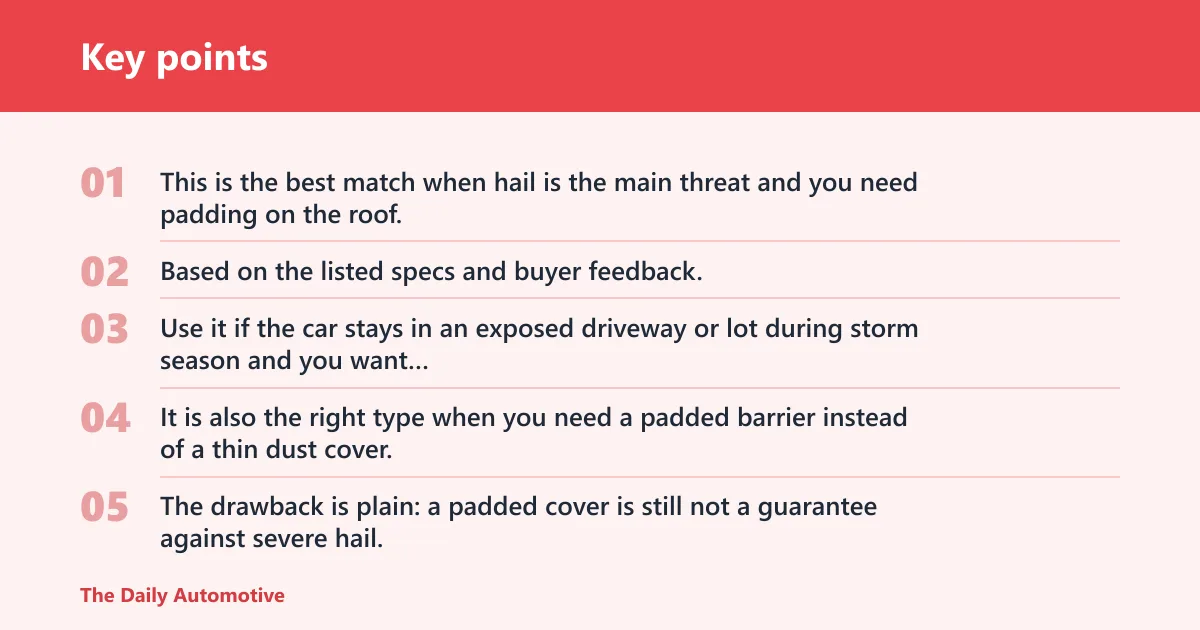
This is the best match when hail is the main threat and you need padding on the roof, hood, and mirror area. Based on the listed specs and buyer feedback, the appeal is simple: multi-layer protection with 4 mm cotton padding, plus wind buckles, wind strips, and tail straps for a more secure hold.
Use it if the car stays in an exposed driveway or lot during storm season and you want faster deployment than a full shelter. It is also the right type when you need a padded barrier instead of a thin dust cover.
The drawback is plain: a padded cover is still not a guarantee against severe hail. Large stones, sharp impacts, or long storm exposure can overwhelm padding, and fit becomes more important because slack fabric can move in wind.
What materials matter most
For hail protection, layered construction matters more than a glossy outer shell. The key is energy absorption, which is why EVA cushioning or similar padding is more relevant than a simple waterproof face fabric.
Coverage should extend across the roof and mirror area, since those surfaces are common impact points. A cover that skips those zones leaves the most exposed panels underprotected.
Best fit features to look
Start with vehicle-size compatibility, then check whether the pattern reaches the roof line without pulling tight across the mirrors. Rapid deployment matters if you are reacting to a storm warning.
Straps, buckles, and hem tension cut lift. If the cover floats or shifts, hail protection drops fast.
Common failure points
Thin padding can compress too easily. Loose fit can also let wind push the cover into the panels it is supposed to protect.
Another weak point is partial coverage. If the roof is padded but the mirrors or hood are left exposed, the cover does not solve the main damage path.
XPEL clear paint protection film: best for chips
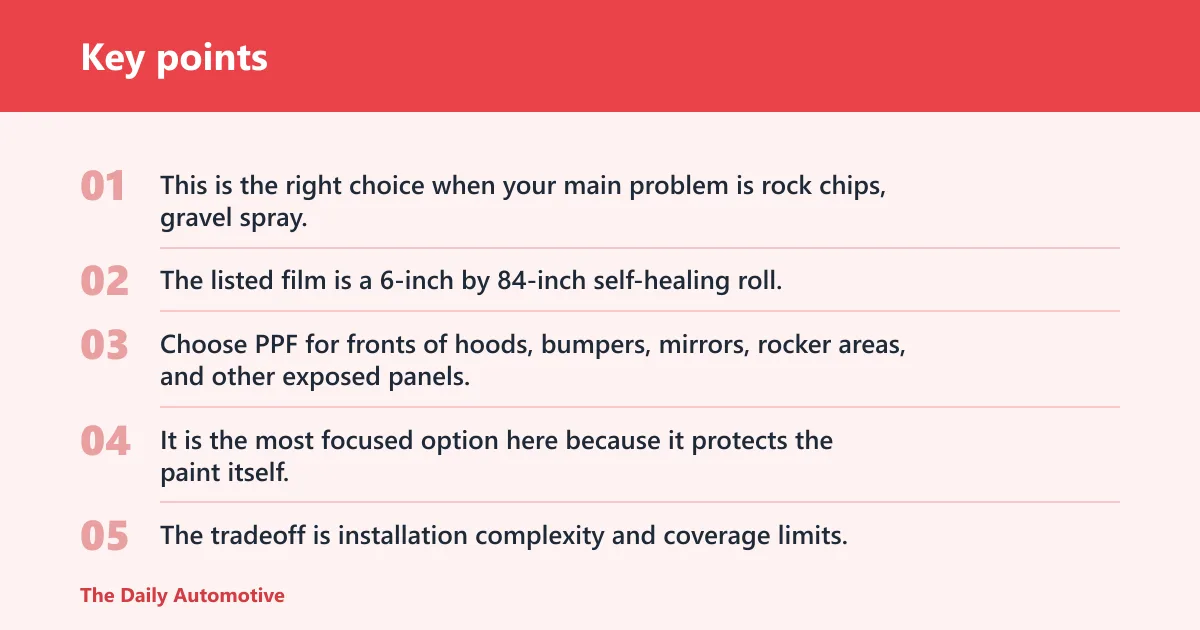
This is the right choice when your main problem is rock chips, gravel spray, and minor scuffs on high-impact paint zones. The listed film is a 6-inch by 84-inch self-healing roll, and it is made to stay clear while protecting paint from chips and scratches.
Choose PPF for fronts of hoods, bumpers, mirrors, rocker areas, and other exposed panels. It is the most focused option here because it protects the paint itself, rather than covering the whole car.
The tradeoff is installation complexity and coverage limits. PPF does not stop dents, does not prevent every strike, and it only protects the areas you apply it to.
How PPF thickness affects protection
For PPF, thickness matters because it can change how much energy the film may absorb before the paint underneath is affected. A common range in the market is 6 mil to 8 mil, and that range is the one to watch when comparing products.
The 3M film listed in the sourced facts is 6mil thick polyurethane, which sits at the thinner end of that practical range. Thicker film can offer more cushioning, but fit, adhesive quality, and edge sealing matter too.
Where PPF works best
PPF works best on repeated impact zones: front bumper edges, hood leading edge, side mirrors, and lower doors where gravel spray lands. It is especially useful on daily drivers that see highway use.
It also works well on cars that are washed often, since a clear film can keep the finish cleaner and reduce visible wear on the paint beneath.
Limits you should expect
PPF cannot stop major impacts, dents, or deep gouges. It also will not help much if the damage comes from a parked hit or a severe storm.
Long-term sun exposure can still age the film. Low-quality film may yellow, lift at the edges, or haze over time.
Which car cover is best for indoor storage?
A breathable indoor cover is best for indoor storage because it keeps dust off the paint without trapping moisture against the body. Look for a snug fit, elastic hem, and a soft inner lining so the cover stays put and does not rub the clear coat during routine garage use.
Breathability and dust control
Indoor covers should be built to block dust, not seal the car in plastic. Breathable fabric helps reduce condensation, which matters in garages that swing between cool nights and warmer days.
WinPower’s indoor cover fits vehicles from 177 to 193 inches, which gives a useful reference point for size matching. If the cover is too loose, it can collect dust folds and shift on the body.
Soft inner linings and paint safety
For a garage car, the inside surface should be soft enough to avoid marring. Fleece or another soft liner is a better choice than rough synthetic fabric on clean paint.
That matters even more for cars that are detailed often. A cover that traps grit between the fabric and paint can create fine scratches over time.
Fit details that prevent rubbing
Elastic hems help the cover hold shape around the lower body line. A snug fit also reduces slack that can flap against mirrors, antennas, or sharp trim pieces.
For a parked car that is rarely moved, fit is about stability first. A cover that drapes loosely can shift every time the garage door opens or someone walks past.
All-weather car covers: best for outdoor parking
All-weather outdoor covers are the right choice when the car faces rain, sun, dust, and wind in the same parking spot. You want waterproofing or strong water resistance, UV protection, mirror pockets, and tie-down features that keep the cover from lifting or pooling water on the roof.
Waterproofing versus water resistance
Waterproof fabric blocks rain, but it can also trap moisture if the inner layer does not breathe well enough. Water resistance may be enough for light weather, while fully waterproof materials are better when the car sits through storms.
The DYTARGET full exterior sedan cover is listed as waterproof, UV resistant, dustproof, and snowproof, which makes it a strong all-weather pick for a sedan. Its wind straps and click-tight buckles help with secure fit.
Wind control and anchor features
Wind is what turns a cover into a problem. If the cover can lift at the hem, it can rub paint, flap loudly, and leave corners exposed.
Look for windproof straps, tail straps, and a snug hem. These features matter more on open lots and coastal or storm-prone parking spots.
UV and mirror coverage
UV protection matters when the car sits outdoors for long stretches. Sun exposure fades trim and paint, and it can also age plastics and seals.
Mirror pockets help the cover sit closer to the body. That reduces slack at one of the most common snag points.
P & S Bead Maker: best for wash-and-wax protection
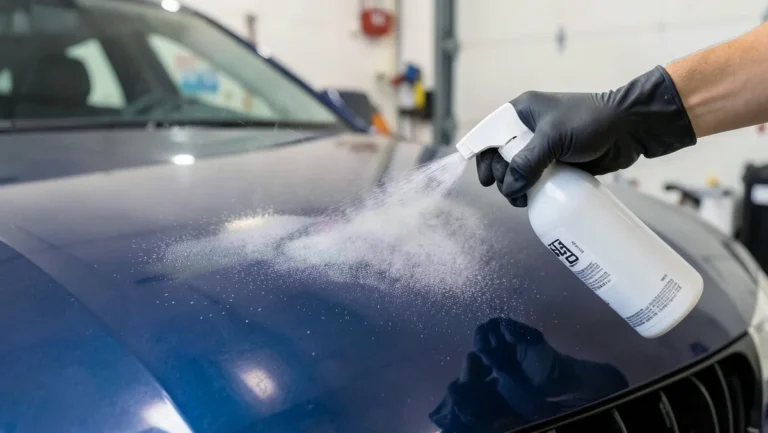
This is the best pick for quick surface protection when you want a spray-and-wipe product rather than a full cover. It is presented as a spray-and-wipe protectant and sealant, which makes it useful for adding a hydrophobic finish, some UV support, and extra gloss after a wash.
It is a good option for cars that are garaged most of the time or for owners who want an easy layer between regular washes. It is not a replacement for PPF on chip-prone panels, and it will not stop hail or dust accumulation on a parked car.
The main drawback is scope. A spray sealant works on the surface it can coat, so it cannot protect against impact damage and it wears off faster than physical barriers.
Spray-and-wipe ease
Easy application is the main reason to buy this type of product. A quick spray and wipe can refresh protection without the setup time of a cover or the cost of film installation.
That convenience makes it useful between deeper protection steps. It is a maintenance product, not a structural shield.
Hydrophobic behavior and gloss
A hydrophobic finish helps water bead and run off the panel more quickly. That can reduce water spotting risk if the car is washed and dried on time.
Gloss is a side benefit, not the core purpose. If your main concern is oxidation or long-term parking damage, a surface sealant is only part of the answer.
Surface compatibility
Check that the product is safe on your clear coat, trim, and existing wax or sealant layers. Some spray protectants work best on clean paint and can underperform if the surface is already contaminated.
Use it where fast maintenance matters. Do not expect it to replace dedicated protection for hail, chips, or prolonged outdoor storage.
What is the best car protection product for hail damage?
The best product for hail damage is a padded hail cover with multi-layer construction, roof and mirror coverage, and secure straps. It is the right tool because it absorbs impact better than a standard cover, which mainly blocks dust, UV, and rain. Severe hail can still overwhelm any portable cover.
How thick should hail protection or PPF be?
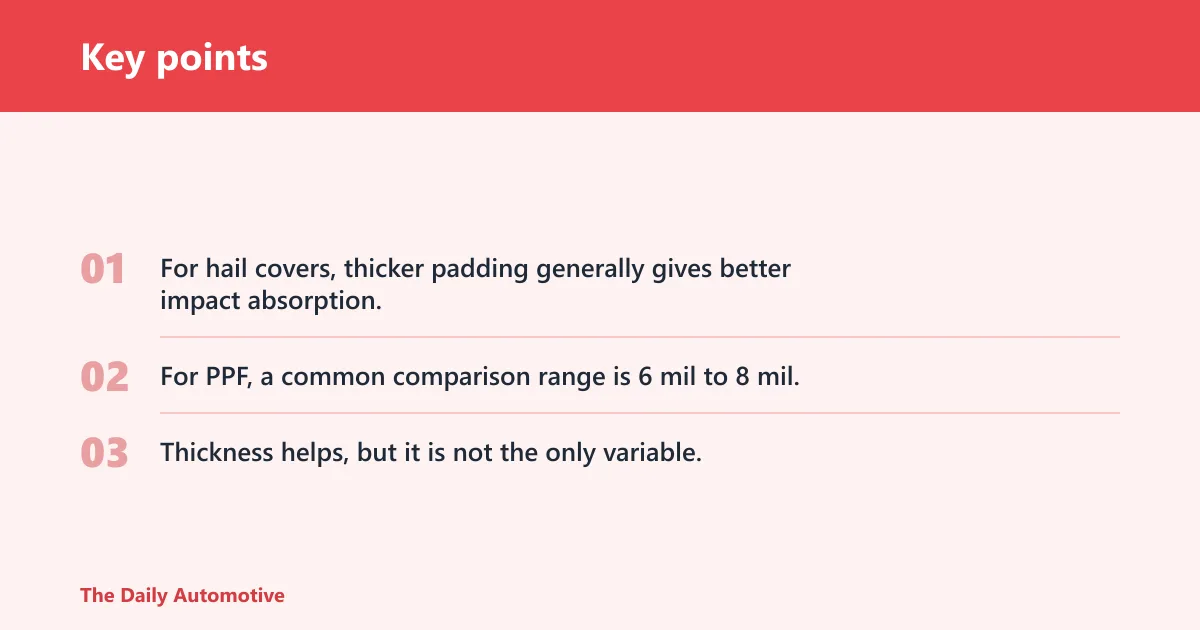
For hail covers, thicker padding generally gives better impact absorption, and 4 mm padding is a concrete reference point from the listed hail cover. For PPF, a common comparison range is 6 mil to 8 mil, with the 3M film here listed at 6mil thick polyurethane. Thickness helps, but it is not the only variable.
Protection decision table
This table matches the threat to the protection type, then ties that choice to fit needs and likely failure points. Use it before you compare brand names, because the wrong product can fail in a predictable way.
| Threat | Best protection type | Recommended features | Fit requirements | Common failure points |
|---|---|---|---|---|
| Hail | Padded hail cover | Multi-layer construction, EVA or cotton padding, roof and mirror coverage, rapid deployment | Vehicle-specific size, snug hem, secure straps, limited slack over roofline | Puncture from severe hail, wind lift, incomplete mirror coverage |
| UV | All-weather outdoor cover or UV-focused cover | UV resistance, reflective outer layer, secure straps, mirror pockets | Correct length, close body contour, no loose panels to flap in sun and wind | Fading from low UV protection, trapped heat, edge wear |
| Dust | Indoor car cover | Breathable fabric, soft inner lining, elastic hem, snug fit | Garage-specific size, low-abrasion inner layer, stable hem tension | Condensation, rubbing from loose fit, dust trapped under the cover |
| Rock chips | Paint protection film | Polyurethane material, adhesive backing, 6mil to 8mil thickness, clear finish | Coverage on high-impact panels, clean edges, panel-specific application | Does not stop dents, edge lift, yellowing on low-grade film |
| Water spotting | Sealant or wax | Hydrophobic finish, spray-and-wipe use, compatible on clear coat and trim | Clean surface, regular reapplication, full-panel coverage | Short service life, limited impact protection, streaking if surface is dirty |
| Indoor storage | Breathable indoor cover or sealed storage bag | Dust protection, soft liner, elastic hem, snug fit | Exact length match, enough mirror clearance, low rubbing risk | Condensation, abrasion from grit, overhang that gathers dust |
Say your sedan lives outside in an area with summer hail and winter wind. A padded hail cover reduces roof impact risk, but it still needs correct sizing and secure straps or it can shift and leave the mirrors exposed.
Suppose your commuter truck sees gravel roads every week. PPF on the front bumper and hood edge is the smarter buy because a cover helps only when the vehicle is parked, while the film protects the panels during the drive itself.
How do you choose the right size?
Measure length in inches first, then compare that number to the manufacturer’s size chart before you buy. After that, check body style, mirror placement, and whether the cover pattern has enough room to sit tight without pulling at the hem or hanging over the bumper.
Measure length in inches first
Length is the fastest filter. The SNKOL cover fits vehicles from 186 to 193 inches, Budge Lite Size 3 is sized for mid-size sedans up to 200 inches, and Season Guard is intended for full-size sedans up to 200 inches.
Those ranges are useful because many owners guess by model name and miss trim-specific differences. A long wheelbase, roof rack, or larger mirror set can change the fit.
Match body style and mirror placement
Sedans, SUVs, hatchbacks, and trucks do not share the same cover pattern. Mirror pockets, antenna allowances, and roof height all affect whether a cover lies flat or pulls apart at the seams.
For SUVs, a product like the A7 hail protector is designed with expanded cushioning, which matters because the higher roof and broader panels need different coverage than a compact sedan.
Check for overhang, gaps, and hem tension
Overhang can trap wind, and gaps let dust, rain, or hail enter at the edges. Hem tension should be firm enough to hold the cover down without making it hard to install.
For daily parking, the goal is simple: close fit, clean coverage, and enough adjustability to avoid exposed corners. If the cover balloons in wind, it is the wrong size or the wrong design.
Which one should you buy?
Buy the hail cover if your biggest risk is storm damage and the car parks outside. Buy PPF if your problem is gravel, road debris, and repeated impact on exposed panels. Buy an indoor cover if the car lives in a garage and dust is the main issue. Buy an all-weather cover if the car sits outdoors through sun, rain, and wind.
Best choice by budget
For a low upfront spend, a sealant like P & S Bead Maker makes sense for routine surface protection, but only if you understand its limits. It helps with water behavior and gloss; it does not solve impact damage.
If you can spend more, a targeted film on the front end often gives better long-term value than repeated cosmetic repair on chipped paint.
Best choice by threat level
For hail, pick the padded hail cover first. For chips, pick PPF first. For indoor dust, pick the breathable indoor cover first.
That order matters because a product can be excellent at one job and weak at another. A UV cover does not replace PPF, and PPF does not replace a hail blanket.
Best choice by parking setup
If you park in a driveway with storm exposure, use a hail or all-weather cover depending on the season and risk. If you park in a garage, use an indoor cover or nothing if the car is already clean and sealed.
If the car sits at a curb or lot near traffic, pair PPF on impact zones with a cover only when parked. That split approach is often the best balance of cost and protection.
Frequently asked questions
Do paint protection films really protect against rock chips?
Yes, PPF is one of the best options for reducing rock chips on high-impact panels. A polyurethane film with adhesive backing can absorb minor hits and scratches better than bare paint. It still cannot stop every chip, and it will not prevent dents or major impacts.
What features should I look for in an all-weather car cover?
Look for waterproofing or strong water resistance, UV resistance, windproof straps, mirror pockets, and a size that matches your body style. Reflective strips help visibility in low light. If the cover is too loose, wind lift becomes the main failure point.
What is the difference between car covers and paint protection film?
Car covers protect the whole vehicle from outside exposure when parked, including dust, UV, rain, and some hail, depending on the design. PPF protects the paint itself on the panels you cover, mainly against chips and scratches. Covers are for storage and weather; film is for impact zones.
Which car protection products are worth buying for 2026?
The best buys are the ones matched to your real risk. For storm-prone parking, the padded hail cover is the highest-priority item. For gravel-heavy commutes, PPF is worth it. For indoor storage, a breathable cover is the right spend. For easy maintenance, a spray sealant is a sensible add-on.
How do I choose the right car cover size for my vehicle?
Start with the vehicle’s length in inches, then check the manufacturer’s size chart and body-style notes. Confirm mirror placement, antenna clearance, and hem tension before buying. A cover that is slightly off can leave gaps, overhang, or a loose fit that invites wind lift.
Products related to this article
Sponsored / affiliate links. As an Amazon Associate I earn from qualifying purchases. I may earn additional commission from eligible campaigns.
 Car Cover Hail Protection Padded Compatible with Toyota MR2 Roadster, Hail Protector Car Cover Protection, Snowproof Waterproof Windproof Sun Uv Protection Hail Blanket FY13Car Cover Hail Protection Padded Compatible with opel Astra TwinTop, Hail Protector Car Cover Protection, Snowproof Waterproof Windproof Sun Uv Protection Hail Blanket FY13