UV Protection for Cars: Top Products to Shield and Shine Your Vehicle
For dashboards and trim, choose a UV protectant with UV absorbers; for paint, use a ceramic coating or sealant; for daily outdoor parking, add a reflective cover or sunshade. Ignore UV and plastic fades, leather dries out, and clear coat loses gloss sooner. This guide compares protectants, coatings, covers, and shades by surface, durability, finish, and parking setup so you can buy the right one.
Quick picks matrix


| Product type | Best surface | Expected maintenance cadence | Finish | Climate fit | Common misuse warning |
|---|---|---|---|---|---|
| 303 Aerospace Protectant | Vinyl, plastic, rubber, gel coat | Reapply every 3–5 weeks | Matte, non-greasy | Good for hot interiors and trim that you want to keep non-shiny | Do not expect paint protection or long outdoor intervals |
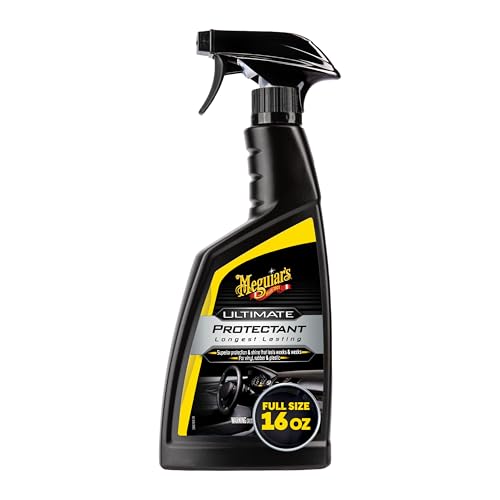
| Meguiar’s Ultimate Protectant | Vinyl, rubber, plastic; interior and exterior use | Reapply as the finish starts to fade | Lasting shine | Useful where you want visible gloss and UV defense on trim | A shiny finish on dusty panels can look uneven fast |
| Adam’s Advanced Graphene Ceramic Coating | Paint | Long-wear coating; follow the listed prep and cure steps | High-gloss | Better fit for owners who want long-term exterior protection | Poor prep or hot-panel application can shorten performance |
| DRONAR 20H Graphene Ceramic Coating | Paint | Long-wear coating; check cure and maintenance instructions carefully | Glossy | Best when you want a durable, hydrophobic exterior layer | Do not treat it as a no-maintenance solution |
| Armor All Original Protectant Wipes | Interior vinyl, plastic, rubber | Fast touch-ups as needed | Quick-clean finish | Good for daily commuters and glove-box cleanup | Wipes are not a substitute for deeper exterior protection |
| MORNYRAY Waterproof Car Cover | Entire parked vehicle | Use whenever the car sits outside | Cover, not finish | Outdoor parking, sun exposure, rain, and dust | Wet or dirty paint under a cover can trap abrasion |
| Enovoe Car Window Shades | Side windows and rear cabin glass | Reusable as needed | Shade, not coating | Cabin heat control and child safety on sunny days | Do not use a shade as a paint protectant |
The overall top pick for trim and interior plastics is 303 Aerospace Protectant because it pairs UV protection with a matte finish and a clear reapply schedule. For paint, move to a ceramic coating. For parked-outside cars, add a cover or shade instead of asking a spray to do every job.
303 Aerospace Protectant for trim and interiors
303 Aerospace Protectant is commonly used on vinyl, plastic, rubber, and gel coat when a non-greasy matte finish and regular reapplication are wanted. Its listed cadence is every 3–5 weeks, so it suits owners who want simple interior and trim protection without a glossy film.
Where it fits best
This product belongs on dashboards, interior trim, door panels, rubber weatherstripping, and similar surfaces that take sun exposure but should not look slick. It is a practical choice for daily drivers, weekend cars, and boats with gel coat surfaces that need UV care.
The main tradeoff is upkeep. If you want to apply a protectant and leave it alone for months, this is not the right lane. If you want a matte, clean look with regular maintenance, it fits well.
Failure risks to watch
A common mistake is using a trim protectant on paint and expecting the same result as a coating. Another is applying it to a hot panel in direct sun, which can leave uneven residue or streaking. Clean the surface first and keep it off glass where glare could be distracting.
Meguiar’s Ultimate Protectant for shine and UV defense
Meguiar’s Ultimate Protectant uses UV clear coat technology and is listed for vinyl, rubber, and plastic on both interior and exterior surfaces. It is the better pick when you want a visible, lasting shine rather than the muted look of a matte protectant.
Best use cases
This is a strong choice for trim that you want to look deeper and darker, especially on exterior plastic pieces that can wash out in bright sun. It can work inside too, but the shine level matters more here than with 303.
If you want a cleaner, factory-matte dashboard look, 303 is usually the safer match. If you want gloss on exterior trim and accept a little more wipe-down work, Meguiar’s is the better fit.
What it does not replace
It is still a protectant, not a paint coating. It helps with UV defense on compatible materials, but it does not take the place of a coating on clear coat or a cover for a car that sits in harsh sun all day.
Do ceramic coatings protect paint from UV rays?
Yes, ceramic coatings are a better paint-focused answer than interior sprays because they are built for exterior clear coat and longer wear. Adam’s Advanced Graphene Ceramic Coating is described as 10H hardness and claims over 7 years of protection, while DRONAR 20H Graphene Ceramic Coating is positioned as a 20H product with hydrophobic, long-term UV resistance claims.
Adam’s advanced graphene ceramic coating
Adam’s is the pick for owners who want a high-gloss finish and a long service life on paint. The 10H hardness and over 7 years of protection claim place it in the long-term coating category, not the quick-spray category.
That long wear comes with prep demands. Surface decontamination, panel readiness, and proper cure time matter more here than with a spray protectant. If the paint is dirty or oily, a coating will not bond as intended.
DRONAR 20H graphene ceramic coating
DRONAR is the stronger long-wear option on paper because it is positioned as a 20H coating with hydrophobic performance and long-term UV resistance. It suits owners who want a more serious exterior layer and are willing to follow a coating process carefully.
Do not treat hardness as a substitute for maintenance. Even a hard coating still needs correct prep, sensible washing, and periodic inspection. It is durable, not invincible.
Are ceramic spray coatings worth it for sun damage?
They can be worth it for owners who want easier application than a full coating, but they are still maintenance products, not permanent sun armor. A spray coating may help with gloss and water behavior, yet it usually will not match the longevity of a properly installed coating on paint that sits outside often.
Say your car is parked outdoors five days a week under intense sun. A spray coating can help, but a true ceramic coating or a cover gives you a more realistic path to reducing long-term exposure.
Armor All Original Protectant Wipes for fast touch-ups
Armor All Original Protectant Wipes are the quick-clean option for vinyl, plastic, and rubber when you want interior UV protection without opening a bottle and towel. They are useful for fast touch-ups on dashboards, consoles, and door trim.
Why wipes make sense
Wipes are convenient for busy owners who want to knock down dust and add some UV protection at the same time. They are best for small areas and maintenance between deeper cleanings.
Because the format is simple, the finish is usually less customizable than a liquid protectant. If you want a specific matte or gloss look, a spray gives you more control.
Where they fall short
Wipes are not the right answer for paint, and they are not a substitute for a true coating. They also dry out or run out faster if you are trying to cover large interior areas with one session.
What works best for outdoor parking?
For daily outdoor parking, MORNYRAY Waterproof Car Cover and Enovoe Car Window Shades do different jobs. The cover blocks the whole vehicle from sun, rain, and dust. The shades target the cabin, blocking up to 97% of UV rays and reducing glare inside the car.
MORNYRAY waterproof car cover
This cover is the clear choice for a car that lives outside. It is designed for sedan-length vehicles from 194–206 inches and combines UV resistance with waterproofing, which makes it useful when the car sits in direct sun or mixed weather.
Use a cover only when the paint is clean and the cover itself is clean. A dirty cover rubbed over dusty paint can create its own damage. That is the main failure case to avoid.
Enovoe car window shades
Enovoe shades are the interior companion to an outdoor-parking plan. Their static-cling reusable design makes them easy to move, and blocking up to 97% of UV rays helps reduce glare and cabin heat for passengers, especially children in the back seat.
They protect glass areas, not paint. If the car sits in the sun all day, a shade reduces cabin abuse, but a cover still does the exterior heavy lifting.
Do car covers block UV rays and reduce interior heat?
Yes, a car cover helps block UV rays and can reduce heat gain inside the cabin because it limits direct sun exposure. It is most useful when the car is parked outside for long stretches. Pairing a cover with window shades gives you exterior and interior protection together.
How do you choose the right UV protection?
Start with surface compatibility, then decide how much maintenance you will tolerate. A dashboard needs a different product than a hood. Vinyl, rubber, plastic, paint, and glass all call for different tools, finishes, and reapplication schedules.
Surface compatibility: vinyl, rubber, plastic, paint, and glass
Use 303 Aerospace Protectant, Meguiar’s Ultimate Protectant, or Armor All Original Protectant Wipes on vinyl, rubber, and plastic. Use a ceramic coating on paint. Use Enovoe shades on glass and MORNYRAY when the whole vehicle needs outside protection.
A common first-timer mistake is assuming a single UV spray will protect the windshield, dashboard, and clear coat equally well. That usually leads to the wrong finish on the wrong panel, or to protection that fades too quickly under real sun exposure.
Finish and appearance: matte vs gloss
If you want a factory-style matte look, 303 is the cleaner match. If you want visible shine on trim, Meguiar’s is the better fit. On paint, Adam’s and DRONAR aim for a glossy exterior finish that belongs to the bodywork, not the dashboard.
Maintenance cadence and failure risks
303 Aerospace Protectant asks for attention every 3–5 weeks. Wipes are faster but less durable per application. Coatings last much longer, but they demand careful prep and correct application. Covers and shades are simple to use, yet they fail if they are dirty, poorly fitted, or used on a hot vehicle that needs cooling down first.
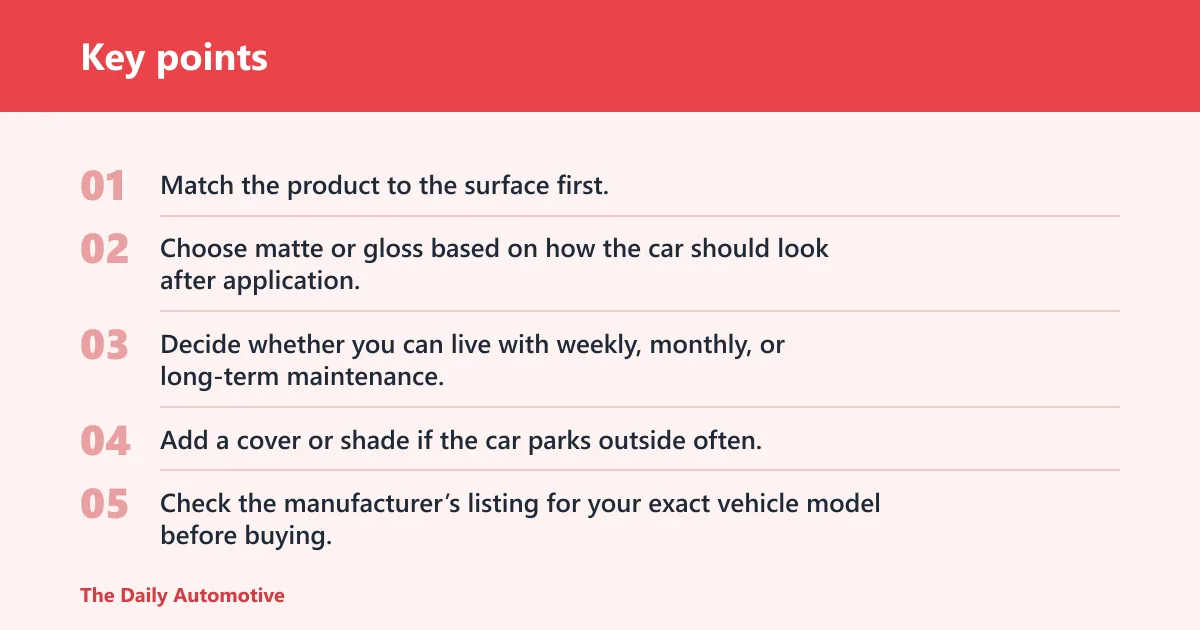
- Match the product to the surface first.
- Choose matte or gloss based on how the car should look after application.
- Decide whether you can live with weekly, monthly, or long-term maintenance.
- Add a cover or shade if the car parks outside often.
- Check the manufacturer’s listing for your exact vehicle model before buying.
Cost per month, not just sticker price
The cheaper bottle is not always cheaper over time. A spray that needs frequent reapplication can cost more per month than a coating if you use the car daily and park outside. A cover or shade can cost more upfront, but it may reduce the need for repeated interior cleanup and UV repair work.
Suppose a commuter parks in full sun every weekday. A low-cost spray may seem appealing, but repeated applications, plus a separate sunshade, can add up faster than one better exterior solution and one reusable cabin tool.
Frequently asked questions
What is the best UV protection for cars?
The best UV protection depends on the surface. For dashboards and trim, 303 Aerospace Protectant is a strong matte-finish choice. For paint, a ceramic coating is more appropriate. For cars parked outside, a reflective cover and window shades do the most to cut direct sun exposure.
Do ceramic coatings protect car paint from UV rays?
Yes, ceramic coatings are designed for paint and are the right category when you want long-wear exterior UV defense. Adam’s Advanced Graphene Ceramic Coating and DRONAR 20H Graphene Ceramic Coating both target that role, with gloss and durability aimed at body panels rather than interior trim.
How often should I reapply a UV protectant on my car?
For 303 Products Automotive Protectant Spray, the listed interval is every 3–5 weeks. Other sprays and wipes depend on use and sun exposure, so watch how quickly the finish fades. Outdoor parking usually shortens the interval compared with garage parking.
Is 303 Aerospace Protectant better than wax for UV protection?
They are for different jobs. 303 Aerospace Protectant is meant for vinyl, plastic, rubber, and gel coat, where it provides a matte UV protectant finish. Wax belongs on painted surfaces, so it is not the better choice for dashboard or trim protection.
Can I use UV protectant on dashboard, vinyl, and plastic?
Yes, if the product is listed for those surfaces. 303 Aerospace Protectant and Armor All Original Protectant Wipes are both aimed at vinyl, plastic, and rubber. That makes them suitable for dashboards, but not for every surface in the cabin, so check the label first.
What UV protection works best for parked-outside cars?
A parked-outside car needs layered protection. MORNYRAY Waterproof Car Cover handles the exterior, while Enovoe Car Window Shades reduce cabin UV and glare. For painted panels, a ceramic coating adds another layer, but it should be paired with a physical barrier when sun exposure is constant.
Products related to this article
Sponsored / affiliate links. As an Amazon Associate I earn from qualifying purchases. I may earn additional commission from eligible campaigns.