5 Best Car Decals for Customizing Your Ride (2026): We Compared
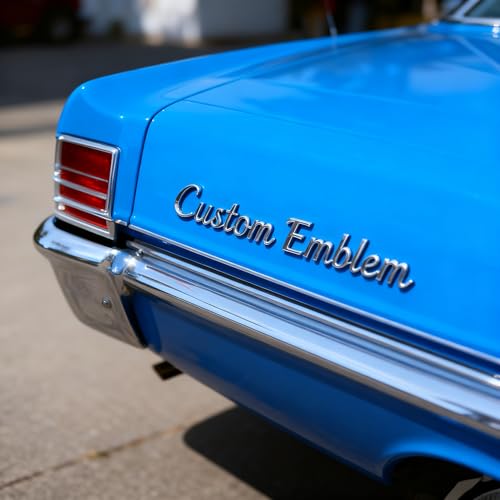
For the cleanest OEM-plus look, choose UV-stable vinyl or cast decal film in gloss black, satin black, or color-matched trim, keep letters at 5–15 mm for badges and 20–40 mm for windows, and match the font to the vehicle’s factory badging. Poor material or oversize letters can lift at the edges, look off-center, and leave adhesive or paint damage during removal. This guide covers the best materials, finishes, sizes, placement rules, and removal risks so you can buy the right trim-letter decals.
Quick comparison
| Product | Badge | Best for | Price | ||
|---|---|---|---|---|---|
 |
1x Car Auto Chrome Metal DIY 3D Letters Digital Alphabetanso | Our pick | 3D chrome letter sticker · approx 25mm · silver | $1.99
Price as of 24 Oct 2026
|
View |
 |
1 inch, Black Letter Stickers, Vinyl Stick on Letters – 30TownStix | Pair with it | Vinyl stick-on letters · 1 inch · black | $6.59
Price as of 24 Oct 2026
|
View |
 |
Arespark Matte Black Vinyl Wrap, Self-Adhesive Matte VinylArespark | Also great | $9.99
Price as of 24 Oct 2026
|
View | |
 |
LZLRUN Custom Metal Letters Support Any Font, PersonalizedLZLRUN | Also great | Custom metal letters · 0.5–3 in · stainless steel | $7.99
Price as of 24 Oct 2026
|
View |
 |
Custom High Grade Reflective Vinyl Lettering Decals, SizeGeneric | Also great | Reflective vinyl lettering · custom size · color options | $9.99
Price as of 24 Oct 2026
|
View |
Start by matching the decal material to the surface, then size the letters to the spot where they will sit. Smooth paint, glass, chrome trim, and textured plastic all need different material behavior.
Color matters too. A decal that reads cleanly on a window can look heavy on a badge, while a narrow letter can disappear on a large door panel.
How we chose
We compared the listings on material type, finish, placement fit, and removal risk. The useful details were the ones that help you avoid bubbles, edge lift, awkward spacing, and residue after removal.
We also prioritized products with clear size options or predictable trim use. For this topic, a good choice is not the flashiest decal; it is the one that lands straight, holds through weather, and comes off with less trouble later.
Two factors matter most. First, the surface: smooth paint, glass, or chrome trim is far more forgiving than textured plastic. Second, the scale: a 25 mm letter can look right on a badge, while a 1 inch letter often suits a larger window or door application better.
Vinyl letter decals: best for easy custom installs
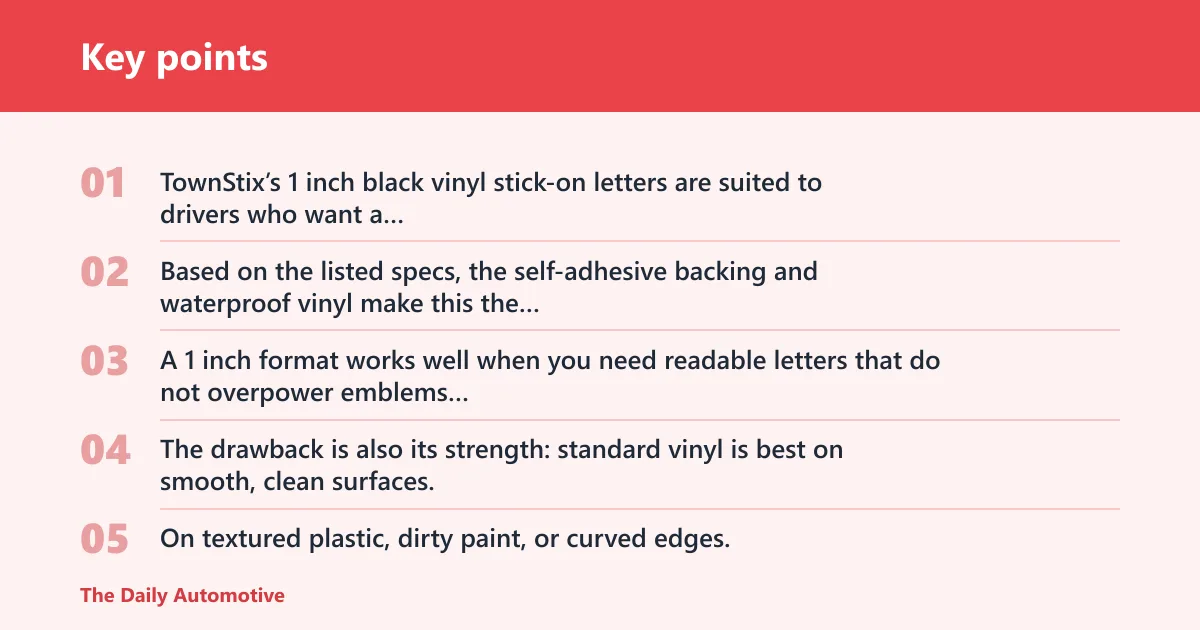
TownStix’s 1 inch black vinyl stick-on letters are suited to drivers who want a straightforward badge or window layout without stepping into custom fabrication. Based on the listed specs, the self-adhesive backing and waterproof vinyl make this the most flexible pick for small-format lettering on smooth surfaces.
The strength here is fit control. A 1 inch format works well when you need readable letters that do not overpower emblems or trim strips, and the set includes A to Z letters and symbols for names, short words, or registration-style labels.
The drawback is also its strength: standard vinyl is best on smooth, clean surfaces. On textured plastic, dirty paint, or curved edges, thin letters can trap air or lift at corners if you rush the install.
Vinyl lettering makes sense when you want custom size and shape options without a complicated order. Signomatic says its decals are made of high quality self-adhesive vinyl, easy to apply and remove, and offered in sizes including 297 x 210 mm, 89 x 30 mm, and 141 x 141 mm. Those figures show how small-format and larger layout options can both fit different placements.
Self-adhesive vinyl works best on smooth surfaces and prefers dry application. That matters for doors, windows, and badge faces, where moisture, wax, or road film can interfere with the bond and lead to edge lift later.
Where vinyl fits best
Vinyl lettering is usually the safest starting point for doors, glass, and flat badge areas. Vistaprint says its custom car decals can be applied to car doors and car windows, and that they are easy to apply and remove. Alpha Print also notes that car decals are made from durable vinyl and can be applied to bumpers, with surface cleaning recommended before application.
A common first-timer mistake is sizing letters for the center of a panel but ignoring the curve at the edges. If a 1 inch letter has to wrap across a tight bend, the outer edge can pull up sooner than the rest of the decal.
When self-adhesive backing matters
Self-adhesive backing matters most when the goal is a clean dry install with less handling. It lets you position the letters, press them down, and remove transfer air with an application scraper rather than relying on wet application tricks that are not meant for every film.
For buyers who want easy changeouts, that also helps with later removal. It does not guarantee residue-free removal in every case, but it usually lowers the chance of a hard tear if the decal has not been baked by heat or contaminated by wax.
Reflective trim letters: best for visibility
Generic’s custom reflective vinyl lettering fits drivers who want lettering that reads clearly at night or in low light. Based on the published details, it offers custom size and color options, plus UV and weather resistance, which makes it useful for high-visibility placement on windows, doors, or fleet-style panels.
The main advantage is contrast. Reflective film can stand out where matte black disappears, especially on glass or dark paint, and that helps if the lettering needs to be seen from a distance.
The tradeoff is daytime character. Reflective finishes can look busier under direct sun, and that is not the same as an OEM-style badge. If the vehicle already uses subdued trim, this option can read louder than intended.
Reflective film works best where visibility matters more than stealth. Think rear windows, door lettering, or simple identification text. It is less forgiving if you want the lettering to disappear into the trim line and mimic factory styling.
Weather and wash exposure matter here too. Even with UV and weather resistance, reflective decals still need a clean, smooth base and careful edge pressure. Dirt at the edge is one of the fastest ways to shorten a decal’s clean look.
Best placements for reflective film
Rear windows and side windows are the most natural fit, because the reflective finish can catch light without fighting the body color. That is also where a smaller height can still read well, since glass provides a dark, plain background.
On painted panels, reflective lettering should stay modest in size. Large reflective words can look more commercial than custom, which may not suit someone aiming for a factory-plus appearance.
Matte or gloss decals: best for an OEM-plus look
Arespark’s matte black vinyl wrap is the best match for drivers trying to black out trim rather than add separate bright lettering. At 2in x 30feet, it is a trim-delete film rather than a shaped letter set, so it suits long strip applications more than badge text.
That is useful when the goal is consistency. Matte black tends to reduce glare and makes chrome trim read calmer, which is why it works well on window trim and narrow accent lines.
The drawback is scope. This is not a shaped lettering product, so it is not the right buy if you need individual letters, numbers, or a logo. It is also more dependent on careful cutting and alignment than a pre-cut decal.
Matte film reads factory-clean when the vehicle already uses black trim, dark badges, or de-chromed accents. Gloss black works better when the surrounding trim has a polished finish, because it reflects light in a way that can echo factory emblems.
Finish affects edge visibility as much as color. Gloss can show dust and a poor cut line more readily. Matte hides minor surface glare, but it can also make a mismatch obvious if the vehicle’s trim is glossy and the decal is not.
When matte reads factory-clean
Matte black is the safer choice for chrome-delete looks and subtle window trim lines. It tends to blend into black plastic, rubber trim, and tinted glass better than chrome or reflective letter stock.
It is less suited to bright badges or color-matched body graphics. If the rest of the exterior uses gloss highlights, matte can look intentional only when the whole trim line is treated the same way.
When gloss matches trim or badges
Gloss black or gloss color-matched lettering works best when the surrounding badge or trim already has a polished surface. It creates a more finished look on emblems, door names, and model marks.
That said, gloss also draws attention to uneven placement. A half millimeter of skew is easier to see on a shiny letter than on a satin or matte one.
Trim letter sizing checklist
LZLRUN’s custom metal letters are the best option here for drivers who want a badge-style result with more structure than vinyl. The listing supports any font, custom text in any language, and adjustable letter height from 0.5 to 3 in, with 0.1 in stainless steel thickness for a more substantial look.
This is the right choice when the goal is a more permanent emblem or a dimensional badge rather than thin sticker lettering. Stainless steel also resists rust and corrosion, which helps in exposed outdoor placements.
The drawback is flexibility. Metal letters need more precise alignment, and they are less forgiving on highly curved or textured surfaces than vinyl. They are also a heavier visual choice, which can overwhelm a small badge area if the height is too large.
Trim letters often work best when the height and spacing match the panel, not just the brand name. A badge-style layout usually looks right in the 5–15 mm range, while full-word layouts on doors or glass often need about 20–40 mm letters to stay readable from several feet away.
The most common sizing mistake is fitting width to the available space and forgetting spacing. A narrow gap between letters can look cramped, while too much spacing can make a factory-style nameplate look homemade.
| Placement | Recommended letter height | Spacing target | Surface prep | Removal and cleanup risk |
|---|---|---|---|---|
| Badges | 5–15 mm | 1–3 mm between letters | Wash, dry, and wipe with isopropyl alcohol on smooth painted or badge surfaces | Higher edge-lift risk if the badge is curved; residue risk rises if heat or wax is present |
| Doors | 20–40 mm | 2–5 mm between letters | Clean paint thoroughly, remove wax, and use a dry application on flat sections | Bubble risk increases on door curves; removal can leave adhesive if the decal bakes in sun |
| Windows | 20–35 mm | 2–4 mm between letters | Clean glass and use a scraper from center to edge after positioning | Lower paint risk, but edge lift can happen if the glass edge is often scraped by seals or wipers |
| Trim | 5–12 mm | 1–2 mm between letters | Use only on smooth trim faces; avoid rough plastic and dirty chrome | Highest contamination risk; residue and lift are more likely on textured or heat-soaked trim |
For badge-size letters, keep the layout compact and centered. If the badge face is only 30 to 40 mm tall, a 15 mm letter can still work, but only if the top and bottom margins stay even.
For door and rocker lettering, measure the available width first, then divide by the number of letters plus the gap. Suppose a four-letter name needs to sit inside a 280 mm strip. If each letter is 30 mm wide and each gap is 4 mm, the layout lands close to 132 mm before margins, which leaves room for centering instead of forcing the text to the edge.
For glass, the letter height can be slightly larger than on paint because the background is plain and high contrast. But the glass edge still needs breathing room, or the lettering will look pinned too close to the frame.
Removal and cleanup risk should be part of the purchase, not an afterthought. Thin vinyl can leave less residue if removed early, while thicker adhesive systems can hold better outdoors but take more cleanup if they sit through heat and repeated washing.
Application tool basics
An application scraper is not optional when the decal needs a clean finish. It presses the film down, helps push air from the center to the edge, and reduces the chance of trapped bubbles that later turn into edge lift.
Some orders include a scraper, but the tool matters more than the bonus. A stiff card with a felt edge is better than a bare hard edge, because it lowers the chance of scratching gloss film during smoothing.
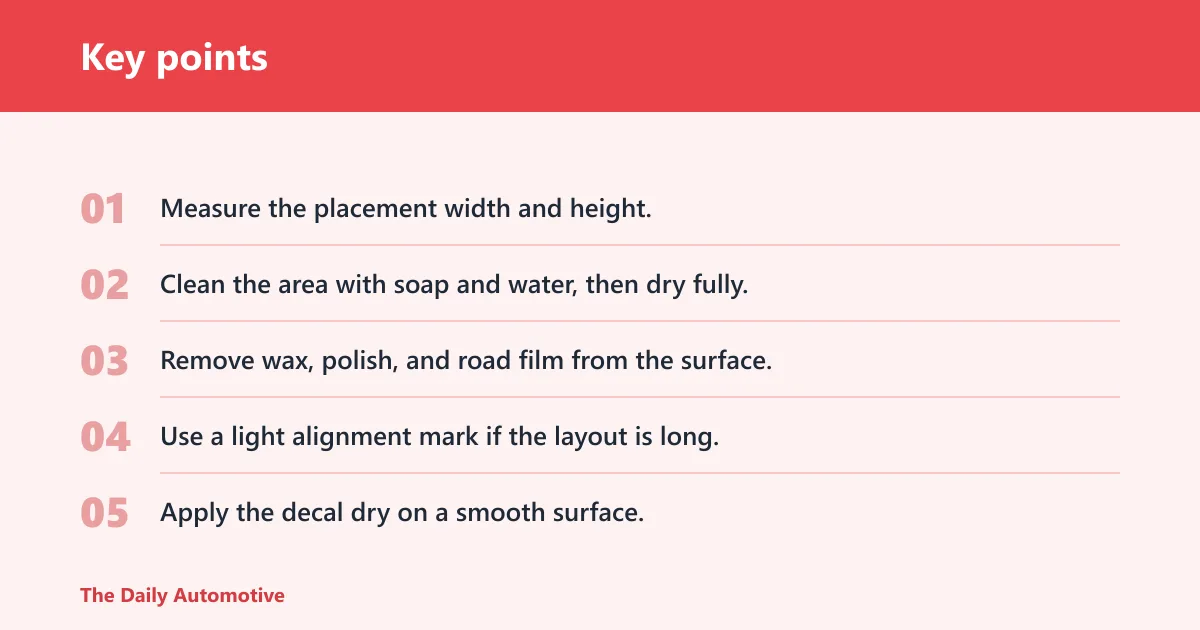
- Measure the placement width and height.
- Clean the area with soap and water, then dry fully.
- Remove wax, polish, and road film from the surface.
- Use a light alignment mark if the layout is long.
- Apply the decal dry on a smooth surface.
- Press from the center outward with a scraper.
- Check the edges for lift before exposing the area to heat or rain.
Say your door lettering is 30 mm tall and sits on a panel with a slight curve. If you start from one end instead of centering first, the last letter is where the skew shows up. A centered dry application gives you a better chance of even spacing and fewer bubbles.
Which one should you buy?
Choose TownStix if you want the simplest vinyl letter set for badges, doors, or windows and you value easy application over custom fabrication. Choose the reflective vinyl if night visibility matters more than a subdued factory look. Choose the metal letters if you want a badge-style finish with more depth and a more permanent feel.
Choose the matte black wrap only if your goal is chrome delete or trim black-out work, not standalone letters. If the vehicle needs a factory-like result, keep the finish close to the surrounding trim and keep the letters small enough for the placement.
For outdoor use, vinyl or stainless steel are the safer choices here. For lower removal priority, metal and heavier adhesive systems may hold better, but they also deserve more careful placement because cleanup can be harder later.
Budget also matters. At $1.99, the anso chrome-style 3D letter sticker is the lowest-cost option, but its 25mm size and metallic look make it better for a small accent than for a full, clean nameplate. At $7.99, LZLRUN costs more but gives you custom sizing and a broader fit range. At $9.99, the reflective vinyl is the best fit if visibility is the main goal.
Picture a rear window decal that needs to be seen at dusk. Reflective film is the cleaner call. Now picture a small badge on a painted trunk lid. A 5–15 mm vinyl or metal letter set will usually look more natural than a large, shiny letter that takes over the whole emblem area.
What are the best car trim letter decals for customizing your ride?
The best choice depends on placement. For small badge work, a 5–15 mm vinyl or metal letter keeps the look close to factory badging. For windows and doors, 20–40 mm lettering reads clearly without looking oversized. Reflective vinyl is best when visibility matters more than subtlety.
Frequently asked questions
Are vinyl letter decals safe for car paint and clear coat?
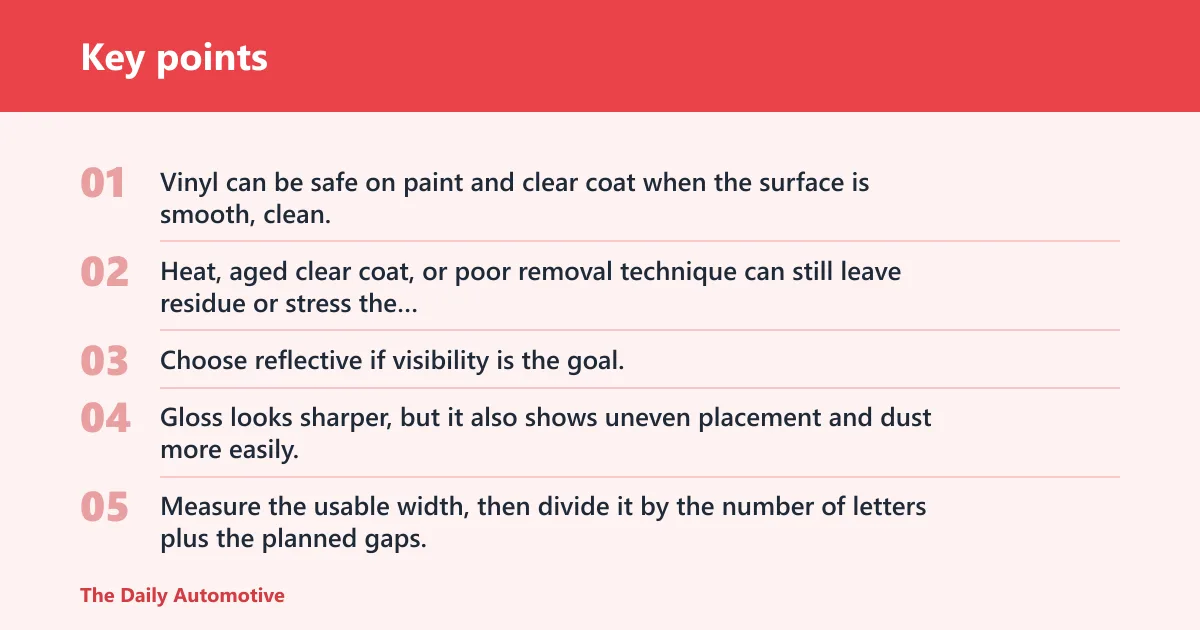
Vinyl can be safe on paint and clear coat when the surface is smooth, clean, and free of wax or contamination. That is not a blanket promise. Heat, aged clear coat, or poor removal technique can still leave residue or stress the finish, especially if the decal has baked on for a long time.
Should I choose reflective, matte, or glossy letter decals for my car?
Choose reflective if visibility is the goal, matte if you want a subdued factory-style look, and gloss if the surrounding trim or badge already has a polished finish. Matte hides glare better. Gloss looks sharper, but it also shows uneven placement and dust more easily.
How do I measure car trim letters so they fit straight and evenly?
Measure the usable width, then divide it by the number of letters plus the planned gaps. Mark the center point first, then work outward so the layout stays balanced. For badges, keep the font height small and the spacing tight. For doors or windows, use larger letters and wider gaps.
What size should custom car lettering be for doors, windows, or badges?
Badges usually look best at 5–15 mm. Doors and windows often need 20–40 mm for readable text without crowding the panel. If the surface is curved, stay toward the smaller end. If the background is glass or a plain painted field, slightly larger lettering can still look clean.
How long do car vinyl letter decals last outdoors?
Outdoor life depends on material, placement, sun exposure, and prep. UV-stable vinyl and weather-resistant films usually last longer on clean, smooth surfaces than on textured trim or dirty paint. Badges and hood edges take more abuse from heat and wash cycles, so they often age faster than side glass.
Can car letter decals be removed without leaving residue?
Sometimes, yes, but not always. Easy-remove vinyl can come off cleanly when it has not been baked by heat or contaminated by wax. Older decals, stronger adhesives, and metal-backed emblems can leave residue that needs careful cleanup. Warm the area gently and work slowly to reduce damage risk.
What surface prep do I need before applying car trim decals?
Clean the surface first, then dry it completely. Remove wax, polish, road film, and any loose dirt. Self-adhesive vinyl works best on smooth surfaces with a dry application, and the same prep matters for paint, glass, and trim. If the surface feels rough or oily, the bond will suffer.
Products related to this article
Sponsored / affiliate links. As an Amazon Associate I earn from qualifying purchases. I may earn additional commission from eligible campaigns.
 Custom Vinyl Lettering, Custom Car Sticker, Vinyl Decals for Windows, Vehicles, Trucks, Cups, Laptop & Storefront, Personalized Vinyl Graphics, Premium Outdoor Lettering,
 Custom Vinyl Lettering, Custom Car Sticker, Vinyl Decals for Windows, Vehicles, Trucks, Cups, Laptop & Storefront, Personalized Custom Text Decal, Waterproof Outdoor Vinyl, Made in USA