What Cars Have Air Suspension? Best Models Listed Here
Understanding which cars come with air suspension can feel like cracking a secret code. Many luxury and some utility vehicles offer it for a smoother, more adjustable ride. Key models often include high-end sedans, SUVs, and trucks from brands like Mercedes-Benz, BMW, Audi, Land Rover, and even some Ford and Ram trucks. The goal is better comfort and handling.
What is Air Suspension?
Air suspension is a type of automotive suspension that uses a pump to fill adjustable air springs. These springs replace your car’s traditional coil springs. Think of it like a balloon instead of a metal coil.
This lets the car’s height change. It can also make the ride softer or firmer.
This system works with a control unit. Sensors tell the unit how the car is sitting. The unit then tells the pump to add or remove air from the springs.
This keeps the car level. It also adjusts for bumpy roads. It makes the ride much more comfortable.
It can also help with how the car handles curves.
My First Encounter with Air Suspension
I remember the first time I really noticed air suspension. It was years ago. I was helping a friend move.
He had borrowed his uncle’s huge luxury SUV. As we loaded heavy boxes, I braced for the suspension to sag. But it didn’t.
The big vehicle just seemed to adjust itself. It stayed perfectly level.
We drove across town later. The road was full of potholes. I expected a jarring ride.
Instead, it was incredibly smooth. It felt like we were gliding. I asked him about it.
He explained the air suspension. He said it was one of the main reasons he loved that SUV. That experience stuck with me.
It showed me how different a car could feel with this tech.
Air Suspension: Key Benefits at a Glance
Smoother Ride: Air springs absorb bumps better than metal springs. This gives a more comfortable journey.
Adjustable Height: The car can be raised or lowered. This helps with clearing obstacles or loading cargo.
Level Load: It keeps the car level even with heavy weight in the back. This helps with towing and hauling.
Better Handling: The system can stiffen the ride for better control on curves.
How Air Suspension Works
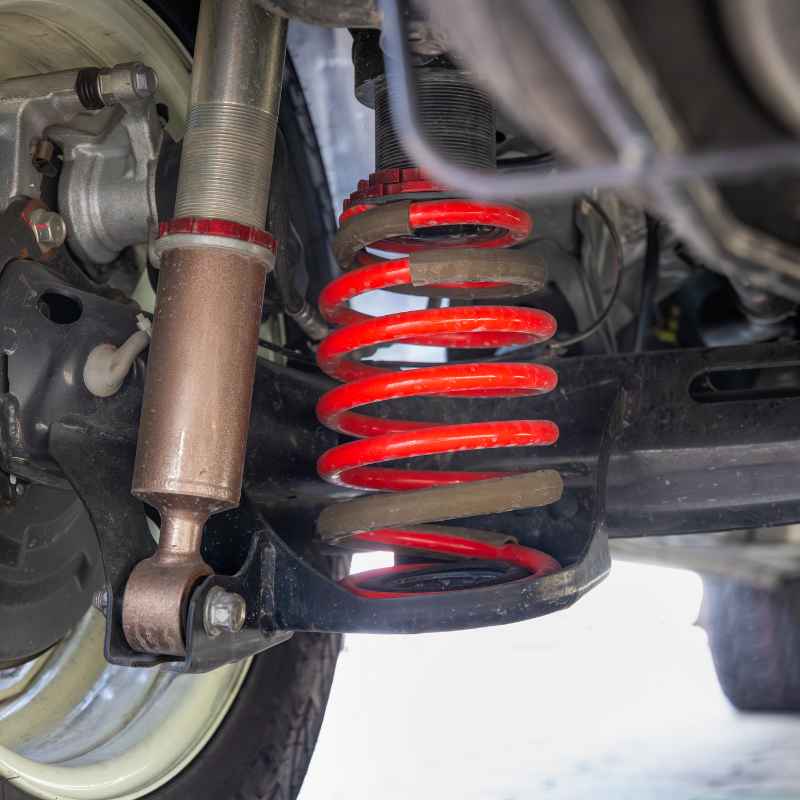
An air suspension system has a few main parts. There is a compressor. This makes the air.
There are air springs. These are like rubber bags. They hold the air.
There are also shock absorbers. These control bouncing. A control unit tells everything what to do.
Sensors on the car’s wheels watch its height. They also watch how the body moves. This information goes to the control unit.
If a wheel hits a bump, the spring might get squeezed. The sensor tells the unit. The unit then adds air to that spring.
This pushes the car back up. It makes the ride smoother.
When you drive fast, the system can make the car lower. This is called sport mode. It makes the car more stable.
It helps it stick to the road better. When you need to go over rough ground, you can raise the car. This gives you more ground clearance.
It helps avoid hitting rocks or curbs.
Types of Air Suspension Systems
There are a few main ways air suspension is set up. Some cars have it on all four wheels. This is called full air suspension.
It gives the best comfort and control. It lets each wheel adjust on its own. This is great for very rough terrain or premium luxury.
Other cars might only have air suspension on the rear wheels. This is common on trucks and some SUVs. It’s mainly to help with heavy loads.
When you tow a trailer or carry a lot of cargo, the back of the car can sag. Rear air suspension helps keep it level. It makes the ride better when loaded.
Some systems are simpler. They might just have air bladders inside regular coil springs. These offer some adjustability but not the full range of a true air spring system.
Still, they can offer a noticeable improvement in ride quality and load capacity.
Air Suspension vs. Traditional Suspension
Myth: Air suspension is always better than traditional springs.
Reality: Air suspension offers more comfort and adjustability. But traditional springs can be simpler and cheaper to fix. For many drivers, traditional springs are perfectly fine.
It really depends on what you need from your car.
Cars That Often Feature Air Suspension
When you look for cars with air suspension, you usually find them on higher-end models. Luxury brands are big users of this technology. They want to offer the best possible ride comfort.
Think of brands like Mercedes-Benz. Their S-Class sedans and GLS SUVs often have it.
BMW also uses air suspension. Models like the 7 Series sedan and X5 or X7 SUVs might offer it. Audi is another big player.
Their A8 sedan and Q7 or Q8 SUVs are candidates. Land Rover and Range Rover vehicles are almost famous for their air suspension. It’s key to their legendary off-road and on-road comfort.
It’s not just cars. Many modern pickup trucks also offer air suspension. This is often for towing and hauling.
Ford F-150 trucks sometimes have it. Ram trucks, especially their higher trims, often feature it too. This helps with carrying heavy loads and provides a smoother ride — see our related guide, Does a 2003 Ford F-150 Have a Cabin Air Filter? Not Always.
Luxury Sedans with Air Suspension
Luxury sedans aim for a serene driving experience. Air suspension is a perfect fit for this goal. It helps isolate passengers from road imperfections.
This makes long trips much more relaxing. These cars often have very sophisticated air suspension systems.
The Mercedes-Benz S-Class is a prime example. It’s known for its exceptionally smooth ride, and air suspension is a big reason why. The system constantly adjusts to the road.
It feels like the car is floating. It makes rough roads feel smooth.
Audi’s A8 sedan also offers air suspension. It provides a refined and quiet cabin. The system balances comfort with sporty handling.
You can often choose different modes. This lets you tailor the ride to your liking. It can go from very soft to quite firm.
BMW’s 7 Series is another strong contender. It offers a blend of luxury and driving dynamics. Its air suspension system helps deliver this.
It can adapt to different driving conditions. It makes the car feel stable and comfortable at all times.
Other luxury sedans to consider might include models from Lexus, like the LS. Porsche’s Panamera also features advanced suspension options. Even some higher-end electric sedans are adopting air suspension.
It’s a key feature for premium comfort.
Luxury Sedan Spotlight: Ride Comfort
Model: Mercedes-Benz S-Class
Air Suspension Feature: Standard AIRMATIC suspension. It adjusts damping and springs for optimal comfort and control.
Experience: Passengers often describe the ride as supremely comfortable. Road imperfections are barely felt. It’s like driving on a cushion.
Luxury SUVs and Crossovers with Air Suspension
SUVs and crossovers have become very popular. Many are designed for comfort and capability. Air suspension is a great addition for these vehicles.
It helps with both aspects. It can raise the vehicle for off-road use. It can also lower it for easier entry and exit.
Land Rover and Range Rover are icons here. Their Range Rover, Range Rover Sport, and even the Discovery models often come with air suspension. It’s part of what makes them so capable off-road.
It also ensures a plush ride on pavement. The height adjustment is a big plus for varied terrain.
BMW’s X5 and X7 offer air suspension. These large SUVs can handle a lot of passengers and cargo. The air springs help maintain a stable ride.
It reduces body roll when cornering. This makes them feel more planted and secure.
Mercedes-Benz offers its GLS SUV with air suspension. It’s often called the “S-Class of SUVs.” The air suspension contributes to its luxurious and smooth ride. It can also be adjusted for different loads.
This is useful for families who often carry a lot.
Audi’s Q7 and Q8 are also strong contenders. Their adjustable air suspension offers a great balance. It can be sporty when you want it to be.
It can be very comfortable for daily driving. The ability to change the ride height is also very practical.
Other notable SUVs that might offer air suspension include the Porsche Cayenne. Some trims of the Volvo XC90 may also have it. Even some American luxury SUVs are starting to offer it more broadly.
SUV Air Suspension: Versatility
Capability: Adjustable ride height is a major advantage.
Use Case 1: Raise for off-roading to clear obstacles.
Use Case 2: Lower for loading luggage or helping children get in.
Benefit: Makes the SUV more practical for diverse needs.
Pickup Trucks and Air Suspension
Pickup trucks have traditionally relied on leaf springs in the rear. This is great for heavy loads. But it can lead to a rougher ride when the truck is empty.
Air suspension is changing this. It offers the best of both worlds.
Many modern heavy-duty trucks offer rear air suspension. This is especially true for trucks used for towing. The air springs can be adjusted.
This keeps the truck level when hauling a trailer. It also makes the ride much smoother when the truck bed is empty. You don’t get that harsh bounce anymore.
Some Ford F-150 models have offered air suspension systems. Ram trucks have been very aggressive with this technology. Their higher trims often come with or offer an optional air suspension.
It’s often called the “Active-Level” system. It helps with load leveling and ride comfort.
This is a game-changer for people who use their trucks for work and play. You can tow a heavy RV all weekend. Then, you can adjust the suspension for a more comfortable commute on Monday.
It makes a truck much more versatile. It turns a workhorse into a more comfortable daily driver.
Performance Cars and Air Suspension
You might think air suspension is only for comfort. But many performance cars also use it. The key here is how it’s implemented.
Instead of just focusing on softness, the system is tuned for dynamic handling. It can also be adjusted by the driver.
Brands like Porsche use advanced air suspension. Their models can offer a firm, responsive ride for sporty driving. But they can also switch to a more comfortable setting for cruising.
This adjustability is very valuable. It means one car can do many things well.
Some high-performance sedans and coupes might offer it. The goal is to provide a car that can be a daily driver one minute and a track-capable machine the next. The air springs can also help lower the car’s center of gravity at speed.
This improves stability and reduces drag.
For example, the Chevrolet Corvette has offered active suspension systems that include air. This allows for incredible performance. It also means the car can be driven comfortably.
It’s a complex system but offers great rewards.
Performance Air Suspension: The Best of Both Worlds
Focus: Balancing ride comfort with sporty handling.
Driver Control: Often includes selectable modes (e.g., Comfort, Sport, Track).
Benefit: Allows a single vehicle to excel in different driving situations.
Example: Porsche 911 models often feature advanced adaptive suspension.
What About Electric Vehicles (EVs)?
Electric vehicles are a growing segment. Many EV manufacturers are embracing air suspension. This is for a few reasons.
EVs can be heavy due to their batteries. Air suspension helps manage this weight. It also contributes to a quiet and smooth ride, which complements the EV experience.
Many premium electric SUVs feature air suspension. Tesla’s Model S and Model X have offered it. These cars are known for their smooth acceleration.
Adding air suspension enhances the overall sense of luxury and refinement. It helps absorb the road noise that might otherwise be noticeable in a quiet EV.
Other electric luxury vehicles, like those from Audi (e-tron models), Mercedes-Benz (EQ models), and BMW (i models), also often include air suspension. It’s becoming a standard feature for premium EVs. It helps them compete on comfort and ride quality.
The even weight distribution of batteries in EVs can benefit from precise suspension control. Air suspension allows for very fine adjustments. This can improve handling and range.
By keeping the car level and optimizing its aerodynamics, EVs can be more efficient.
How to Check if a Car Has Air Suspension
So, how do you actually find out if a car has it? The easiest way is to check the official specifications. When you look at a car listing online or in a brochure, there’s usually a section for “Suspension” or “Chassis.” Look for terms like “Air Suspension,” “Adaptive Air Suspension,” “AIRMATIC,” or “Active Body Control.”
If you’re looking at a used car, the window sticker or the car’s manual can be helpful. Sometimes, you can also spot visual clues. Cars with air suspension might have adjustable ride height controls inside the cabin.
There might be buttons near the gear shifter or on the dashboard. These often have symbols showing a car going up or down.
Another hint can be the type of wheels. Sometimes, cars with advanced suspension systems have specific wheel designs. But this is less reliable.
The most solid way is to look at the specs. Don’t just assume. Always verify.
Checking for Air Suspension: Quick Steps
1. Check Specifications: Look for “Air Suspension” in official details.
2. Look for Controls: Search the cabin for ride height adjustment buttons.
3. Read the Manual: The owner’s manual will detail suspension features.
4. Ask the Dealer/Seller: Direct confirmation is always best.
Real-World Scenarios Where Air Suspension Shines
I’ve seen air suspension make a big difference in several situations. One time, I was helping a friend who had just bought a large luxury SUV. We were heading to a cabin in the mountains.
The final road was unpaved and rough. With standard suspension, it would have been a bumpy, slow crawl.
But his SUV had adjustable air suspension. He simply selected the “Off-Road” or “High” setting. The SUV lifted up a few inches.
This gave us much more ground clearance. We were able to drive over the rough patches without scraping the bottom. It made a potentially difficult drive easy and comfortable.
Another scenario involves loading heavy items. I once helped someone move a large, heavy safe into their basement. They had a pickup truck with rear air suspension.
When they attached the trailer and loaded the safe, the truck bed dipped. But the air suspension kicked in. It raised the rear of the truck back to level.
This prevented the truck from bottoming out.
It also makes a difference with everyday things. For example, getting in and out of a tall SUV can be hard for some people. Many systems have a “kneeling” mode.
The vehicle lowers itself. This makes stepping in and out much easier. It’s a small thing, but it adds a lot of practicality.
Potential Downsides of Air Suspension
While air suspension is great, it’s not without its potential issues. The biggest concern is cost. These systems are more complex than traditional ones.
This means they can be more expensive to repair if something goes wrong. A leak in an air spring or a faulty compressor can lead to significant bills.
Complexity also means more potential points of failure. Over time, rubber air springs can degrade. Seals can leak.
The compressor can wear out. While many systems are very reliable, they do require maintenance. And repairs are usually more specialized.
Another factor is that repairs might require a dealer or a specialist shop. Not every mechanic is trained to work on air suspension. This can make finding service more difficult, especially if you’re not near a major city.
Cold weather can sometimes affect air suspension. In very cold temperatures, moisture in the system can freeze. This can temporarily disable the system or cause it to not work correctly.
However, modern systems are designed to minimize this risk.
Air Suspension Considerations
Cost: Repairs and replacement parts can be expensive.
Complexity: More parts mean more potential issues.
Specialized Service: Requires mechanics with specific training.
Maintenance: Regular checks are recommended.
What This Means for You
If you’re looking for the ultimate in ride comfort and adjustability, air suspension is a fantastic feature. It can significantly improve your driving experience. It makes cars feel more luxurious and capable.
However, it’s important to be aware of the potential costs. If you’re buying a car with air suspension, especially a used one, consider the warranty. Look into the cost of potential repairs.
For some drivers, the added comfort is worth the risk and expense.
If you prioritize simplicity and lower maintenance costs, traditional suspension might be a better choice. Many cars offer excellent comfort with standard systems. It’s about finding the right balance for your needs and budget.
Always research the specific model and its known issues.
Quick Checks for Air Suspension Issues
If you own a car with air suspension, here are some quick things to watch for. The most obvious sign is if the car is sitting lower than it should be, especially after it’s been parked for a while. This could indicate a leak.
Listen for unusual noises. A worn-out compressor might make loud or grinding sounds. You might also hear hissing sounds, which could mean an air leak.
If you notice the car leaning to one side, that’s also a sign of a problem with the air springs.
Check if the adjustable height settings are working. If you try to raise or lower the car and it doesn’t respond, there’s an issue. Many modern cars will warn you on the dashboard if there’s a suspension fault.
Don’t ignore these warnings. Get it checked out by a professional.
Frequently Asked Questions About Air Suspension
Is air suspension worth the extra cost?
For many drivers, yes, especially in luxury vehicles. The increased comfort and adjustability can be significant. However, if you are on a tight budget or prioritize low maintenance costs, it might not be worth the extra expense and potential repair bills.
How long do air springs last?
Air springs are made of rubber and can last a long time, often 10 years or more. However, factors like exposure to road salt, extreme temperatures, and physical damage can shorten their lifespan. Regular inspection is recommended.
Can you convert a car to air suspension?
Yes, it’s possible to convert a car that doesn’t come with air suspension. Aftermarket kits are available. However, this can be a complex and expensive modification.
It’s usually more practical to buy a vehicle that already has it.
Does air suspension affect fuel economy?
In most cases, the effect on fuel economy is minimal. Some systems can actually improve it slightly by optimizing aerodynamics when the car is lowered. However, a faulty system that requires the compressor to run constantly could use more energy.
What is the difference between adaptive suspension and air suspension?
Air suspension is a type of system that uses air springs. Adaptive suspension is a broader term. It means the suspension can adjust itself.
Many cars with air suspension also have adaptive damping. This allows for both ride height adjustment and variable stiffness.
Are there any safety concerns with air suspension?
When working correctly, air suspension is very safe. It enhances stability and control. However, a failure could lead to a car sitting too low or unevenly.
This might affect handling. It’s important to keep the system in good working order.
Final Thoughts on Air Suspension Cars
Finding cars with air suspension means looking at models focused on comfort and luxury. It’s a feature that truly elevates the driving experience. From smooth sedans to capable SUVs and even some trucks, this technology is widely available.
Remember to check the specifics. The benefits are clear, but so are the potential costs of repair. Weigh your priorities.
A car with air suspension can offer unparalleled comfort. It’s a fantastic option for those who value a smooth and refined ride.
Products related to this article
Sponsored / affiliate links. As an Amazon Associate I earn from qualifying purchases. I may earn additional commission from eligible campaigns.