Best Mechanic Tool Sets for Beginners (2026): we compared
Beginner mechanic tool sets are often in the 90- to 200-piece range and commonly include 1/4-inch and 3/8-inch drives, a solid ratchet, and room for metric sockets, as long as the case fits your shelf or drawer. Buy the wrong kit and you waste money on duplicate bits, weak tools, and storage you never use. I pick first sets by the jobs they will actually do and the space they will actually occupy.
Quick comparison
| Product | Badge | Best for | Price | ||
|---|---|---|---|---|---|
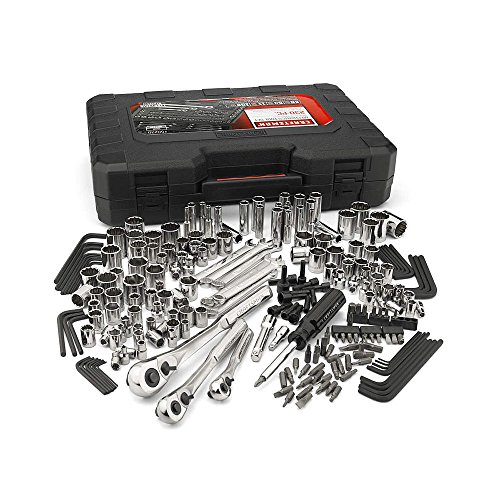 |
Craftsman 230-Piece Mechanics Tool Set, 50230, Silver, 1 SetCRAFTSMAN | Budget pick | 230-piece set, alloy steel, dual extension bars | $127.99
Price as of 3 Oct 2026
|
View |
 |
Husky H230MTS Mechanics Tool Set (230-Piece)Husky | Also great | Husky 230-piece mechanic tool set | $196.54
Price as of 3 Oct 2026
|
View |
 |
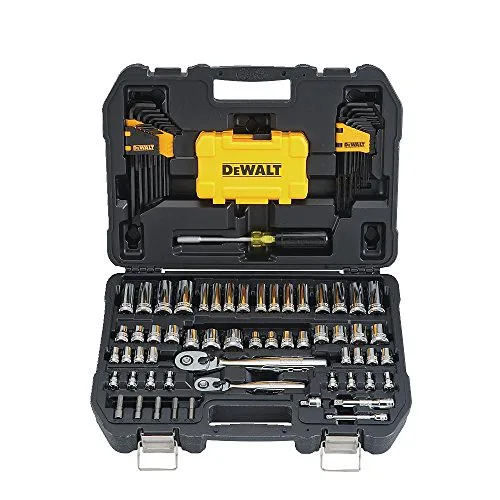
GEARWRENCH 232 Piece 72T 6 & 12 Pt SAE/mm Mechanics ToolGEARWRENCH | Upgrade pick | 232-piece 72T 6 & 12 pt SAE/mm set | $163.58
Price as of 3 Oct 2026
|
View |
 |
Crescent 180 Piece Professional Tool Set in Tool StorageCrescent | Our pick | 180-piece professional set with ergonomic handles | $174.99
Price as of 3 Oct 2026
|
View |
 |
CARTMAN 320-Piece Professional Mechanic Tool Kit SetCARTMAN | Also great | 320-piece professional kit, black and red case | $159.99
Price as of 3 Oct 2026
|
View |
For a first garage kit, the real question is not piece count. It is whether the set covers oil changes, battery swaps, brake pads, spark plugs, and interior trim without leaving you short on the common socket sizes that matter on day one.
The products below are compared by repair coverage, drive sizes, storage, and the odds that a beginner will use the extras instead of leaving them in the case forever.
According to The Best Mechanic Tool Sets Tested in 2023 – Top Picks by Bob Vi… — Bob Vila says these sets typically include more than 100 tools.
How we chose
We compared beginner kits by five things: first-job coverage, drive-size coverage, socket mix, ratchet quality, and storage footprint. We also favored sets that reduce missing-piece risk, because the cheapest kit is not cheap if it leaves out the one socket you need.
For source-backed context, Popular Mechanics lists the DeWalt 168-Piece Mechanics Set as best all around, the Kobalt 243-Piece set as best for the organized garage, the Kobalt 267-Piece set as best home-focused, the Craftsman 262-Piece set as best value comprehensive, and the EPAuto Small Drive Set as best socket set on a budget. Bob Vila’s best overall pick is the DeWalt DWMT73802 142-Piece Mechanics Tool Set, and it is described as using 72-tooth ratchets with chrome vanadium steel construction.
That mix tells a useful story. Beginners do not need the largest box on the shelf. They need the right coverage, the right drives, and a case they will actually keep nearby.
Craftsman 230-piece mechanics tool set: best for a balanced starter garage
This is the kind of set that makes sense for a first-time DIY owner who wants one box to handle common car work and a few home repairs. The 230-piece count gives room for sockets, wrenches, bits, and the kind of accessory pieces that help when fasteners sit in awkward spots.
Based on the spec sheet and owner feedback, the dual extension bars and six combination wrenches in standard and metric sizes are the useful parts here. That matters because a starter kit should cover oil changes, battery work, brake pads, spark plugs, and trim without forcing a second purchase two months later.
The drawback is familiar with larger kits: some of the count is filler for beginners. If a buyer wants a compact apartment kit, this one can feel bulky, and extra duplicates may sit untouched while the case takes up precious shelf space.
Husky 230-piece mechanics tool set: best for a store-and-forget garage box
This suits buyers who want a mid-to-large set and plan to keep it in a garage or dedicated cabinet. The appeal is simple: it arrives as a full mechanics tool set with the accessory coverage that helps a beginner avoid constant trips to the parts store.
Its main strength is breadth. For a first toolkit, that means fewer moments where a repair stalls because the right socket or bit is missing. If the vehicle sees regular maintenance and the storage space is already set aside, that convenience is worth something.
The drawback is cost-to-space efficiency. At this size, a new DIYer can end up paying for pieces that duplicate what the first 100 useful tools already cover, especially if the plan is only oil changes, brake pads, and trim work.
GEARWRENCH 232-piece 72T 6 and 12 pt SAE/mm set: best for tight fasteners
This is the strongest choice for beginners who expect tight spaces, older hardware, or a vehicle with a mix of stubborn bolts and cramped access. The 72-tooth teardrop head, quick release design, and both 6-point and 12-point sockets make it more practical than a cheap high-count box.
For basic auto work, the 6-point sockets are the headline. They grip better on worn fasteners and reduce rounding risk, which is exactly what you want when a 10mm socket is doing what 10mm sockets do best: disappearing right when you need it.
The drawback is that the set is more specialized than a plain starter box, and the extra ratchet detail may be wasted if the buyer rarely works in cramped engine bays. Still, based on specs and reviews, this is a smart upgrade path for someone already expecting real repairs.
Crescent 180-piece professional tool set: best for apartment storage
This is a strong fit for apartment users and anyone storing tools in a closet, under a bed, or in a small utility cabinet. The 180-piece count is high enough to cover starter repairs, but the case size is more realistic than the biggest multi-drawer kits.
The useful details are the 72T quick release ratchet, ergonomic handles, and narrow head combination wrenches. In tight home storage, those details matter because the set needs to be easy to carry, easy to sort, and fast to put away after a short job.
The drawback is that 180 pieces can still include extras a beginner does not need on day one. If the buyer wants the smallest possible footprint, a smaller socket-focused kit may be a better fit, even if it means fewer extras in the box.
CARTMAN 320-piece professional mechanic tool kit set: best for expanding into harder jobs
This is for the beginner who already knows the kit will grow into suspension work, lug-related tasks, and more general garage use. The 320-piece count, broad socket assortment, and organized drawers give it the widest runway of the group.
For harder work, 1/2-inch drive coverage starts to matter more. That drive size is useful for larger fasteners, and a bigger kit like this is more likely to include the socket depth and adapter range needed for jobs beyond routine maintenance.
The drawback is size. A 320-piece kit is not the best answer for a small apartment, and beginners can spend extra money on breadth they will not touch for months. If storage is tight, this is too much box for too little space.
Which one should you buy?
Buy by repair job, not by piece count. If your first year means oil changes, battery swaps, brake pads, spark plugs, and trim work, a mid-size set with 1/4-inch and 3/8-inch drives is enough. If you already expect suspension or lug-related work, add 1/2-inch coverage. Choose the case size that you will actually open, not the one that looks best online.
For a budget starter set, look in the lower range and focus on the real essentials: SAE and metric sockets, a 1/4-inch ratchet, a 3/8-inch ratchet, shallow sockets, and a few extensions. For value, move into the middle range and insist on 6-point sockets, clear size labeling, and a better ratchet head. For premium, pay for better access, a tighter swing arc, and a case that keeps every piece in place.
What a beginner set should include
A good mechanic tool set for beginners is a starter kit with sockets, ratchets, wrenches, and bits, often made from chrome vanadium steel or a similar durable material. It should include both SAE and metric sockets, because U.S. and import fasteners often live side by side in the same garage. A carrying case matters too, because a tidy box gets used.
Use-case decision table for first jobs
| First job | Minimum drive sizes | Socket types needed | Useful accessories | Budget range |
|---|---|---|---|---|
| Oil change | 3/8-inch | Shallow SAE and metric, 6-point preferred | Extension bar, drain-plug size socket, small adapter | $40 to $90 |
| Battery swap | 3/8-inch, with 1/4-inch for trim fasteners | Shallow metric and SAE, 6-point preferred | Short extension, bit driver, terminal brush | $50 to $100 |
| Brake pads | 3/8-inch, sometimes 1/2-inch | Deep and shallow metric, 6-point strongly preferred | Long extension, adapters, breaker bar if included | $80 to $160 |
| Spark plugs | 3/8-inch | Deep sockets, metric, 6-point preferred | Extension bar, universal joint, magnetic pickup | $60 to $120 |
| Interior trim | 1/4-inch | Small metric and SAE, shallow sockets, bits | Trim tools, bit driver, small extensions | $30 to $70 |
Do beginners need SAE and metric sockets?
Yes, most do. Beginners should buy both SAE and metric sockets to cover common U.S. and import fasteners, and to avoid mixed-size gaps that turn a simple repair into a parts-store run. If the vehicle is strictly one type, a narrower set can work, but mixed coverage is the safer first buy.
Should I buy a mechanic tool set with 1/4, 3/8, and 1/2 inch drives?
Buy all three if the budget allows and the storage space exists. The 1/4-inch drive is best for small fasteners and tight spaces, the 3/8-inch drive is the core all-purpose size for beginner auto work, and the 1/2-inch drive matters when the jobs get larger. For many beginners, 1/4 and 3/8 cover the first year.
What is a good mechanic tool set?
A good mechanic tool set for beginners is one that matches the repairs you will actually do. It should have SAE and metric sockets, 1/4-inch and 3/8-inch drives, a 72-tooth ratchet if the space is tight, 6-point sockets for grip, and a case that keeps the set organized.
How much does a mechanics tool set cost?
Most beginners should think in budget bands, not sticker shock. A basic set that covers simple maintenance can live in the lower range, a stronger home-garage set sits in the middle, and a more complete kit with better access tools and broader drive coverage costs more. Paying extra for the right socket mix is better than buying a huge box with filler.
Is a 142-piece or 200-piece mechanic set better for beginners?
A 142-piece set can be enough if it includes the right drives, SAE and metric coverage, and the common socket sizes you will actually use. A 200-piece set makes more sense when the extra pieces add real coverage, not duplicate bits and filler. If the smaller set has the right essentials, piece count alone should not decide it.
What should be in a beginner mechanic tool list?
Start with sockets, ratchets, combination wrenches, bits, extensions, and adapters. Add both SAE and metric sizes, a 1/4-inch drive and 3/8-inch drive, and 6-point sockets where possible. Deep and shallow sockets should be clearly labeled, because beginners often need both in the same repair.
Which mechanic tool set is best for apartment storage?
The best apartment storage set is the one with the smallest useful footprint and a case that closes cleanly. A 180-piece or similar mid-size kit is often easier to live with than a huge box, as long as it includes the core drives and sockets. Avoid oversized sets with drawers unless you have real storage space.
Products related to this article
Sponsored / affiliate links. As an Amazon Associate I earn from qualifying purchases. I may earn additional commission from eligible campaigns.