Best Engine Degreasers for Car Engines (2026): we compared
Pick the degreaser by the mess: aerosol for light grime and cramped spots, concentrate for heavy grease when you can rinse, and multi-purpose spray for plastic-heavy bays or fast wipe-downs. Choose badly and you can leave film, stain hoses, or push water where it does not belong. This guide shows how to pick the best engine degreaser for your engine condition, water access, and sensitive components.
This guide is part of our Car maintenance and repair guide series.
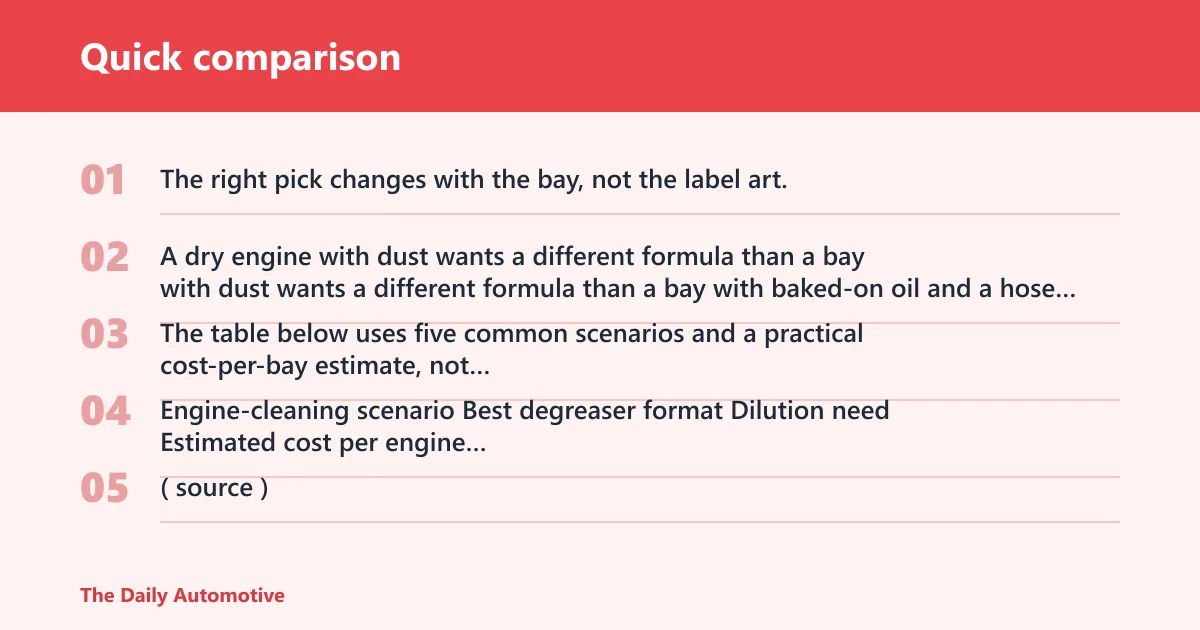
Quick comparison
| Product | Badge | Best for | Price | ||
|---|---|---|---|---|---|
 |
Simple Green Pro HD Heavy Duty Cleaner Concentrate 1 GallonSimple Green | Our pick | Simple Green Pro HD · 1 Gallon concentrate | $15.58
Price as of 4 Oct 2026
|
View |
 |
CRC Brakleen Brake Parts Cleaner Spray – Non-Chlorinated –CRC | Also great | CRC Brakleen · 14 oz × 12-pack non-chlorinated | $48.49
Price as of 4 Oct 2026
|
View |
 |
GORILLA Concrete Cleaner and Degreaser, Heavy DutyGORILLA | Budget pick | GORILLA Concrete Cleaner · 64 oz heavy duty concentrate | $17.99
Price as of 4 Oct 2026
|
View |
 |
Zep Heavy-Duty Citrus Degreaser Cleaner Concentrate – 1Zep | Pair with it | Zep Heavy-Duty Citrus · 1 Gallon restaurant grade | $12.99
Price as of 4 Oct 2026
|
View |
 |
Purple Power 4319PS Industrial Strength Cleaner andPURPLE POWER | Our pick | $4.99
Price as of 11 Oct 2026
|
View |
The right pick changes with the bay, not the label art. A dry engine with dust wants a different formula than a bay with baked-on oil and a hose within reach.
The table below uses five common scenarios and a practical cost-per-bay estimate, not sticker price alone.
| Engine-cleaning scenario | Best degreaser format | Dilution need | Estimated cost per engine bay | Key no-go surfaces |
|---|---|---|---|---|
| Light dust and fresh oil film | Aerosol | No | About $2 to $5 | Hot manifolds, open intake, exposed electrical connectors |
| Tight bay with hoses and brackets | Foaming aerosol | No | About $3 to $6 | Alternator face, sensor plugs, belt edges |
| Neglected bay with heavy grease | Concentrate | Yes, usually | About $1 to $3 | Unprotected electronics, raw intake openings, hot surfaces |
| Plastic-heavy bay with frequent wipe-downs | Multi-purpose cleaner | Sometimes | About $1.50 to $4 | Fresh paint, polished trim, exposed electrical connectors |
| One cleaner for engine bay, wheels, and garage floor | Concentrate or multi-purpose cleaner | Usually yes | About $1 to $4 | Glossy paint, soft plastics, brake friction surfaces |
According to 10 Best Engine Degreasers (2025 Guide) – Mechanic Base — Chemical Guys Signature Series Orange Degreaser is available in 16 ounces or 1 gallon.
How we chose these engine degreasers
Cleaning power versus engine-bay safety
The first filter was simple: the formula had to cut grease, oil, and grime without turning a basic clean into a parts-safety issue. That means checking how it behaves on metal, plastic, rubber, and paint, plus how likely it is to reach alternators, sensors, belts, and exposed connectors.
Ease of use for home mechanics
A concentrate can be the right answer, but only if the user has a spray bottle and a mixing plan. An aerosol is easier for quick cleanup, while a foaming spray clings better on vertical surfaces and in tight engine bays.
Cost per use, not just sticker price
Small cans look cheap until you price them by engine bay. Gallon concentrates often cost less per clean, while aerosols buy convenience and reach. That tradeoff matters more than the shelf tag.
Spray reach, residue, and cleanup
The better picks leave less residue, rinse in a predictable way, and do not demand hard scrubbing. We also looked for formulas that have a clear use beyond engine bays, such as wheels or garage floors, because that can cut total spend.
What is the best engine degreaser for a car engine?

The widest-fit pick is Simple Green Pro HD Heavy Duty Cleaner Concentrate because it fits repeat DIY work, comes in a large container size, and is described as biodegradable and non-toxic. It is a strong match for home mechanics who want one bottle for engine bays, wheels, and other shop cleanup, as long as they have a spray bottle and follow the label.
When a concentrate beats an aerosol
A concentrate wins when the bay is greasy, the user can mix a bottle, and a rinse is available. It also makes more sense if the same cleaner will see use on floors, tools, or metal parts, because the cost per bay usually drops fast.
When a foaming spray is the safer call
Aerosols and foam make more sense when reach matters more than economy. They are easier around tight brackets, grime trapped behind hoses, and areas where a careful spot-clean is safer than flooding the bay.
Simple Green: best for biodegradable concentrate

Simple Green Pro HD fits repeated DIY engine-bay cleaning because it is a 1 gallon concentrate, it is described as biodegradable and non-toxic, and it is safe on metal surfaces. The spray-bottle requirement is the main hassle, but that same concentrate format keeps the per-bay cost low when the engine is dirtier than a light dusting.
It also works beyond the car. The product is aimed at floors, walls, industrial equipment, and automotive parts, so it earns a place in a garage that needs one cleaner for several jobs. That matters more than a shiny claim on the label.
The drawback is plain: concentrates ask for setup, dilution discipline, and more care around sensitive plastics and painted areas. It is the type of cleaner that rewards a measured rinse and careful wiping, not a casual blast-and-walk-away approach.
CRC Citrus Engine Degreaser: best for budget aerosol
CRC Citrus Engine Degreaser is the budget convenience pick because it comes in a 15-ounce aerosol container and is praised for hard-to-reach places. It suits a quick cleanup when the engine bay has light grime, oily film, or awkward angles that a spray bottle struggles to reach.
The big advantage is speed. An aerosol gets into corners, around brackets, and behind small components without mixing or filling a sprayer, and that makes it a practical one-or-two-use can for occasional jobs.
The drawback is capacity and cost per use. Small aerosols are rarely the cheapest route for repeated detailing, and the can format gives less room for dilution control. It is a smart purchase for convenience, not for large neglected bays.
Chemical Guys Signature Series Orange Degreaser: best for premium cleaning
Chemical Guys Signature Series Orange Degreaser is the premium pick because it is sold in 16 ounces or 1 gallon and can be diluted. That gives the user a cleaner that can be mixed for lighter maintenance work or used stronger for heavier grease.
Based on the spec sheet and owner feedback, this is the kind of product that makes sense when cleaning power matters and the user wants a single formula with more range than a fixed aerosol. The 1 gallon option can make sense for a serious garage, while the smaller bottle suits occasional use.
The drawback is price. Premium formulas tend to cost more per bay than commodity concentrates, and dilution only helps if the user measures carefully. Used too strong, it can leave residue or require extra rinsing on plastic-heavy bays.
3D Grand Blast Heavy Duty Degreaser: best for heavy-duty gallon cleaning
3D Grand Blast Heavy Duty Degreaser is the heavy-duty gallon option because it is sold in a 1 gallon container, is biodegradable, and is made in the United States. It also requires a spray bottle, so it fits the user who wants a refillable, repeat-use garage staple.
This is the better match for neglected engine bays, road grime, and repeated detailing where a small aerosol would disappear too fast. The gallon format also makes it easier to keep a dedicated sprayer ready for engine work.
The drawback is simple. It asks more from the user than a can, and slightly higher cost than some basic concentrates can be the tradeoff for that heavier-duty positioning. It is a tool, not a shortcut.
Aero Cosmetics Wash ALL: best for multi-surface use
Aero Cosmetics Wash ALL Multi-Purpose Cleaner and Degreaser is the versatility pick because it comes in 16 ounces, 32 ounces, or 1 gallon and can be used on garage floors, countertops, and wheels. That kind of reach helps when one cleaner needs to cover engine bays and general shop cleanup.
It makes the most sense for owners who do not want a separate bottle for every task. If the same sprayer can handle a dirty wheel, a grimy floor, and a dusty engine cover, the product earns its shelf space fast.
The drawback is focus. A multi-surface cleaner can be the right middle ground, but it is not always the strongest choice for stubborn baked-on engine grease. On sensitive plastics or paint, it still deserves a test spot first.
GUNK FEB-1 Foamy Engine Cleaner and Degreaser: best for foaming aerosol use
GUNK FEB-1 Foamy Engine Cleaner and Degreaser is the foaming aerosol pick because it comes as a 17-ounce aerosol and uses foam to cling to vertical and cramped surfaces. That is useful in engine bays where runoff is the enemy and the grime sits behind hoses or on the side of a cover.
It also benefits from consumer review popularity on retail listings, which usually means buyers understand it as a fast-use, no-mixing option for ordinary engine cleaning. For many home users, that is the whole point.
The drawback is the same one most aerosols share: limited volume and less control over cost per use. Foam helps with dwell time, but it does not replace careful work around connectors, belts, and unfinished plastic.
Which one should you buy?
Buy Simple Green if you want one cleaner that covers most home detailing jobs and you are willing to mix a sprayer. Buy CRC Citrus if the engine bay is only lightly dirty and you want the cheapest easy spray. Buy Chemical Guys Orange if you want a stronger premium formula that can be diluted for different jobs.
Buy 3D Grand Blast if the car sees neglected-bay work, repeated cleanups, or you want a gallon-size staple for the garage. Buy Aero Cosmetics Wash ALL if you want one bottle for engine bays, wheels, and floors. Buy GUNK FEB-1 if you want a foam aerosol for tight spaces and quick use without mixing.
Practical decision rules
- Light dust and oil film: choose an aerosol or foaming spray.
- Heavy grease and a rinse available: choose a concentrate.
- Plastic-heavy bay: choose a milder multi-purpose cleaner first.
- Tight access around hoses and brackets: choose foam or aerosol.
- Best cost per bay: choose a gallon concentrate with a spray bottle.
- One product for the whole garage: choose a multi-surface cleaner.
Can I spray engine degreaser directly on an engine?
Yes, but only with restraint and only on a cool engine. Spray the degreaser on targeted grime, not as a flood across the whole bay, and keep it away from alternators, exposed connectors, belts, and open intakes. Direct spray is safest when used sparingly and followed by controlled wiping or rinsing.
The mistake most people make is treating every bay like bare metal. Many modern engine compartments are packed with plastic, wiring, and sealed electronics, so a careful spray pattern matters more than raw cleaning strength.
What is the difference between a concentrate and an aerosol engine degreaser?
A concentrate is a mix-at-home formula that usually needs a spray bottle and often gives the lowest cost per use. An aerosol is ready to spray, reaches tight spots well, and is usually better for quick jobs or awkward areas. They are not interchangeable, especially around runoff and residue control.
Concentrates fit repeat work and heavier grime. Aerosols fit convenience, small touch-ups, and places where a spray pattern with no mixing is the whole point. A foaming aerosol sits between the two by clinging better to vertical surfaces.
Which engine degreaser is safe for plastic and rubber engine parts?
No degreaser is automatically safe on every plastic and rubber part. The safer approach is a milder multi-purpose cleaner or a diluted concentrate, used with a test spot first. That is why products like Simple Green and Aero Cosmetics are often better starting points than aggressive spray cleaners on mixed-material engine bays.
Plastic trim, hose ends, and rubber covers can spot or haze if the cleaner is too strong or left too long. If the bay has many exposed plastics, use less product, shorter dwell, and more wiping.
How long should engine degreaser sit before wiping it off?
Most engine degreasers should sit only long enough to loosen the grime, not dry on the surface. A short dwell is usually enough for light dirt, while heavier buildup may need a second pass. If the product starts drying on plastic or paint, it has likely sat too long.
Short dwell times reduce staining and residue. Foam can stay put a little longer on vertical surfaces, but even then the goal is controlled cleaning, not letting the bay bake in solvent.
Do I need to rinse an engine after using degreaser?
Often yes, but lightly and carefully. Rinsing removes loosened grease and leftover cleaner, which matters most with concentrates and heavy-duty formulas. If water access is limited, choose a product designed for wipe-down use and avoid over-application so residue does not sit in seams or on plastics.
Rinse pressure should stay modest. The danger is forcing water into connectors, coils, or the alternator, not the rinse itself. Work from targeted cleaning to controlled cleanup.
What is the cheapest engine degreaser that still works well?
The cheapest usable option is usually a budget aerosol or a small concentrate that can be diluted well, depending on how often the bay needs cleaning. CRC is the convenience budget choice; a gallon concentrate like Simple Green usually becomes cheaper per engine bay if the user cleans more than once.
Price per can is not the same as price per job. A small aerosol can look inexpensive and still cost more across repeated use than a gallon bottle mixed into several sprays.
Is a citrus-based degreaser better than a heavy-duty degreaser for engine bays?
Not automatically. Citrus formulas are often a good middle ground for engine bays because they can clean well without feeling as harsh as a heavy-duty product, but a neglected bay with baked-on grease may still need a stronger concentrate. The right call depends on grime level, not scent or label style.
Citrus and heavy-duty products both have limits. If the bay has old oil residue, choose the stronger cleaner and plan for careful rinsing. If the grime is light, a gentler citrus or multi-purpose formula may be the safer move.
How much engine degreaser do I need for one engine bay?
For one normal engine bay, plan on only enough product to wet the dirty areas, not soak every surface. An aerosol may cover a bay once or twice before it runs out, while a concentrate can cover many bays when mixed correctly. The real answer depends on grime level and spray control.
Heavy buildup needs more product, but overuse creates its own problems: residue, streaking, and cleaner trapped in seams. Start with less and repeat if needed.
Can engine degreasers be used on wheels or other car parts?
Some can, but only if the label supports that use. Multi-purpose cleaners like Aero Cosmetics are built for more than engine bays and can be used on wheels and garage floors, while dedicated engine degreasers may be too aggressive for some finishes. Always test first on painted or coated parts.
Brake-friction surfaces, fresh paint, and delicate wheel finishes deserve extra caution. A cleaner that is fine on a greasy engine cover may be wrong for a polished wheel lip.
Frequently asked questions
What is the best engine degreaser for cleaning a car engine?
The best pick for most home jobs is Simple Green Pro HD because it is a 1 gallon concentrate, described as biodegradable and non-toxic, and suitable for repeat use across engine bays and garage tasks. It is the widest-fit choice when the user wants value, flexibility, and safe metal compatibility.
Can I spray engine degreaser directly on an engine?
Yes, but only on a cool engine and only with care. Spray directly on dirty areas, not across every component, and avoid alternators, sensors, belts, and exposed connectors. Direct spray is safest when it is targeted, brief, and followed by wiping or a controlled rinse.
What is the difference between a concentrate and an aerosol engine degreaser?
A concentrate must be mixed and usually needs a spray bottle, which makes it better for cost per use and heavy cleaning. An aerosol is ready to spray, better for hard-to-reach places, and easier for quick work, but it costs more per bay and offers less dilution control.
Which engine degreaser is safe for plastic and rubber engine parts?
Look for a milder formula and use the shortest dwell time that gets the job done. Multi-purpose cleaners and diluted concentrates are usually the safer starting point on plastic and rubber, but any cleaner can spot or haze those materials if it dries on them or is left too strong.
How long should engine degreaser sit before wiping it off?
Long enough to loosen grime, not long enough to dry. Light film usually needs only a short dwell, while heavier buildup may need a second pass. If the product begins drying on plastic, painted trim, or rubber, wipe it off and reduce the dwell next time.
Do I need to rinse an engine after using degreaser?
Usually yes, especially with concentrates and heavy-duty formulas. A controlled rinse removes residue and loosened grime, but it should be gentle and careful around electrical parts. If rinsing is not practical, use a cleaner meant for wipe-down work and apply less product.
Products related to this article
Sponsored / affiliate links. As an Amazon Associate I earn from qualifying purchases. I may earn additional commission from eligible campaigns.