Best Dash Cam Mounts for Cars: Top 2 Picks Reviewed
The two best dash cam mount styles are a heat-resistant adhesive pad for the most discreet, secure windshield fit, and a suction-cup mount for easier removal and repositioning. Pick the wrong one and you risk a falling camera, rattling footage, heat failure, or sticky residue on the glass. This guide compares adhesive and suction mounts on heat, vibration, residue, concealment, and day-to-day use so you can buy the one that stays put.
Quick comparison
| Product | Badge | Best for | Price | ||
|---|---|---|---|---|---|
 |
OctinPris Camera Suction Mount for Car Dash Cam WindshieldOctinPris | Our pick | 9cm heavy duty · suction cup · universal mount | $8.99
Price as of 19 Oct 2026
|
View |
 |
2Pack Low Profile Adhesive Mount for Garmin Dashcam,forNaponal | Also great | 2-pack · low profile · adhesive mount | $9.99
Price as of 19 Oct 2026
|
View |
The short version: adhesive mounts win for long-term hold, especially in hot cabins and on rough pavement. Suction cups win when you want tool-free removal, fast reuse, or a temporary setup in a lease car or shared vehicle.
How we chose
Mount choice comes down to failure points, not marketing copy. We compared each style on heat resistance, vibration control, residue risk, removal effort, discreetness, and whether it fits parking-mode wiring without turning the windshield into a cable mess.
We also weighed vehicle fit. A steep windshield, a tall truck cab, and a small hatchback all create different visibility and heat problems. Trusted Reviews says it checks both ease of attachment and how well a mounted dash cam stays in position, which is the right lens for this comparison.
This article focuses on windshield mounting position, because that is where visibility, field of view, and interior heat all collide. CNET notes dash cams are designed to mount securely and unobtrusively to a windshield, and that is exactly the tradeoff here.
Windshield adhesive mount: best for permanent installs
A low-profile adhesive mount is the safer bet if you want a dash cam to stay put through summer heat, daily vibration, and repeated door slams. Based on the published product details and buyer feedback, this Naponal 2-pack is aimed at Garmin owners who want a discreet fit and a stronger long-term bond than suction cups usually provide.
Its main advantage is stability. Adhesive pads spread load across the glass and resist the slow loosening that shows up after heat cycles and rough-road vibration. CNET also notes that adhesive mounting can stay shake-free, and its own compact Garmin recommendation shows why low-profile adhesive setups are popular for keeping the camera out of the sightline.
The drawback is serviceability. If you move the camera often, adhesive takes more prep and usually leaves you with replacement pads to keep on hand. Clean glass matters, too; dust, silicone residue, and warm cabin surfaces all reduce bond strength.
Why it holds better in heat
Adhesive mounts usually outperform suction cups when the cabin gets hot. Heat softens suction seals and can weaken the vacuum over time, while adhesive pads are designed to hold their shape against the windshield and camera weight once properly applied.
That matters in parked cars, especially if the dash cam faces direct sun through the glass. A mount that looks solid in the morning can creep by afternoon if the adhesive or suction system is not built for high interior temperatures.
Where residue risk comes
Residue risk comes from the adhesive itself, the pad material, and how clean the windshield was before installation. A properly removed adhesive pad should not damage glass, but older pads can leave film or need extra cleaning, especially if they were baked in heat for months.
Replacement pad availability matters here. A cheap mount that requires a fresh pad every time you move it may cost less up front, but more over a year of swaps between vehicles.
Best fit for lease vs owned cars
For an owned car, adhesive is usually the better long-term answer. For a lease, it can still work if you want a tidy install and are comfortable removing it carefully at the end of the term.
If you plan to transfer the camera often or you do not want any chance of cleanup, suction is easier. If you want the cleanest mirror-adjacent hiding spot and do not expect to reposition it weekly, adhesive makes more sense.
Suction cup mount: best for temporary use
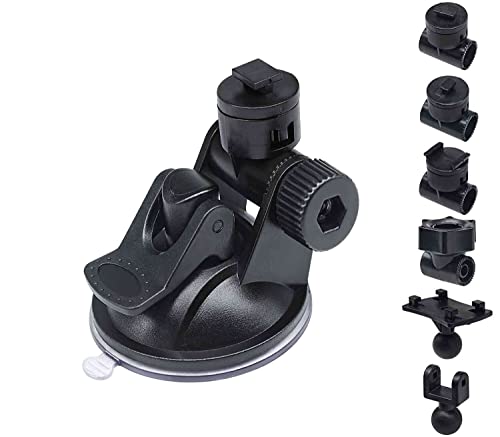
A suction cup mount is the best choice when you want tool-free installation, quick repositioning, or a temporary setup that may move from one car to another. Based on the product listing, this OctinPris mount uses a large suction cup, which is the type of design people often choose when ease of attachment matters more than hidden installation.
The advantage is obvious: press it on, aim the camera, and remove it without scraping adhesive off the glass. That makes suction mounts useful for rental cars, family cars that change drivers often, and short-term installs where you are still deciding on the best windshield position.
The weakness is equally clear. Suction cups are more temperature-sensitive than adhesive pads, and they can loosen over time on hot glass or on roads with constant vibration. TechRadar’s recommendation of the Nextbase iQ using an ODB II port shows that some buyers move away from windshield-mounted power solutions altogether when they want cleaner routing and fewer visible parts.
When tool-free removal matters
If you remove the camera weekly, suction is easier on both the mount and the windshield. That can matter for a lease car, a shared household vehicle, or a city car parked in public where you may want to take the camera down often.
It also helps if you are still testing camera angle. You can shift the mount a few millimeters, check mirror clearance, and reposition without waiting for adhesive to cure.
What temperature swings do to suction
Heat and cold both affect suction. Warm glass can let the cup creep, and cold mornings can make the seal less consistent if the rubber has stiffened. The result is familiar: a camera that slowly sags, then rattles, then needs another press to stay level.
That is why suction is best treated as a temporary or semi-permanent option, not a set-it-and-forget-it answer for a car that sits outside all day.
How to stop loosening on rough roads
Choose the flattest possible part of the windshield and keep the glass clean and dry before mounting. A textured edge, a dusty area near the dash, or a sharply curved section gives the suction seal less contact area.
Ball-joint adjustability helps here, but only to a point. It lets you tune the camera angle without forcing the suction base to carry the weight at a bad angle. Too much tilt, though, can make any suction mount more likely to creep.
Mount decision matrix
The table below scores the two mount styles on the failure points that matter most in daily use. “High” means the style is stronger in that category; “Low” means it is weaker or more limited.
| Criterion | Windshield adhesive mount | Suction cup mount |
|---|---|---|
| Hold strength | High | Medium |
| Heat resistance | High | Low to medium |
| Ease of removal | Medium | High |
| Residue risk | Medium | Low |
| Camera adjustability | Medium to high | High |
| Windshield discreteness | High | Low to medium |
| Lease-car suitability | Medium | High |
| Compatibility with parking-mode wiring | High | Low to medium |
A simple rule of thumb is to pick adhesive for an owned car, daily driving, and parking-mode wiring. Pick suction for temporary installs, lease cars, and drivers who move the camera often.
Which mount should you buy?
The best mount depends on how long you want it installed and how harsh your cabin conditions are. If you want the most discreet, stable windshield setup, start with adhesive. If you want the easiest removal and reinstall, choose suction. That is the clearest split for most buyers.
Best for lease cars
Choose suction if you want the lowest cleanup burden. It comes off quickly, and it is easier to swap between vehicles without worrying about adhesive film or replacement pads. If you do want adhesive in a lease, keep the install small and remove it carefully before return.
Best for trucks and rough roads
Choose adhesive. Trucks often have more cabin vibration and more glass exposure to sun, and those two conditions punish weak mounts. A mirror-adjacent adhesive placement also helps keep the camera tucked away while reducing the chance of accidental bumps from passengers or cargo.
Best for parking mode setups
Choose adhesive with a hardwire kit. Rigs Rated says the VIOFO A229 Pro requires a hardwire kit for parking mode, and that setup only makes sense if the mount stays fixed while routing power carefully. Parking mode depends on constant power, buffered recording, and motion-trigger behavior, so a mount that creeps can ruin the angle when the car is unattended.
Hardwire routing also keeps the cabin cleaner than a loose cable draped across the windshield. OBD-II powered systems can work as an alternate power source, but TechRadar’s Nextbase iQ recommendation using an ODB II port is a reminder that plug-in convenience can come with a larger footprint.
Best for small cars and discreet installs
Choose a low-profile adhesive mount. The same source says the Vantrue E1 Pro is super compact, measuring just over 1.5 inches in every dimension, and compact cameras pair best with compact mounts. That combination helps hide the setup near the mirror without blocking the driver’s view.
Say your hatchback has a steep windshield and a rearview mirror mounted high on the glass. A small adhesive mount placed just behind the mirror can keep the camera out of sight while preserving a clear field of view and leaving room for the sun visor to swing down.
How to choose a mount that stays in place on rough roads
- Pick adhesive if vibration is the main problem.
- Choose a flat, clean section of glass near the mirror.
- Keep the mount low enough to stay out of your sightline.
- Use ball-joint adjustability to fine-tune the angle, not to force a bad mounting spot.
- If the camera needs parking mode, route power before final placement so the wire does not tug on the mount.
A common first-timer mistake is mounting too low on the windshield because it feels safer. That can expose the camera to more cabin heat and give the cable a longer, more visible path across the glass. A higher, mirror-adjacent position usually hides better and cuts down on distraction.
What windshield mounting position means in practice
Windshield mounting position affects three things at once: visibility, camera view, and heat exposure. A mirror-adjacent spot usually gives the best concealment, but you still need a clear view of the road and enough clearance for wipers, tint strips, and mirror housings.
Legal placement concerns vary by location, so check local rules before you stick anything to the glass. The goal is a mount that stays put without becoming a visibility problem.
How parking mode changes the decision
Parking mode changes the mount choice because the camera is expected to sit powered for long periods. The same source lists 24-hour buffered parking mode for the VIOFO A229 Pro, and that kind of use favors a mount with stable alignment and a hardwire-friendly layout.
Dash cam hardwire kits support parking mode by feeding constant power through the fuse box, but that also means careful cable routing matters. If the power lead tugs on the camera body, even a good mount can start to drift.
How 3M adhesive pads affect the result
3M adhesive pads are common because they bond strongly and resist vibration well when the windshield is clean. They also make replacement easier, since most aftermarket mounts rely on spare pads rather than one fixed piece of hardware.
The tradeoff is removal work. If you move the mount often, the cost of replacement pads and the time spent cleaning the glass add up. That is why adhesive makes the most sense when the install is meant to stay in one car.
Ball joints, OBD-II, and rear camera setups
Ball-joint adjustable mounts help you aim the camera without redoing the whole install. They are useful when the windshield angle is steep or when the mirror housing forces an odd camera angle. The downside is that too much looseness can invite wobble under vibration.
OBD-II powered mount systems are best when you want a cleaner install and the vehicle supports that power source. The downside is footprint: the plug and cable can be more visible than a simple adhesive mount with hardwire routing. For a front-and-rear setup, the front mount should be the stable one, because the rear camera cable often depends on the front unit staying fixed.
Frequently asked questions
What is the best dash cam mount for my car?
The best mount for most cars is a low-profile adhesive windshield mount. It holds better in heat, stays discreet behind or near the mirror, and handles vibration better than a suction cup. If you need frequent removal or you drive a lease, suction is the easier choice.
Are adhesive dash cam mounts better than suction mounts?
Yes, if your priority is long-term stability. Adhesive mounts usually win on heat resistance, vibration control, and discreetness. Suction mounts win on convenience and reuse. The better choice depends on whether you value permanence or easy removal more.
How do I keep a dash cam mount from falling off in heat?
Use a clean, dry windshield, mount near the mirror where the camera is less exposed to direct sun, and choose adhesive over suction if the car sits hot for long periods. Heat is where suction cups fail most often, especially if the cabin bakes all afternoon.
Will a dash cam mount damage my windshield?
A properly installed mount should not damage glass, but residue is possible with adhesive and some suction cups can leave marks if they sit for a long time. Careful removal matters. Clean the area first, follow the mount instructions, and avoid forcing the base off the glass.
Which dash cam mount is easiest to remove and reinstall?
Suction cup mounts are easiest. They are tool-free, fast to reposition, and better for temporary use or shared vehicles. Adhesive mounts are stronger, but they usually take more care to remove and may need replacement pads before they go back on another windshield.
What mount works best for a lease car?
Suction is usually the safest lease-car choice because it is easy to remove and less likely to leave residue. If you want a cleaner, more hidden install and plan to leave it in place for the full lease term, a small adhesive mount can still work, but cleanup matters more.
Can I use a dash cam mount with a rear camera setup?
Yes. The front mount still needs to stay fixed, because the rear camera cable often depends on the front camera staying put and aimed correctly. Adhesive is usually better here, especially if parking mode or hardwire routing is part of the setup.
Products related to this article
Sponsored / affiliate links. As an Amazon Associate I earn from qualifying purchases. I may earn additional commission from eligible campaigns.