Best Portable Vacuum Kits for Cars: Based on Specs and Reviews
For most car owners, the best portable vacuum kit is a 12V or cordless model with a crevice tool, brush, and extension hose; choose 12V for long deep-cleans, cordless for quick pickups, and wet/dry only for heavy spills. Pick the wrong setup and you waste time, leave grit in seams, or buy a kit that cannot reach pedals, rails, and cargo corners. This guide matches vacuum type, attachments, and power source to specific detailing jobs so you can choose the right kit fast.
Quick comparison
| Product | Badge | Best for | Price | ||
|---|---|---|---|---|---|
 |
KÄRCHER Shop Vacuum WD 5 P, 6.6 Gal, 6.0 Peak HP, 33 ftKÄRCHER | Our pick | 6.6 Gal · 6.0 Peak HP · WD 5 P | $249.99
Price as of 16 Oct 2026
|
View |
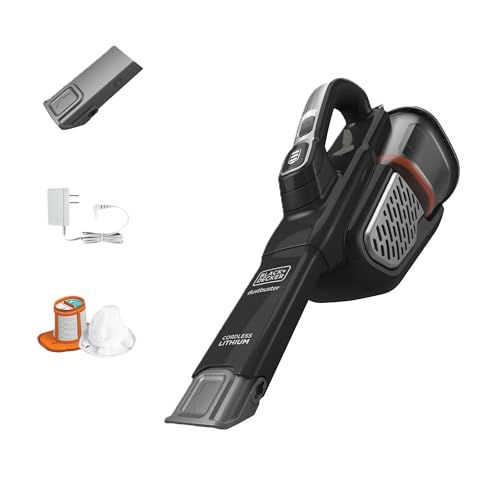 |
BLACK+DECKER dustbuster Portable Vacuum Cordless Handheld,BLACK+DECKER | Also great | 20V AdvancedClean+ · 750ml · Cordless | $99.99
Price as of 16 Oct 2026
|
View |
 |
Bissell TurboClean Cordless Hard Floor Cleaner Mop andBissell | Also great | $148.10
Price as of 16 Oct 2026
|
View | |
 |
iRobot Roomba i3+ EVO (3550) Self-Emptying Robot Vacuum –iRobot | Also great | $399.00
Price as of 16 Oct 2026
|
View |
Use the table to match the mess, not the marketing copy. A unit that clears dog hair well can still struggle with sand, and a fast weekly vacuum may fall short on trunk debris.
How we chose
Portable car vacuums were judged on four practical filters: suction and runtime together, attachment coverage for car interiors, power source and reach, and upkeep costs such as filters and batteries. A kit that looks strong on paper but misses seat rails or cargo edges does not make the cut.
The list also favors compact storage and clear job fit. A vacuum can pull hard and still be the wrong buy if it fades under sustained use, clogs fast, or ships with attachments that do not solve a real interior problem.
Cordless handheld vacuum: best for weekly cleanup
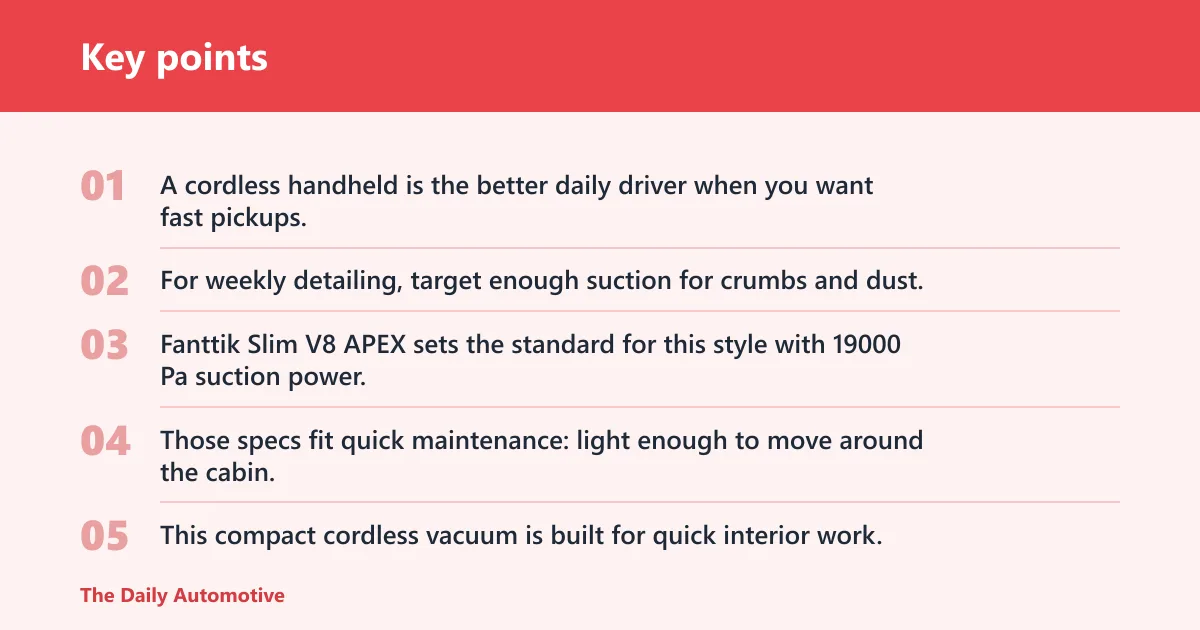
A cordless handheld is the better daily driver when you want fast pickups, short runtimes, and no cord to manage around pedals and child seats. For weekly detailing, target enough suction for crumbs and dust, a dust cup that empties cleanly, and a battery that does not sag halfway through the cabin.
Fanttik Slim V8 APEX sets the standard for this style with 19000 Pa suction power, a 1.1 lb body, an 80000 RPM brushless motor, and Type-C fast charging. Those specs fit quick maintenance: light enough to move around the cabin, strong enough for seams, and fast to recharge between uses.
Its weakness is simple. This compact cordless vacuum is built for quick interior work, not marathon cleanup after a beach trip, a muddy dog ride, or a trunk full of gravel.
What specs to target
For a cordless handheld, look first at usable runtime, battery capacity in mAh, and how the tool feels in one hand. Suction in Pa matters, but a higher number means little if the battery fades under load or the dust cup fills quickly.
Brushless motors deserve attention because they usually hold performance better under load and waste less energy than basic brushed designs. That matters when you are pulling debris from carpet fibers or repeating passes along seat rails.
Best attachment set for crumbs and dust
A fine-detail car kit should include a crevice tool for console edges, vent fins, seat rails, and the gap beside the center tunnel. A brush head should cover dust on vents, buttons, and hard trim without scratching them.
An extension hose or extra tubes help when the unit body is too bulky to fit between a seatback and the floor. That matters in compact cabins where the vacuum itself cannot physically reach the problem.
Tradeoffs versus corded models
Cordless models trade continuous power for speed and convenience. They are easier to store and faster to grab, but they can lose edge pickup as the battery drains, especially on carpet, mats, and embedded grit.
Say your car is a two-row crossover used mainly for school runs and groceries. A cordless handheld makes sense because the mess is usually small and repeatable; a long cord would only slow the job down.
Corded 12V vacuum: best for long sessions
A corded 12V vacuum is the better pick when you need continuous power, longer cleanup sessions, and fewer concerns about battery fade. It plugs into the vehicle’s 12V DC outlet, so the motor keeps working as long as the car outlet does.
THISWORX Car Vacuum is the clean example here: 12V DC power source, 16-foot cord, and a 106-watt motor. That combination supports steady interior cleaning because you are not waiting on a battery, and the cord gives you the reach to work from front seats to cargo area in one pass.
The downside is predictable. A corded vacuum is less nimble around large SUVs and awkward to route around seat bases, and the cord length still has a hard limit.
Why vehicle power changes the equation
Vehicle power lets a corded vacuum run at full strength without battery fade. That helps on sand, trunk debris, and repeated passes through thick floor mats, where a handheld battery unit can taper off.
Vehicle outlet compatibility matters too. If the car’s 12V outlet is limited or hard to access, corded convenience drops fast.
What cord length can cover
A 16-foot cord is enough for many sedans and compact SUVs, especially if the outlet is near the dash or center console. Longer cabins and three-row vehicles benefit from extra reach because you avoid constantly swapping sides.
Reach is not the same as freedom. A long cord still needs to clear pedals, door sills, and seat tracks without snagging.
Where corded kits still feel limited
Corded kits can be awkward for quick crumb pickups because setup takes longer. They also demand a clean path to the 12V outlet, and many buyers underestimate how much cord management matters inside a crowded interior.
For a pickup truck with a large bed cover area, or an SUV that regularly hauls garden soil and sports gear, the corded route usually pays off. For a small hatchback, it may feel like more work than the mess justifies.
Which portable car vacuum fits which detailing job?
The best vacuum depends on the mess. Pet hair, sand, wet spills, and weekly dust each stress different parts of the kit, so choose suction, runtime, and attachments around the task instead of chasing one headline spec.
| Mess type | Recommended vacuum type | Minimum practical suction/runtime | Must-have attachments | Likely tradeoffs |
|---|---|---|---|---|
| Pet hair | Cordless handheld or corded 12V with a pet hair nozzle | Enough suction to keep lifting hair from fabric without clogging; runtime long enough for seats and cargo trim | Pet hair nozzle, brush head, crevice tool | Hair wraps around filters and rollers; upholstery work is slower than hard-surface cleanup |
| Sand | Corded 12V or high-suction cordless with larger dust cup | Strong sustained suction and enough runtime for repeated passes over mats | Crevice tool, floor nozzle, brush head | Sand can scratch trim if the nozzle is dragged carelessly; cups fill fast |
| Crumbs | Cordless handheld | Moderate suction and short, convenient runtime for quick pickup | Crevice tool, brush head | Weak edge pickup can leave crumbs in seat seams and console gaps |
| Wet spills | Wet/dry vacuum | Continuous power and enough tank capacity for the spill size | Wet nozzle, crevice tool, washable filter | Bulkier storage and more cleanup after use |
| Trunk cleanouts | Corded 12V or larger-capacity cordless | Long runtime or continuous power for debris-heavy sessions | Extension hose, crevice tool, floor nozzle | Long sessions expose battery fade or cord routing problems |
| Quick weekly maintenance | Compact cordless handheld | Short bursts of power and enough charge for the cabin | Crevice tool, brush head | Not ideal for deep carpet extraction or large debris piles |
What attachments actually matter?
Attachments matter because each one solves a different interior problem. A good kit is not a pile of plastic; it is a set of tools that reaches seams, lifts hair, loosens dust, and avoids damage on trim.
Crevice tool
The crevice tool is the most useful attachment in a car. It reaches seat rails, console edges, vents, trim gaps, and the narrow seam between a seat and the center tunnel where grit tends to collect.
Pet hair nozzle
A pet hair nozzle is for upholstery, carpet, and floor mats where embedded hair clings to fabric. It is the attachment that can make a real difference on dog hair that a plain open nozzle leaves behind.
Brush head
The brush head helps with dust on vents, buttons, and dash trim. It loosens fine dirt without being as aggressive as a bare tube, which reduces the chance of scattering dust across the cabin.
Extension hose and extra tubes
An extension hose helps when the vacuum body is too bulky to fit into a footwell or between seats. Extra tubes matter in larger cabins because they keep the motor unit parked while the nozzle reaches the problem.
A common first-timer mistake is buying a vacuum with strong suction but no usable narrow tool. That usually means the easy debris disappears and the real mess in seams stays put.
How much suction and runtime do you need?
You need enough suction to move the debris you actually face, and enough runtime to finish the job without rushing. For a small cabin and light dust, moderate cordless power can be enough; for sand, pet hair, and trunk debris, continuous power or higher suction matters more.
Reading Pa, mAh, and minutes together
Pa tells you pulling force, but the practical result depends on airflow, nozzle shape, and battery output. mAh tells you battery capacity, yet the useful number is runtime under load, not a label reading in isolation.
As a rough rule, a kit that claims strong suction but only short runtime can still be fine for a weekly clean. A deep-clean routine needs longer runtime or vehicle power, especially once the dust cup starts filling.
When brushless motor specs matter
Brushless motors matter most when you expect sustained use and repeated passes. A motor such as the 80000 RPM unit in a compact cordless design is a sign that the brand is aiming for better efficiency and steadier performance under load.
That said, RPM alone is not enough. The real question is whether the motor keeps the nozzle effective after the first few minutes of use.
When a bigger dust cup beats more power
A larger dust cup can be more useful than extra suction when the mess is light but frequent. More capacity means fewer stops to empty, which helps during trunk cleanouts and sand removal.
The ONAVOT cordless vacuum shows why this matters: 35000 Pa suction, up to 60 minutes of runtime from a dual-battery system, and a 350 ml dust cup. That combination supports longer sessions, though the tradeoff is more to store and keep charged.
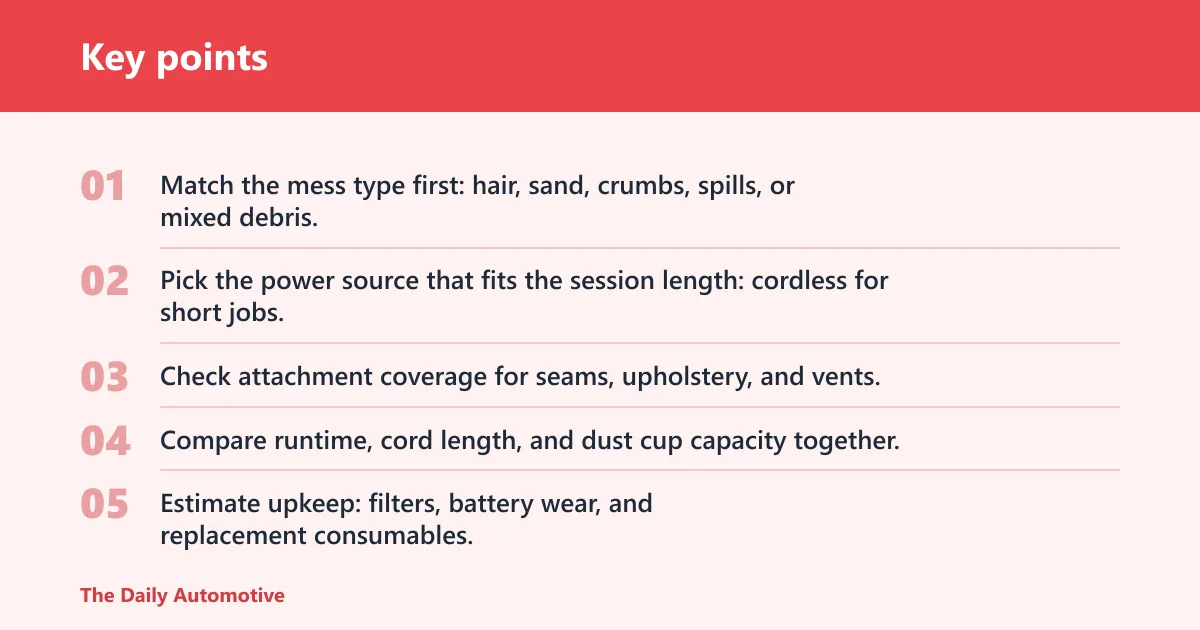
- Match the mess type first: hair, sand, crumbs, spills, or mixed debris.
- Pick the power source that fits the session length: cordless for short jobs, 12V for long ones.
- Check attachment coverage for seams, upholstery, and vents.
- Compare runtime, cord length, and dust cup capacity together.
- Estimate upkeep: filters, battery wear, and replacement consumables.
Cordless or corded: which should you buy?
Choose cordless if your cleaning is frequent, short, and focused on quick pickups. Choose corded if you do longer detailing sessions, haul dirty cargo often, or need continuous power for sand and heavy debris.
Best fit by vehicle size
Small cars and compact crossovers usually favor cordless convenience because reach demands are lower. Larger SUVs, wagons, and pickups lean toward corded 12V models because cargo areas and third-row seats make battery life and cord routing more important.
Best fit by cleaning frequency
If you vacuum weekly, a light cordless handheld is easier to keep in the trunk or garage. If you wait several weeks between cleanups, corded power or a larger dust cup becomes more valuable because the mess has more time to accumulate.
Best fit by mess type
Crumbs and dust favor cordless. Pet hair and sand often favor stronger suction and better attachment coverage. Wet spills require a wet/dry unit, which is a different category altogether and should not be forced into a dry-only handheld.
Are HEPA filters worth it in a car vacuum?
HEPA filters are most useful for allergy-sensitive drivers, especially when the goal is to trap fine particles instead of blowing them back into the cabin. They are helpful, but not mandatory for every buyer, and they work best when the rest of the vacuum seals well.
Who benefits most from HEPA filtration
Drivers with dust allergies, pet dander sensitivity, or frequent pollen buildup benefit the most. A fine-particle filter helps when the cabin collects dry dust in vents, seat seams, and floor mats.
Filter cleaning and replacement tradeoffs
HEPA filters need regular care. If they are not cleaned or replaced on schedule, airflow drops and suction suffers, which is exactly the opposite of what most buyers want.
As a general maintenance rule, check the filter after every few uses and clean it more often if you vacuum pet hair or sand. Fine dust loads filters quickly.
What to expect from fine-particle capture
HEPA filtration improves fine-particle capture, but it does not make a weak vacuum strong. The rest of the kit still has to move air, keep seals tight, and avoid clogging.
Which one should you buy?
Start with the job you do most often. For tight interiors and weekly maintenance, a compact cordless handheld is the cleanest fit. For pet hair and sand, prioritize stronger suction, a pet hair nozzle, and a larger dust cup. For the lowest ownership cost, choose a simple 12V corded kit with washable parts. For allergy-sensitive buyers, look for HEPA filtration and easy filter access.
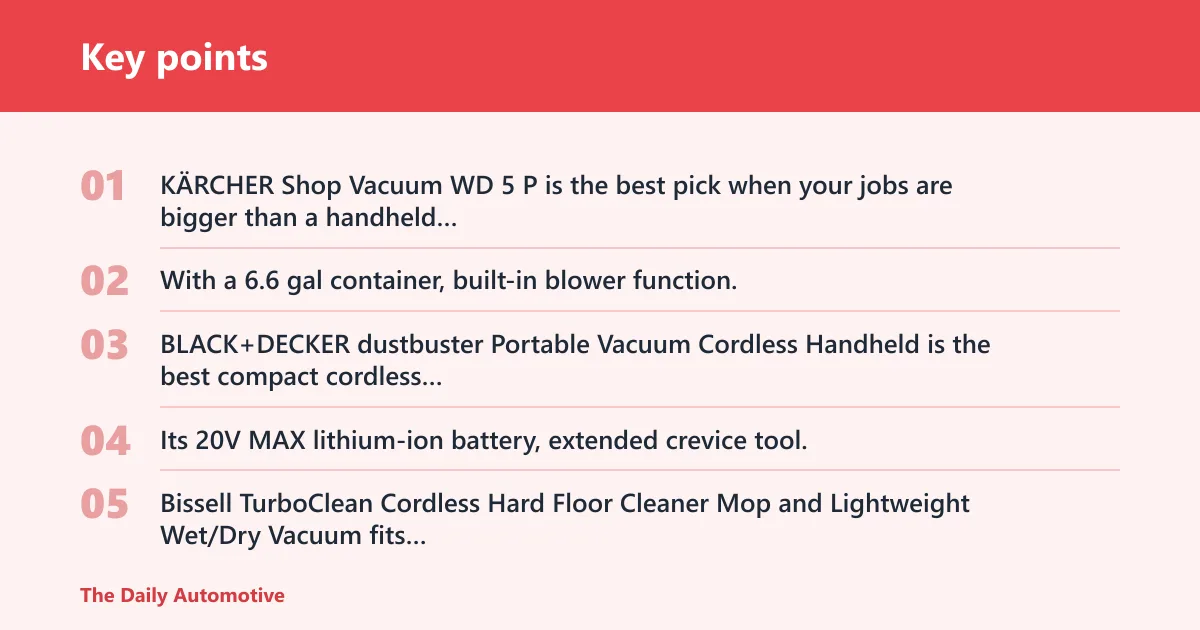
KÄRCHER Shop Vacuum WD 5 P is the best pick when your jobs are bigger than a handheld can comfortably handle. With a 6.6 gal container, built-in blower function, and 33 ft reach from the 26 ft power cable, it is better for trunk cleanouts, garage-level detailing, and heavy debris than for glovebox-sized cleanup.
BLACK+DECKER dustbuster Portable Vacuum Cordless Handheld is the best compact cordless option among the supplied products for small-car maintenance and seats-plus-vents cleaning. Its 20V MAX lithium-ion battery, extended crevice tool, and 750ml dustbin make it more capable than a tiny emergency vacuum, but it is still a handheld and not the best choice for heavy sand or wet messes.
Bissell TurboClean Cordless Hard Floor Cleaner Mop and Lightweight Wet/Dry Vacuum fits spill cleanup better than dry debris duty. The drawback is category fit: it is more of a floor-care and wet/dry tool than a purpose-built car detailing vacuum, so a car-first buyer may find it bulkier and less focused than a dedicated interior kit.
iRobot Roomba i3+ EVO is not a portable car vacuum at all, which makes it a poor match for this keyword. Its strength is automatic floor cleaning at home, not seat rails, cargo corners, or 12V vehicle power, so it should be skipped for car detailing.
A 12V model with a 16-foot cord is still the safest answer for steady power during deep-clean days.
Frequently asked questions
What is the best portable vacuum kit for car detailing?
The best portable vacuum kit is the one that matches your mess pattern. For weekly cleanup, a compact cordless handheld with a crevice tool and brush is easiest to live with. For longer detailing sessions, a 12V corded kit is usually better because it keeps power steady and avoids battery fade.
Is a cordless or corded car vacuum better for detailing?
Cordless is better for quick jobs, grab-and-go cleanup, and smaller cabins. Corded is better for long sessions, heavy debris, and repeat passes over mats or cargo areas. The right answer depends less on preference than on how long you clean and how dirty the vehicle gets.
How much suction power do I need for car detailing?
Enough suction to lift what you actually vacuum is the right target. Crumbs and dust need less than sand and pet hair, while wet spills need a different type of vacuum entirely. Look at suction together with attachment shape, dust cup size, and runtime.
Which car vacuum is best for pet hair and sand?
Pet hair and sand usually need the strongest practical combination of suction, a pet hair nozzle, and a crevice tool. Pet hair sticks to fabric and sand settles into mats, so a larger dust cup and sustained power matter more than a tiny, ultra-light design.
How long should a cordless car vacuum battery last?
Long enough to finish the job without pausing to recharge. For quick weekly cleaning, short runtime may be fine. For full-cabin work or messy SUVs, aim for a battery that can cover seats, floor mats, and cargo space in one session, or choose a dual-battery design.
What attachments should a car detailing vacuum kit include?
At minimum, look for a crevice tool, brush head, and some form of extension hose or extra tube. A pet hair nozzle helps on upholstery and mats. If the kit also includes washable filters and easy-empty dust collection, upkeep gets simpler over time.
What is the best compact vacuum for tight car interiors?
A compact cordless handheld with a narrow crevice tool is usually the best fit for tight interiors. It is easier to maneuver around seat rails, console edges, and under pedals than a bulky canister or wet/dry unit. Size matters as much as suction in small cabins.
Products related to this article
Sponsored / affiliate links. As an Amazon Associate I earn from qualifying purchases. I may earn additional commission from eligible campaigns.