Best Small Car for Safety Features
The best small car for safety features is the Honda Civic Hatchback. It combines a 2026 NHTSA 5-star overall rating, 2025 IIHS Top Safety Pick+ status, and a perfect 10 out of 10 safety score with standard blind spot monitor, cross traffic alert, and lane centering on the base setup. The Mazda3 Hatchback remains a close match, especially if available parking sensors and a surround-view camera matter.
Quick picks
- Honda Civic Hatchback — best overall safety stack at the lowest trim, with standard blind spot monitor, cross traffic alert, and lane centering.
- Mazda3 Hatchback — best for buyers who want a top safety rating plus available parking sensors and a surround view camera.
Safety stack vs. price
| Model | MSRP range | NHTSA overall rating | IIHS award status | AEB | Blind-spot monitoring | Lane centering | Rear cross-traffic alert | Parking sensors |
|---|---|---|---|---|---|---|---|---|
| Honda Civic Hatchback | 2026 MSRP range: check the manufacturer’s listing for your model | 2026: 5 out of 5 stars | 2025 IIHS Top Safety Pick+ | Standard | Standard | Standard | Standard | Check the manufacturer’s listing for your model |
| Mazda3 Hatchback | 2026 MSRP range: check the manufacturer’s listing for your model | 5-star overall rating | 2025 IIHS Top Safety Pick+ | Check the manufacturer’s listing for your model | Check the manufacturer’s listing for your model | Check the manufacturer’s listing for your model | Check the manufacturer’s listing for your model | Available |
Which small car is best for safety?
The Honda Civic Hatchback is the better safety buy if you want the strongest standard safety stack at the base trim.
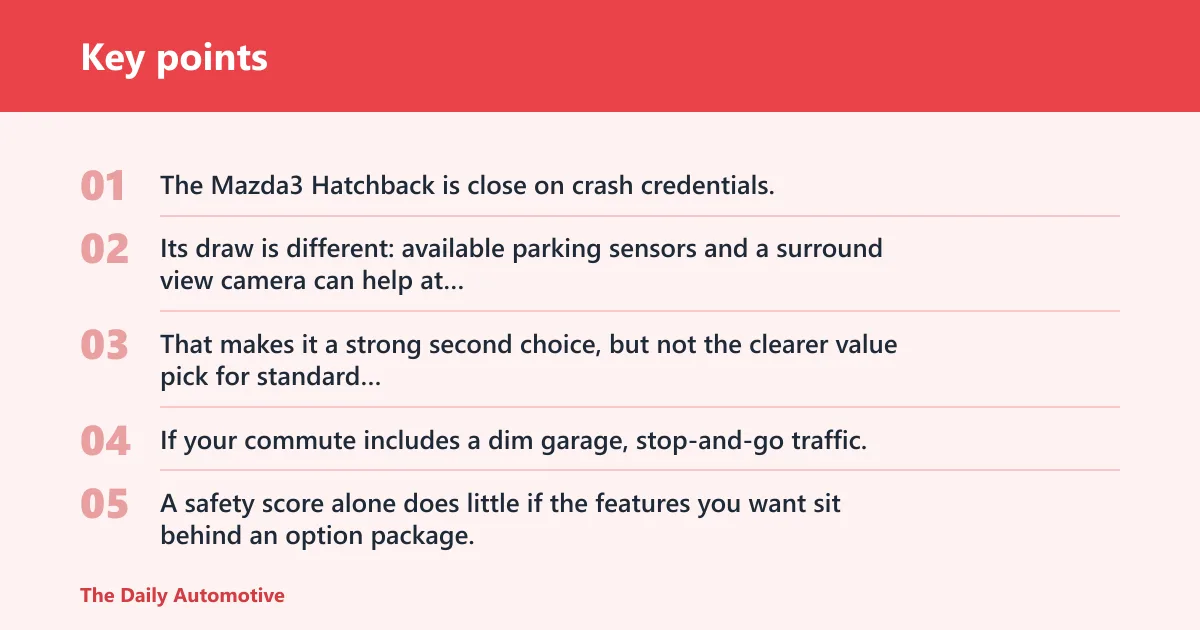
The Mazda3 Hatchback is close on crash credentials, with a 2025 NHTSA 5-star overall rating and a 2025 IIHS Top Safety Pick+. Its draw is different: available parking sensors and a surround view camera can help at low speeds and in tight lots. That makes it a strong second choice, but not the clearer value pick for standard equipment.
If your commute includes a dim garage, stop-and-go traffic, and frequent curbside parking, the Civic’s standard driver-assistance suite matters more than a higher trim brochure. A safety score alone does little if the features you want sit behind an option package.
What the scores do, and do not, tell you
NHTSA’s overall rating rolls up the frontal crash rating, side crash rating, rollover rating, and rollover risk percentage. IIHS is more specific about real-world protection details. For 2026 Top Safety Pick, IIHS requires good ratings in the small overlap front, moderate overlap front, and side tests. Top Safety Pick+ adds a standard front crash prevention system that earns a good pedestrian-test rating, and the vehicle-to-vehicle test uses passenger car, motorcycle, and semitrailer targets.
That is why the safest small car for one shopper may not be the best one for another. A shopper who values base-trim safety tech should weight standard equipment more heavily. A shopper who parks in crowded lots may care more about available sensors and a surround view camera.
Start with IIHS and NHTSA together, because they measure different parts of the safety picture. NHTSA gives a broad crash summary. IIHS goes deeper on crash structures, headlights, and front crash prevention, which often matters more in a small car where low-speed visibility and night driving can expose weak spots.
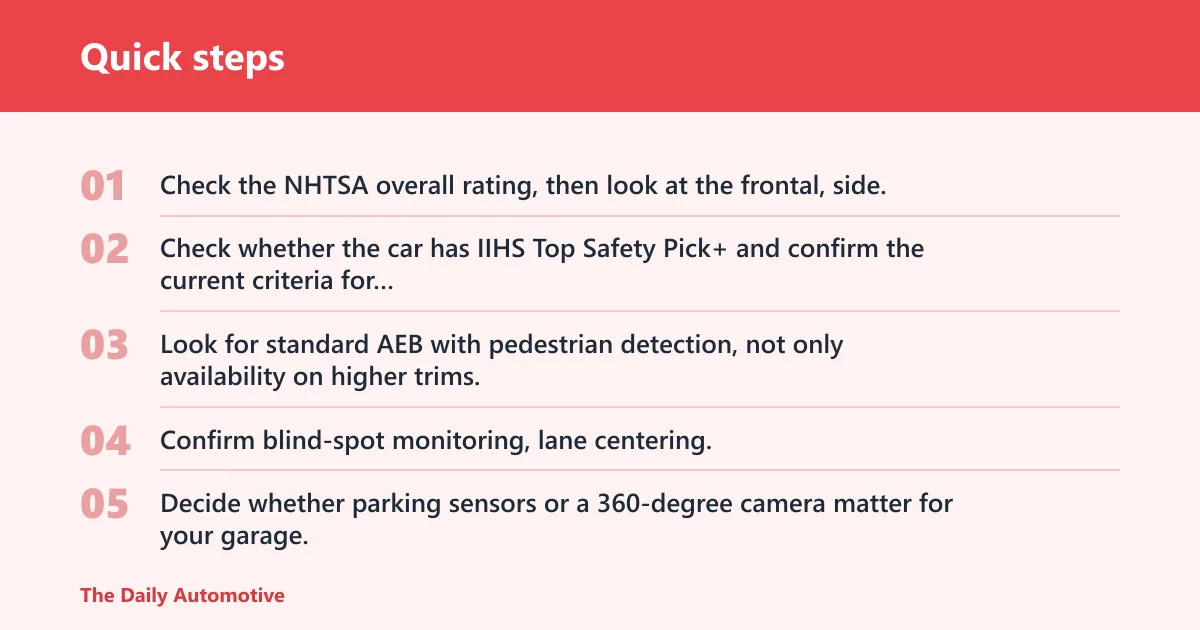
- Check the NHTSA overall rating, then look at the frontal, side, and rollover results separately.
- Check whether the car has IIHS Top Safety Pick+ and confirm the current criteria for headlights and pedestrian front crash prevention.
- Look for standard AEB with pedestrian detection, not only availability on higher trims.
- Confirm blind-spot monitoring, lane centering, and rear cross-traffic alert on the exact trim you would buy.
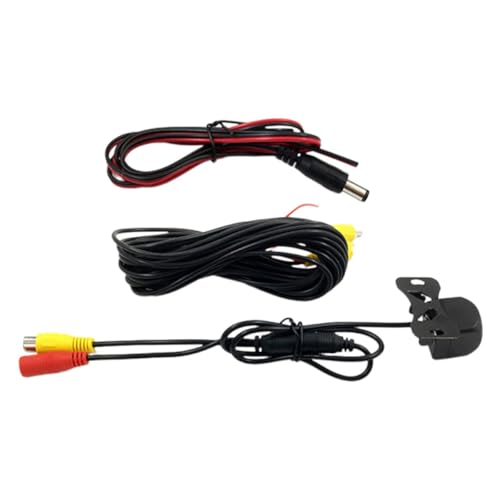
- Decide whether parking sensors or a 360-degree camera matter for your garage, street parking, or winter visibility needs.
Automatic emergency braking is the first feature to verify. It helps with forward collision prevention, and many systems also add pedestrian detection. Some use radar, some use cameras, and some use both. If the feature is optional on the trim you can afford, the value case weakens fast.
Blind-spot monitoring matters more in a small car than many buyers expect. Mirror alerts and adjacent-lane detection can reduce lane-change stress, especially on crowded highways. Lane keep assist and lane centering also matter in a small car because they reduce fatigue during long, straight drives and in slow, repetitive traffic.
Adaptive cruise control deserves a close look as well. A system with multiple following-distance settings and stop-and-go operation can calm highway traffic and commutes that crawl for miles. Rear cross-traffic alert is a real help when backing out of parking spaces where tall SUVs block the view.
A common first-timer mistake is choosing a trim for wheels or screens and assuming the safety gear is the same across the range. It often is not. On a small car, the trim level can decide whether a feature is standard, optional, or absent.
Why headlights and rear visibility matter so much
Headlight ratings are easy to overlook, but they matter in the real world. A good crash score does not solve weak low-beam performance on an unlit road. IIHS includes headlight ratings for a reason, and that is one place where the gap between a strong test result and a useful package can show up.
Rear visibility matters too. Hatchbacks often make packaging easier for cargo, but the tall rear opening can still create blind zones. That is where rear cross-traffic alert, parking sensors, and a surround view camera become more than convenience features. They help when the driver cannot see the child’s scooter, cart return, or curb behind the bumper.
Are hatchbacks safer than sedans?
Not by body style alone. In the small car class, hatchbacks can be easier to live with because rear visibility, cargo access, and feature packaging often work better than on a sedan, but the safety answer still depends on the exact trim. A well-equipped sedan can beat a poorly equipped hatchback, and the reverse is also true.
For these two picks, the hatchback layout helps shoppers focus on visibility and daily usability without giving up top-tier crash results. The Civic Hatchback and Mazda3 Hatchback both earn strong safety credentials, so the smarter question is which trim delivers the features you need at the lowest price.
Suppose two drivers park on a narrow street every night. One has a base trim with standard blind spot monitoring and rear cross-traffic alert. The other has a higher trim with a larger wheel package but no extra visibility tech. The first driver will usually feel safer, because the equipment addresses the actual risk.
Which small car have the highest crash test ratings?
Among the two cars covered here, both the Honda Civic Hatchback and Mazda3 Hatchback sit at the top of the small-car safety conversation. Each has a strong NHTSA result and a 2025 IIHS Top Safety Pick+ award. The Civic Hatchback gets the edge for buyers who want more standard safety equipment at the base trim.
The Mazda3 Hatchback stays in the same crash-rating conversation, but its buying case leans more toward optional visibility aids. That makes it a solid runner-up when you want a top-rated small car and plan to add parking support on a higher trim.
Frequently asked questions
What is the best small car for safety?
The Honda Civic Hatchback is the best small car for safety in this comparison.
Which small cars come with automatic emergency braking and blind spot monitoring?
The Honda Civic Hatchback clearly does, with standard blind spot monitor and the safety tech expected in this class, including forward collision prevention.
Which small cars earn IIHS Top Safety Pick+?
Both the Honda Civic Hatchback and Mazda3 Hatchback earn 2025 IIHS Top Safety Pick+. That award matters because IIHS also checks small overlap front, moderate overlap front, side, headlights, and front crash prevention performance, including pedestrian protection for the Plus award.
Should I choose a small car based on NHTSA or IIHS ratings?
Use both. The same source gives a broad overall crash picture with frontal, side, and rollover results, while IIHS adds detail on headlights and front crash prevention. For a small car, that extra detail matters because night driving, pedestrian risk, and rear visibility can shape real-world safety.
Is a small car safe enough for families?
Yes, if you choose one with strong crash ratings and the right driver-assistance tech on the trim you buy. The key is not size alone; it is whether the car has solid crash results, standard AEB, blind-spot monitoring, and rear cross-traffic alert, plus good headlights for night driving.
Are hatchbacks safer than sedans in the small car class?
Not automatically. Hatchbacks can have better rear practicality and easier visibility packaging, but the safer choice depends on trim-level equipment and crash results. In this comparison, the Civic Hatchback and Mazda3 Hatchback both make the case for selecting by features, not body style alone.
Products related to this article
Sponsored / affiliate links. As an Amazon Associate I earn from qualifying purchases. I may earn additional commission from eligible campaigns.