Best Snow Foams for Winter Washes (2026): we compared
The best snow foam for winter car washes is a pH-neutral, salt-cutting pre-wash that clings in cold weather and rinses clean. If your panels are cold, choose a product designed for shorter dwell times rather than maximum thickness. Bad foam leaves brine film, wastes time, and can freeze on trim. This guide ranks winter-safe options by salt removal, cold-panel dwell, and coating safety.
Quick comparison
| Product | Badge | Best for | Price | ||
|---|---|---|---|---|---|
 |
Chemical Guys, Honeydew Snow Foam Car Wash Soap for FoamChemical Guys | Our pick | 64 oz · pH-balanced | $29.97
Price as of 29 Sep 2026
|
View |
 |
Sooprinse Foam Cannon Kit with Pressure Washer Short Gun, 1Sooprinse | Budget pick | 1 L lance · brass foam core | $29.99
Price as of 29 Sep 2026
|
View |
For winter use, thick foam is not the prize. You want a pre-wash that breaks down road film, stays usable on cold paint, and rinses before it dries or freezes.
According to autofinesse.com — Auto Finesse prices Avalanche Snow Foam from £9.95.
How we chose
Three things matter most in freezing weather: cleaning strength on salted road film, rinseability on cold panels, and safety on wax, sealants, or ceramic coatings. Fit matters too, because a foam lance and a foaming pump sprayer can behave quite differently when the driveway is cold.
Auto Finesse says a simple wash is usually insufficient to maintain a car’s exterior, and it describes snow foam as a pre-wash that maximizes cleaning performance. That is the right framing for winter. Snow foam is there to loosen dirt before contact washing, not to replace the wash mitt.
We also weighed failure cases. A foam that dries too fast, grabs on trim, or hangs on so long that it leaves residue is the wrong tool when panels are cold. In winter, lift, lubrication, and rinseability matter more than marketing around foam density.
Chemical Guys Honeydew Snow Foam: best for salted daily drivers
This is the safer all-around pick for drivers who wash often in winter and want a maintenance foam that is easier on wax and sealant. Based on the spec sheet and owner feedback, its pH-balanced formula and concentrated use rate make it a practical option when the car is dirty, but not caked in heavy oily film.
What stands out is the balance. A pH-balanced foam is usually the right default for frequent winter washing because it lowers the risk of stripping protection during repeated washes, and it still gives enough loosened grime for a careful contact wash afterward.
The drawback is simple: a maintenance foam is not the strongest answer for thick, greasy road film. If your lower doors are covered in salt crust and traffic film, this is the kind of product that may need a stronger pre-wash step afterward.
Sooprinse Foam Cannon Kit: best for winter washes with a pressure washer
This is the better setup choice when you already have a pressure washer and want foam coverage that is easier to control than a basic sprayer. Based on the listed brass foam core, included nozzles, and 4000 PSI rating, it is aimed at drivers who want a fuller pre-wash from a lance-style tool.
The stand-out point is application control. A foam lance matters because dilution and coverage do more real work than foam height alone, and a proper cannon helps you coat shut lines, emblems, and lower panels before the mitt touches paint.
The drawback is that it depends on pressure-washer access, which makes it less useful for driveway users in freezing weather. It is also only as good as the soap you put through it, so the kit is not a substitute for a winter-appropriate formula.
What is the best snow foam for winter car washes?
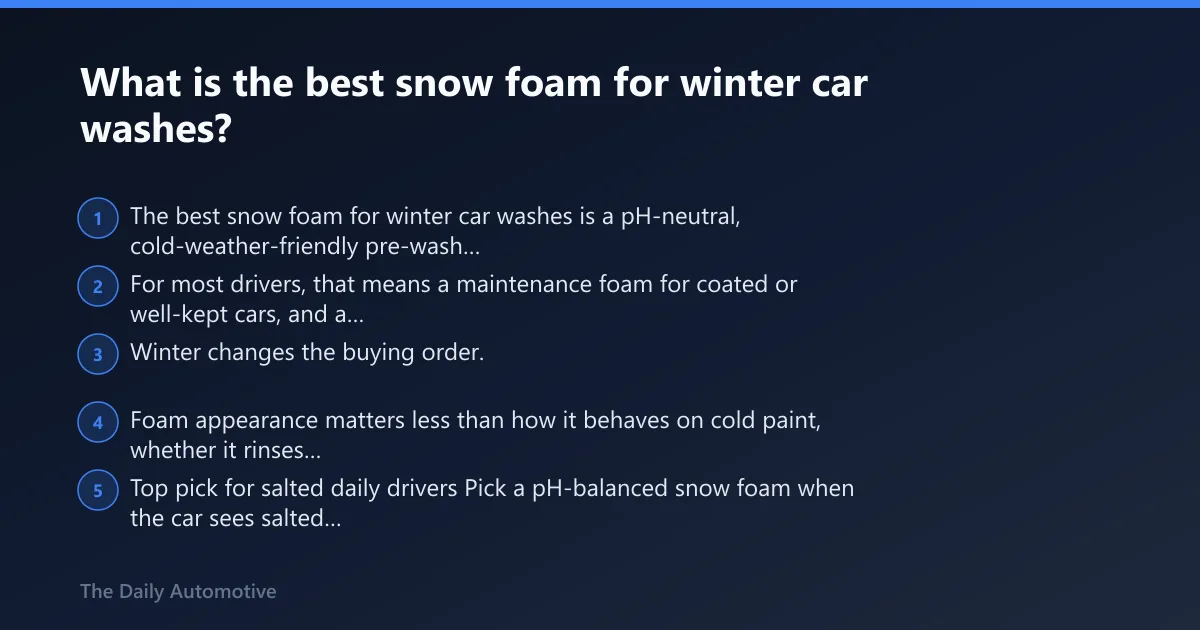
The best snow foam for winter car washes is a pH-neutral, cold-weather-friendly pre-wash that removes salt film without hanging around so long that it dries on panels. For most drivers, that means a maintenance foam for coated or well-kept cars, and a citrus-infused pre-wash when road grime is heavier.
Winter changes the buying order. Foam appearance matters less than how it behaves on cold paint, whether it rinses without leaving residue, and whether it protects wax, sealant, or ceramic coating while still loosening grime enough for a safe contact wash.
Top pick for salted daily drivers
Pick a pH-balanced snow foam when the car sees salted roads several times a week. It is usually the safest default for wax, sealant, and ceramic-coated cars because it supports frequent winter washing without being needlessly aggressive.
Top pick for coated weekend cars
Choose a pH-balanced formula here too, especially if the car is washed before buildup gets heavy. Coatings and sealants do not need a harsh cleaner every time, and winter washing is easier when the pre-wash is gentle enough to preserve protection.
Top pick for driveway washes without a pressure washer
A foaming pump sprayer is the practical answer when there is no pressure washer in winter. It will not throw product like a lance, but it lets you apply a pre-wash to the lower panels and shut lines where winter contamination gathers.
How we chose
We separated winter buying decisions into four buckets. First, how well the foam deals with salt-heavy road film. Second, whether it rinses clean before cold panels start holding residue. Third, whether it is safe for wax, sealant, or ceramic coating. Fourth, whether it fits a foam lance or a foaming pump sprayer.
That split matters because winter failure modes are different. A foam that looks great in summer may dry too quickly on a frosty hood, freeze in the nozzle, or fail to cut the greasy film that builds on lower doors and rear bumpers.
Can you use snow foam on a cold car?
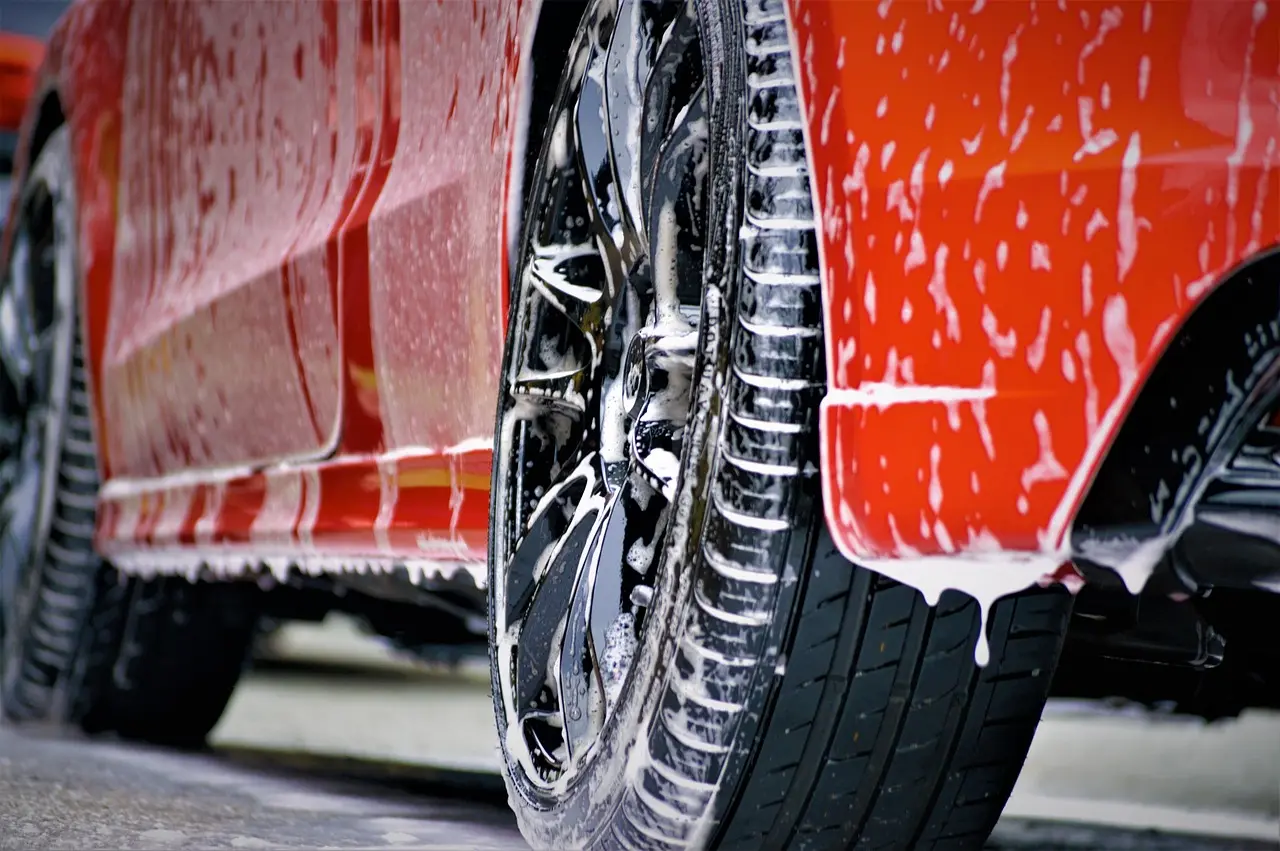
Yes, but cold changes the way snow foam behaves, so the panel temperature matters as much as the soap itself. On a cold car, dwell time should be shorter, the work area should be smaller, and the rinse should start as soon as the foam has loosened the film rather than waiting for it to look dramatic.
Below freezing, the risk is not only weak cleaning. It is foam that slows down, grabs the surface, or starts to dry on trim and badging. On cold panels, you are managing chemistry and evaporation at the same time.
What changes when the panel temperature drops
Cold panels slow chemical action and make residue more likely. Foam that seems fine on a mild day can leave streaks or stubborn patches when the metal is close to freezing, especially on horizontal surfaces and around emblems.
Why short dwell matters more in freezing weather
Dwell time is not a race, but winter shortens the usable window. A foam that sits too long can dry into film, and dried film is harder to remove than a quick rinse of a cleaner, wetter layer.
When to stop and rinse early
Rinse early if the foam starts to bead into dry spots, if the lower panels look chalky, or if wind is moving through the wash bay. If the product begins to stop clinging evenly, it is time to rinse and move to contact washing.
pH-balanced snow foam: best for coated daily drivers
pH-balanced snow foam is the safest winter default for cars with wax, sealant, or ceramic coating that get washed often. It is built for maintenance, not heavy decontamination, and that is exactly why it fits frequent winter cleaning so well.
Auto Finesse says Avalanche Snow Foam is pH-balanced, and that is the sort of formula most coated drivers should start with. Auto Finesse also says snow foam can reduce friction during detailing, which is useful in winter when grit can still sit on the paint after the pre-wash.
Why maintenance washing in winter favors a safer formula
Frequent winter washing is more about preserving what is already on the paint than stripping everything off. A safer pH-balanced foam helps keep wax and sealant in place while you remove the loose road salt and road film that can accelerate wear.
How it behaves on wax, sealant, and ceramic coatings
On protected paint, a pH-balanced foam should loosen the contamination layer without immediately fighting the protective layer underneath. That makes it the better choice when the car is washed often and the main goal is cleaning, not correction or deep decontamination.
Where it falls short on heavy traffic film
It is not the strongest option for greasy winter grime. If the panels carry thick road film, especially on the lower half of the car, a maintenance foam may need backup from a stronger pre-wash or a more deliberate two-step wash.
Citrus-infused pre-wash formula: best for salty road film
Citrus-infused pre-wash formulas are the stronger choice when winter grime turns greasy. They are better suited to traffic film, oily buildup, and the dirty lower panels that pick up salt spray, sludge, and road residue on the way home.
Auto Finesse offers Avalanche Snow Foam as a citrus-infused pre-wash. It is also described as pH-balanced, which is a useful combination when you want more bite than a basic maintenance wash without jumping straight to a harsh cleaner.
Why citrus formulas help with greasy winter grime
Citrus additives are usually aimed at film and road residue, not just loose dust. That makes them more relevant in winter, when the dirt on the car is bonded with salt, slush, and oily road contamination rather than being a dry summer layer.
Best use cases for salted commutes and dirty lower panels
Use this type when the car does short, frequent trips on salted roads and the lower doors, bumpers, and rear valance collect the heaviest film. It is also a better fit when the wheels and wheel arches contribute extra grime to the wash cycle.
When to pair it with a second wash step
If the rinse water still carries visible film or the surface feels gritty after rinsing, follow with a contact wash. Snow foam should loosen contamination enough to reduce rubbing, not promise that the paint is clean enough to skip the mitt.
Foaming pump sprayer: best for winter washes without a pressure washer
A foaming pump sprayer can be a winter fallback when a pressure washer is not available. A 2-litre unit gives enough volume for targeted pre-wash work, especially on lower panels, shut lines, wheels, and other areas where winter grime accumulates.
Auto Finesse sells a Foaming Pump Sprayer with a 2-litre capacity, and that format makes sense for driveway users. It is slower than a lance, but it keeps you washing when the garage or street setup does not support pressure equipment.
How a 2-litre sprayer changes dilution and coverage
With a pump sprayer, dilution has to be practical because you are building foam by hand pressure, not by a pressure washer’s jet and mixing chamber. Coverage is narrower, so the goal is to coat the high-risk grime zones rather than flood the whole car.
What to expect from hand-applied foam in cold weather
Hand-applied foam will usually be less thick and less dramatic. That is fine. In winter, the useful question is whether it softens the contamination enough to reduce rubbing and prevent dragging salt across the paint.
How to avoid freezing or drying too fast
Work in sections and keep the bottle out of the wind when possible. Rinse each section as soon as the grime has loosened, and do not let product sit long enough to flash dry on mirrors, badges, or plastic trim.
Which one should you buy?
Choose by contamination level first, not by foam appearance. For regular salted commutes, start with a pH-balanced snow foam. For heavier winter road film, step up to a citrus-infused pre-wash. If you have no pressure washer, a foaming pump sprayer is the practical choice because it still lets you pre-treat the worst areas.
Choose by coating next. Wax, sealant, and ceramic coatings usually point you toward the safer maintenance option unless the car is carrying obvious winter grime. Ceramic foam can be attractive if you want wash plus protection, but it is not the same thing as a heavy-duty cleaner and should not be treated that way.
Choose by equipment last. A foam lance gives better coverage and more consistent dilution, which matters more than chasing maximum foam thickness. If the product dries early, leaves residue, or performs poorly on cold paint, move to a stronger pre-wash or shorten the dwell and rinse sooner.
Winter snow foam decision table
| Use case | Recommended foam type | Dilution approach | Dwell-time caution | Upgrade trigger |
|---|---|---|---|---|
| Salted daily driver | pH-balanced snow foam | Use a conservative lance mix; aim for even coverage, not max thickness | Keep dwell brief on cold panels and rinse before it starts drying on trim | Upgrade if lower panels still feel greasy or the rinse leaves visible road film |
| Coated weekend car | pH-balanced snow foam | Use the lighter maintenance dilution recommended for coating-safe washing | Short dwell only; stop early if the foam begins to cling unevenly | Upgrade if winter contamination has bonded into shut lines or wheel-arch film |
| No-pressure-washer driveway wash | Foaming pump sprayer with a winter-safe pre-wash | Mix for hand application and work small sections to conserve solution | Very short dwell; cold air can make hand-applied product behave unpredictably | Upgrade if the sprayer cannot lift the salt film on lower doors and bumpers |
- Pick the foam type for the grime, not for the bubbles.
- Use a foam lance if you have a pressure washer, because dilution and coverage are easier to control.
- Use a foaming pump sprayer when you do not have pressure-washer access.
- Keep dwell time short on cold panels and rinse before the product starts drying.
- Step up from maintenance foam to a citrus-infused pre-wash when winter film stays behind after rinsing.
Frequently asked questions
What is the best snow foam for winter car washes?
The best winter snow foam is usually a pH-balanced formula that rinses clean and stays usable on cold panels. If the car sees a lot of salt, a citrus-infused pre-wash is the stronger choice. Thick foam is secondary to lift, lubrication, and fast rinseability.
Do I need a pH-neutral snow foam in winter?
For frequent winter washes, yes in most cases. pH-neutral or pH-balanced foam is safer on wax, sealant, and ceramic coatings, and it is a sensible default when you wash often to remove salt before it builds up. Heavier grime may still call for a stronger pre-wash afterward.
Will snow foam remove salt and road grime?
It will loosen a lot of it, but it should not be treated as complete removal by itself. Snow foam helps break the bond on road film and salt residue so the contact wash does less work. If the contamination is heavy, rinse and then wash by hand.
Can you use snow foam on a cold car?
Yes, but keep the dwell short and watch the surface carefully. Cold paint slows cleaning and raises the risk of drying or residue, especially on trim and badges. Work one section at a time and rinse early if the foam starts to flash dry.
How long should snow foam dwell in winter?
Only as long as needed to loosen the film. Winter dwell should be shorter than summer dwell because cold panels can still let foam sit without really working any better. The safer rule is to rinse as soon as the surface contamination has visibly softened.
Is snow foam safe for wax, sealant, or ceramic coating?
Usually yes, if you choose the right formula. pH-balanced snow foam is commonly preferred for maintenance washing because it is gentler on protection layers. Ceramic foam can add protection, but it should not be mistaken for a heavy-duty pre-wash on salted winter grime.
Products related to this article
Sponsored / affiliate links. As an Amazon Associate I earn from qualifying purchases. I may earn additional commission from eligible campaigns.