Heated Seat Cover vs Heated Steering Wheel Cover
A heated seat cover warms your back and thighs faster, while a heated steering wheel cover warms your hands faster, so choose the seat cover for long commutes and the wheel cover for short, frequent drives. Pick the wrong one and you can waste power, block airbags or wheel controls, or still feel cold where it matters. This guide compares heat path, safety limits, and the winter driving patterns each upgrade fits best.
| Decision factor | Heated Seat Cover | Heated Steering Wheel Cover | Winner |
|---|---|---|---|
| Warm-up speed | Electric heating elements under the seat surface usually take 5–10 minutes to reach full warmth. | Heat reaches your hands sooner when the cover is powered and fit is correct, but output depends heavily on the model and wheel thickness. | Heated Steering Wheel Cover |
| Whole-body comfort | Warms the back and thighs, which helps for long cold runs and driver-only comfort. | Does little for torso or legs. | Heated Seat Cover |
| Hand comfort | Does not warm your hands. | Targets the grip area and helps where cold steering wheels hurt most. | Heated Steering Wheel Cover |
| Install complexity | Usually straps over the seat and plugs into a 12V outlet. | Needs careful wrap fit, steering control clearance, and airbag-safe placement. | Heated Seat Cover |
| Compatibility risk | Higher risk with factory heated seats, ventilated seats, and seat-mounted airbags. | Higher risk with wheel diameter fit, spokes, buttons, and airbag clearance. | Tie |
| Battery risk | Uses the vehicle’s 12V outlet; leaving it on with the engine off can drain the battery. | Some powered versions also use the 12V outlet, so the same risk applies. | Tie |
| Value | Often costs about $30–$150, and thermal seat covers often cost under $50. | Usually a lower-cost add-on than a factory upgrade, but pricing varies by power and materials. | Heated Seat Cover |
Matching heat to your body’s cold spots
The core difference is where the warmth goes. A heated seat cover sends heat into your back and thighs through electric heating elements, while a heated steering wheel cover is aimed at your hands and fingers. That makes them better at different jobs, even though both are winter comfort upgrades.
That split matters because cold-weather discomfort rarely hits one body part equally. If your hands go numb first, the wheel matters more. If your lower back and legs feel frozen on the highway, the seat matters more.
Side-by-side comparison
Use this table to separate fit, heat delivery, and daily use. The “winner” column is about the better match for that factor, not a score of quality.
| Criterion | Heated Seat Cover | Heated Steering Wheel Cover | Winner |
|---|---|---|---|
| Where warmth goes | Back, hips, and thighs | Hands and palms | Depends on your cold spot |
| Power source | Usually the vehicle’s 12V outlet | Some models use the 12V outlet; others are passive covers and do not heat at all | Tie |
| Typical price | About $30–$150 | Varies by model; confirm the listing for your wheel size and power method | Heated Seat Cover |
| Fit sensitivity | Must work with your seat shape, bolsters, and any built-in seat heating | Must match wheel diameter, spoke layout, and airbag clearance | Tie |
| Heat transfer sensitivity | Seat material, padding, and cover thickness affect how quickly heat reaches you | Wheel cover thickness can dull heat transfer if the material is insulating | Heated Seat Cover |
| Best use case | Longer commutes, driver-only warmth, cold seats | Short trips, cold hands, frequent starts | Depends on trip pattern |
Where each product sends heat
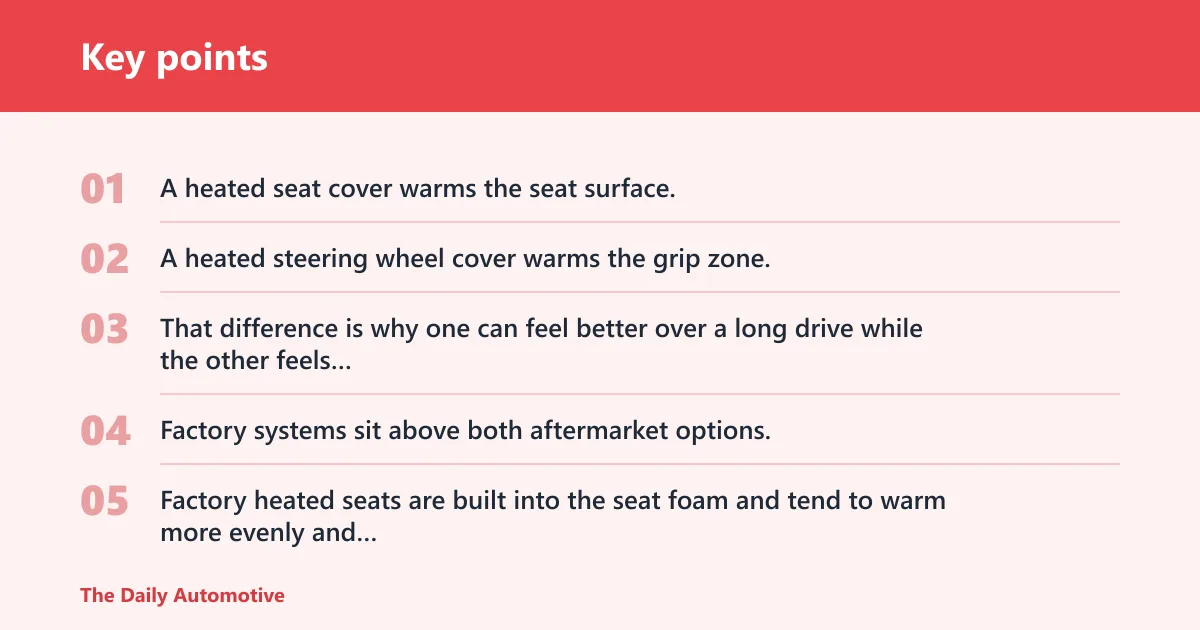
A heated seat cover warms the seat surface, then your body picks up that heat through contact with the backrest and cushion. A heated steering wheel cover warms the grip zone, so the benefit is immediate for your hands but narrow in scope. That difference is why one can feel better over a long drive while the other feels quicker at startup.
Factory systems sit above both aftermarket options. Factory heated seats are built into the seat foam and tend to warm more evenly and faster than covers, with heat settings controlled through the vehicle. Factory heated steering wheels use built-in heating elements, offer direct hand warmth, and usually warm faster than aftermarket covers because the heating path is designed into the wheel.
How each product works in practice
Aftermarket heated seat covers rely on electric heating elements and a 12V outlet power source. Most take 5–10 minutes to reach full warmth, which is slower than factory heated seats, but still useful for cold starts and driver-only comfort. Heated seat covers usually cost about $30–$150, and thermal seat covers often cost under $50.
Heated steering wheel covers are less standardized. Some are active heated covers, while many wheel covers are only insulating layers with no heating element at all. A powered model may fit steering wheels 14.5–15.5 inches in diameter, but the listing and your wheel shape both matter.
Material thickness and heat transfer
Material choice changes how much heat gets through. Thicker covers insulate more and can slow heat transfer, while thinner materials pass heat better. Leather usually insulates less than sheepskin, microfiber tends to fall somewhere in between, and thick neoprene can add a noticeable barrier.
Some wheel covers are only about ±1.4mm thick according to a manufacturer spec, while others are much bulkier. A thin leather steering wheel cover reduced temperature only 5°F in the example table, a fabric cover reduced temperature by 20°F, and a sheepskin cover reduced temperature by 30°F. That gap is why a thick cover can dull a heated wheel’s output.
Which heats faster?
Factory heated seats and factory heated steering wheels generally warm faster than aftermarket covers because the heating elements are built into the original parts. For aftermarket products, a heated steering wheel cover can feel faster on your hands if it fits tightly and has active heating, while a heated seat cover usually takes 5–10 minutes to reach full warmth. Material thickness changes the result, since a thicker cover slows heat transfer.
For a powered wheel cover, the main question is speed and contact quality. If the cover is loose, bulky, or highly insulating, the heat you pay for may not reach your hands quickly. That is why a product description that mentions insulation should be read as a warning, not a benefit, if you want quick heat.
How do comfort and fit differ?
Seat heat and wheel heat solve different problems. A heated seat cover is better for whole-body comfort because it warms the back and thighs, while a heated steering wheel cover focuses on the part of your body that is exposed first and usually stays cold during the drive.
Fit changes both comfort and performance. Seat covers must avoid interfering with factory heated seats, seat sensors, and any seat-mounted side airbags. Steering wheel covers must not cover buttons, spokes, or airbag zones, and they should not make steering controls harder to reach.
If your car has cold leather seats and you drive about 35 minutes to work, a seat cover can help keep your lower body warmer. A seat cover helps your lower body stay warm after the cabin starts to stabilize. Now change only one thing: your commute drops to 8 minutes and your hands hurt most at the first turn of the wheel. The steering wheel cover becomes the more useful upgrade.
Are they safe to install and use?
They can be safe, but only if the product fits the vehicle and leaves all safety systems clear. Heated seat covers and some heated steering wheel covers draw from the vehicle’s 12V outlet, so use them only with the engine running unless the manual says otherwise. If you leave any accessory on with the engine off, battery drain is a real risk.
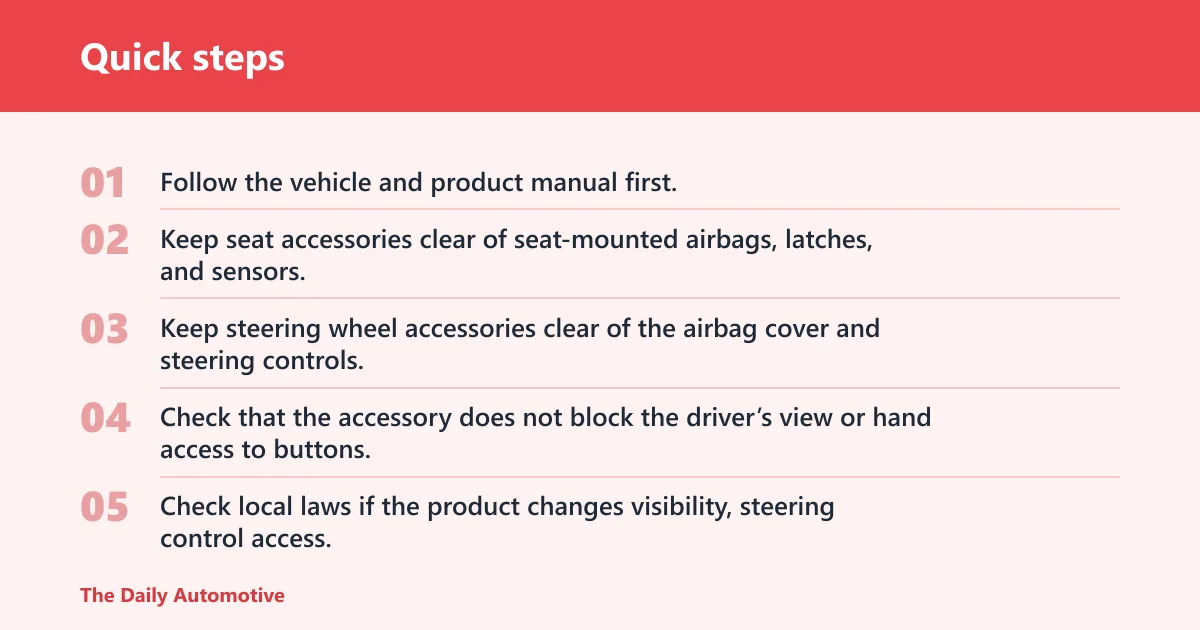
- Follow the vehicle and product manual first.
- Keep seat accessories clear of seat-mounted airbags, latches, and sensors.
- Keep steering wheel accessories clear of the airbag cover and steering controls.
- Check that the accessory does not block the driver’s view or hand access to buttons.
- Check local laws if the product changes visibility, steering control access, or airbag zones.
Compatibility also matters with factory heated seats. A cover on top of a heated seat can change how heat moves through the seat foam and upholstery, so the result may feel uneven or slower. If your vehicle already has built-in seat heat, confirm that the accessory is allowed by both the car-seat and vehicle manual where seat safety systems are involved.
Heated cover decision matrix
This matrix turns the comparison into a use-case choice. The winner in each row is the upgrade that fits that driving pattern better, assuming the product itself fits your vehicle and clears all safety systems.
| Scenario | Heated Seat Cover | Heated Steering Wheel Cover | Winner |
|---|---|---|---|
| Short commute | Useful, but slower to pay off if the drive ends before full warmth builds | Better, because hand warmth matters immediately on short winter trips | Heated Steering Wheel Cover |
| Long commute | Better, because it gives sustained back-and-thigh warmth through the whole drive | Helpful, but limited to hand contact | Heated Seat Cover |
| Very cold climate | Better for body warmth during long cold starts and highway driving | Better only if cold hands are the main problem; otherwise it leaves the torso cold | Heated Seat Cover |
For mixed use, think in terms of cold pain points. If you spend most of your time waiting for the cabin to warm up, the seat cover does more work. If the wheel feels icy but the rest of the cabin is acceptable, the wheel cover can be the more direct fix.
Choose Heated Seat Cover if… / Choose Heated Steering Wheel Cover if…
Choose Heated Seat Cover if you want warmth in your back and thighs, you drive longer than a few minutes at a time, you are the main driver, or your car does not have factory seat heat. It is also the better value when you want broad comfort for cold commutes and do not care much about hand warmth.
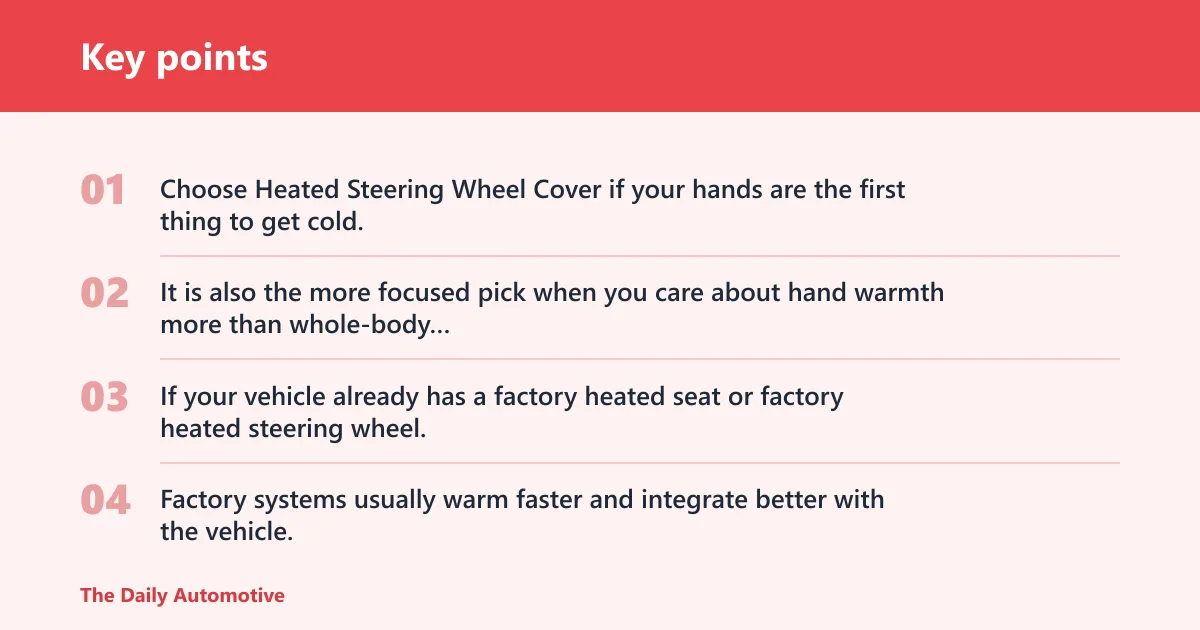
Choose Heated Steering Wheel Cover if your hands are the first thing to get cold, your trips are short and frequent, or you want the quickest comfort gain with minimal cabin wait time. It is also the more focused pick when you care about hand warmth more than whole-body heat.
If your vehicle already has a factory heated seat or factory heated steering wheel, start with the built-in feature before adding a cover. Factory systems usually warm faster and integrate better with the vehicle, while aftermarket covers make the most sense when the original equipment is missing or not enough.

Frequently asked questions
Is a heated seat cover better than a heated steering wheel cover?
Neither is universally better. A heated seat cover is better for back-and-thigh warmth on longer drives, while a heated steering wheel cover is better for hand comfort on short trips. The better pick depends on where you feel cold first and how long you stay in the car.
Which heats faster: a seat cover or a steering wheel cover?
Factory heated seats and factory heated wheels usually warm fastest because the heating elements are built into the original parts. Among aftermarket products, speed depends on the specific model and fit, but a heated steering wheel cover can feel quicker because it warms the hand contact area directly. A heated seat cover usually takes 5–10 minutes to reach full warmth.
Do heated steering wheel covers work with factory heated wheels?
Some may, but fit and heat transfer matter. A cover can reduce the heat you feel from a factory heated wheel if it is thick or insulating, and it can interfere with buttons or airbag clearance if it is not designed correctly. Check the wheel cover listing and your vehicle manual before adding one.
Can a steering wheel cover reduce the heat from a heated wheel?
Yes. A thicker or more insulating cover can block some heat transfer, especially if the material has low thermal conductivity. A thin leather cover will usually block less heat than fabric or sheepskin, while a thick cover can noticeably dull the warmth from the built-in wheel heater.
Is a heated seat cover safe to leave plugged in while driving?
Usually yes, if the product is made for vehicle use and the manual allows it. Use the 12V outlet as directed, keep the cover clear of airbags and seat sensors, and turn it off or unplug it when the engine is off to avoid battery drain. Follow the vehicle and product manual.
Are heated seat covers or steering wheel covers cheaper?
Heated seat covers have clearer price data: they usually cost about $30–$150, and thermal seat covers often cost under $50. Heated steering wheel cover pricing varies more by power method, materials, and fit range, so check the listing for your wheel size and power source before comparing cost.
Products related to this article
Sponsored / affiliate links. As an Amazon Associate I earn from qualifying purchases. I may earn additional commission from eligible campaigns.
 FLORICH Leather Seat Cover, Car Seat Covers Front Set, Waterproof Car Seat Protectors, Front Seat Covers 2 Pack, Breathable Automotive Seat Covers Protector Fit for Most Cars Trucks SUV
 FH Group Car Seat Cover Front Set Striking Striped Car Seat Covers with Front Seat Covers and Rear Split Bench, Universal Fit Interior Accessories for Cars, Trucks, and SUVs – Gray