Car Cover vs Windshield Cover for Winter
Use a windshield cover if your only winter problem is scraping; choose a full car cover only when you need paint, mirrors, and body panels protected from snow, sleet, or freezing rain. A poor match wastes time, traps wet snow, and can leave you fighting ice or a frozen cover at dawn.
Which cover wins on install, storage, and freeze risk?
The difference is direct. A windshield cover shields the front glass and wiper area. A car cover protects more of the vehicle, but it generally needs a better fit, more drying, and more storage space after use.
| Decision factor | Car Cover | Windshield Cover | Winner |
|---|---|---|---|
| Install time | Slower; you have to drape the full body and match the shape | Faster; you only place material over the front glass | Windshield Cover |
| Morning removal time | Longer, especially if snow or ice covers the whole shell | Shorter; remove, shake off, fold, and go | Windshield Cover |
| Wind stability | Can be secure if fitted well, but more fabric can catch gusts | Can be stable if held by doors or wipers, but only when sized and anchored well | Tie |
| Freeze-on risk | Higher if moisture gets trapped against panels or under the cover | Lower than a full cover, but wet fabric can still freeze to the glass. | Windshield Cover |
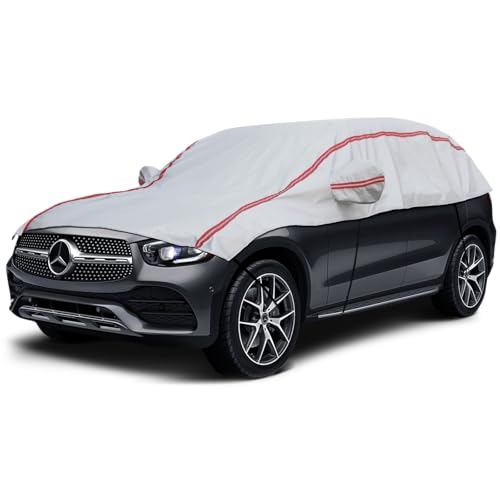
| Paint protection | Full-body coverage helps protect panels and mirrors from snow and ice buildup | No body-panel protection | Car Cover |
| Wiper protection | May cover the wipers, but fit matters | Specifically protects the wiper area from ice bonding | Windshield Cover |
| Storage bulk | Bulky; takes more room when wet and folded | Smaller and easier to stash in the vehicle | Windshield Cover |
| Fit risk | Higher; it has to match sedan, SUV, or truck shape | Lower; the target area is just the front glass | Windshield Cover |
| Cost | Usually higher because it covers more of the vehicle | Usually lower, including DIY options | Windshield Cover |
| Best use case | Overnight outdoor parking when you want body-panel, mirror, and paint protection too | Overnight outdoor parking when scraping the windshield is the main pain point | Depends on the problem |
| Recommended for sedan | Choose this option if the car sits outside through sleet, freezing rain, or heavy snow and panel protection is desired. | Choose if your only goal is faster departure and less scraping | Windshield Cover |
| Recommended for SUV | Choose this option if the taller body and mirrors need broader snow and ice protection. | Choose if you only need the windshield clear and the vehicle is easy to brush off | Car Cover |
| Recommended for street-parked truck | Choose this option if the truck stays outside in high-wind exposure and more than glass protection is needed. | Choose if you mainly want to stop the front glass from icing up | Car Cover |
Winter cover
Install time
A windshield cover is faster because you are covering one area, the front glass. A full car cover takes longer because it must go over the body and line up with the vehicle shape, and that matters more on a sedan, SUV, or truck with different rooflines and mirror positions.
Morning removal time
Windshield covers usually come off faster and leave less cleanup. That matters when your goal is to avoid scraping and defrosting in the morning. A car cover can add extra minutes if snow sits on top of it or if the fabric has frozen to panels.
Wind stability
Neither option is wind-proof. A windshield cover can hold well when secured under doors or tucked under the wipers, but strong parking-lot gusts can still lift the edges. A full car cover has more surface area for wind to catch, so fit and tie-down method matter even more.
Freeze-on risk
Freeze-on risk rises when the cover is wet. A windshield cover can freeze to the glass if it soaks up moisture. A car cover can trap moisture against paint or panels if it is poorly vented, which is a separate problem from snow blocking the glass.
Paint protection
This is where a car cover moves ahead. It covers the full vehicle body, so it can protect paint, mirrors, and panels from snow and ice buildup. A windshield cover does none of that; it only deals with the front glass and the wiper zone.
Wiper protection
Windshield wipers can freeze to the glass, and a cover helps reduce that bonding when it is placed correctly. Some placements can pin the blades in place, so the cover needs to sit where it blocks ice but does not fight the wiper arm design. Replaceable blade sizes also vary by vehicle.
Storage bulk
Bulk matters after the commute, not only before it. A windshield cover is easier to shake off, fold, and store wet in a grocery bag or trunk space. A full car cover usually takes more room and is harder to handle when coated in snow or sleet.
Fit risk
Fit risk is lower with a windshield cover because the target is one flat area. A car cover has to fit a sedan, SUV, or truck shape well enough to stay put and avoid loose material. Taller vehicles and lifted trucks make that harder.
Cost
Windshield covers usually cost less, and the cheapest versions can be homemade. Car covers tend to cost more because they use more material and need a more specific shape. For a driver who only wants to stop scraping, the extra spend often buys protection that is not needed.
Which cover works better in snow and ice?
For front-glass snow and ice control, the windshield cover is the more focused tool. For broader body protection, the car cover wins because it covers the vehicle’s paint and panels too. In heavy snow, sleet, and freezing rain, both options depend on fit and secure placement; neither should be expected to fix a poor parking setup by itself.
Front glass first
The windshield is the main winter scrape surface. It has to be clear for driving, and it is where frost, sleet, and freezing rain usually turn into the morning delay. If that is the only issue, a windshield cover handles it directly without adding full-body bulk.
Body panels and mirrors
A car cover is the choice when the vehicle needs more than glass protection. It helps keep snow and ice off the hood, roof, mirrors, and other exposed surfaces. That matters more when the vehicle sits outside overnight on a street or in a driveway with heavy exposure.
Picture a sedan parked curbside before a freezing rain event. A windshield cover can save the driver from scraping the front glass at dawn. If the same car also needs the mirrors and paint protected from buildup, the full cover starts to make more sense.
How do you keep a cover from blowing off?
Use a retention method that matches the cover type and the parking conditions. Door-closed retention, wiper-tucked retention, and mirror securing can each help, but none of them will fix a bad fit or an open, high-wind parking spot. Street parking usually puts the most stress on the setup.
Door-closed retention
Door-closed retention is common for a windshield cover because the cover can be held in place with the car doors. That keeps the fabric anchored at the lower edge. It also means you need to place it carefully so you do not create a poor seal or pinch it in a way that makes morning removal harder.
Wiper-tucked retention
One method runs material across the windshield and under the wipers. That can help keep the cover from shifting and can be paired with the passenger door on some setups. The trade-off is that the wipers themselves must not be buried so tightly that they become hard to free in the morning.
Mirror securing
Mirror securing matters more on full car covers because the mirrors can help locate the cover and reduce flutter. It is not a substitute for proper sizing. A loose cover still risks movement, and loose edges can invite wear or theft concerns if the vehicle is parked where passersby can handle it.
High-wind parking risks
High-wind exposure changes the decision. A cover that works in a protected driveway can be a poor fit on an exposed street. If the parking spot gets gusts, the cover should be chosen for secure anchoring, not just for low price or easy storage.
Suppose a truck sits on a street corner where winter wind funnels between buildings. A thin, loose cover may shift overnight even if it looked fine at install time. In that case, a tighter fit and better anchoring matter more than choosing the cheapest material.
What happens when a cover gets wet and freezes?
A wet cover can freeze to the surface it was meant to protect, so that failure case should be planned for before the first storm. That risk is especially important with cardboard and thin DIY material. After use, remove the cover quickly, shake off snow and ice, and store it so it can dry.
Moisture trapping under a full cover
A full car cover can trap moisture if the fabric is not vented well or if snow melts and then refreezes under the shell. That can leave you with a cover that sticks to panels and takes longer to remove. It also means the vehicle may need extra drying once the cover comes off.
Morning cleanup and storage
Winter morning cleanup should be simple. Remove the cover, shake off snow and ice, fold it, and put the wet cover away in a grocery bag or similar container if needed. That keeps meltwater from spreading through the cabin and cuts down on scraping and defrosting time.
Windshield cover vs car cover fit by vehicle
Vehicle type changes the answer more than most buyers expect. A sedan is easier to cover than a lifted truck, and an SUV often sits between the two. If the shape is unusual or taller than average, fit and anchoring become as important as the material itself.
Sedan
A sedan usually favors the windshield cover when the goal is a faster winter departure. It has a smaller glass area than many SUVs and trucks, so the driver can get most of the benefit without carrying a large cover. Choose a car cover only if the body panels also need protection.
SUV
An SUV can make a full car cover more appealing because it has more body surface exposed to snow and ice. That said, the larger size also makes fit more demanding. If the only annoyance is scraping the front glass, the windshield cover still wins on simplicity.
Street-parked truck
Street-parked trucks face more wind exposure and more fit risk because of their height and shape. A car cover can protect more of the vehicle, but it must fit well enough to stay in place. If you only care about the windshield, a windshield cover is easier to manage and less bulky.
Lifted or tall vehicle fit checks
Lifted or unusually tall vehicles need a careful fit check. A cover that is too short or too loose can move in wind, leave gaps, or freeze onto awkward contact points. Check the manufacturer’s listing for your model and body style before counting on the cover to stay put overnight.
Choose Car Cover if… / Choose Windshield Cover if…
Choose Car Cover if you need body-panel, mirror, and paint protection along with windshield coverage; you park outside in repeated snow or freezing rain; or your vehicle type makes a full-body fit worthwhile. Choose Windshield Cover if scraping is the main problem, you want the fastest morning removal, or you need the smallest, simplest winter setup.
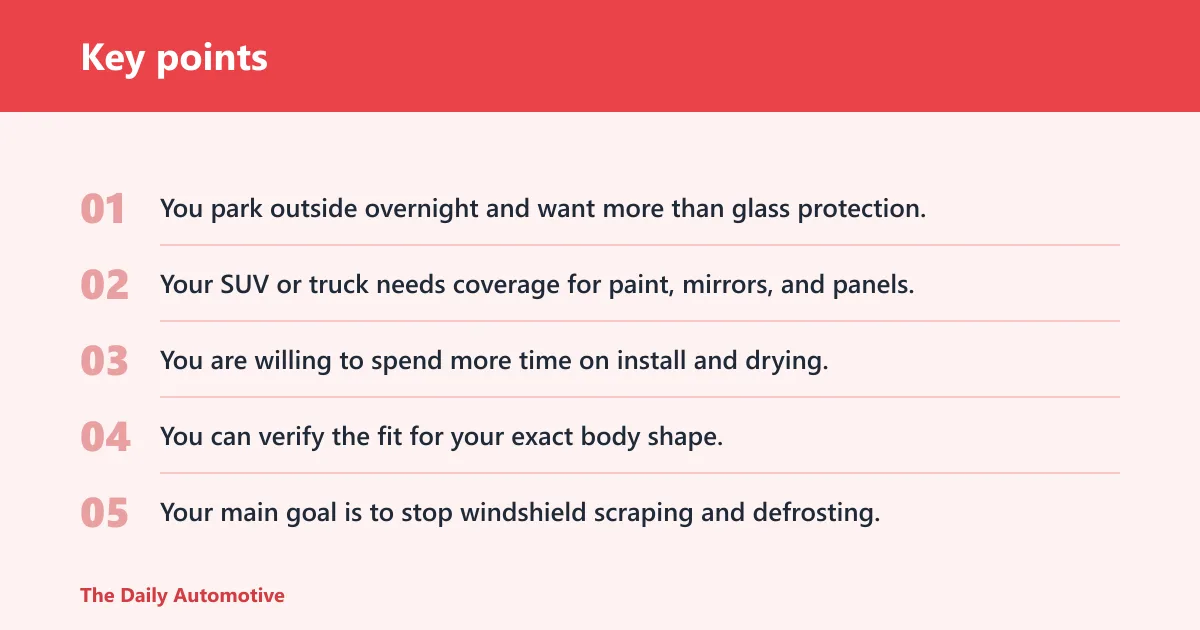
Choose Car Cover if…
- You park outside overnight and want more than glass protection.
- Your SUV or truck needs coverage for paint, mirrors, and panels.
- You are willing to spend more time on install and drying.
- You can verify the fit for your exact body shape.
Choose windshield cover if…
- Your main goal is to stop windshield scraping and defrosting.
- You want the quickest install and removal.
- You need a smaller, cheaper option for curbside winter parking.
- You want a cover that is easier to store when wet.
When a homemade cover makes sense
A homemade windshield cover can make sense as a low-cost fallback when the goal is simply to cover the windshield. The method can use a couple pieces of cardboard, a shower curtain, clear plastic, or a heavy black trash bag. The trade-off is durability, wind control, and moisture handling.
When to skip cardboard or thin plastic
Skip cardboard or thin plastic when the forecast calls for wet snow, sleet, or freezing rain and you cannot dry the cover afterward. A wet cardboard cover can freeze to the windshield. Thin material can also shift more easily in wind and is more likely to wear out quickly.


Frequently asked questions
Is a windshield cover or car cover better for winter?
If your only problem is scraping the windshield, the windshield cover is the more direct choice. If you need the body, mirrors, and paint protected too, a car cover is worth the extra effort. The right answer depends on what you want to keep clear by morning.
Do windshield covers work in heavy snow and ice?
Yes, but only if the cover is secured well and the material is suited to wet winter weather. Heavy snow and ice increase the chance of wind lift and freeze-on problems. That is why fit, anchoring, and material choice matter as much as the idea itself.
Will a car cover keep snow off the windshield?
Yes, a car cover will keep snow off the windshield because it covers the full vehicle body. It also protects the hood, roof, and mirrors. The downside is extra install time, more bulk, and more risk of moisture problems if the cover is poorly vented.
What should I use if I park outside overnight in winter?
For overnight outdoor parking, start with the problem you actually have. If you only want to avoid scraping, use a windshield cover. If snow, sleet, or freezing rain hits the body panels too, a full car cover becomes more useful, especially on a street or exposed driveway.
How do I keep windshield wipers from freezing to the glass?
Use a windshield cover that protects the wiper area and place it so the blades are not pinned hard against the glass. That helps reduce ice bonding. If the cover is wet, remove it carefully in the morning so you do not drag frozen material across the blade edge.
What should I do if my windshield cover gets wet and freezes?
Do not yank at it. Free up the edges slowly, remove the cover without tearing it, and shake off as much ice as possible before storing it. Afterward, dry it as soon as you can so it does not freeze again the next time you park outside.
Products related to this article
Sponsored / affiliate links. As an Amazon Associate I earn from qualifying purchases. I may earn additional commission from eligible campaigns.