Best Ceramic Spray Waxes for Winter (2026): We Compared
The best ceramic spray wax for winter protection is Turtle Wax Hybrid Solutions Ceramic Spray Wax for most drivers, because it gives you easy spray application, strong winter water beading, and wide exterior use. Choose by wash frequency, parking conditions, and how much cold-weather hassle you can tolerate.
Quick comparison
| Product | Badge | Best for | Price | ||
|---|---|---|---|---|---|
 |
Turtle Wax Hybrid Solutions Ceramic Spray Wax CoatingTurtle Wax | Our pick | 16 oz · Ceramic spray wax · High shine | $14.99
Price as of 2 Nov 2026
|
View |
 |
Meguiar’s Hybrid Ceramic Wax SprayMeguiar’s | Also great | 6 pack · Hybrid ceramic wax · Rinse off | $97.35
Price as of 2 Nov 2026
|
View |
 |
Griot’s Garage Ceramic 3-in-1 WaxGriot’s Garage | Also great | 22 oz · SiO2 spray wax · 3-in-1 | $21.99
Price as of 2 Nov 2026
|
View |
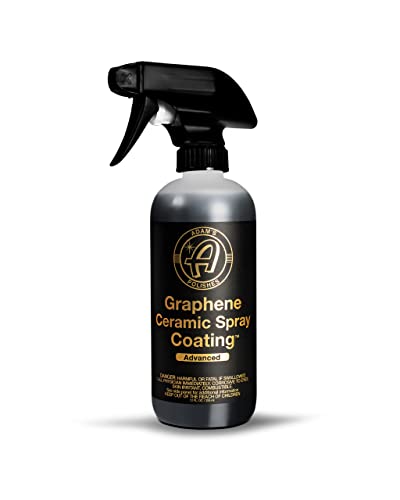 |
Adam’s Polishes Advanced Graphene Ceramic Spray CoatingAdam’s Polishes | Upgrade pick | 18+ months · Graphene ceramic · Spray coating | $48.44
Price as of 2 Nov 2026
|
View |
For commuters on salted roads, you want a product that keeps water moving off the paint between wash intervals. For garage-kept cars or lower-mileage drivers, longer-wearing formulas can make sense if you can prep the surface well and apply in a warmer bay.
How we chose
This comparison uses manufacturer specs, listing details, and published buyer feedback. The filter was winter use: cold-weather application, salt resistance, surface compatibility, and how often you may need to reapply once road salt, slush, and frequent washing start to work on the finish.
One key distinction matters. True ceramic spray waxes are not the same as ceramic coatings, and paste waxes are not spray waxes. The first group is chosen for speed and winter touch-ups; the second for longer durability when you can spend more time on prep.
Winter ceramic wax decision matrix
| Product type | Application temperature window | Expected winter reapplication interval | Best-use scenario | Failure case to watch |
|---|---|---|---|---|
| Turtle Wax Hybrid Solutions Ceramic Spray Wax | Above freezing, on a clean, dry panel | About 4–6 weeks in winter use | Daily driver that needs quick upkeep after salted-road washes | Streaking on cold panels if the surface is not fully dry |
| Meguiar’s Hybrid Ceramic Wax | Above freezing; wet or dry use lowers workflow friction | About 4–6 weeks in winter use | Salt-season driver that gets regular wash-and-rinse maintenance | Poor bonding if panels are damp with wash residue or road film |
| Cerakote Platinum Rapid Ceramic Paint Sealant Spray | Above freezing; best on freshly washed paint | Longer than a basic spray wax when prep is strong | Garage-kept or carefully maintained car that gets fewer winter miles | Trim haze or uneven wipe-off on textured plastics |
| CAR GUYS Hybrid Spray Wax | Above freezing, with careful drying before use | About 4–6 weeks in winter use | Mixed-surface cleanup on paint, plastic, and glass | Streaking on glass if buffing is rushed in cold air |
| Collinite 476 Super Double Coat Wax | Warm garage application is safest | 7–10 months under favorable conditions | Owner who wants the longest winter gap and can handle paste wax work | Poor bonding on a cold or damp panel, plus slower application |
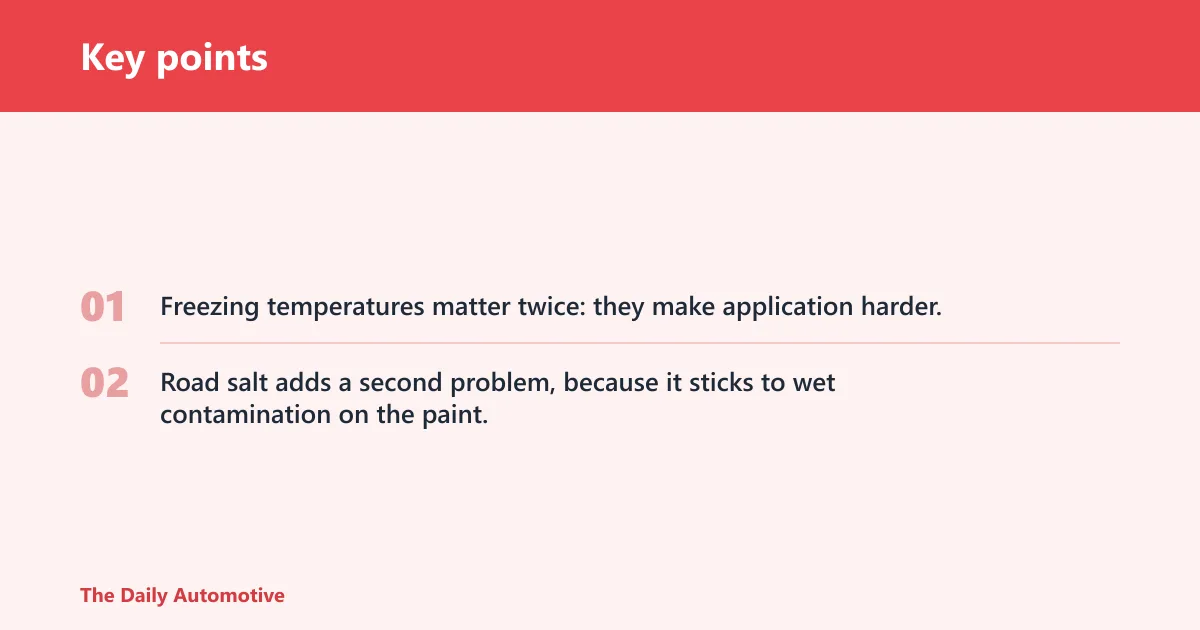
Freezing temperatures matter twice: they make application harder, and they reduce your margin for error on curing and wipe-off. Road salt adds a second problem, because it sticks to wet contamination on the paint; a hydrophobic barrier helps water sheet away before salt can cling as aggressively to the surface.
Turtle Wax Hybrid Solutions Ceramic Spray Wax: best for all-around winter use
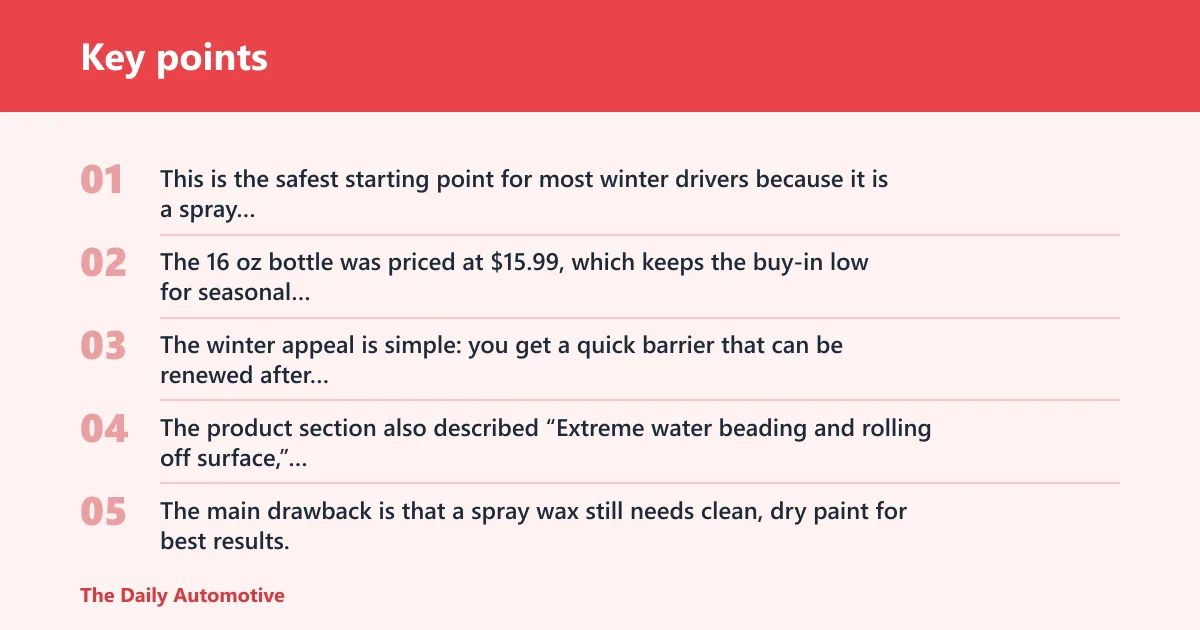
This is the safest starting point for most winter drivers because it is a spray application and the listing calls out durable paint protection, extreme water beading action, and use on glass, wheels, trim, and more. The 16 oz bottle was priced at $15.99, which keeps the buy-in low for seasonal maintenance.
The winter appeal is simple: you get a quick barrier that can be renewed after salted-road wash intervals without turning the job into a full detailing session. The product section also described “Extreme water beading and rolling off surface,” which is exactly the behavior you want when slush keeps hitting the car.
The main drawback is that a spray wax still needs clean, dry paint for best results. On cold panels, rushed wipe-off can leave streaks or residue, especially around textured trim and panel edges.
Meguiar’s Hybrid Ceramic Wax: best for wet-or-dry application
This option fits drivers who want a simple spray-on process with SiO2 technology and a durable barrier. The wet-or-dry use matters in winter because wash-day conditions are often messy, cold, and short on time, so reducing workflow friction helps you keep protection on the car.
Published product details emphasize strong water beading, and the six-bottle format means plenty of supply for repeated winter upkeep. That makes sense for a car that sees regular washes in salty weather, especially if you prefer to refresh protection more often than you would with a paste wax.
The drawback is that wet-or-dry convenience can hide a prep mistake. If the surface still carries dirt, soap residue, or road film, the barrier can bond unevenly and the finish may haze or streak on colder panels.
Cerakote Platinum Rapid Ceramic Paint Sealant Spray: best for maximum gloss
This is the pick for a carefully maintained vehicle where appearance still matters, but protection needs to be more than a quick shine. The product claims a maximum-gloss spray-sealant approach, and the CarAwareness listing says it lasts up to 50 washes.
That kind of claim suits a garage-kept car or a driver who can keep winter grime under control with regular washing. As a spray sealant, it sits closer to the protection end of the spectrum than an old-school wax, so it may hold up better between wash cycles if you maintain the surface properly.
The drawback is that a high-gloss, fast-flashing spray sealant can be less forgiving on imperfect prep. On textured plastics and trim, any overapplication or uneven buffing may leave haze or patchy residue.
CAR GUYS Hybrid Spray Wax: best for mixed-surface cleanup

This option is built for drivers who want one product for paint, plastic, and glass. The listing says it is safe on paint, plastic, glass, motorcycles, RVs, and boats, so it suits a winter garage session where you want to touch several exterior surfaces in one pass.
Quick application is the point here. If your winter routine is a wash, a dry-down, and a fast protective reset before the next storm, an all-surface spray wax keeps the process short and practical.
The tradeoff is streak control. On cold glass or dusty trim, a quick wipe can leave smears if you do not work panel by panel and turn the towel often enough.
Collinite 476 Super Double Coat Wax: best for long intervals
Paste wax still has a place in winter when you want the longest gap between reapplications and can work in better conditions. Collinite 476 was presented as offering 7–10 months of durability, which is a serious interval compared with most spray wax routines.
That longer window makes sense for a garage-kept car or an owner who wants to prep once and maintain through most of the season. In salty climates, a strong, long-wearing barrier reduces how often you need to interrupt your routine for reapplication.
The drawback is obvious: paste wax is slower and less convenient in freezing temperatures. If the panel is cold or slightly damp, bonding suffers and the job becomes harder to finish cleanly.
Which one should you buy?
For a salted-road commuter, start with Turtle Wax Hybrid Solutions Ceramic Spray Wax or Meguiar’s Hybrid Ceramic Wax. Both are easier to refresh during winter, and both fit the kind of repeated wash interval that a road-salt season creates.
For a garage-kept daily driver, Cerakote Platinum Rapid Ceramic Paint Sealant Spray makes more sense if you want stronger-looking finish retention and fewer top-ups. If your priority is the longest reapplication gap and you can handle paste wax, Collinite 476 is the winter outlier worth considering.
For the easiest cold-weather application, Meguiar’s Hybrid Ceramic Wax has the clearest workflow advantage because it is designed for wet or dry use. For mixed-surface cleaning, CAR GUYS Hybrid Spray Wax is the most flexible choice.
A common first-timer mistake is applying any of these products to a damp hood after a winter wash in 34-degree weather. The spray goes on fast, but the residue can smear, and the cold panel gives you less time to correct it before streaks set in.
How long does ceramic spray wax last in winter?
In winter, ceramic spray wax usually lasts less time than its warm-weather marketing number suggests, because salt, slush, and frequent washing work on the barrier every week. A practical target for many spray waxes is 4–6 weeks, while a longer-lasting paste wax like Collinite 476 can stretch much farther when prep is strong and the car is not abused by constant grime.
The difference is storage and exposure. A garage-kept car can often hold its protection longer because it avoids daily salt spray, while an outdoor-stored commuter may need earlier reapplication after repeated wash cycles or a stretch of wet, freezing weather.
Suppose a sedan parks outside in a salted climate and gets washed every 10 days. Once beading weakens and water starts clinging instead of rolling off, it is time to reapply before the barrier drops too far for winter use.
Can you apply ceramic spray wax in cold weather?
Yes, but only if the paint is clean and dry and the surface is not so cold that the product flashes unevenly. Cold weather slows drying, raises streak risk, and makes wipe-off less forgiving, so a garage bay or mild daytime window is better than a freezing driveway.
The safest workflow is to wash first, dry fully, and then apply one panel at a time. That matters because trapped moisture, especially around mirrors, emblems, and trim seams, can block bonding and leave residue behind.
- Wash off salt and road film before applying.
- Dry the panel completely, including edges and crevices.
- Apply a light, even layer of spray wax.
- Buff before the product dries hard on the surface.
- Check trim and glass for haze before moving to the next panel.
A common first-timer mistake is trying to fix a cold-weather streak by adding more product. That usually makes the smear wider, especially on black trim and glass.
Is spray on ceramic wax any good?
Yes, if you want easier winter maintenance rather than the longest possible protection interval. Spray-on ceramic wax is good at giving you a hydrophobic barrier, quick wipe-off, and better resistance to winter grime than a bare-panel wash routine, but it should be judged as maintenance chemistry, not a full coating.
That distinction matters because ceramic spray wax is meant for repeat use. It is useful when you want to keep salt from sticking as aggressively between washes, but it will not behave like a true coating laid down in a controlled prep environment.
For most winter drivers, that tradeoff is acceptable. You give up some durability for speed, and you gain a product you are more likely to actually keep refreshed through the season.
Is ceramic spray wax better than traditional wax for winter?
Usually, yes. Ceramic spray wax tends to be easier to refresh, more water-repellent, and more forgiving for winter maintenance than traditional wax, especially when salted roads and frequent washing break down protection quickly. A good paste wax can still last longer, but it takes more time and better application conditions.
For winter use, the question is not only which product lasts longest on paper. It is which one you will reapply before road salt, slush, and freeze-thaw cycles strip the surface down again.
That is why spray wax often wins for commuters. Traditional wax still matters for long intervals, but spray-on products fit the rhythm of winter upkeep better for many cars.
What surfaces can ceramic spray wax be used on?
Surface compatibility depends on the product listing. Turtle Wax says its spray works on glass, wheels, trim, and more; CAR GUYS says it is safe on paint, plastic, glass, motorcycles, RVs, and boats; Jimbo-style winter guidance also treats paint, trim, wheels, and glass as acceptable on ceramic spray use when the surface is clean and dry.
That said, glass and textured plastic are the places where mistakes show up first. Glass can streak if you overapply, textured trim can haze if the residue is not buffed fully, and wheels often collect brake dust that should be cleaned off before protection goes on.
For wheels, the main concern is prep. For trim, the main concern is residue. For glass, the main concern is streak control.
Frequently asked questions
What’s the best ceramic spray wax
For most winter drivers, Turtle Wax Hybrid Solutions Ceramic Spray Wax is the best starting point because it combines spray application, broad surface use, and strong water-beading behavior at a low entry price. It fits the daily-driver maintenance pattern better than a slower paste wax or a longer-wait coating-style product.
What is the best spray wax?
If winter use is the goal, the best spray wax is the one that stays useful after road salt, slush, and repeated washes. That usually points to Turtle Wax or Meguiar’s for easy upkeep, while Cerakote is better if your car is cleaner, stored inside, and maintained more carefully.
How long does ceramic spray wax last in winter: for winter use, plan?
For winter use, plan on roughly 4–6 weeks for many spray-wax routines, with the exact gap shaped by wash frequency, salt exposure, and storage. Collinite 476 is the exception in this group, with a 7–10 month durability window when conditions and prep are favorable.
Can you apply ceramic spray wax in cold weather: yes, but the surface should?
Yes, but the surface should be clean and dry, and the panel should not be so cold that the product streaks or leaves residue. Cold air slows the job down, so work in short sections and avoid applying to damp paint after a winter wash.
Is ceramic spray wax better than traditional wax for winter: for most drivers, yes?
For most drivers, yes, because ceramic spray wax is easier to reapply during the season and better suited to quick maintenance after salted-road driving. Traditional paste wax can last longer in some cases, but it is less convenient when winter conditions are cold, wet, and repetitive.
What surfaces can ceramic spray wax be used on: many formulas are safe
Many formulas are safe on paint and several non-painted exterior surfaces, but you should follow the product listing. Turtle Wax and CAR GUYS both support broad exterior use, and winter guidance commonly includes paint, trim, wheels, and glass when the surface is clean and dry before application.
Products related to this article
Sponsored / affiliate links. As an Amazon Associate I earn from qualifying purchases. I may earn additional commission from eligible campaigns.