CRC Ice-Off Windshield Spray Review: Is It Worth It?
CRC Ice-Off Windshield Spray is worth keeping in the car if your mornings usually start with light frost or a thin crust of ice. It can cut the time spent clearing glass, but it is still a convenience product, not a replacement for a scraper when ice is thick or frozen rain has built up hard.
Verdict
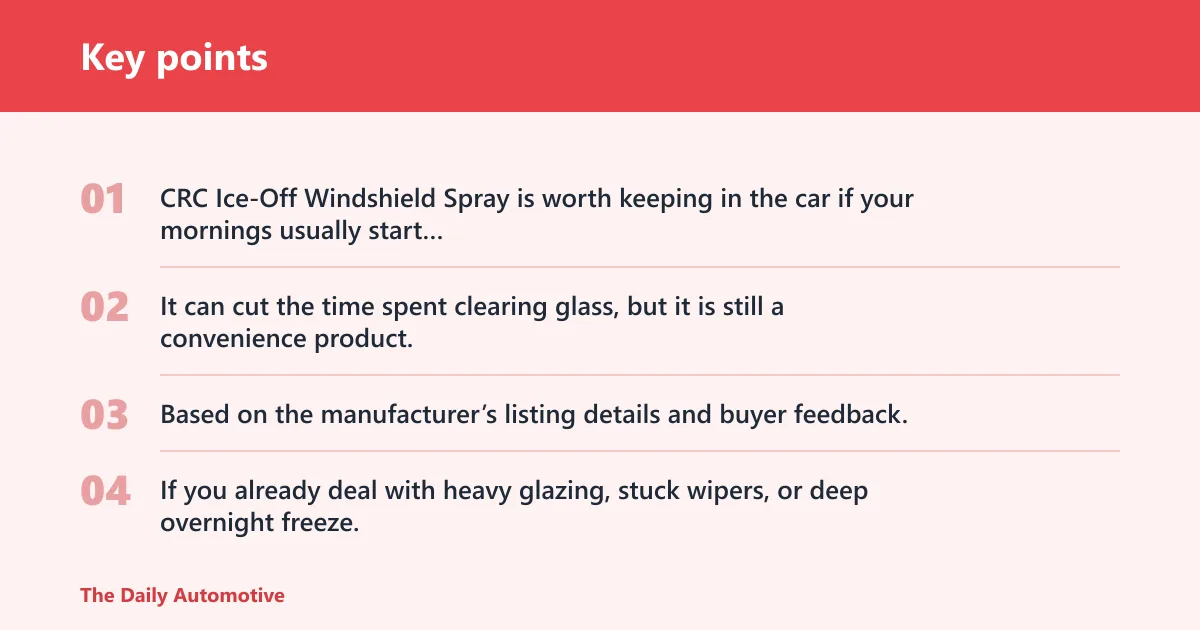

Based on the manufacturer’s listing details and buyer feedback, this spray makes the most sense for drivers who want quicker visibility recovery before work or school. If you already deal with heavy glazing, stuck wipers, or deep overnight freeze, a scraper and brush remain the main tools.
Specs at a glance
| Item | Detail |
|---|---|
| Product name | CRC Ice-Off Windshield Spray De-Icer |
| Brand | CRC |
| Product type | Aerosol windshield de-icer |
| Intended use | Melting ice and frost on glass |
| Package format | Spray can |
| Where to use it | Windshield and other exterior glass |
| Storage concern | Freeze/thaw exposure in a vehicle |
| Price listed | $7.19 |
Who it
CRC Ice-Off fits drivers who want faster frost removal without waiting for the cabin heat to do all the work. It is a practical buy for commuters, apartment parkers, and drivers who leave a car outside and need a faster start on clear glass.
It is less compelling for drivers who already keep a good ice scraper, a snow brush, and a garage spot. If your windshield usually has only a thin layer, the spray can save a little time. If your glass is locked under thick ice, the scraper still does the heavy lifting.
Say your windshield has a light frost layer on a 25-degree morning and you need to leave in 10 minutes. A de-icer spray can shorten the cleanup. Suppose the glass is covered in a hard, opaque sheet from freezing rain. The same can will not replace mechanical scraping.
Pros and cons
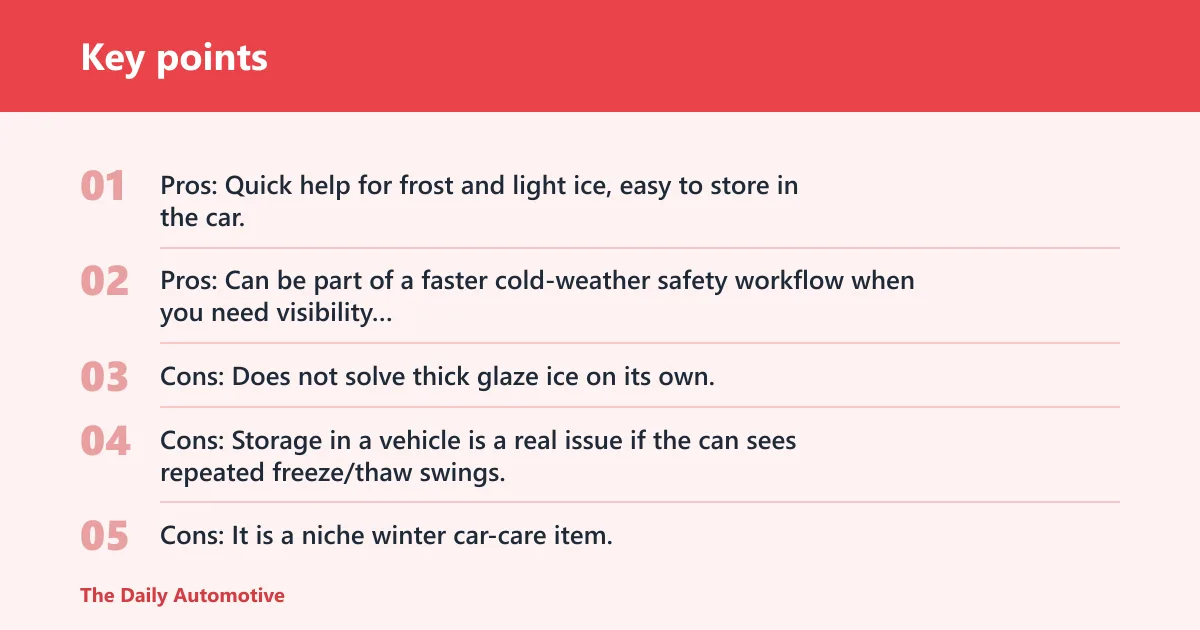
- Pros: Quick help for frost and light ice, easy to store in the car, useful on windshield and other exterior glass.
- Pros: Can be part of a faster cold-weather safety workflow when you need visibility sooner.
- Cons: Does not solve thick glaze ice on its own.
- Cons: Storage in a vehicle is a real issue if the can sees repeated freeze/thaw swings.
- Cons: It is a niche winter car-care item, so some drivers will use it only a few mornings a season.
What works
The main benefit is simple: the spray loosens frost and ice on glass so you can clear the windshield faster. That matters when visibility is the only thing between you and a delayed departure.
For light-to-moderate morning frost, this kind of spray can be a good first step before scraping. It may also reduce the amount of effort you need from the scraper, especially on side windows and mirrors where frost often sticks in a thin layer.
Most buyers are not chasing a miracle. They want a cleaner windshield, fewer passes with the scraper, and a quicker way to reach safe visibility. That is the job this product is built for.
- Start with the windshield and other exterior glass that needs clearing.
- Apply the spray according to the label directions.
- Wait briefly for the ice or frost to loosen.
- Clear the surface with a scraper if needed.
- Use the wipers only if the label allows it and the glass is already free enough to move cleanly.
Coverage matters here. A spray can is useful because it reaches broad glass areas without much effort, but it still has limits if the ice layer is uneven or thick. Even a good de-icer is still a step in the workflow, not the whole workflow.
What does not?
CRC Ice-Off is not the right fix for thick glaze ice, frozen rain, or a windshield that looks sealed under a hard shell. In those cases, a scraper, brush, and patience are still the better answer.
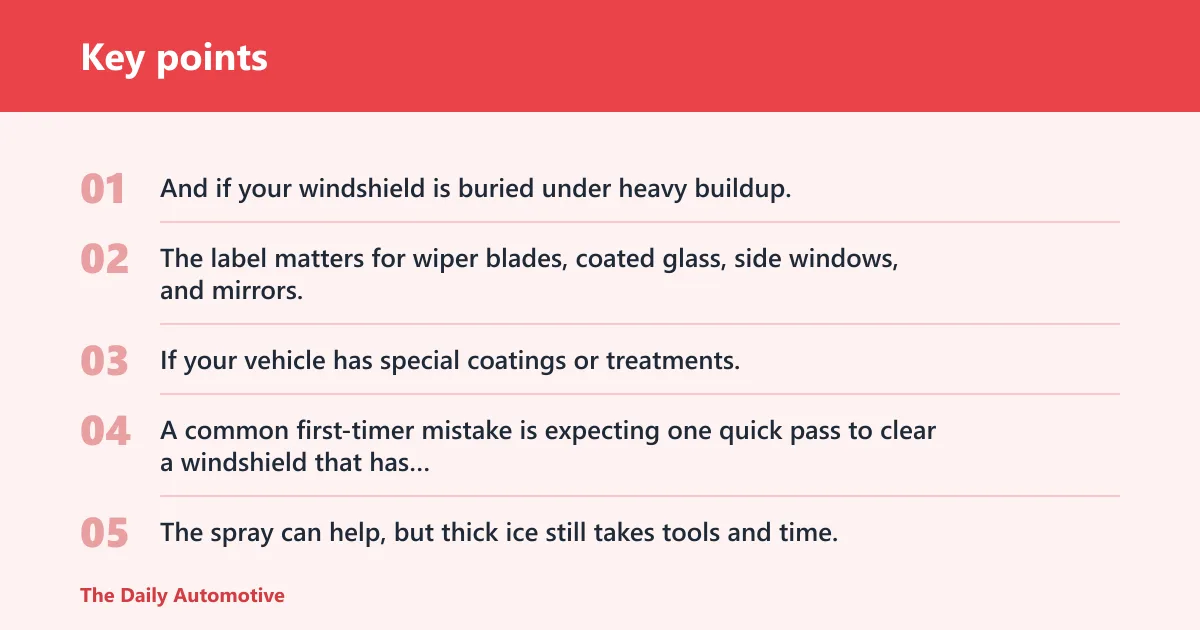
It also does not solve every winter problem. Frozen wipers can stay stuck to the glass. Locked doors need their own de-icer plan. And if your windshield is buried under heavy buildup, the spray may only soften the top layer before you still need to scrape.
Compatibility is another point to watch. The label matters for wiper blades, coated glass, side windows, and mirrors. If your vehicle has special coatings or treatments, check the manufacturer’s directions before spraying broadly.
A common first-timer mistake is expecting one quick pass to clear a windshield that has built up overnight. The spray can help, but thick ice still takes tools and time.
Winter use decision table
| Ice severity | Expected outcome | Best backup tool | Worth using first? |
|---|---|---|---|
| Light frost | Usually a quick cleanup with less scraping | Basic scraper | Yes |
| Thin ice film | Helpful for loosening the surface before scraping | Scraper and brush | Yes |
| Moderate freeze with side glass and mirrors frosted | Can speed visibility recovery, but likely needs follow-up scraping | Scraper plus brush | Usually |
| Thick glaze ice | Limited effect; cleanup still takes time and effort | Heavy-duty scraper | No |
| Frozen wipers or locked-door icing | May not address the main problem | Owner’s manual-approved de-icing steps | No |
Buy verdict by driver type: commuters who leave before sunrise should buy it if they often face frost. Apartment parkers without indoor storage should also consider it, since outside parking usually means more scraping days. Drivers who already keep a scraper and mostly see light frost can skip it unless they want the extra convenience.
How fast does CRC Ice-Off work on frozen windshields?
CRC Ice-Off is meant to act quickly on frost and light ice, but the product details do not give a published time figure. The practical answer is that it should reduce waiting when the frost is thin, while thicker buildup still needs scraping and more time.
The speed question depends on weather severity, ice thickness, and how much of the windshield is affected. A light skim is one thing. A windshield sealed under a hard shell is another.
For buyers, that means the value comes from shaving minutes off a normal morning, not from replacing the entire defrost process.
Does CRC Ice-Off damage wipers or windshield coatings?
The safest answer is to follow the product label and your vehicle manual. The listing says it is meant for windshield and exterior glass use, but compatibility with wiper blades and coatings still depends on the exact directions and the materials on your vehicle.
That caution matters because winter chemicals can behave differently on coated glass, older wiper rubber, and aftermarket treatments. If the label allows wiper contact, use it that way only after the glass has started to clear. If it does not, keep the spray off the blades.
For coated glass, side windows, and mirrors, check the manufacturer’s instructions before broad application. A careful read is better than a guess.
How does CRC Ice-Off compare with other windshield de-icers?
Compared with a scraper alone, this spray trades effort for speed on light frost. Compared with another de-icer spray, the real difference usually comes down to label details, storage tolerance, and how much cleanup the product still leaves behind.
The biggest gap in many product pages is hard performance data. Buyers do not get a useful coverage figure, melt-time figure, or temperature limit from the listing details here, so value has to be judged by use case rather than a claimed number.
If your goal is fast morning visibility, a de-icer spray can be worth the space in the car. If your goal is to handle the worst cold snaps with no manual scraping, no spray bottle in this class is the right expectation.
Will CRC Ice-Off work in very cold temperatures?
It may still help in very cold weather, but the listing details do not provide a stated temperature limit. That means you should treat it as a frost and light-ice tool, not a guaranteed fix for extreme cold.
In severe cold, the product may still be useful as part of a broader workflow: start the car, defrost if allowed, spray the glass, then scrape what remains. If the ice is especially hard, the scraper stays in charge.
Cold also affects storage. Repeated freeze/thaw exposure in a vehicle is a real concern, so keep the can where the label allows and away from heat sources.
How many sprays do you need for one windshield?
There is no exact published spray count in the product details, so the honest answer is that it depends on windshield size, frost thickness, and how evenly you apply it. A light layer may need only a modest pass. A bigger windshield or stubborn buildup may need more.
Use enough to wet the iced areas without wasting product. If the label gives distance or coverage guidance, follow that instead of guessing. One can may last a while for light use, but the product page does not provide a cost-per-use figure.
Is CRC Ice-Off safe to keep in the car overnight?
It can be stored in a vehicle if the label allows it, but freeze/thaw exposure is the concern, not just temperature alone. That matters in winter because a parked car can swing from cold outside air to heated cabin conditions over and over.
Keep it away from heat sources, follow the can’s storage directions, and do not leave it where it can roll into the driver’s footwell or sit near anything hot. If your area sees extreme cold, indoor storage is safer when possible.
What should I use if ice is thick or the windshield is heavily frosted?
Use a scraper first or as the main tool. Thick glaze ice is where a de-icer spray becomes support rather than solution, and the goal is safe visibility, not quick convenience.
For heavy frosting, pair a scraper with a brush and the vehicle’s defrost system if the manual allows. If the ice is stubborn, work in stages: loosen the surface, clear the main field of view, then clean the edges and mirrors.
The best winter routine is prevention plus treatment. Park where you can, use a cover if appropriate, and keep a scraper in the car even if you buy the spray.
Alternatives
If you do not want a spray can, the best alternative is still a solid scraper and brush. Those tools do the real work on thick ice, packed snow, and frozen edges. They also avoid the storage issue that comes with aerosol cans in a car.
Other useful winter visibility habits matter too. Clear the windshield before driving, check side windows and mirrors, and let the vehicle reach proper visibility before moving. If your winter routine is already organized, the spray becomes optional rather than essential.
For drivers who already have a good scraper, CRC Ice-Off is mainly a convenience add-on. For drivers who hate slow morning cleanup, it is more compelling, especially when the frost is light and time is short.
Should you buy it?
Buy CRC Ice-Off if your winter mornings usually involve light frost, thin ice, or quick cleanup before a commute. Skip it if your parking situation is mild, your scraping routine already works, or your winters bring heavy glaze ice more often than a light frost.
The best verdict is simple: this is a useful niche winter car-care item for faster visibility recovery, not a full replacement for mechanical scraping. If you keep that expectation in place, the value is easy to judge.
Frequently asked questions
Is CRC Ice-Off Windshield Spray actually worth buying?
It is worth buying for drivers who regularly face light frost or thin ice and want a faster morning routine. It is less useful for people who mostly deal with heavy glaze ice or who already have indoor parking and rarely need extra help.
Products related to this article
Sponsored / affiliate links. As an Amazon Associate I earn from qualifying purchases. I may earn additional commission from eligible campaigns.