Washer Fluid Concentrate vs Pre-Mixed Formula
Washer fluid concentrate can cost less per finished gallon if you mix it right, but Pre-Mixed Formula is the safer pick when you want winter protection without measuring. Pick the wrong seasonal formula and you can end up with frozen lines, weak spray, or a bottle that costs more than it should. This guide compares dilution, break-even cost, and the winter-season mistakes that matter most.
| Decision factor | Washer Fluid Concentrate | Pre-Mixed Formula | Winner |
|---|---|---|---|
| Setup friction | Must be diluted with water before use; yield depends on the stated ratio. | Ready to use as sold. No measuring step. | Pre-Mixed Formula |
| Cold-weather protection | Can be summer, winter, or all-season, but the finished mix must match the lowest temperature you expect. | Its temperature rating applies as sold, so the bottle label is the protection level you pour in. | Pre-Mixed Formula |
| Cost per finished gallon | Can be lower, but only after you account for dilution and the actual gallons it makes. | Usually easier to price upfront because the gallon you buy is the gallon you use. | Washer Fluid Concentrate |
| Storage and refill habits | More space-efficient packaging and less bulk to store. | Often sold in gallon jugs or multi-gallon cases, which are simple to grab and pour. | Washer Fluid Concentrate |
Measuring dilution and matching winter temperature ratings
The trade-off is straightforward. Washer fluid concentrate rewards correct measuring and a clear seasonal target, while Pre-Mixed Formula gives up flexibility for grab-and-pour convenience. In winter, that difference matters because the finished mixture rating, not the label alone, decides whether the fluid stays usable.
How each one is used
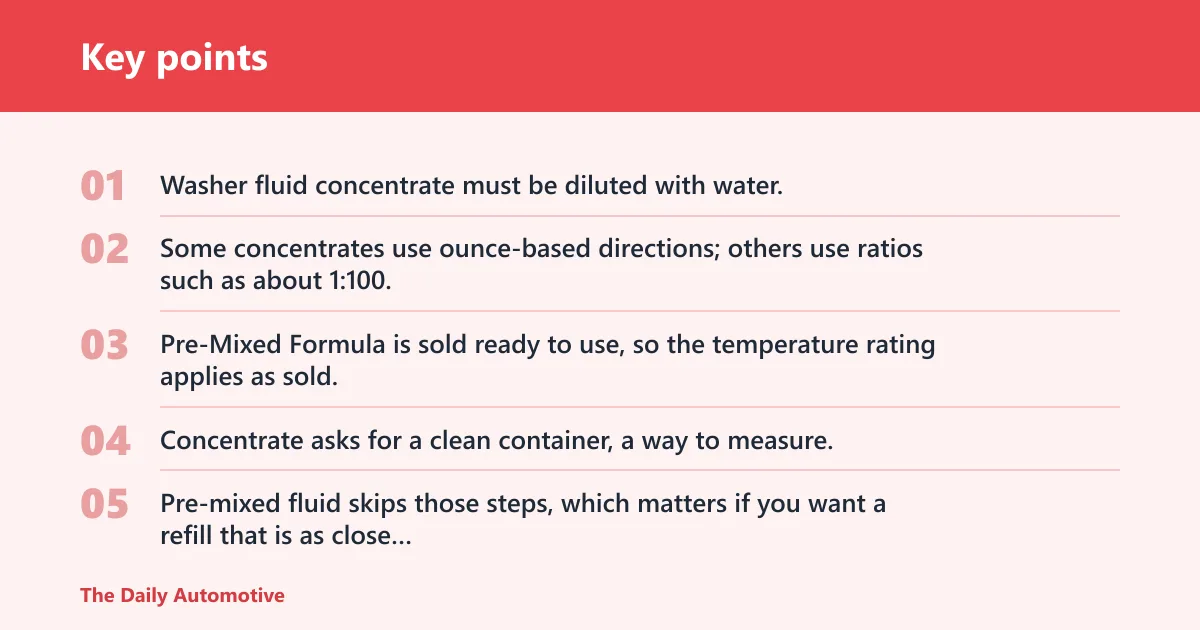
Washer fluid concentrate must be diluted with water, and its yield changes with the ratio on the bottle. Some concentrates use ounce-based directions; others use ratios such as about 1:100, 1:1.5, or 2:1. Pre-Mixed Formula is sold ready to use, so the temperature rating applies as sold.
That changes the ownership friction. Concentrate asks for a clean container, a way to measure, and enough attention to hit the intended mix. Pre-mixed fluid skips those steps, which matters if you want a refill that is as close to “pour and drive” as washer fluid gets.
How the temperature rating works
A finished-mixture temperature rating should match the coldest weather you expect. A winter label means more than a color or a marketing word. It means the fluid, after dilution if needed, should be rated below the lowest temperature you expect to see.
Standard summer washer fluid is for bugs and road grime, but it is not winter-safe. Winter washer fluid is the cold-weather version, often blue in consumer products, and it is built for de-icer performance at below-freezing temperatures. Some products are sold as all-season, but the rating still needs to fit your climate.
What storage and refill habits look like
Concentrate is compact, so it is easier to store on a garage shelf or in a trunk box without taking up much room. Pre-mixed fluid often comes in gallon jugs, and Cross Country sells a ready-to-use all-season washer fluid in a 6-gallon case. That format is simple, but it takes more space.
Say your reservoir is nearly empty in January and you are parked where overnight lows drop well below freezing. A ready-to-use winter bottle avoids a mix error. Say your driving is mostly mild-weather commuting and you refill only a few times a year. Concentrate can make more sense if you are comfortable measuring.
Washer fluid decision table
| Driving climate | Reservoir use pattern | Best choice |
|---|---|---|
| Mild weather, occasional dust and bugs | Top off a few times a year | Washer Fluid Concentrate |
| Cold winter with regular freezing nights | Frequent refills and want no mix guesswork | Pre-Mixed Formula |
| Mixed seasons with garage storage and a measuring cup available | Willing to change formulas as the season changes | Washer Fluid Concentrate |
| Very cold climate where the finished rating must be clear on the bottle | Want a simple refill routine for multiple vehicles | Pre-Mixed Formula |
Winter break-even example: how yield changes with dilution
The shelf price on concentrate can mislead you if winter dilution uses more of the bottle. Suppose a concentrate bottle is priced for an easy summer dilution, but the cold-weather mix needs more concentrate per gallon. The finished cost rises because each gallon now uses more of the bottle.
Here is the logic. If a product is mixed at 1:100 for a mild setup, one unit of concentrate makes far more finished fluid than it would at 2:1. If winter use requires a stronger finished mix, the same bottle makes fewer gallons, so the cost per finished gallon rises even though the sticker price did not change.
That is why the real break-even point is the cost after dilution, not the label price. A low bottle price can still lose to a ready-to-use jug if the concentrate must be mixed much stronger for winter protection and you only need a modest amount at a time.
Safe mixing checklist for home use
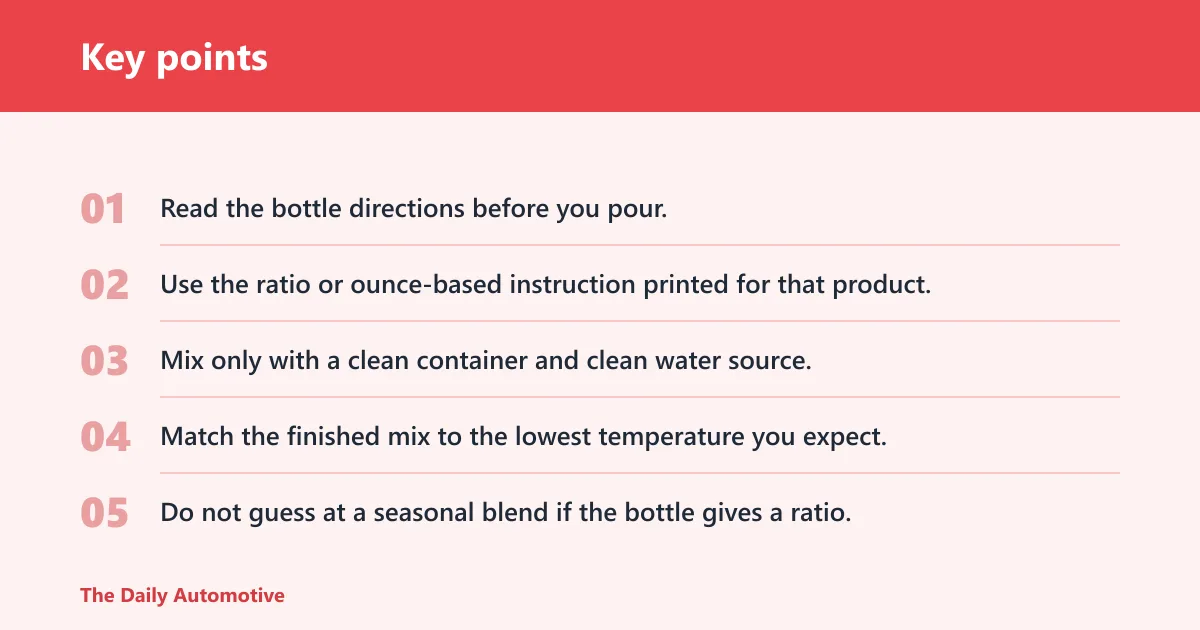
- Read the bottle directions before you pour.
- Use the ratio or ounce-based instruction printed for that product.
- Mix only with a clean container and clean water source.
- Match the finished mix to the lowest temperature you expect.
- Do not guess at a seasonal blend if the bottle gives a ratio.
- Keep methanol-based products away from children and animals.
- Label the container if you store leftover mix.
Is washer fluid concentrate cheaper?
Washer fluid concentrate can be cheaper per finished gallon, but only if the dilution ratio still gives you the protection you need. The bottle price alone does not answer the question. You need the cost after mixing, because a winter recipe can use more concentrate and shrink the savings fast.
Car Talk says washer fluid ranges in price from under $1 to about $20 per gallon, which shows how wide the market is. That range is not a shortcut to the best choice. It just means you should compare the cost of the finished gallon, not the shelf tag.
One simple way to compare is to divide the bottle cost by the number of finished gallons it makes at your actual mix ratio. If a summer mix gives you more finished fluid than a winter mix, the summer formula may look cheaper until cold weather forces a stronger dilution and reduces yield.
Which washer fluid is safer in winter?
For winter use, the safer choice is the one whose finished mixture rating matches the coldest temperature you expect. Pre-Mixed Formula removes dilution uncertainty because the temperature rating applies as sold. Concentrate can be just as useful, but only if you mix it to the correct winter strength.
Methanol is used in some winter formulas and is toxic, so store those products carefully away from children and animals. Some premium concentrates use ethanol instead, and ethanol is often positioned as a safer alternative to methanol. Either way, the label should tell you what the product uses.
Standard summer washer fluid is not winter-safe. It is meant for bug removal and road grime, not for freezing weather. If the reservoir contains a summer formula when the temperature drops, the fluid can freeze or stop spraying when you need it most.
What temperature rating should winter washer fluid have?
The rating should be below the coldest temperature you expect to see. If your area regularly sees freezing nights, choose a finished mix that stays usable below that point. The same source lists a best overall winter formula washer fluid rated for -30°F, which is the kind of cold-weather figure shoppers should look for on a winter bottle.
That rating matters more than broad labels like all-season or professional. Those terms may describe packaging or market position, but they do not replace the actual freeze rating. If the number is missing, check the manufacturer’s listing for your model or the product label before buying.
Choose Washer Fluid Concentrate if… / Choose Pre-Mixed Formula if…
Choose Washer Fluid Concentrate if you want lower packaging volume, can measure accurately, and expect to change your mix with the season. Choose Pre-Mixed Formula if you want no measuring, a simple refill routine, and a winter rating that applies the moment you pour it in.
Choose Washer Fluid Concentrate if…
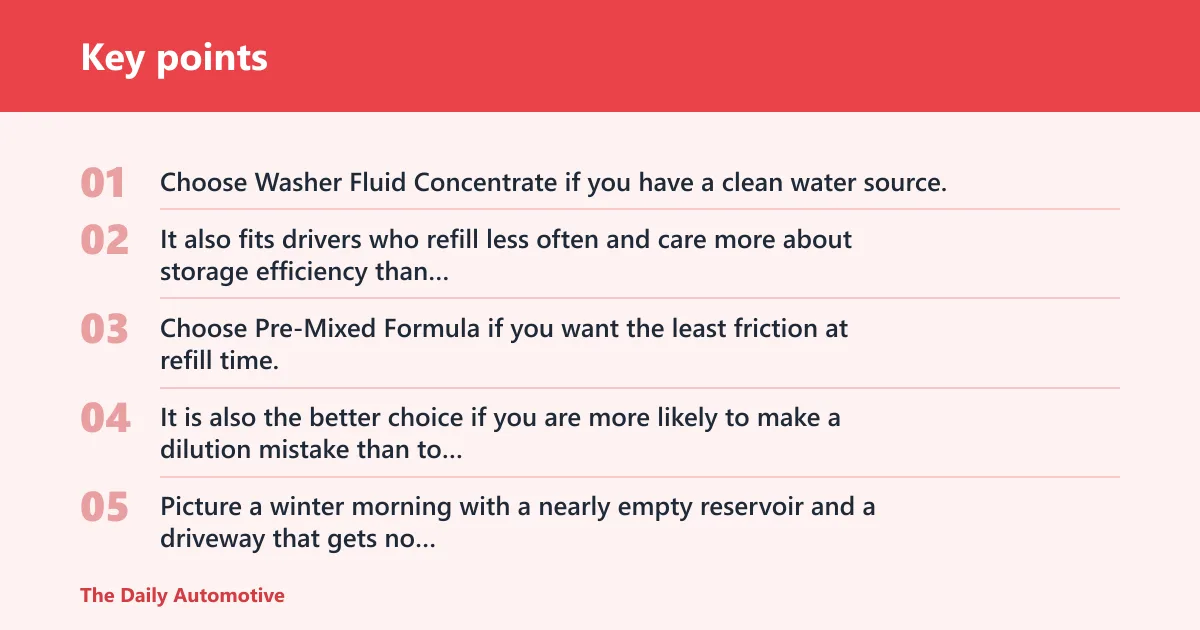
Choose Washer Fluid Concentrate if you have a clean water source, do not mind doing the math on yield, and want the option to tailor the mix for summer, winter, or all-season use. It also fits drivers who refill less often and care more about storage efficiency than grab-and-pour convenience.
Choose Pre-Mixed Formula if…
Choose Pre-Mixed Formula if you want the least friction at refill time, especially in cold weather. It is also the better choice if you are more likely to make a dilution mistake than to save money through careful mixing.
Picture a winter morning with a nearly empty reservoir and a driveway that gets no shelter. Pre-mixed fluid gives you one less step. Concentrate can still be the right choice, but only if you are confident the finished mix will match the weather outside.


Frequently asked questions
Washer fluid concentrate vs pre-mixed formula: which is better?
Neither is always better. Washer fluid concentrate is better when you want lower cost per finished gallon and do not mind mixing. Pre-Mixed Formula is better when you want a ready-to-use refill and less chance of a seasonal error, especially in winter.
Can you mix washer fluid concentrate with water yourself?
Yes. That is how concentrate is meant to be used, but you should follow the product-specific instructions on the bottle. The final mix ratio controls the finished temperature rating, so the right amount of water matters for winter protection.
Can you mix washer fluid with standard water?
Yes, if the product instructions call for dilution with water. Use clean water and the ratio listed on the bottle. If you use too much water, the finished mix can lose freeze protection and perform poorly in cold weather.
How much washer fluid concentrate do I need for one gallon?
It depends on the stated ratio. A concentrate may use ounce-based directions or ratios such as 1:100, 1:1.5, or 2:1. Check the label for the exact mix, because the amount needed for one gallon changes with the product and the season.
Does pre-mixed washer fluid freeze in winter?
It can if you buy a summer formula or a blend that is not rated for the temperature where you drive. Pre-Mixed Formula is only as winter-safe as its sold rating. Always match the printed temperature rating to the coldest weather you expect.
What is the difference between summer washer fluid and winter washer fluid?
Summer washer fluid is aimed at bugs and road grime, and it is not winter-safe. Winter washer fluid adds de-icer performance and is rated for below-freezing temperatures. If you drive in cold weather, the finished mix needs a winter rating, not a summer one.
Is washer fluid concentrate safe for my windshield and reservoir?
It is generally safe when you use the product as directed, because washer fluids commonly include surfactants for cleaning and corrosion inhibitors to protect the system. The main risk is mixing it wrong or choosing the wrong seasonal formula, not the format itself.
Products related to this article
Sponsored / affiliate links. As an Amazon Associate I earn from qualifying purchases. I may earn additional commission from eligible campaigns.