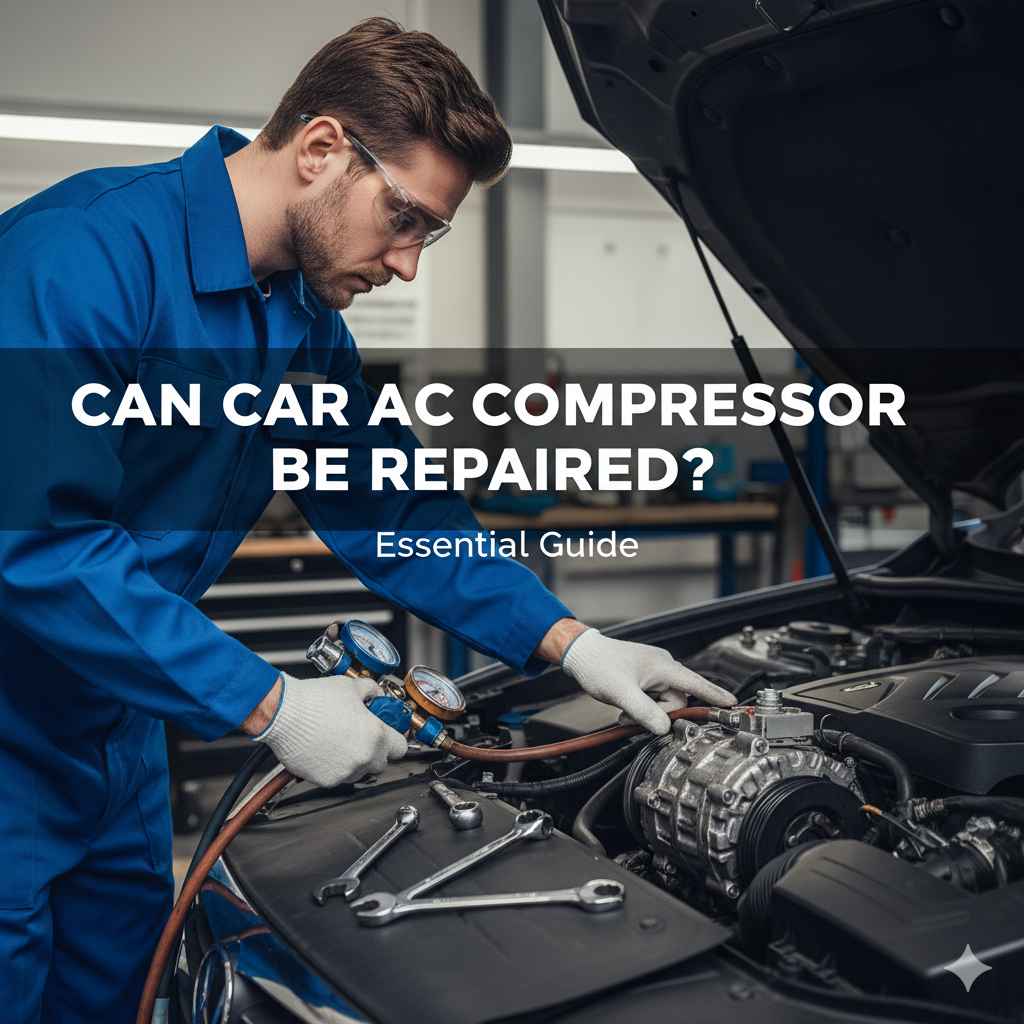
Can Car AC Compressor Be Repaired? Essential Guide
Yes, in some cases, a car AC compressor can be repaired, but it’s often more practical and cost-effective to replace it. Minor issues might be fixable, but significant damage usually requires a full replacement for reliable, long-lasting cooling. Understanding the symptoms and options is key.
Is your car’s air conditioning acting up? That comforting cool breeze you rely on during hot days might be gone, leaving you feeling sticky and uncomfortable. Often, the culprit is the AC compressor, the heart of your car’s cooling system. When it stops working correctly, it can be a real headache. You might wonder, “Can my car AC compressor be repaired?” This guide is here to help you understand the possibilities, the costs, and what a broken compressor really means for your car.
We’ll break down what a compressor does, the common signs of a failing one, and whether repair is a realistic option or if a replacement is your best bet. By the end of this guide, you’ll feel much more confident about diagnosing the problem and making the right decision for your vehicle and your wallet.
What Does an AC Compressor Do?
Think of your car’s AC compressor as the engine for your air conditioning system. It’s a vital component responsible for circulating refrigerant (the special fluid that cools your car) throughout the system. Basically, it compresses the refrigerant, turning it into a high-pressure gas. This process is key to the entire cooling cycle. Without a working compressor, your AC simply won’t blow cold air.
The compressor uses a pulley system, driven by your car’s engine belt. When the AC is turned on, an electromagnetic clutch engages this pulley to the compressor’s internal mechanism, making it spin and do its job. If this process doesn’t happen, or if something within the compressor is damaged, your AC will struggle or fail completely.

Common Signs of a Failing AC Compressor
Spotting a failing AC compressor early can save you a lot of hassle. Here are some common signs to look out for:
- Weak or No Cold Air: This is the most obvious sign. If your AC is blowing air, but it’s not cold, the compressor might not be engaging or circulating refrigerant properly.
- Strange Noises: A failing compressor can make various noises. You might hear grinding, rattling, chirping, or even a loud knocking sound, especially when the AC is on. These sounds often indicate internal wear or damage.
- AC Clutch Not Engaging: The clutch is what connects the engine’s power to the compressor. If you don’t hear a distinct “click” when you turn on the AC, or if you see the clutch pulley just spinning without the center hub engaging, it could be a compressor or clutch issue.
- Leaking Refrigerant: While refrigerant leaks can happen elsewhere in the AC system, they can sometimes originate from the compressor’s seals or gaskets. This can lead to poor cooling performance and a need for more refrigerant.
- AC System Not Turning On: In some cases, a completely failed compressor or its clutch might prevent the entire AC system from even starting up.
Can a Car AC Compressor Be Repaired vs. Replaced?
This is the big question! The short answer is: sometimes, but often replacement is the better choice. Let’s break down the repair possibilities and their limitations.
What Can Potentially Be Repaired?
Minor issues might theoretically be fixable, though these are often temporary or only applicable in very specific situations. The most common repairable component is often the AC clutch. If the clutch fails, it might be possible to replace just the clutch assembly without removing the entire compressor. This is generally less expensive than a full compressor replacement.
Other potential “repairs” might involve:
- Seal Replacement: If a compressor has a minor leak from its seals, a mechanic might be able to replace those seals. However, this is intricate work, and if the compressor has already been running with low refrigerant, internal damage might have already occurred, making this a risky fix.
- Clutch and Pulley Replacement: If the clutch itself is worn out, or the pulley bearing is failing, these parts can sometimes be replaced independently of the main compressor unit.
Why Replacement is Often Necessary
The AC compressor works under high pressure and contains precision-engineered moving parts. When these parts wear out or break, it’s usually due to:
- Internal Wear and Tear: Over time, the internal components (pistons, reed valves, swashplate, etc.) simply wear down from constant operation.
- Contamination: Debris, metal shavings, or moisture in the AC system can severely damage internal compressor parts. This often happens after a major failure.
- Lack of Lubrication: The refrigerant in your AC system also carries a special oil to lubricate the compressor. If refrigerant levels drop too low, or if the wrong type of oil is used, the compressor can seize up.
In most of these scenarios, the damage is internal and widespread. Trying to repair a compressor with significant internal wear is like trying to fix a worn-out engine by just replacing a gasket – the underlying problem remains. A failed internal component can shed metal shavings that contaminate the entire AC system, leading to further damage if not thoroughly flushed.
The Cost Factor: Repair vs. Replace
It’s important to consider the cost-effectiveness of any repair. Replacing just a clutch might be feasible and cheaper than a full compressor swap. However, if the compressor itself is damaged internally, a repair attempt is often:
- Expensive: Specialized AC work can be labor-intensive.
- Risky: There’s no guarantee a partial repair will last.
- Short-lived: The repaired compressor might fail again relatively soon.
A new or remanufactured compressor, while a larger upfront cost, typically comes with a warranty and offers a much higher probability of reliable, long-term performance. Many mechanics will recommend replacement because it’s the most reliable solution.
Diagnosing the Problem: What to Look For
When your AC isn’t working, a proper diagnosis is crucial. Here’s a simplified look at how a mechanic might approach it:
Step 1: Visual Inspection
The technician will first look for obvious signs of damage:
- Check the compressor pulley for free spinning or seized rotation.
- Inspect for visible oil leaks around the compressor body, seals, or hose connections.
- Check the serpentine belt that drives the pulley.
Step 2: Checking the AC Clutch
A common point of failure is the magnetic clutch:
- When the AC is on, the clutch should engage with an audible click.
- A mechanic can test the electrical signal going to the clutch. If the signal is present but the clutch doesn’t engage, the clutch itself might be faulty.
Step 3: Checking Refrigerant Levels and Pressure
Low refrigerant is a major cause of AC problems:
- Using a manifold gauge set, a technician measures the high and low-side pressures of the AC system.
- Incorrect pressures can indicate low refrigerant, a faulty compressor, or a restriction in the system.
- The diagnostic software available on modern scan tools also helps in AC system testing. Learn more about how OBD2 scanners can aid in car diagnostics.
Step 4: Listening to the Compressor
Internal compressor issues often make noise:
- The mechanic will listen for grinding, knocking, or hissing sounds coming directly from the compressor body.
- These sounds often point to internal component failure.
Step 5: System Flush and Component Check
If a compressor fails completely, especially due to internal damage, the priority shifts to preventing damage to new components:
- The entire AC system typically needs to be flushed to remove any debris or contaminants left by the failed compressor.
- Other AC components like the receiver/drier and expansion valve (or orifice tube) may also need to be replaced as they can trap debris or moisture.
DIY vs. Professional Repair
Working on car AC systems requires specialized tools, knowledge, and safety precautions. It’s generally recommended to leave AC compressor diagnosis and replacement to qualified professionals.
Why Professional Help is Advised:
- Safety: AC systems operate under high pressure. Releasing refrigerant improperly can be harmful and is illegal in many places.
- Specialized Tools: AC work requires vacuum pumps, manifold gauges, refrigerant recovery machines, and specific diagnostic equipment.
- Refrigerant Handling: Handling refrigerants requires certification in many regions due to environmental regulations. You can find more information on EPA regulations regarding refrigerants at the U.S. Environmental Protection Agency website.
- Contamination: Improper procedures can introduce moisture or debris into the system, damaging new parts.
What a DIYer Might Check (Carefully!):
If you’re comfortable working on your car, you might be able to perform some initial checks, but always prioritize safety and consult your car’s service manual.
- Visual Inspection: Look for obvious leaks, belt condition, and pulley spinning.
- Listen: Try to pinpoint unusual noises.
- Check for Clutch Engagement: With the engine running and AC on, see if the center part of the compressor pulley spins with the outer part.
Even with these checks, if you suspect compressor issues, it’s best to book an appointment with a trusted mechanic.
Cost of Repairing vs. Replacing an AC Compressor
The cost can vary significantly based on your car’s make and model, the specific issue, and your location. Here’s a general idea:
AC Clutch Replacement Costs
This is often the most affordable “repair” scenario.
- Parts: $50 – $200
- Labor: $100 – $300
- Total: $150 – $500 (approx.)
This assumes the compressor body itself is fine and only the clutch needs replacement.
AC Compressor Replacement Costs
This is the more common and expensive scenario.
| Component | Estimated Cost Range |
|---|---|
| Remanufactured Compressor | $200 – $800 |
| New Compressor | $400 – $1200+ |
| Refrigerant Recharge | $100 – $300 |
| System Flush | $100 – $200 |
| Receiver/Drier & Expansion Valve/Orifice Tube | $50 – $200 |
| Labor (can be 3-6+ hours) | $300 – $1000+ |
Total Estimated Cost for Compressor Replacement: $800 – $2500+
As you can see, replacing the compressor is a significant investment. That’s why understanding if a simpler repair is possible is so appealing, but often not practical.
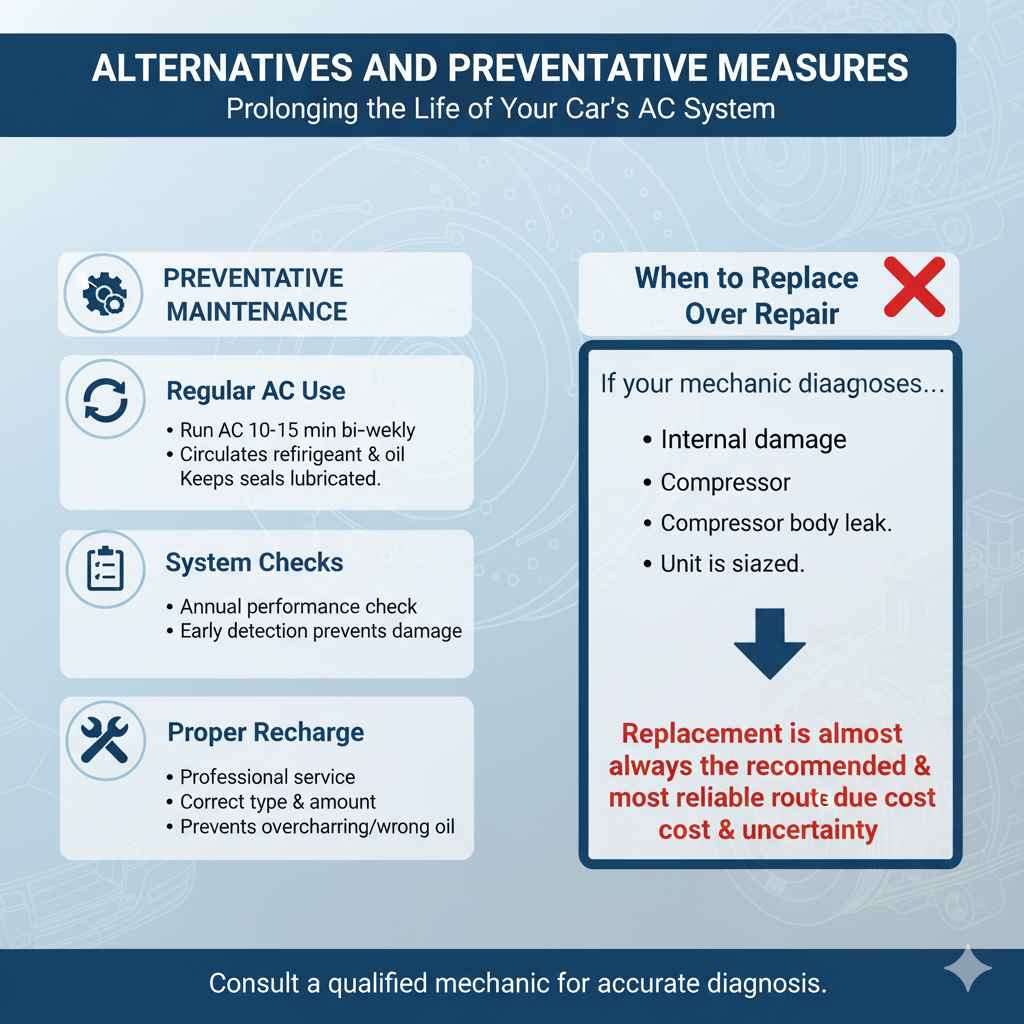
Alternatives and Preventative Measures
While you can’t entirely prevent an AC compressor from eventually wearing out, some steps can prolong its life and the life of your AC system.
Preventative Maintenance:
- Regular AC Use: Even in cooler months, run your AC for about 10-15 minutes every couple of weeks. This circulates refrigerant and oil, keeping seals lubricated and preventing them from drying out.
- System Checks: Have your AC system’s performance checked annually, especially before the hot season. Early detection of low refrigerant or other issues can prevent damage to the compressor.
- Proper Recharge: If your AC needs a recharge, ensure a professional uses the correct type and amount of refrigerant and oil. Overcharging or using the wrong oil can be detrimental.
When to Consider Replacement Over Repair:
As a general rule, if your mechanic diagnoses internal damage to the compressor, a leak related to the compressor body, or if it’s seized, replacement is almost always the recommended and most reliable route. The cost and uncertainty associated with repairing a critically damaged compressor typically outweigh the benefits.
FAQ: Your AC Compressor Questions Answered
Here are some answers to common questions beginner car owners have about AC compressors:
Q1: How long does a car AC compressor usually last?
A car AC compressor can last anywhere from 100,000 to 200,000 miles, or around 8 to 15 years. However, this depends heavily on maintenance, driving conditions, and the overall quality of the unit.
Q2: Can I drive my car if the AC compressor is bad?
Yes, you can usually drive your car if the AC compressor is bad. The AC system is separate from the engine’s fundamental operation. If the compressor failure hasn’t caused a belt to break or a critical engine issue, your car will still run. You’ll just be without air conditioning.
Q3: What happens if I don’t fix a bad AC compressor?
If you don’t fix a bad AC compressor, you’ll continue to have no cold air. In some cases, a failing compressor could potentially seize up and cause the serpentine belt to break, which would stop your engine from running and power steering/charging systems from working. It’s best to address it sooner rather than later.
Q4: Is it safe to use AC recharge kits from auto parts stores?
AC recharge kits can be a temporary fix for very minor refrigerant leaks, but they are not a substitute for professional repair. Overcharging the system, using the wrong type of refrigerant, or introducing air/moisture can cause more damage. They also don’t address the root cause of the leak. For best results and safety, professional service is recommended.
Q5: What’s the difference between a new and a remanufactured AC compressor?
A new compressor is built from scratch with all new parts. A remanufactured (or rebuilt) compressor is a used compressor core that has been disassembled, cleaned, inspected, and had worn parts replaced with new ones. Remanufactured units are typically less expensive than new ones and often come with a warranty.
Q6: Can a frozen AC compressor be repaired?
A “frozen” AC compressor usually means the internal components have seized, often due to lack of lubrication or internal damage. In this state, repair is generally not feasible or cost-effective. Replacement is the standard solution for a seized compressor.
Conclusion
When it comes to your car’s AC compressor, the question “Can it be repaired?” often leads to the practical answer: replacement is usually the most reliable and long-term solution. While minor issues like a faulty clutch might be fixable, significant internal damage means the heart of your AC system needs a complete overhaul. Understanding the symptoms, consulting with a trusted mechanic, and considering the cost-effectiveness will empower you to make the best decision for your vehicle’s comfort and your peace of mind.
Don’t let a warm car ruin your drive. By staying informed and addressing AC issues promptly, you can keep your cool on the road, knowing you’ve made a smart choice for your car’s health.