Can I Use Trufuel in My Car: The Ultimate, Dangerous Risk
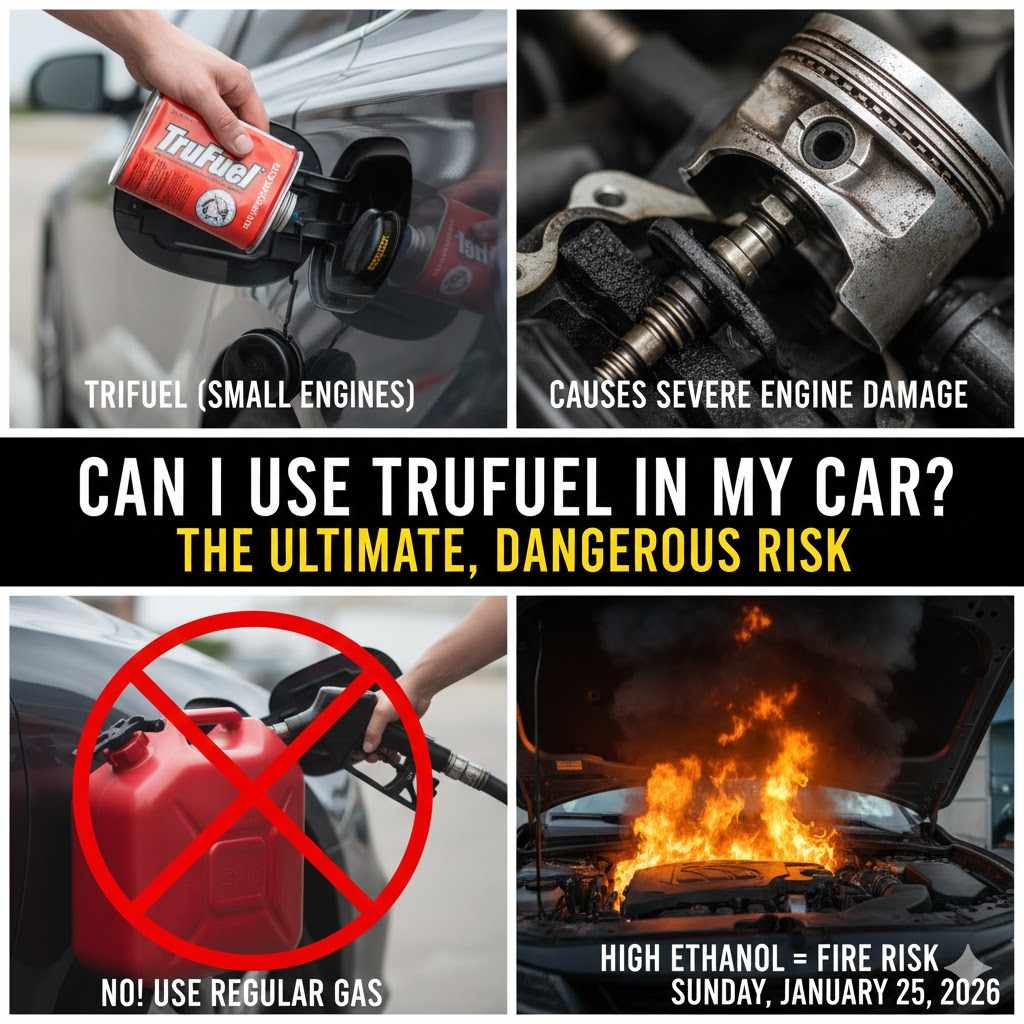
Putting Trufuel in your car is extremely dangerous and will cause serious, expensive engine damage. Trufuel is designed for small engines like lawnmowers, not cars. It lacks the critical detergents your car needs and often contains oil that will destroy vital components like your catalytic converter and oxygen sensors. Never use it as a substitute for regular gasoline.
Hello there! I’m Md Meraj, and I’m here to help you navigate the world of car care with confidence. Have you ever been stranded with an empty gas tank, spotted a can of Trufuel in the garage, and wondered, “Can I just use this to get me to the gas station?” It’s a logical question, especially in a pinch. You’re not alone in thinking it!
That little can of fuel looks a lot like gasoline, so it’s easy to assume it might work. But this is one of those times when a quick fix can lead to a massive, wallet-draining problem. Don’t worry, I’m going to break it all down for you in simple terms. We’ll explore what Trufuel actually is, why it’s so different from car gasoline, and the serious risks involved. Let’s make sure you have the knowledge to keep your car safe and running smoothly.
What Exactly Is Trufuel? A Closer Look at Small-Engine Fuel
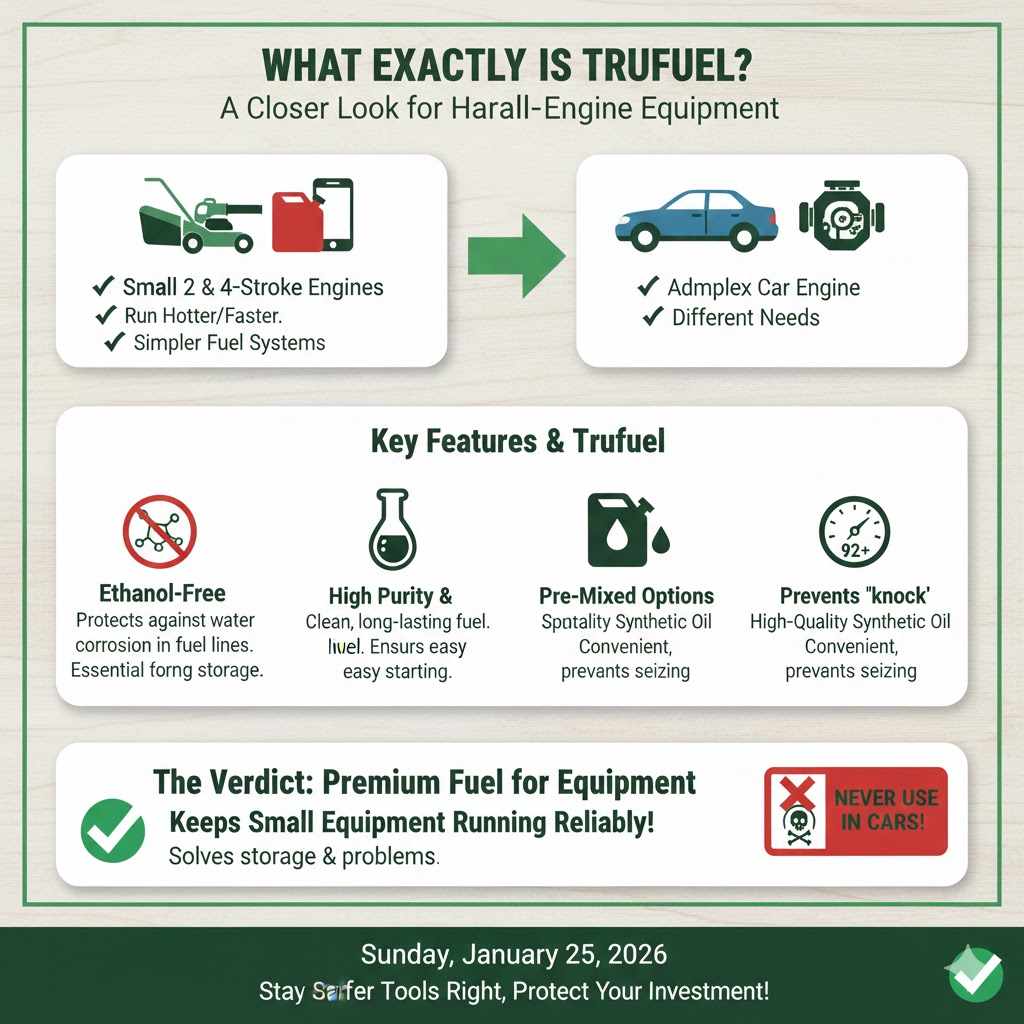
Before we talk about your car, let’s understand what Trufuel is made for. Think of Trufuel as a specialty drink for high-performance athletes—if those athletes were your lawnmower, chainsaw, or leaf blower. It’s a precisely engineered fuel designed specifically for small 2-stroke and 4-stroke engines.
These small engines are very different from the complex engine under your car’s hood. They run hotter and faster in some ways, and they have very different needs. Trufuel is created to meet those specific needs perfectly.
Key Features of Trufuel:
- Ethanol-Free: Most gasoline you buy at the pump contains up to 10% ethanol (E10). Ethanol attracts water, which can corrode the simple fuel lines and carburetors in small engines, especially when they sit in storage for a long time. Trufuel is completely free of ethanol, protecting this equipment.
- High Purity and Stability: It’s a very clean, stable fuel that doesn’t go bad quickly. This is great for a chainsaw you might only use a few times a year. It ensures the engine starts right up, even after sitting all winter.
- Pre-Mixed Options: Many small engines are “2-stroke,” which means they need oil mixed directly into the gasoline for lubrication. Trufuel often comes pre-mixed with the exact right ratio of high-quality synthetic oil. This is convenient and protects the engine from seizing up.
- High Octane: Trufuel typically has a high octane rating (92 or higher), which helps prevent engine “knock” or “pinging” in high-compression small engines.
So, in short, Trufuel is a premium, ready-to-use fuel that keeps small, hardworking equipment running reliably. It solves problems like fuel storage and proper oil mixing. But as we’re about to see, the very things that make it great for a lawnmower make it a disaster for your car.
Car Gasoline vs. Trufuel: A Tale of Two Fuels
On the surface, both seem similar. They are both flammable liquids that make engines run. But when you look closer, they are as different as tap water and saltwater. You can’t just swap them. Your car’s engine is a sophisticated, computer-controlled machine designed to run on a very specific diet: the gasoline you get at the pump.
Let’s compare them side-by-side to see the critical differences. This is where the danger of mixing them up becomes crystal clear.
| Feature | Regular Car Gasoline | Trufuel (4-Stroke and 2-Stroke) |
|---|---|---|
| Primary Use | Automobiles, trucks, and other road vehicles. | Lawnmowers, chainsaws, leaf blowers, trimmers. |
| Detergent Additives | Contains a complex package of detergents mandated by the Environmental Protection Agency (EPA) to keep fuel injectors and intake valves clean. | Contains zero detergents. It’s not designed for long-term use in systems with injectors. |
| Ethanol Content | Typically contains up to 10% ethanol (E10). Modern car fuel systems are designed to handle this. | Completely ethanol-free to protect small engine components. |
| Oil Content | Contains no motor oil. Lubrication is handled by a separate oil system in the engine. | 4-stroke versions have no oil. 2-stroke versions are pre-mixed with oil, which is catastrophic for a car engine. |
| Octane Rating | Varies (usually 87, 89, 91-93). Formulated for computer-controlled automotive engines. | High (often 92+), but formulated for the specific combustion needs of small, air-cooled engines. |
| Cost | Priced per gallon at the pump. | Extremely expensive. Sold in small cans, costing many times more per gallon than pump gas. |
Why These Differences Matter So Much
Let’s unpack that table. The single biggest danger lies in two areas: the lack of detergents and the presence of oil (in the 2-stroke version).
1. The Missing Detergents: Your car’s engine relies on the detergents in gasoline to act like a cleaning crew. They constantly work to prevent carbon and gunk from building up on your fuel injectors and valves. Without these detergents, your injectors will start to clog. This leads to poor fuel spray, rough running, bad gas mileage, and eventually, a check engine light and costly repairs.
2. The Catastrophic Oil Problem: If you were to accidentally use 2-stroke Trufuel (the kind mixed with oil), you are introducing thick oil into a system that is designed only for a fine mist of gasoline. This oil will not burn cleanly in your car’s combustion chamber. Instead, it will coat everything with a sticky, gummy residue. It will permanently destroy your oxygen sensors and, most critically, your catalytic converter—a repair that can easily cost thousands of dollars.
Even if you use 4-stroke Trufuel without oil, the lack of detergents and different formulation makes it completely wrong for your vehicle.
The Damage Explained: What Happens if I Put Trufuel in My Car?
Okay, let’s get right to the heart of the matter. You’ve poured the can in. What happens next? The outcome ranges from bad to disastrous, depending on how much you used and which type of Trufuel it was.
Immediate and Short-Term Problems
If you only added a small amount to a nearly full tank of regular gas, you might not notice much at first. But if you added a significant amount to an empty tank, you’ll see problems right away:
- Rough Engine Performance: The car will likely run poorly. It may sputter, hesitate when you press the gas, and idle erratically. The engine’s computer is trying to adjust to a fuel it doesn’t recognize, and it’s failing.
- Stalling: The engine may stall completely, especially at low speeds or when stopped at a light.
- Check Engine Light: Your car’s onboard computer will detect a serious problem with the fuel mixture and exhaust readings. This will trigger the check engine light on your dashboard almost immediately.
- Engine Knocking: Despite Trufuel’s high octane, its burn properties are wrong for a car. This can lead to engine knock or pinging, which sounds like a rattling or metallic tapping noise. This is the sound of uncontrolled combustion, which can damage pistons and cylinder walls over time.
The Severe, Long-Term Damage (The Expensive Part)
The immediate running issues are just the start. The real damage is happening silently to some of your car’s most expensive and sensitive components. This is especially true if you used oil-mixed 2-stroke fuel.
A Quick Look at Potential Repair Costs
Using the wrong fuel isn’t just an inconvenience; it’s a direct path to some of the most feared auto repairs. Here’s a rough idea of what you could be facing.
| Component Damaged | Why It Fails | Estimated Repair Cost |
|---|---|---|
| Catalytic Converter | The oil in 2-stroke fuel burns and coats the precious metals inside, rendering it useless. | $1,000 – $3,500+ |
| Oxygen (O2) Sensors | Sensors get coated with oil or unburnt fuel residue, so they can’t read the exhaust gases correctly. | $200 – $500 per sensor |
| Fuel Injectors | Clogged by deposits due to the lack of detergents, or gummed up by oil. | $400 – $1,500+ for a full set |
| Spark Plugs | Fouled by oily residue, causing misfires. | $150 – $400 |
Note: These are estimates and can vary widely based on your car’s make and model and local labor rates.
Beyond these costs, there’s another major consequence: using the wrong fuel will absolutely void your vehicle’s powertrain warranty. The dealership can easily test the fuel and will deny any claims related to the damage, leaving you to pay the entire bill out of pocket.
Help! I Already Put Trufuel in My Car! What Should I Do?
If you’re reading this because you’ve already made the mistake, take a deep breath. Panicking won’t help, but taking quick, decisive action can save you from the worst of the damage. Follow these steps precisely.
- DO NOT START THE ENGINE. This is the most important rule. Do not even turn the key to the “on” position, as this can prime the fuel pump and circulate the bad fuel. If the car is already running, turn it off immediately and safely. The less that fuel moves through your system, the better.
- Assess the Amount. Be honest with yourself. Did you pour in a full one-gallon can into an empty tank, or just a tiny splash into a 15-gallon tank that was already full? A tiny amount is less severe, but still requires action. A large amount is a definite emergency.
- Call for a Tow Truck. Do not try to “dilute” the bad fuel by adding more gasoline on top. Do not try to drive it to a mechanic. Your only safe move is to call for roadside assistance or a tow truck. Explain the situation so they know not to try and start the vehicle.
- Have the Fuel System Drained. The car must be taken to a qualified mechanic. They will need to drain the entire fuel tank, flush the fuel lines, and possibly clean the fuel rail. This is not a simple DIY job, as it involves handling large amounts of flammable liquid and requires special equipment.
- Replace the Fuel Filter. After a full drain and flush, it’s a very good idea to replace the fuel filter as a precaution to catch any contaminants that may have been dislodged.
- Refill with the Correct Gasoline. Once the mechanic gives you the all-clear, fill the tank completely with the correct grade of gasoline recommended in your owner’s manual.
Acting fast can mean the difference between a few hundred dollars for a tow and a fuel drain, and many thousands of dollars for a new catalytic converter and sensors.
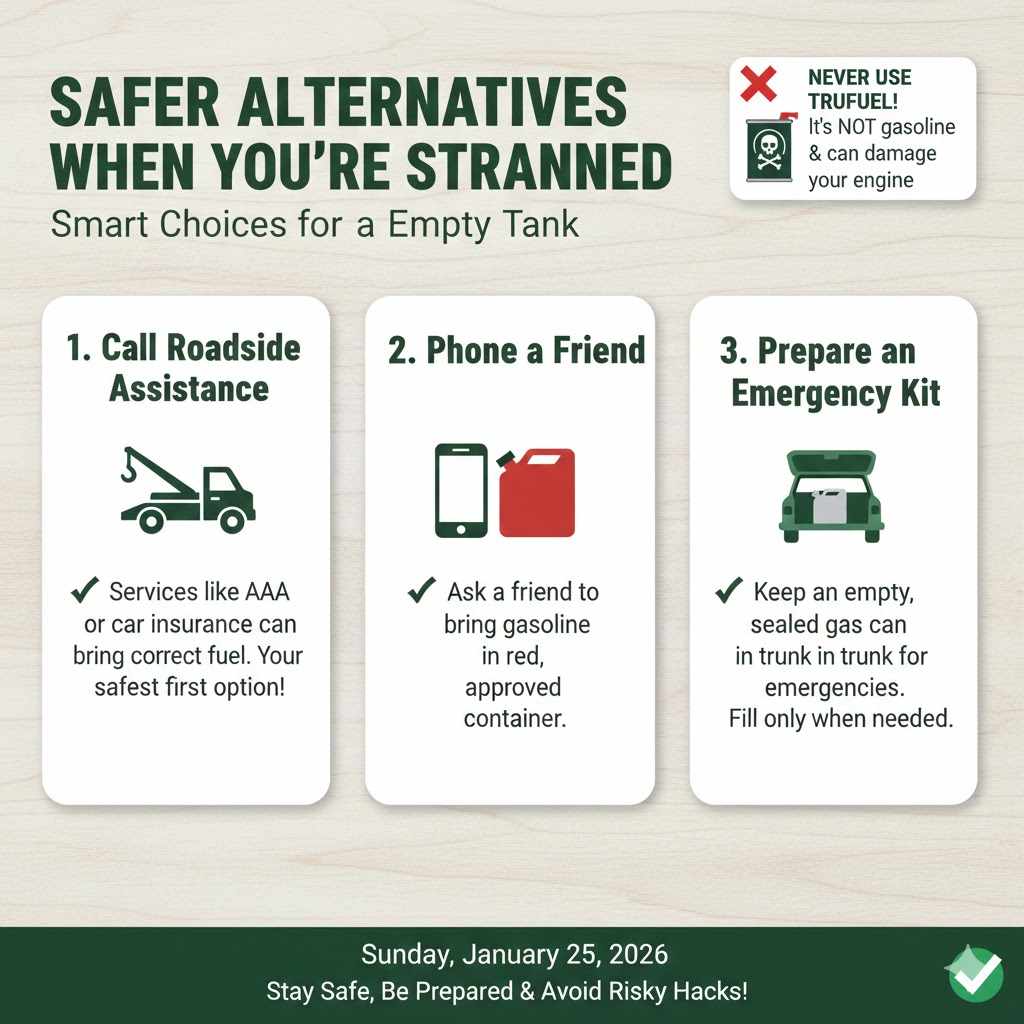
Safer Alternatives When You’re Stranded
The temptation to use Trufuel comes from a place of desperation. So, what should you do when you’re truly stuck on the side of the road with an empty tank? Here are the safe and correct choices.
- Call Roadside Assistance: Services like AAA or the service included with your car insurance are designed for this exact situation. They can bring you a couple of gallons of the correct gasoline to get you to the nearest station safely. This is always your best and first option.
- Phone a Friend: If you don’t have roadside assistance, call a friend or family member. Ask them to go to a gas station, purchase a legally approved gasoline container (a red plastic can), and bring you a gallon or two of regular unleaded gasoline.
- Prepare an Emergency Kit: A great way to prevent this situation is to be prepared. You can keep a small, empty, and properly sealed gas can in your trunk for emergencies. Make sure you follow all safety guidelines for transporting gasoline, which you can learn about from trusted sources like the National Safety Council. The key is that the can should be empty until you need it.
Frequently Asked Questions (FAQ)
Is Trufuel the same as premium gasoline?
No, it is not. While both may have a high octane rating, Trufuel lacks the essential detergents and additives that premium pump gasoline has. It is formulated for the simple needs of small, air-cooled engines, not for complex, computer-controlled car engines.
What if I only put a very small amount of Trufuel in my car?
Even a small amount is a risk. While a few ounces in a full 15-gallon tank might get diluted enough to not cause immediate catastrophic failure, it’s still introducing harmful substances into your fuel system. The safest course of action is always to not start the car and have the tank drained.
Can Trufuel damage a car engine permanently?
Yes, absolutely. The oil in 2-stroke Trufuel will permanently destroy the catalytic converter and oxygen sensors by coating them in a thick, unburnable residue. This is not something that can be cleaned; the parts must be replaced at great expense.
Why is Trufuel so much more expensive than regular gas?
Trufuel is a specialty product. You are paying for the convenience of a highly refined, stable, ethanol-free fuel that is perfectly mixed and packaged in a small, easy-to-use can. The refining process and packaging contribute to its high cost per gallon compared to bulk gasoline at the pump.
Is it okay to use regular car gas in my lawnmower?
For most modern 4-stroke lawnmowers, yes, it’s generally fine to use regular 87-octane gasoline. However, the ethanol in pump gas can damage the fuel lines of older equipment over time and can cause issues if left in storage. That’s why products like Trufuel are recommended for longevity and reliability, but in a pinch, regular gas is the correct choice for a 4-stroke mower (never a 2-stroke one without adding oil!). Always check your equipment’s manual.
What’s the difference between 2-stroke and 4-stroke Trufuel?
The only difference is oil. 2-stroke Trufuel is pre-mixed with oil for engines that require fuel and lubrication together (like a chainsaw). 4-stroke Trufuel has no oil, for engines with a separate oil system (like most push mowers). Putting the 2-stroke version in a car is by far the most damaging scenario.
Conclusion: The Smart Choice for a Healthy Car
So, can you use Trufuel in your car? We’ve seen that the answer is a loud, clear, and absolute no. That can of specialty fuel sitting in your garage is a lifesaver for your small equipment, but it’s a fast track to financial heartache for your automobile.
The temptation in a moment of panic is understandable, but the risk of destroying your catalytic converter, fouling your sensors, and voiding your warranty is far too great. Your car’s engine is a precise and valuable piece of machinery that deserves the correct fuel to keep it running for years to come.
By understanding the critical differences between fuels and knowing the safe alternatives when you’re stranded, you’ve empowered yourself to make the best decision for your vehicle. Keeping your car healthy isn’t about knowing everything; it’s about knowing where the real dangers are. And this is one of the biggest. Stay safe, stay prepared, and always give your car the fuel it was designed for.
Products related to this article
Sponsored / affiliate links. As an Amazon Associate I earn from qualifying purchases. I may earn additional commission from eligible campaigns.