Best Car Seat Protectors for Everyday Use (2026): We Compared
The best car seat protectors for everyday use match the seat and the failure mode: a simple mat for rear-facing child seats, and full coverage for muddy family traffic. A bad fit can let the car seat shift, block a tight install, trap spills, and wear the seat faster. This guide separates what works under infant seats, boosters, and pet or kid traffic by vehicle setup and the problem each protector must avoid.
Quick comparison
| Product | Badge | Best for | Price | ||
|---|---|---|---|---|---|
 |
Munchkin Elite Seat Guardian Car Seat Protector, Dark GreyMunchkin | Our pick | Dark Grey · Standard · Munchkin Protector | $31.97
Price as of 31 Oct 2026
|
View |
 |
Silicone Waterproof Seat Protectors for Under Car SeatsM Mayton | Also great | Brown · Silicone · M Mayton Protector | $59.98
Price as of 31 Oct 2026
|
View |
These two picks handle different jobs. The Munchkin option is the safer fit for rear-facing child-seat use, while the Siliguard option gives broader coverage for seat backs, side areas, and mess-heavy family transport.
Use the table to match the protector shape to your vehicle layout first. Fit, coverage, and whether the child-seat maker allows an accessory under that exact restraint matter most.
How we chose
We compared manufacturer listing details and each product’s stated use case. Also check the fit questions that matter most: LATCH or ISOFIX clearance, seat-base support, cleanup, and whether the shape suits a child seat, a booster, or full-vehicle mess control.
One rule stays above the rest: child restraints and aftermarket seat accessories must be allowed by both the car-seat manual and the vehicle manual. If the child-seat maker prohibits unapproved accessories, skip the protector even if the vehicle upholstery needs protection.
Are car seat protectors safe with car seats?
Only if the child-seat maker allows that exact accessory and the vehicle manual does not conflict. The important checks are lower-anchor clearance, seat-belt access, and whether the mat changes how tightly the restraint sits on the seat. A protector that adds slack or blocks installation is the wrong choice.
When the car-seat manual allows accessories
If the restraint manual specifically permits a protector, start with fit and then look at cleanup. Look for LATCH or ISOFIX cutouts that clear the lower anchors without forcing the protector into the belt path, and avoid extra padding under the seating area unless the maker approves it for that exact seat.
Why slack and anchor access matter
Lower-anchor access has to stay open and usable. A protector that bunches under the child seat can introduce slack, and slack is the problem that matters more than stain protection. The same goes for seatbelt routing on boosters and forward-facing seats; the accessory should not change how the restraint locks in.
When a protector is the wrong choice
Skip a protector when the seat maker prohibits accessories, when the vehicle has a tight split bench that needs the middle buckle, or when the car seat already sits securely on clean upholstery. In those cases, a better installation or a regular cleaning plan is safer than adding material.
Munchkin Elite Seat Guardian: best for rear-facing seats
This is the better fit when you need simpler everyday protection under a child seat, especially a rear-facing setup. The listing says it helps shield fabric or leather upholstery from dirt and spills, and the built-in lower catch panel helps keep crumbs from reaching the floor.
What stands out is the straightforward design. It focuses on the seat base and the mess that collects below the child seat instead of trying to cover every surface in the rear cabin.
The drawback is scope. It does not promise full backrest or side coverage, so it is not the stronger pick if you need to protect seat backs from shoe marks or want broader coverage for pets and wet clothes.
Silicone waterproof seat protectors for under Car Seats Siliguard Brown: best for full-coverage messes
This is the better choice when you want more than an under-seat mat. The listing says it offers full back and base coverage, shields the cushion, backrest, side areas, and seat edge, and uses waterproof silicone to block spills.
It also fastens around the headrest, which makes it a better match for messy family use, rainy-clothes cleanup, and seat-back protection. The listed LATCH access matters if you are trying to keep anchor access open under a child restraint.
The drawback is that this kind of broad coverage can be too much for some setups. Full-coverage protectors are more likely to conflict with split-fold functions, center-belt access, or the tighter packaging that a child seat installation needs.
Seat protector matrix
| Scenario | LATCH clearance | Indentation protection | Spill resistance | Seatback protection | Likely failure mode | Best-fit recommendation |
|---|---|---|---|---|---|---|
| Rear-facing infant seat | Must clear lower anchors without adding slack | Important, but only with firm, thin construction | Useful for bottle drips and diaper leaks | Helpful if feet contact the seatback | Added padding can loosen the install | Munchkin Elite Seat Guardian |
| Forward-facing convertible seat | Must stay open for anchor routing where used | Helpful for leather and fabric dents | Useful for snack spills and winter slush | Less important than base stability | Bulk can interfere with belt path or tight seating | Munchkin Elite Seat Guardian if you need a lighter mat; Siliguard if the seat maker allows a fuller protector |
| Booster | Seat-belt access matters more than anchor cutouts | Moderate, since boosters press less on the cushion | Useful for crumbs and drink spills | Low priority unless shoes hit the seatback | High side bolsters can block buckle access | Munchkin Elite Seat Guardian for simpler coverage |
| Leather seats | Keep cutouts aligned so the protector does not shift | Very important for dent prevention | Very useful for dye transfer and stains | Helpful if kids kick the front seatbacks | Too much padding can create impressions of its own | Siliguard for broader coverage; choose only if the seat maker allows it |
| Rainy-clothes messes | Usually secondary | Moderate | Very important | Very helpful for wet backrests and shoe mud | Fabric-only mats can soak through | Siliguard for waterproof, wipe-clean coverage |
| Pet use | Usually secondary unless a child seat also shares the bench | Moderate for claw pressure | Very important for wet fur and dirt | Helpful if the pet climbs on the backrest | Bench-wide covers can block split-fold and middle-seat access | Siliguard for full coverage if the bench functions still work |
How do you protect seats from car seats?
Start with the right shape, not the thickest pad. For infant and convertible seats, choose a firm, low-bulk mat with cutouts that keep the lower anchors and belt paths clear. For boosters, choose a flatter protector that preserves buckle access. For leather, prioritize base support and spill cleanup separately.
Slim mat: best for infant seats
A slim, firm mat is the safer pattern under a rear-facing infant seat because it helps with indentation protection without building a soft layer that can change the install. The key detail is cutout accuracy: the protector has to clear lower anchors and stay flat under load.
Bench cover: best for messy family use
A full-width bench protector is better when the whole rear seat sees mud, snacks, pets, and wet jackets. It can be the right call for wide coverage, but it may block the middle seat belt, cover split-fold controls, or make buckle access awkward.
Kick mat: best for seat backs
Seat-back protectors and kick mats are the answer when the problem is shoe marks, not cushion wear. They are especially useful with rear-facing seats, where dangling feet can scuff the front seatback. Pockets help hold wipes, tissues, or a small toy, but loose straps are a common weak point.
Suppose a toddler rides rear-facing in a compact SUV with light-colored leather. The failure mode is seat-base imprinting plus muddy shoe contact on the front seatback. A thin base protector and a separate kick mat solve those two problems better than one thick full cover.
What is the best car seat protector for leather seats?
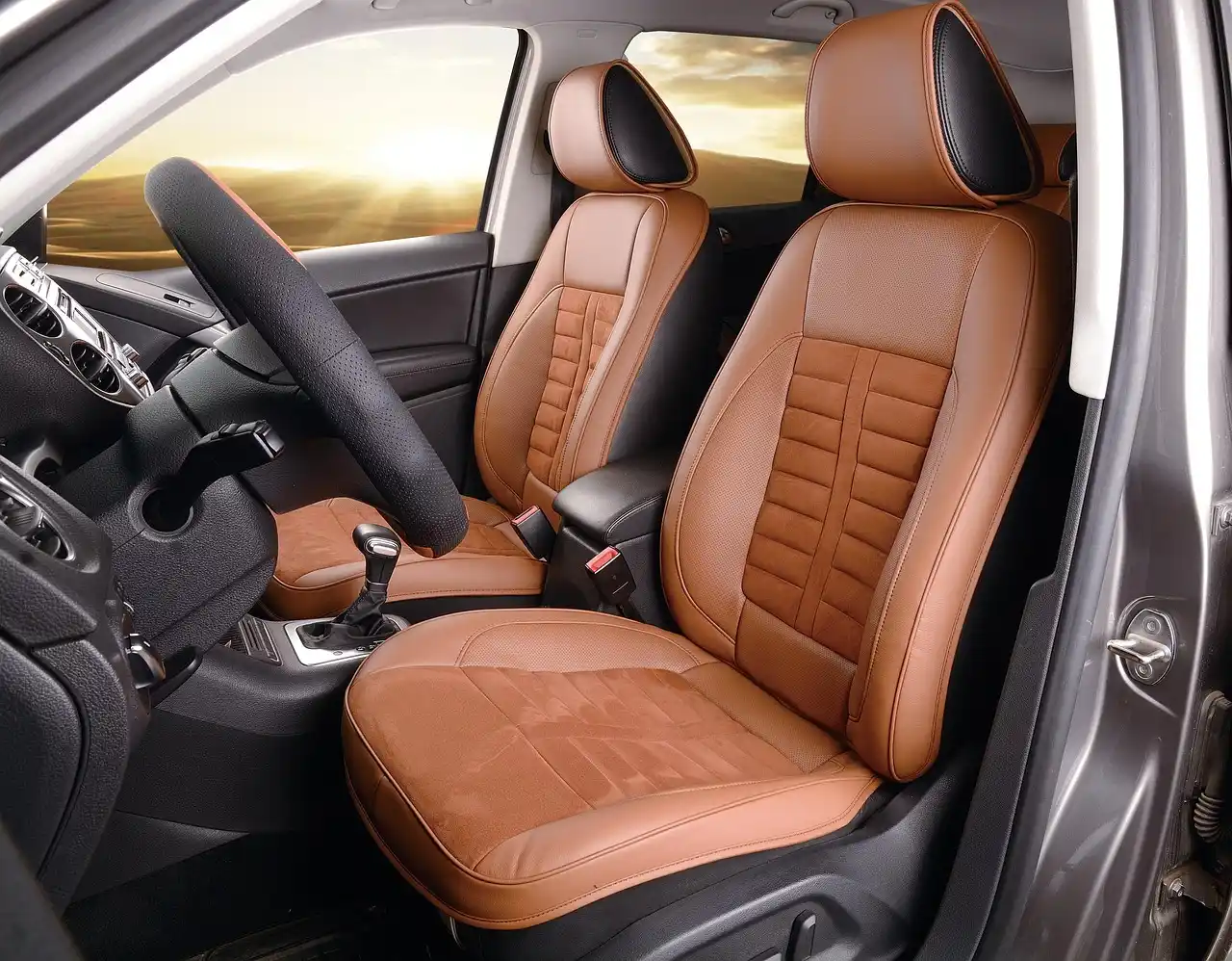
For leather, the best protector is the one that spreads pressure without adding too much thickness. That means firm base support for the seat bottom, plus a separate way to handle seat-back scuffs if feet or boots reach the front seat. Waterproof or water-resistant fabric helps with dye transfer and wet messes.
Leather needs two kinds of protection that are easy to confuse. Seat-base indentation protection prevents dents, while spill resistance stops stains. A seat-back protector handles shoe marks and wet weather. A single full-cover product can do all three only if the fit stays tight and the seat maker allows it.
Thickness vs safety tradeoff
More padding can reduce impressions, but too much padding can create slack. The sweet spot is firm enough to spread pressure and thin enough not to change how the restraint seats against the vehicle cushion. That tradeoff matters most with infant and convertible seats.
Waterproof or wipe-clean care
Waterproof or water-resistant fabric helps with daily cleanup after spills, rainy clothes, and muddy shoes. Common materials include Oxford fabric and PVC, while silicone styles are easy to wipe clean. Machine-washable covers are convenient, but wipe-clean surfaces usually win for faster day-to-day use.
Which one should you buy?
Choose the Munchkin if your main job is protecting the seat under a child restraint and you want a simpler, less intrusive fit. Choose the Siliguard if you need broader coverage for rain, pets, and seat-back messes, and the vehicle layout still leaves room for belt access and fold functions.
For rear-facing infant seats, start with the slimmer, simpler option. For a leather bench that also sees kids, boots, and groceries, the fuller waterproof protector makes more sense. For boosters, pick the one that keeps the buckle path easiest to reach, because awkward access becomes a daily nuisance fast.
A common first-timer mistake is buying a full bench cover for a split rear seat and then finding the middle buckle or fold mechanism is harder to use. If that bench has regular passenger duty, a smaller protector or no protector at all may be the better choice.
- Check the car-seat manual first.
- Check the vehicle manual next.
- Make sure the protector is allowed by both.
- Confirm lower-anchor or seat-belt clearance.
- Match the shape to the mess: base, seatback, or full bench.
- Choose the easiest cleanup surface that still fits securely.
Frequently asked questions
Are seat protectors safe with car seats?
Only when the child-seat maker and the vehicle manual both allow that exact accessory. The right protector must stay flat, preserve lower-anchor access, and avoid adding slack. If it changes the way the restraint seats or routes the belt, it is the wrong choice.
Are car seat protectors safe?
They can be, but safety depends on the exact child seat, vehicle seat, and accessory. The safest route is a protector that the car-seat maker permits, with cutouts and thickness that do not disturb installation. If there is any doubt, do not add it under the restraint.
Do car seat protectors stop indentations under a child seat?
They can reduce imprinting, especially on leather, but only if they are firm and thin enough to keep the child seat stable. Thick padding can backfire by creating its own compression or slack. The goal is pressure distribution, not soft cushioning.
Do car seat protectors interfere with LATCH or ISOFIX?
They can if the cutouts are wrong or the material bunches under load. LATCH and ISOFIX cutouts need to clear the lower anchors without adding slack, and the protector should not obstruct the belt path. If the car seat shifts after installation, remove the protector.
Which car seat protector is easiest to clean?
Wipe-clean silicone and similar waterproof surfaces are usually the fastest after spills, mud, or wet clothes. Machine-washable fabric is convenient, but it takes longer to reset for daily use. For busy families, easy wipe-down care is often the more practical choice.
Should I choose a seat protector or a full seat cover?
Choose a protector when you need child-seat clearance, anchor access, or easy buckle reach. Choose a full seat cover only when the bench layout can tolerate it and the seat will not need split-fold or middle-belt functions. Child-seat use usually favors the smaller, more specific option.
Products related to this article
Sponsored / affiliate links. As an Amazon Associate I earn from qualifying purchases. I may earn additional commission from eligible campaigns.
 FLORICH Leather Seat Cover, Car Seat Covers Front Set, Waterproof Car Seat Protectors, Front Seat Covers 2 Pack, Breathable Automotive Seat Covers Protector Fit for Most Cars Trucks SUV
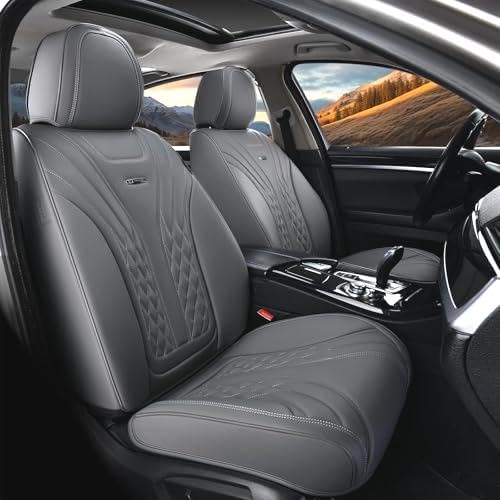 Coverado Car Seat Covers, Car Seat Covers Front Seats, 2-Pack Front Seat Cover, Nappa Leather Waterproof Seat Covers, Car Seat Protectors, Automotive Seat Covers Universal Fit for Most Vehicles